
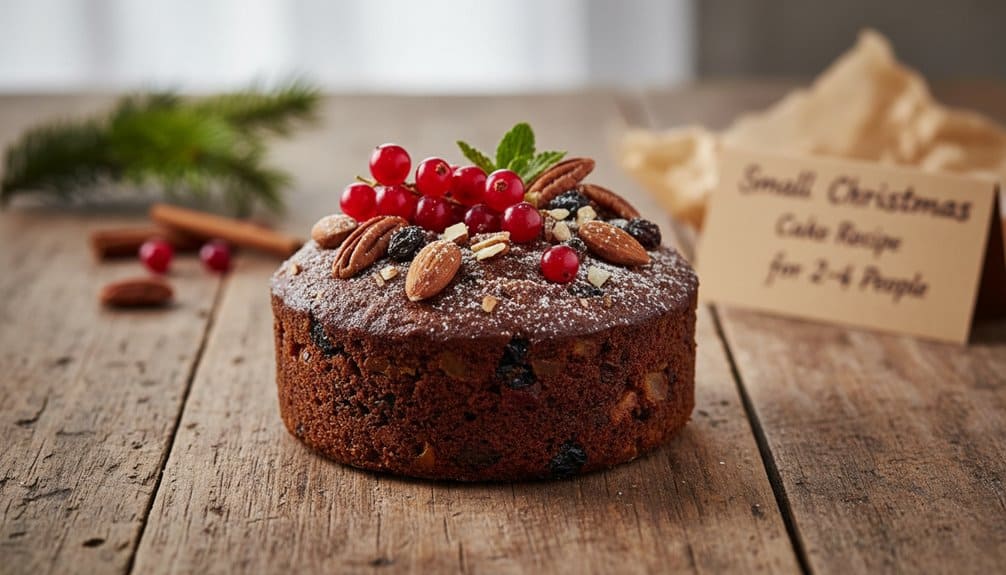
Small Christmas Cake Recipe for 2–4 People
You’ll create a perfect small Christmas cake for 2-4 people using a 6-inch pan with dried fruits soaked in brandy, quality butter, eggs, flour, and warming spices like cinnamon and nutmeg. Cream butter and brown sugar, add eggs gradually, then fold in flour and your soaked fruit mixture. Bake at 325°F for 60-75 minutes until a toothpick comes out clean. Decorate simply with powdered sugar or elevate with marzipan and candied peels for an impressive holiday centerpiece that’ll satisfy your intimate gathering.
Table of Contents
Key Takeaways
- Use a 6-inch round pan and bake at 325°F for 60-75 minutes for perfect small cake portions.
- Soak dried fruits in brandy or rum, then fold into creamed butter-sugar mixture with spices and flour.
- Cream quality butter with brown sugar, add eggs individually, then alternate flour and milk additions.
- Decorate simply with powdered sugar, fresh cranberries, marzipan figures, or orange juice glaze for elegance.
- Store wrapped in plastic and foil; serve at room temperature in thin wedges for 2-4 people.
Why Choose a Small Christmas Cake?
Three compelling reasons make small Christmas cakes the perfect choice for modern holiday celebrations.
First, you’ll appreciate the space saving convenience a smaller cake provides. Your kitchen counter won’t be dominated by an enormous dessert, and you’ll have more room for other holiday treats. Storage becomes effortless when you’re dealing with a compact cake that fits easily in your refrigerator.
Second, small cakes are ideal for intimate gatherings. Whether you’re hosting a cozy dinner for two or a small family celebration, you won’t waste food or feel pressured to invite extra guests just to finish the cake. Everyone gets a proper slice without leftovers lingering for weeks.
Third, you’ll find baking easier and faster. Small cakes require less preparation time, fewer ingredients, and shorter baking periods. You can focus on quality over quantity, creating a beautifully decorated centerpiece that’s perfectly proportioned for your celebration.
Essential Ingredients for Your Petite Holiday Cake
Now that you’ve decided on a small Christmas cake, you’ll need to gather the right ingredients to create your festive masterpiece. Ingredient quality makes all the difference in your final result, so invest in premium components whenever possible.
For your petite holiday cake, you’ll need dried fruits like currants, raisins, and candied peel. Soak these overnight in brandy or rum for maximum flavor. Quality butter, free-range eggs, and plain flour form your cake’s foundation.
Essential spices include:
- Ground cinnamon and mixed spice for warmth
- Fresh nutmeg for aromatic depth
- Vanilla extract for sweetness enhancement
- Lemon zest for brightness
Achieving proper flavor balance requires careful measurement of each component. Brown sugar adds moisture and richness, while a pinch of salt enhances all flavors. Don’t forget blanched almonds for texture and marzipan for covering. These carefully chosen ingredients will transform your small cake into an unforgettable holiday centerpiece.

Step-by-Step Baking Instructions
With your quality ingredients properly prepared, you’re ready to begin the actual baking process for your small Christmas cake. Start by preheating your oven to 325°F and greasing a 6-inch round pan.
Begin mixing techniques by creaming butter and sugar until light and fluffy. Add eggs one at a time, beating well after each addition. Gradually fold in flour alternately with milk, starting and ending with flour. Don’t overmix – this keeps your cake tender.
Gently fold in your soaked dried fruits, nuts, and spices. The proper ingredient preparation you’ve done earlier ensures even distribution throughout the batter. Pour mixture into your prepared pan, smoothing the top with a spatula.
Bake for 60-75 minutes until a toothpick inserted in center comes out clean. Cool in pan for 10 minutes before transferring to a wire rack. Your perfectly portioned Christmas cake is ready for decorating or aging.
Decorating Tips for Your Small Christmas Cake
Once your small Christmas cake has cooled completely, you’ll want to transform it into a festive centerpiece that’s as beautiful as it’s delicious.
Start with a simple dusting of powdered sugar to create a snow-like effect. This classic approach works perfectly for intimate gatherings where you want elegant simplicity.
For more elaborate presentations, consider these edible decorations and festive toppings:
- Fresh cranberries and rosemary sprigs – Arrange them on top for natural Christmas colors and aromatic appeal
- Candied orange peels and chopped pistachios – These add texture, color, and complementary flavors
- Mini marzipan figures – Create tiny snowmen, trees, or stars for whimsical charm
- Chocolate shavings with gold leaf – Perfect for sophisticated dinner parties
You can also drizzle a simple glaze made from powdered sugar and orange juice over the cake before adding your chosen decorations. This helps secure lighter toppings while adding extra sweetness.
Storage and Serving Suggestions
You’ll want to store your small Christmas cake properly to maintain its rich flavor and moist texture for weeks. Serve it at room temperature for the best taste experience, allowing about 30 minutes for chilled cake to warm up.
Cut modest portions since this dense, fruit-laden cake is quite rich – thin slices will satisfy without overwhelming your guests.

Proper Storage Methods
Storing your small Christmas cake properly ensures it stays moist and flavorful for weeks. After your cake has completely cooled, wrap it tightly in plastic wrap or aluminum foil before placing it in airtight containers. This prevents air exposure that can dry out your cake and diminish its rich flavors.
Choose a cool dry location away from direct sunlight and heat sources for optimal storage conditions. Your pantry, basement, or refrigerator work perfectly.
- Wrap twice: Use plastic wrap first, then aluminum foil for maximum protection
- Label containers: Include the date you made the cake for freshness tracking
- Avoid freezing: Fresh storage maintains better texture than frozen alternatives
- Check weekly: Inspect for any signs of spoilage or moisture buildup
Serving Temperature Tips
Temperature dramatically affects how your small Christmas cake tastes and feels when you eat it. The ideal serving temperature is room temperature, which allows the cake’s rich flavors to fully develop and shine through. Remove your cake from refrigerated storage about 30-60 minutes before serving, depending on your room’s warmth.
Cold cake straight from the fridge tastes muted and feels dense. The optimal serving temperature brings out the brandy, spices, and dried fruit flavors while creating a tender, moist texture that’s easy to slice cleanly.
If you’re serving cake that’s been frozen, thaw it completely in the refrigerator first, then bring it to room temperature. Never microwave Christmas cake to warm it, as this creates tough, rubbery spots.
Portion Size Guidelines
Christmas cake’s rich, dense nature means a little goes a long way when determining proper serving sizes. Your small cake recipe creates convenient serving sizes perfect for intimate gatherings without overwhelming guests or creating excessive leftovers.
Cut your cake into these recommended portions:
- Thin wedges: 1/8 to 1/6 of the cake per person for dessert course
- Small squares: 2-inch pieces when serving alongside other holiday treats
- Generous slices: 1/4 of the cake for cake enthusiasts or main dessert
- Tasting portions: 1-inch squares for holiday parties with multiple desserts
These efficient ingredient amounts in your small cake recipe translate to satisfying portions that respect the cake’s richness. You’ll find guests appreciate smaller servings of this decadent treat, allowing them to savor every bite without feeling overly full during holiday celebrations.
Flavor Variations and Customization Options
Several delicious variations can transform your basic small Christmas cake into a personalized holiday treat. You can experiment with flavored frostings like cinnamon cream cheese, eggnog buttercream, or spiced maple frosting to complement your cake’s festive spirit. These alternatives add unique seasonal notes that’ll make your dessert memorable.
Consider incorporating personalized toppings that reflect your preferences. Candied orange peel, toasted nuts, or dried cranberries create texture and visual appeal. You might also add chocolate chips, mini marshmallows, or coconut flakes for extra indulgence.
For bolder flavor changes, substitute rum extract for vanilla, fold in citrus zest, or incorporate warm spices like cardamom or nutmeg into your batter. Fresh berries work wonderfully as both garnish and flavor enhancement.
Don’t forget dietary modifications—you can use gluten-free flour, dairy alternatives, or sugar substitutes without sacrificing taste. These adaptations ensure everyone enjoys your small Christmas cake creation.
Troubleshooting Common Small Cake Baking Issues
Even experienced bakers encounter challenges when making small Christmas cakes, and you’re not alone if your results don’t match your expectations.
You might find yourself dealing with a cake that’s disappointingly dry, bakes unevenly with some parts overdone while others remain underbaked, or turns out dense and heavy instead of light and festive.
These common issues have straightforward solutions once you understand what’s causing them.
Cake Too Dry
One of the most frustrating outcomes when baking a small Christmas cake is discovering it’s turned out dry and crumbly. This typically results from overmixing the batter, which develops too much gluten and creates a dense crumb with coarse texture.
Overbaking is another common culprit that draws moisture from your cake.
To prevent dryness in your small Christmas cake:
- Monitor baking time closely – Small cakes bake faster than full-sized versions
- Don’t overmix the batter – Fold ingredients gently until just combined
- Check oven temperature accuracy – Use an oven thermometer to verify settings
- Add moisture-rich ingredients – Include extra butter, eggs, or fruit juice in your recipe
You’ll achieve a moist, tender crumb by addressing these key factors during preparation and baking.
Uneven Baking Results
Another common frustration you’ll encounter when baking small Christmas cakes is uneven results – parts that are overcooked while others remain underbaked. This typically stems from improper oven positioning or temperature inconsistencies. Place your cake pan in the center rack to ensure even heat circulation around all sides.
Uneven rise often occurs when you don’t level your batter properly before baking. Gently tap the pan on your counter and smooth the surface with an offset spatula.
Uneven browning usually indicates hot spots in your oven or incorrect pan placement. Rotate your cake halfway through baking if you notice one side browning faster.
Check your oven’s calibration with a separate thermometer, as temperature variations can cause these inconsistent results throughout your small Christmas cake.
Dense Heavy Texture
Dense, heavy texture ranks among the most disappointing outcomes when you’re baking small Christmas cakes. This frustrating problem typically stems from improper mixing techniques or ingredient ratios that don’t work well in smaller portions.
- Overmixing the batter – Excessive stirring develops gluten, creating a tough, dense structure instead of tender crumb
- Incorrect flour measurement – Too much flour overwhelms the leavening agents and creates heavy texture
- Insufficient creaming time – Butter and sugar need proper aeration to provide lift and lightness
- Old or inactive leavening agents – Expired baking powder won’t create the necessary rise for fluffy texture
You’ll achieve better results by measuring ingredients precisely, creaming butter thoroughly, and mixing just until ingredients combine. Fresh leavening agents make a significant difference in small batch baking.
Frequently Asked Questions
Can I Make This Cake Gluten-Free Without Affecting the Texture?
Yes, you can make gluten-free substitutions without significantly affecting texture. Replace regular flour with a gluten-free flour blend containing xanthan gum, which provides structure. You’ll need texture adjustments like adding an extra egg or tablespoon of liquid to maintain moisture. Use a 1:1 ratio when substituting.
The dense, fruit-heavy nature of Christmas cake helps mask any textural differences from gluten-free flour.
How Far in Advance Can I Bake This for Christmas Day?
You can bake your Christmas cake up to 3 months ahead for optimal flavor development.
The ideal baking timeline is 4-6 weeks before Christmas Day, allowing the cake to mature properly. For storage duration, wrap it tightly in parchment paper and foil, then store in an airtight container. You’ll need to “feed” it weekly with brandy or rum to keep it moist and enhance the flavors.
What’s the Best Pan Size for a Small Christmas Cake?
You’ll want a 6-inch round cake pan for the perfect small Christmas cake serving 2-4 people. If you prefer individual portions, use single serving bakeware or miniature cake pans instead.
A 6-inch pan creates an intimate cake that’s not overwhelming, while miniature cake pans let you make personal-sized Christmas cakes. Choose non-stick or well-greased pans to ensure your festive cake releases easily after baking.
Can I Substitute Alcohol With Fruit Juice in the Recipe?
You can definitely substitute alcohol with fruit juice when baking without alcohol.
Apple juice, orange juice, or grape juice work well as non alcoholic substitutes. Use the same amount as called for in the recipe.
The cake won’t have the same depth of flavor, but it’ll still be delicious. You’ll get a lighter, fruitier taste that’s perfect for family gatherings.
How Do I Convert a Large Christmas Cake Recipe to Small?
You’ll need to scale down by dividing all ingredient quantities by half or thirds, depending on your desired size. Use a kitchen scale for accurate measuring ingredient quantities since volume measurements can be tricky with smaller amounts.
Switch to a smaller pan and reduce your baking temperature by 25°F while adjusting baking time to roughly half the original time. Check doneness with a toothpick frequently.
Conclusion
You’ve now mastered creating the perfect small Christmas cake that’ll bring joy to your intimate holiday gathering. Don’t hesitate to experiment with different flavors and decorating techniques to make it uniquely yours. Whether you’re celebrating with just your partner or a small group of friends, this scaled-down version delivers all the festive magic of a traditional Christmas cake without the overwhelming leftovers. Enjoy every delicious bite!


No Comments