
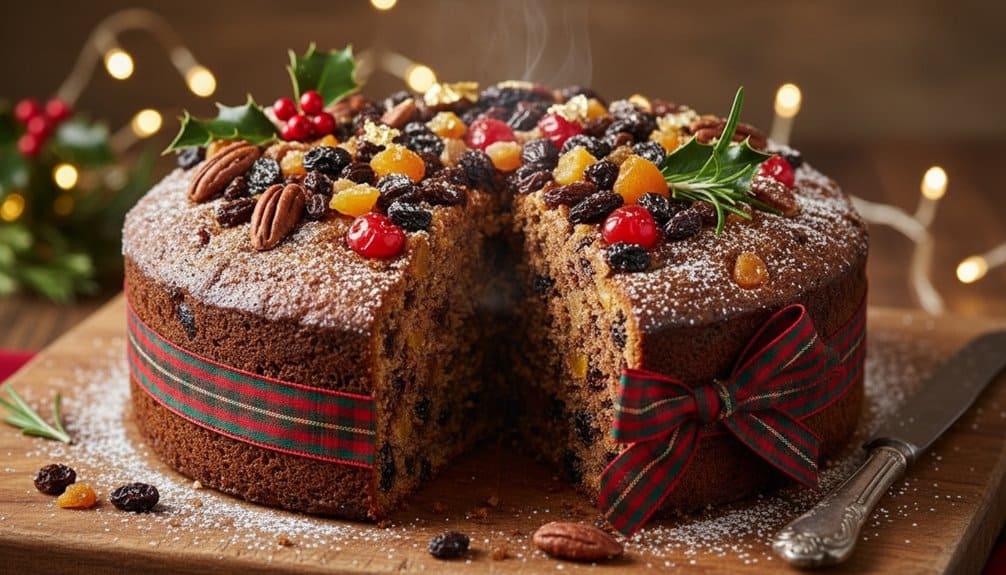
Gluten Free Xmas Cake Recipe That’s Moist and Rich
You’ll create a moist, rich gluten-free Christmas cake by using a quality flour blend containing rice flour, potato starch, and tapioca flour with xanthan gum. Soak your dried fruits in brandy for 24 hours, then cream butter and sugar before folding in sifted flour and soaked fruits. Bake at 325°F for 2-3 hours until a toothpick comes out clean. The secret lies in proper ingredient preparation and gradual cooling techniques.
Table of Contents
Key Takeaways
- Use a quality gluten-free flour blend with rice flour, potato starch, and tapioca flour for proper texture and structure.
- Soak dried fruits in brandy, rum, or orange juice for at least 24 hours to add moisture and flavor.
- Cream butter and brown sugar thoroughly, then add eggs one at a time for a rich, fluffy base.
- Fold flour alternately with liquid ingredients using gentle motions to maintain the cake’s tender crumb structure.
- Bake at 325°F for 2-3 hours, testing doneness with a toothpick for perfectly moist results.
Essential Ingredients for Perfect Gluten-Free Christmas Cake
When you’re putting together a gluten-free Christmas cake, the foundation lies in selecting the right flour blend. You’ll need a high-quality gluten-free flour mix containing rice flour, potato starch, and tapioca flour for optimal texture and structure.
Your dried fruit selection matters enormously. Choose premium currants, raisins, sultanas, and mixed peel. These require proper soaking durations – overnight minimum in brandy, rum, or orange juice to achieve maximum flavor absorption and moisture.
Essential binding agents include xanthan gum if your flour blend doesn’t contain it already. You’ll need fresh eggs, quality butter, brown sugar, and warming spices like cinnamon, nutmeg, and allspice.
Don’t forget blanched almonds, both whole and ground, plus fresh orange and lemon zest for brightness. Ground almonds add moisture and richness that gluten-free cakes often lack.
Consider storage requirements when shopping – proper airtight containers for flour and spices maintain freshness, while alcohol for feeding your finished cake needs cool, dark storage.
Preparing Your Dried Fruits and Spices
Before your gluten-free Christmas cake can reach its full potential, you’ll need to properly prepare your dried fruits and spices through careful soaking and toasting techniques.
Start soaking fruits at least 24 hours before baking. Combine your raisins, currants, sultanas, and chopped dried apricots in a large bowl. Pour brandy, rum, or orange juice over the fruits until they’re completely covered. This process plumps them up and infuses rich flavors throughout.
While your fruits soak, focus on measuring spices accurately. Toast whole spices like cinnamon sticks, cloves, and cardamom pods in a dry pan for 2-3 minutes until fragrant. Let them cool completely before grinding in a spice grinder or mortar and pestle.

Measure pre-ground spices like nutmeg, allspice, and ginger carefully using level teaspoons. Fresh spices deliver better flavor than old ones, so check expiration dates. Store prepared spices in airtight containers until you’re ready to mix your cake batter.
Choosing the Right Gluten-Free Flour Blend
Three essential factors determine whether your gluten-free Christmas cake will have the perfect texture and structure you’re aiming for. Your flour blend choice makes all the difference between a crumbly disaster and a perfectly moist, rich cake that rivals any traditional recipe.
Look for established brands that offer consistent results. Flour blend consistency is crucial – inconsistent mixing ratios between batches can ruin your cake’s structure. Avoid single-flour substitutions like almond or rice flour alone.
The best flour blend substitutions contain:
- Xanthan gum or guar gum for binding and elasticity
- Rice flour for structure and neutral flavor
- Potato starch for moisture retention
- Tapioca flour for chewiness and texture
You’ll want blends specifically designed for baking, not all-purpose varieties. King Arthur, Bob’s Red Mill, and Cup4Cup deliver reliable results. Don’t experiment with homemade blends for your Christmas centerpiece – stick with proven formulations that guarantee success.
Step-by-Step Mixing and Baking Instructions
Getting your mixing technique right will transform your carefully chosen flour blend into an extraordinary gluten-free Christmas cake. Start by creaming butter and sugar until light and fluffy—this takes about 4-5 minutes with an electric mixer. Add eggs one at a time, beating well after each addition to prevent curdling.
Sift your gluten-free flour blend twice before measuring to ensure accuracy. Precise ingredient measurements are crucial since gluten-free flours behave differently than wheat flour. Fold in the flour mixture alternately with your liquid ingredients, beginning and ending with flour. Use gentle folding motions rather than vigorous mixing techniques to maintain the cake’s structure.
Add your soaked fruits and nuts last, distributing them evenly throughout the batter. Pour into your prepared tin and bake at 325°F for 2-3 hours. Test doneness with a skewer—it should come out clean when inserted into the center.
Testing for Doneness and Proper Cooling
You’ll know your gluten-free Christmas cake is perfectly baked when a toothpick inserted into the center comes out clean or with just a few moist crumbs.
Watch for visual cues like golden-brown edges that pull slightly away from the pan and a cake that springs back when gently pressed.

Once done, let it cool in the pan for 10 minutes before turning it out onto a wire rack to prevent cracking and ensure proper texture.
Toothpick Test Method
When your gluten-free Christmas cake has been baking for the recommended time, you’ll need to test whether it’s fully cooked before removing it from the oven. The toothpick test remains the most reliable method for evaluating cake doneness, especially with gluten-free batters that behave differently than traditional recipes.
Insert a clean toothpick into the cake’s center, avoiding any fruit pieces. For proper results when checking crumb texture, look for these signs:
- Completely clean toothpick – indicates perfect doneness
- Few moist crumbs clinging – acceptable for dense Christmas cakes
- Wet batter coating – needs more baking time
- Toothpick meets resistance – cake isn’t set yet
If the toothpick emerges with wet batter, continue baking for 10-15 minute intervals, testing again until you achieve the desired doneness.
Visual Doneness Cues
Beyond the toothpick test, your gluten-free Christmas cake will display several visual indicators that signal proper doneness. The cake’s surface should develop a rich, golden-brown hue that’s evenly distributed across the top. You’ll notice the edges pulling slightly away from the pan sides, creating a small gap around the perimeter.
Color variations will appear as the cake transforms from pale batter to deep amber tones. The center should spring back gently when lightly pressed, indicating proper structural development. For texture assessment, observe the surface—it shouldn’t appear wet or glossy but rather matte and firm.
The cake will also stop bubbling around the edges, and you won’t hear any sizzling sounds. These visual cues, combined with the toothpick test, ensure your festive cake is perfectly baked.
Cooling Best Practices
Proper cooling transforms your gluten-free Christmas cake from fragile to structurally sound, making this stage as critical as the baking itself. You’ll need patience during the proper cooling duration to prevent structural collapse that’s common with gluten-free bakes.
Start with effective cooling methods that preserve your cake’s integrity:
- Leave it untouched – Resist opening the oven door for the first 10 minutes after baking ends
- Cool in the pan – Let your cake rest in its tin for 20-30 minutes before attempting removal
- Wire rack transfer – Gently turn out onto a cooling rack to prevent soggy bottoms
- Complete cooling – Allow 2-3 hours for full cooling before wrapping or decorating
This gradual process ensures your festive masterpiece maintains its beautiful texture and doesn’t crumble.
Feeding Your Cake With Brandy or Rum
Feeding your gluten-free Christmas cake with brandy or rum transforms it from a simple baked good into a rich, moist centerpiece that’ll improve with age. Regular alcohol infusion creates depth and prevents the cake from drying out during storage.
Start periodic cake feeding immediately after cooling. Use a skewer to poke holes across the surface, then drizzle 2-3 tablespoons of your chosen spirit evenly over the top.
| Week | Amount | Method |
|---|---|---|
| 1 | 3 tbsp | Poke holes, drizzle slowly |
| 2-3 | 2 tbsp | Light application on surface |
| 4-6 | 1 tbsp | Gentle brushing motion |
| 7+ | As needed | Maintain moisture level |
The alcohol penetrates the gluten-free crumb structure differently than traditional cakes, so monitor moisture levels carefully. Wrap tightly in parchment and foil between feedings. Your cake will develop complex flavors while staying perfectly moist for weeks.
Decorating and Serving Your Festive Masterpiece
Your beautifully aged gluten-free Christmas cake deserves a stunning presentation that’ll wow your guests.
You’ll want to master both traditional royal icing techniques and modern frosting alternatives that complement your cake’s rich flavors. The right decorative touches and serving style can transform your homemade creation into a show-stopping centerpiece that rivals any bakery display.
Festive Frosting and Icing
The final transformation of your gluten-free Christmas cake happens when you apply the perfect frosting or icing that’ll make it shine as the centerpiece of your holiday table. You’ve got several stunning options to choose from, each bringing its own festive flair.
Consider flavored buttercreams infused with vanilla, almond, or even peppermint for rich, creamy coverage. Drizzled glazes create elegant simplicity while adding sweetness and visual appeal.
Your frosting choices can evoke pure holiday magic:
- Cream cheese frosting with cinnamon creates warm, cozy feelings
- Royal icing allows intricate piping for sophisticated elegance
- Chocolate ganache delivers indulgent luxury that melts hearts
- Fondant enables creative decorating for show-stopping presentation
Whatever you choose, apply it generously and let your creativity flow to create unforgettable holiday memories.
Elegant Presentation Tips
Once you’ve frosted your gluten-free Christmas cake, it’s time to transform it into a stunning centerpiece that’ll captivate every guest at your holiday gathering. Position your cake on a decorative pedestal or vintage cake stand to create an elegant tabletop display that draws attention.
Arrange festive garnishes around the base—fresh cranberries, rosemary sprigs, or gold-dusted pinecones work beautifully. Dust the cake’s surface lightly with powdered sugar for a snow-like effect. Add height variation by placing smaller treats nearby on tiered stands.
Consider soft lighting with battery-operated fairy lights woven through your display. When serving, use a sharp knife warmed in hot water between cuts. This ensures clean slices that showcase your cake’s beautiful layers and rich texture perfectly.
Frequently Asked Questions
Can I Make This Gluten-Free Christmas Cake Dairy-Free as Well?
Yes, you can easily make this cake both gluten-free and dairy-free. Replace butter with vegan butter or coconut oil, and swap milk for plant-based alternatives like almond or oat milk. Use dairy free ingredients throughout, including dairy-free chocolate if required.
For alcohol free substitutions, replace brandy or rum with apple juice, grape juice, or vanilla extract to maintain moisture and flavor.
How Long Does Gluten-Free Christmas Cake Stay Fresh When Stored?
Your gluten-free Christmas cake‘s shelf life depends on proper storage. You’ll get 3-4 days at room temperature in an airtight container, up to one week refrigerated, or three months frozen.
For best storage tips, wrap it tightly in plastic wrap before placing in containers. The cake actually improves after a day as flavors develop. Don’t store it uncovered since gluten-free baked goods dry out faster than traditional cakes.
Can I Substitute the Alcohol With Fruit Juice in This Recipe?
Yes, you can make a fruit juice substitution for alcohol in your gluten-free Christmas cake. Use apple juice, orange juice, or grape juice as non alcoholic alternatives. Replace the alcohol with equal amounts of your chosen fruit juice.
The cake will still be moist and flavorful, though it’ll have a slightly different taste profile. You’ll get excellent results with this simple swap.
Is This Gluten-Free Christmas Cake Safe for People With Celiac Disease?
Yes, this cake’s generally safe for celiac disease, but you’ll need to verify all ingredients meet strict gluten-free certification standards. Check that your flour blend, baking powder, and flavorings don’t contain gluten or face cross-contamination risks.
When considering celiac disease considerations, you must ensure your kitchen tools and surfaces are completely gluten-free to prevent any trace contamination that could trigger symptoms.
Can I Freeze the Gluten-Free Christmas Cake for Later Use?
Yes, you can freeze your gluten-free Christmas cake for up to three months.
For proper freezing instructions, wrap it tightly in plastic wrap, then aluminum foil to prevent freezer burn.
When you’re ready to enjoy it, follow these thawing procedures: move the cake to your refrigerator overnight, then let it reach room temperature before serving for best texture.
Conclusion
You’ve created a gluten-free Christmas cake that rivals any traditional recipe. The rich, moist texture and deep flavors won’t give away its gluten-free secret. Don’t forget to feed it regularly with your chosen spirit for optimal taste development. When you slice into this festive masterpiece, you’ll discover it’s every bit as delicious as the classic version. Your guests will be amazed at how perfectly spiced and satisfying this celebration cake truly is.


No Comments