
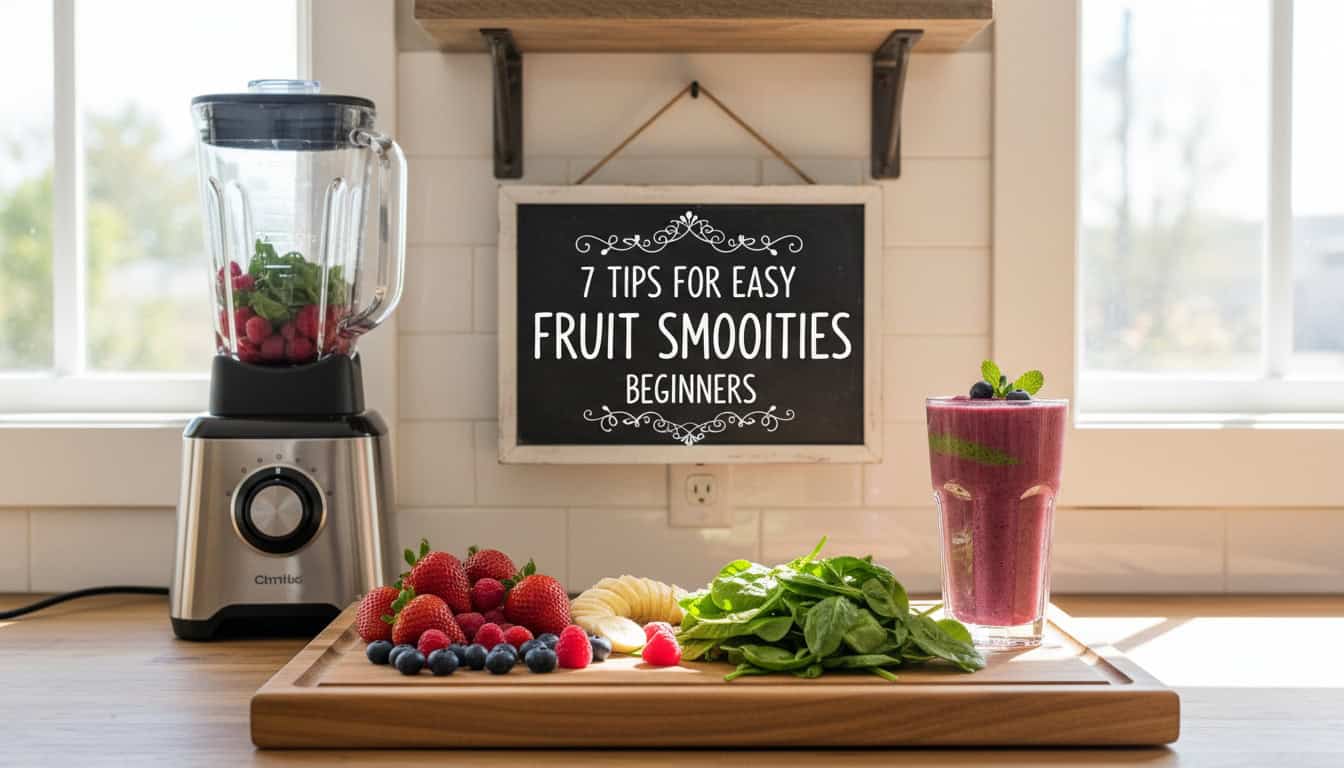
7 Tips for Easy Fruit Smoothies Beginners
Pick a creamy fruit base like banana or frozen berries, then add a splash of milk, juice, or water using a 1‑to‑2 cup‑to‑fruit ratio and adjust for your desired thickness. Use a 500 W blender with stainless‑steel blades and a tight‑sealing lid, layering greens and ice at the bottom for a vortex. Toss in a pinch of salt, a squeeze of lemon, and a drizzle of honey or maple for brightness. Boost nutrition with Greek yogurt, protein powder, oats, chia, or almond butter, and tweak the liquid until the blend coats the back of a spoon—keep going and you’ll discover even more tricks.
Table of Contents
Choose the Fruit Base for Your Smoothie
What fruit should you start with? Pick a base that matches your taste, texture, and nutrition goals. Bananas give a creamy thickness and potassium, so they’re perfect when you want a smooth, filling drink. Berries—strawberries, blueberries, raspberries—add antioxidants, vibrant color, and a light tartness, making them ideal for a refreshing sip. If you crave extra fiber without overpowering flavor, toss in a handful of spinach; it blends invisibly while boosting nutrients. Frozen fruit works great for a chilled, thick consistency, but fresh fruit keeps the flavor bright and avoids excess dilution. Balance sweetness by combining a naturally sweet fruit like mango with a milder one like kiwi. Remember to consider seasonal availability for peak flavor and cost efficiency. By choosing the right fruit base, you set the foundation for a tasty, nutritious smoothie that meets your preferences.
Select the Ideal Liquid Ratio for a Smooth Smoothie
You’ll start with a 1‑to‑2 cup‑to‑fruit ratio and tweak it until the texture feels right. If you want a thinner drink, add a splash more liquid; for a richer, creamier bite, cut back a bit. Keep the flavor in mind—using milk or juice will brighten the taste, while water lets the fruit shine.
Liquid‑to‑Fruit Ratio
Finding the right liquid‑to‑fruit ratio is the key to a smooth, drinkable texture without sacrificing flavor. You’ll want about one cup of liquid for every two cups of fruit, but tweak it based on fruit juiciness and personal preference. Too little liquid leaves you with a chunky mess; too much makes it watery and dulls taste. Start with the standard ratio, blend, then add a splash if it feels thick. Remember, frozen fruit releases less water than fresh, so you may need a bit more liquid.
- A splash of almond milk creates a creamy base that lets berries shine.
- Coconut water adds a tropical note while keeping the blend light.
- Plain water keeps flavors pure and lets fruit sweetness dominate.
Adjust for Desired Thickness
How thick do you want your smoothie? Start with the standard ratio—one cup of liquid for every two cups of fruit—and tweak from there.
If you prefer a spoon‑ful consistency, add a half‑cup less liquid; for a drinkable pour, increase by a quarter‑cup.
Use milk or plant‑based milks for creaminess, juice for a lighter feel, and coconut water for a subtle tropical note.
When you’re using frozen fruit, you can keep the liquid amount lower because the ice contributes thickness.
If the blend looks too dense, drizzle in a little more liquid and pulse briefly.
Consider Base Flavor Balance
After setting the thickness, turn your attention to the liquid that will carry the flavor. The right liquid ratio lets fruit shine without drowning it in milk or juice. Aim for a 1:2 liquid‑to‑fruit proportion as a baseline, then tweak based on sweetness, acidity, and texture. If you prefer a richer mouthfeel, swap half the water for coconut milk; for a bright, refreshing sip, use a splash of orange juice. Remember, each extra ounce changes the balance, so taste as you go.
- A splash of citrus juice lifts berries, making the blend feel lighter.
- A drizzle of almond milk adds subtle nutty depth without overpowering fruit.
- A handful of coconut water introduces tropical notes and electrolytes.
Pick a Blender That Handles Greens and Ice for Smoothies
A reliable blender for greens and ice needs a powerful motor—at least 500 W—to crush fibrous leaves and frozen chunks without stalling. You should look for a model with sturdy, stainless‑steel blades that are angled to create a vortex; this prevents leafy bits from clinging to the sides. A jar of at least 1.5 L gives you room for fruit, liquid, and ice without overfilling, while a tight‑sealing lid stops leaks when you blend on high. Check that the speed settings include a pulse function and a dedicated “ice crush” or “smoothie” mode, because those presets are calibrated for the torque needed to pulverize kale, spinach, and ice cubes. Finally, consider a dishwasher‑safe design and a removable blade assembly—easy cleaning keeps the motor running smoothly and extends the blender’s lifespan.
Layer Ingredients for a Perfect Smoothie Blend
Ever wondered why the order you drop ingredients into the blender matters? You start with liquid to form a vortex, protect the blades, and prevent splatter. Next, add soft fruits like banana or berries; they blend easily and create a smooth base. Then toss in leafy greens, letting the whirlpool pulverize them without clumping. Finally, drop harder items—frozen fruit, ice, or nut butter—so the blades work through a thickened mixture, avoiding chunky pockets. This sequence keeps texture consistent and flavor balanced.
- Liquid at the bottom creates a swirling tunnel.
- Soft fruit follows, forming a creamy middle layer.
- Harder ingredients finish on top, ensuring full pulverization.
Add Sweeteners & Brighteners to Your Smoothie
Wondering how to make your smoothie pop with flavor without overwhelming the fruit? Start by tasting your blend, then add a modest drizzle of honey, maple syrup, or agave—about a teaspoon per cup of fruit works well. If you prefer natural sweetness, toss in a few pitted dates or a splash of orange juice; both lift flavor and keep sugar from..
To brighten the profile, squeeze in a dash of lemon or lime juice; the acidity cuts richness and accentuates fruit notes. A pinch of sea salt can also amplify sweetness and balance any bitterness. For a subtle spice kick, sprinkle cinnamon, ginger, or a pinch of turmeric—these add depth without masking the fruit.
Remember to blend briefly after each addition, then taste again. Adjust in small increments; a little goes a long way, ensuring your smoothie stays vibrant, refreshing, and perfectly balanced.
Adjust Thickness and Creaminess of Your Smoothie
You can tweak the texture by adjusting the liquid‑to‑fruit ratio—add a splash more milk or juice for a thinner sip, or cut back for a richer feel.
If you want extra creaminess, blend in thickening agents like banana, Greek yogurt, or a spoonful of nut butter.
Play with both elements until the smoothie hits the consistency you love.
Liquid Liquid Ratio
How much liquid you add determines whether your smoothie feels silky or spoon‑thick. Start with the standard ratio—1 cup (240 ml) liquid for every 2 cups of fruit—and tweak from there. If you crave a lighter sip, increase the liquid by a quarter cup; if you want a denser bite, cut back a tablespoon. Remember that dairy, plant milks, and juice each bring distinct flavors, so choose one that complements your fruit. Ice works only with fresh fruit to avoid excess dilution.
- A splash of coconut water adds a tropical zing while keeping the blend smooth.
- A dollop of almond milk creates a nutty, creamy mouthfeel.
- A splash of orange juice brightens the taste and loosens the texture.
Thickening Agents Selection
Balancing the liquid ratio sets the stage, but the real texture comes from what you add to thicken and enrich the blend. Choose a base that fits your goal: Greek yogurt delivers protein and creaminess, while kefir adds tangy smoothness. Nut but—almond, cashew, or peanut—impart richness and healthy fats; a tablespoon thickens without overwhelming flavor. For dairy‑free options, silken tofu blends into a velvety body and boosts protein. Avocado contributes buttery texture and extra nutrients, but keep portions modest to avoid heaviness.
Oats or cooked quinoa absorb liquid and create a hearty mouthfeel, perfect for breakfast smoothies. If you crave a light, frothy finish, add a splash of coconut cream or a scoop of frozen cauliflower; both increase density while staying low‑calorie. Adjust quantities until the pour coats the back of a spoon, giving you the ideal sip‑and‑slurp consistency.
Boost Nutrition in Your Fruit Smoothie
Looking to turn a tasty smoothie into a nutrient powerhouse? Start by swapping a plain base for protein‑rich ingredients. Greek yogurt or a scoop of plant‑based protein powder adds amino acids that keep you full longer. Toss in a handful of oats or chia seeds for slow‑release carbs and extra fiber that steadies blood sugar. Finish with a sprinkle of flaxseed or hemp seed for omega‑3s that support heart health and brain function.
- Protein boost: Greek yogurt, whey, or pea protein powder.
- Fiber & carbs: Rolled oats, chia seeds, or cooked quinoa.
- Healthy fats: Flaxseed, hemp seed, or a spoonful of almond butter.
These additions transform a simple fruit blend into a balanced snack or meal replacement. Keep the liquid ratio at about 1 cup per 2 cups fruit, blend until silky, and enjoy a smoothie that fuels your day.
Frequently Asked Questions
Can I Use Fresh Herbs Like Mint or Basil in a Fruit Smoothie?
Yes, you can toss fresh mint or basil into your fruit smoothie. Blend a handful with the fruit and liquid, then taste and adjust—herbs add bright flavor, aroma, and a refreshing twist.
Will Adding a Splash of Vinegar Affect the Flavor Balance?
Yes, a splash of vinegar brightens the flavor, adds a tangy punch, and balances sweetness. Use just a teaspoon, blend quickly, and taste before adding more, so it won’t overpower the fruit.
Is It Safe to Blend Hot Liquids With Frozen Fruit?
Yes, you can blend hot liquids with frozen fruit, but keep the temperature moderate—don’t exceed 150 °F—to avoid steam pressure, and blend slowly to prevent splattering or over‑loading the motor.
How Long Can a Prepared Smoothie Stay Fresh in the Fridge?
You can keep a prepared smoothie fresh in the fridge for about three to five days, but for best flavor and nutrition drink it within 24‑48 hours and store it in a tightly sealed container.
Do I Need to Pre‑Soak Chia Seeds Before Blending?
Yes, you can blend chia seeds straight in, but soaking them for a few minutes gives a smoother texture and helps them absorb liquid, preventing gritty bites and boosting the drink’s thickness.
Conclusion
Now that you’ve mastered the basics—choosing fruit, balancing liquid, picking a sturdy blender, layering wisely, adding sweeteners, tweaking texture, and boosting nutrients—you’re ready to whip up effortless, delicious smoothies every day. Keep experimenting with flavors and ingredients, and you’ll discover endless combos that suit your taste and health goals. Enjoy the process and sip confidently, knowing you’ve got the perfect smoothie formula at your fingertips.


Sorry, the comment form is closed at this time.