
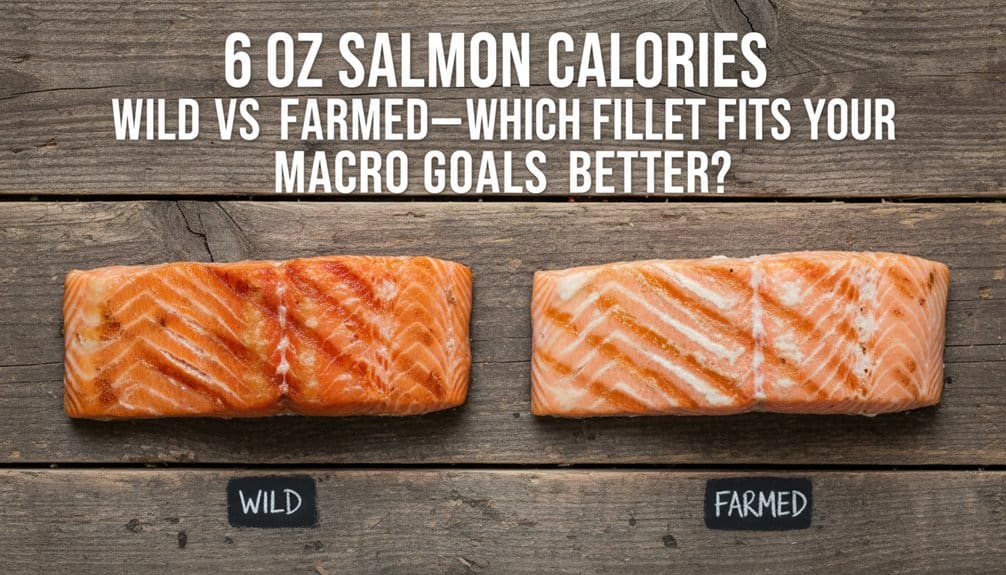
6 Oz Salmon Calories: Wild Vs Farmed – Which Fillet Fits Your Macro Goals Better?
You’ll get 280 calories and 44g of protein from 6 ounces of wild salmon, while farmed salmon delivers 350 calories, 42g of protein, and nearly twice the fat at 20g versus 12g. Wild salmon’s lower calorie density supports cutting phases, but farmed salmon’s higher omega-3 content (3.7g vs 2.2g) and extra calories benefit bulking and recovery. Your fitness phase determines which nutritional profile aligns with your current macro needs and body composition targets.
Table of Contents
Key Takeaways
- Wild salmon contains 280 calories per 6oz while farmed salmon contains 350 calories, making wild better for cutting and farmed for bulking.
- Wild salmon provides 44g protein with 12g fat, while farmed offers 42g protein with 20g fat per 6oz serving.
- Farmed salmon contains more omega-3s (3.7g vs 2.2g) but wild salmon has a superior omega-3 to omega-6 ratio.
- Choose wild salmon for fat loss goals due to lower calorie density while maintaining high protein intake.
- Select farmed salmon for muscle building phases when extra calories and omega-3s support recovery and growth.
Complete Nutritional Breakdown: Wild-Caught Vs Farmed Salmon per 6-Ounce Serving
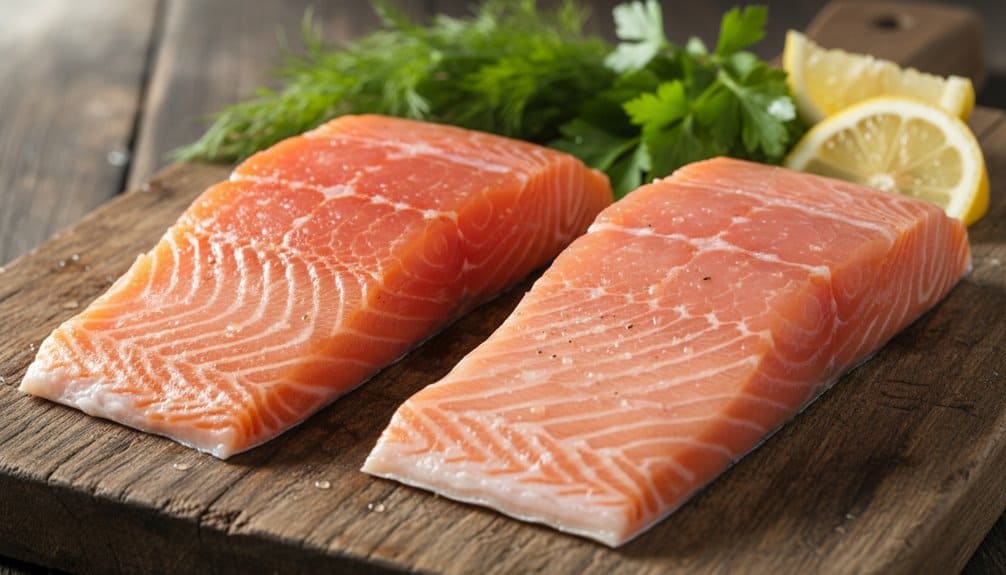
When you’re choosing between wild-caught and farmed salmon at the grocery store, you’ll notice significant nutritional differences that affect both calorie content and overall health benefits. A 6-ounce wild-caught salmon fillet contains approximately 280 calories, while farmed salmon packs 350 calories for the same serving size.
The nutrient density comparison reveals wild salmon delivers 44 grams of protein with just 12 grams of fat. Farmed salmon provides similar protein at 42 grams but contains 20 grams of fat. You’ll find higher omega 3 fatty acid levels in farmed salmon at 3.7 grams compared to wild’s 2.2 grams, though wild salmon’s omega-3s come with a better omega-3 to omega-6 ratio.
Wild salmon offers more B vitamins, particularly B12 and niacin, plus higher selenium content. Farmed salmon contains more vitamin D and vitamin E. Both varieties provide excellent potassium and phosphorus levels essential for your body’s functions.
Matching Your Salmon Choice to Specific Fitness and Body Composition Goals
Understanding these nutritional differences helps you select the right salmon type for your specific fitness objectives. Your body composition goals directly influence which salmon variety you’ll benefit from most.
Here’s how to match salmon types to your training needs:
- Muscle Building: Choose farmed salmon’s higher fat content (18-20g) for extra calories and omega-3s that support recovery and growth
- Fat Loss: Select wild-caught salmon’s leaner profile (8-10g fat) to maintain protein intake while managing calories
- Endurance Training: Opt for whatever’s freshest based on seasonal salmon availability—both provide quality protein for sustained energy
- Maintenance Phase: Consider salmon sustainability when choosing—wild-caught during peak seasons offers environmental benefits
You’ll maximize results by timing your selection with your training cycles. During bulking phases, farmed salmon’s extra 80-100 calories per serving adds valuable energy. When cutting, wild-caught salmon’s lower calorie density lets you eat larger portions while staying within macros.
Frequently Asked Questions
How Long Can I Safely Store Raw Salmon in My Refrigerator?
You can safely store raw salmon in your refrigerator for 1-2 days maximum. The refrigerator storage duration depends on the salmon’s freshness when purchased.
If you’ve frozen salmon, proper thawing methods include overnight refrigerator thawing or cold water immersion. Don’t leave salmon at room temperature. Once thawed, cook it within 24 hours.
You’ll know it’s spoiled if it smells overly fishy, feels slimy, or has discolored patches.
What’s the Best Cooking Method to Preserve Salmon’s Nutritional Value?
You’ll preserve salmon’s nutritional value best through gentle oven baking at 275-325°F, which retains omega-3 fatty acids and prevents nutrient loss.
If you prefer pan searing, use medium heat and don’t overcook—aim for an internal temperature of 145°F. Both methods maintain the fish’s protein content, but avoid high-heat grilling or deep frying, which can destroy beneficial oils and create harmful compounds that diminish salmon’s health benefits.
Are There Sustainability Differences Between Wild and Farmed Salmon?
Yes, you’ll find significant sustainability differences between the two. Wild salmon’s environmental impact depends on fishing practices that can deplete natural populations when poorly managed.
Farmed salmon reduces pressure on wild stocks but you’re dealing with concerns about pollution, antibiotics, and escaped fish affecting ecosystems. You’ll want to look for certifications like MSC for wild or ASC for farmed options to ensure you’re choosing responsibly sourced salmon.
How Much Mercury Is Typically Found in Both Salmon Types?
You’ll find both wild and farmed salmon have low mercury content levels compared to other fish. Wild salmon typically contains 0.022 parts per million, while farmed salmon averages 0.027 ppm. These amounts fall well below FDA safety thresholds, making mercury contamination risks minimal for both types.
You can safely eat either variety multiple times weekly without concern, as salmon’s position lower on the food chain naturally limits mercury accumulation.
What Seasonings Pair Best With Salmon Without Adding Excessive Calories?
You’ll find fresh herbs, citrus zest, and spices add incredible flavor without calorie overload. Try dill, parsley, or thyme paired with lemon pepper seasoning for a classic combination.
Garlic powder, paprika, and black pepper work beautifully too. If you’re craving richness, use herb infused butter sparingly—just a teaspoon adds amazing taste.
Don’t forget simple options like fresh ginger, cayenne, or a squeeze of lime that enhance salmon’s natural flavors perfectly.
Conclusion
You’ve learned the key nutritional differences between wild and farmed salmon, and now you can make the choice that aligns with your goals. Whether you’re cutting calories with wild salmon’s leaner profile or maximizing omega-3s with farmed varieties, you’ll get quality protein either way. Don’t stress too much about the perfect choice—both options deliver excellent nutrition. Track your portions, stay consistent with your plan, and enjoy whichever type fits your budget and taste preferences.


No Comments