
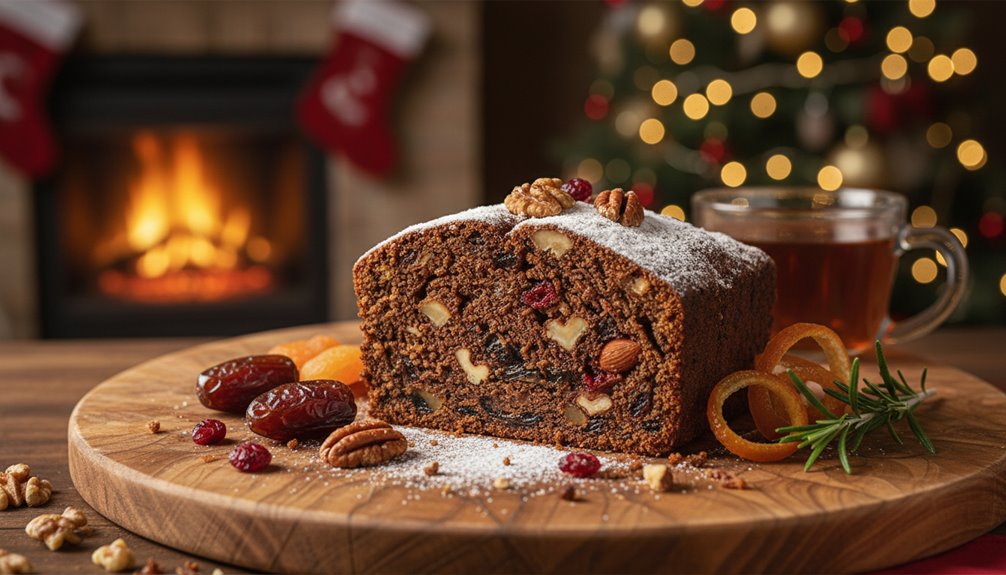
Diabetic Christmas Cake That’s Moist and Naturally Sweet
You’ll create a moist diabetic Christmas cake using natural sweeteners like stevia, erythritol, or monk fruit that won’t spike your blood sugar. Replace regular flour with almond or coconut flour for fewer carbs and more fiber. Add moisture through Greek yogurt or unsweetened applesauce while baking at 325°F for even heat distribution. Mix erythritol with liquid stevia for balanced sweetness and incorporate warm spices like cinnamon. Master these techniques to transform your holiday dessert experience.
Table of Contents
Key Takeaways
- Natural sweeteners like stevia, erythritol, and monk fruit provide sweetness without affecting blood glucose levels or causing sugar crashes.
- Greek yogurt and unsweetened applesauce create exceptional moistness while adding protein and fiber instead of empty calories.
- Almond or coconut flour substitutions reduce carbohydrates by up to 75% compared to traditional wheat flour.
- Baking at 325°F prevents moisture loss and protects natural sweeteners from developing bitter flavors.
- Each standard slice contains only 18g net carbs and 145 calories while maintaining rich, satisfying holiday flavor.
Understanding the Health Benefits of a Sugar-Free Christmas Cake
A sugar-free Christmas cake isn’t just about avoiding sugar spikes—it’s packed with surprising health benefits that make it a smart choice for everyone at your holiday table. You’ll discover that eliminating refined sugar doesn’t mean sacrificing flavor or tradition.
When you choose sugar-free alternatives, you’re supporting healthy blood sugar management throughout the festive season. Natural sweeteners like dates, applesauce, or stevia won’t cause the dramatic glucose fluctuations that traditional cakes trigger. You’ll maintain steady energy levels instead of experiencing the dreaded sugar crash.
Important nutritional considerations include the cake’s higher fiber content from whole grain flours and dried fruits. You’re getting essential minerals, vitamins, and antioxidants that refined sugar depletes from your body. The nuts and seeds typically found in diabetic-friendly recipes provide heart-healthy fats and protein, creating a more balanced dessert. You’ll feel satisfied with smaller portions since the cake’s nutrient density naturally curbs cravings. Plus, you’re reducing inflammation markers linked to excessive sugar consumption.
Essential Ingredients for Your Diabetic-Friendly Holiday Dessert
You’ll need to stock your pantry with the right ingredients to create a Christmas cake that won’t spike your blood sugar. Natural sweeteners like stevia, erythritol, or monk fruit can replace traditional sugar while maintaining the festive sweetness you’re after.
Almond flour, coconut flour, or whole wheat pastry flour offer lower-glycemic alternatives to white flour, giving your cake structure without compromising your health goals.
Natural Sugar Alternatives
Several natural sweeteners can transform your diabetic Christmas cake into a guilt-free celebration centerpiece without sacrificing the festive flavors you’re craving. These diabetic friendly ingredients won’t spike your blood sugar while delivering the sweetness you love.
You’ll find these natural sweeteners work beautifully in holiday baking:
- Stevia – Zero calories, won’t affect blood glucose levels
- Erythritol – Tastes like sugar without the bitter aftertaste
- Monk fruit – 150 times sweeter than sugar, perfect for smaller quantities
- Allulose – Browns and caramelizes just like traditional sugar
- Xylitol – Adds moisture while reducing cavity-causing bacteria
Each sweetener brings unique properties to your cake. Combine them strategically—use erythritol for bulk, stevia for sweetness intensity, and allulose for that golden-brown crust you’re after.
Flour Substitution Options
When you’re ready to swap traditional flour for blood sugar-friendly alternatives, almond flour and coconut flour stand out as the top contenders for your diabetic Christmas cake. Almond flour substitutions work best at a 1:1 ratio with regular flour, though you’ll need to add extra binding agents like eggs since it lacks gluten. Its naturally sweet, nutty flavor enhances your cake while keeping carbs low.
Coconut flour substitutions require more adjustments—use just ¼ cup for every cup of regular flour. You’ll need to increase liquids significantly because coconut flour absorbs moisture like a sponge. Add an extra egg for every ¼ cup used to maintain structure. Both options deliver fewer carbs and more fiber than wheat flour, helping you control blood sugar spikes while creating a moist, satisfying cake.
Choosing the Right Sugar Alternatives for Maximum Flavor
If you’re making a diabetic-friendly Christmas cake, selecting the perfect sugar alternative can make the difference between a bland dessert and one that rivals traditional recipes. Your sweetener selection directly impacts both taste and texture, so you’ll want to consider multiple factors before deciding.
Erythritol provides bulk similar to sugar without the aftertaste, while stevia offers intense sweetness in smaller quantities. You can combine different alternatives for optimal results. Monk fruit sweetener works beautifully with spices, and allulose browns like regular sugar, creating that coveted golden crust.
Consider these ingredient substitutions for enhanced flavor:
- Mix erythritol with liquid stevia for balanced sweetness
- Add vanilla extract to mask any artificial aftertaste
- Incorporate cinnamon to complement natural sweeteners
- Use date paste for caramel undertones
- Blend xylitol with erythritol for improved moisture retention
Step-by-Step Recipe for the Perfect Diabetic Christmas Cake
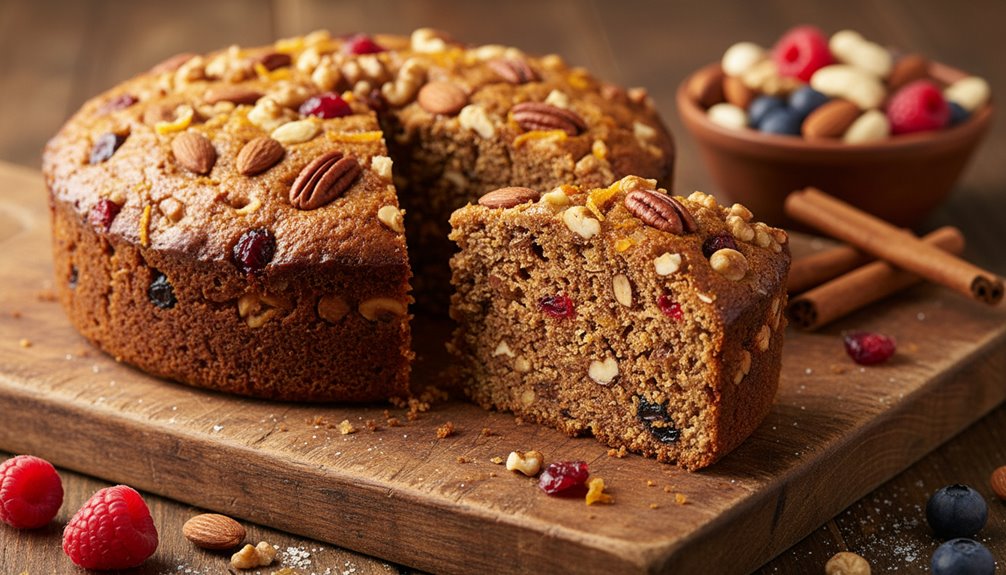
Now that you’ve selected your sugar alternatives, you’re ready to create a diabetic Christmas cake that doesn’t compromise on taste or tradition. Start by preheating your oven to 325°F and preparing your diabetic friendly ingredients: almond flour, eggs, unsweetened applesauce, and mixed dried fruits soaked in orange juice.
Combine dry ingredients first, whisking together flour, baking powder, and spices. In a separate bowl, cream butter with your chosen sweetener using proper sweetener ratios—typically ¾ cup erythritol equals 1 cup sugar. Beat in eggs one at a time, then fold in the flour mixture alternately with applesauce.
Gently incorporate the soaked fruits and nuts, ensuring even distribution. Pour batter into a lined 9-inch pan and bake for 60-75 minutes until a toothpick emerges clean. You’ll achieve the perfect moisture level by cooling the cake completely before removing it from the pan.
Tips for Achieving Ultimate Moistness Without Added Sugar
You’ll achieve bakery-level moistness in your diabetic Christmas cake by mastering three sugar-free techniques. Natural fruit purees like unsweetened applesauce or mashed bananas add both moisture and subtle sweetness, while Greek yogurt creates a tender crumb that stays fresh for days.
You’ll also need to adjust your oven temperature down by 25°F to prevent moisture loss during the longer baking time these ingredients require.
Natural Fruit Purees
Natural fruit purees consistently deliver exceptional moisture to diabetic Christmas cakes while keeping sugar content in check. You’ll find that unsweetened applesauce and mashed bananas work brilliantly as butter replacements, creating tender crumbs without compromising flavor. The fruit purity matters significantly – choose organic options when possible to avoid unnecessary additives. Check fruit ripeness before pureeing; overripe fruits provide maximum sweetness and moisture naturally.
Transform your cake with these puree options:
- Silky pumpkin puree adds festive warmth
- Creamy avocado creates buttery richness
- Sweet potato brings caramel-like depth
- Prune puree delivers dark, complex sweetness
- Pear sauce offers delicate, light moisture
You’re replacing up to half the fat content while adding fiber and nutrients. These purees won’t spike blood sugar dramatically, making them perfect for diabetic-friendly baking.
Greek Yogurt Substitutions
Greek yogurt stands apart from fruit purees by offering protein-rich moisture that stabilizes blood sugar while creating an incredibly tender crumb structure. You’ll find that replacing half your cake’s butter with plain Greek yogurt reduces calories while maintaining richness. The tangy flavor complements warm spices beautifully, and you’re getting probiotic benefits that support digestive health during indulgent holiday eating.
For best results, use full-fat Greek yogurt rather than low fat substitutions, which can make your cake rubbery. You’ll need to adjust your leavening slightly—add an extra quarter teaspoon of baking soda to balance the yogurt’s acidity. Don’t overmix once you’ve added the yogurt; fold it in gently to preserve the air bubbles that create lightness. This simple swap delivers professional bakery texture.
Proper Baking Temperature
The secret to moist diabetic Christmas cake lies in maintaining a steady 325°F (163°C) throughout baking—lower than traditional recipes by 25 degrees. You’ll protect natural fruit sugars from caramelizing too quickly while ensuring even heat distribution. Place your cake on the center rack for optimal airflow.
Your precise temperature control prevents:
- Dry, crumbly edges that ruin texture
- Sunken centers from rapid temperature changes
- Bitter taste from overcooked natural sweeteners
- Disappointing results after hours of preparation
- Family members missing out on holiday dessert
Check your oven’s accuracy with a thermometer—many run hot. The proper baking duration ranges from 55-65 minutes, depending on pan size. Test doneness with a toothpick; slight moisture means it’s perfect. Don’t open the door frequently—you’ll lose critical heat.
Storage and Make-Ahead Guidelines for Best Results
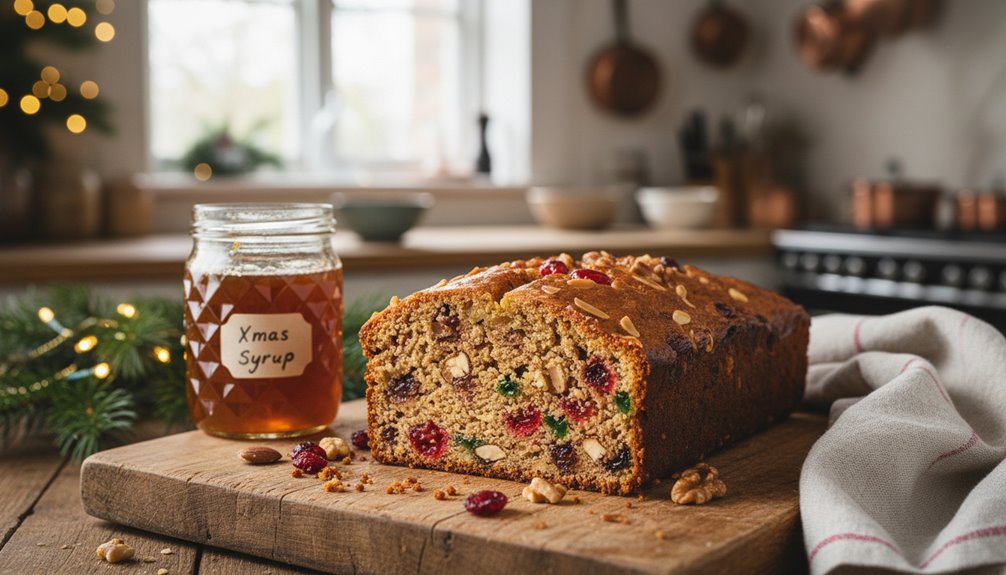
Two key factors determine how well your diabetic Christmas cake maintains its flavor and texture: proper wrapping and optimal timing. You’ll achieve best results by making your cake 2-3 days before serving, allowing flavors to deepen and moisture to redistribute evenly throughout.
For refrigerator storage, wrap your cooled cake tightly in plastic wrap, then aluminum foil. It’ll stay fresh for up to one week when stored this way. Place it in an airtight container for extra protection against odor absorption.
Your freezing techniques can extend storage to three months. Double-wrap the cake in plastic wrap before adding a layer of heavy-duty foil. Label with the date and thaw overnight in the refrigerator when you’re ready to serve.
You can also freeze individual slices between parchment paper sheets for convenient single servings. This method prevents you from thawing the entire cake when you only need a portion.
Creative Variations and Mix-In Options to Customize Your Cake
Mix in your favorite sugar-free additions to transform this basic diabetic Christmas cake into a personalized holiday masterpiece. You’ll discover endless unique flavor combinations by experimenting with different spices, extracts, and diabetic-friendly ingredients. Add cinnamon and nutmeg for warmth, or try cardamom and ginger for an exotic twist.
Create texture variations with these delicious mix-ins:
- Sugar-free chocolate chips for indulgent pockets of sweetness
- Chopped pecans or walnuts for satisfying crunch
- Unsweetened coconut flakes for tropical flair
- Fresh cranberries for tart bursts of flavor
- Sugar-free dried apricots for chewy contrast
You can’t go wrong when you fold in citrus zest—orange, lemon, or lime brighten the entire cake. Replace vanilla extract with almond or rum extract for sophisticated depth. Consider adding a tablespoon of instant coffee to enhance chocolate variations. These simple additions won’t affect your blood sugar while delivering maximum impact for your holiday celebration.
Nutritional Information and Portion Control Guidelines
After creating your perfect diabetic Christmas cake with all your favorite mix-ins, you’ll need to understand its nutritional profile to manage your blood sugar effectively. Each slice’s impact depends on your chosen ingredients and portion sizes.
| Serving Size | Net Carbs | Calories |
|---|---|---|
| 1/16 cake (standard) | 18g | 145 |
| 1/20 cake (small) | 14g | 116 |
| 1/12 cake (large) | 24g | 193 |
| Mini cupcake | 9g | 72 |
| 2-inch square | 12g | 97 |
You’ll benefit from the dietary fiber content in almond flour and fruit, which slows glucose absorption. Aim for standard portions during main celebrations, saving larger pieces for active days. Pre-slice your cake to avoid estimation errors. Pair each serving with protein-rich foods like nuts or Greek yogurt to minimize blood sugar spikes. Track your readings 90 minutes after eating to determine your ideal portion. Remember, smaller servings let you enjoy cake more frequently throughout the holiday season.
Frequently Asked Questions
Can I Use This Recipe to Make Diabetic-Friendly Cupcakes Instead?
Yes, you can definitely convert this recipe into diabetic-friendly cupcakes! You’ll need to adjust your portion sizes by dividing the batter evenly among cupcake liners, filling them about two-thirds full.
Your baking time adjustments will be significant – reduce the original cake’s baking time to approximately 18-22 minutes. You’ll know they’re done when a toothpick inserted in the center comes out clean.
They’ll maintain the same moist, naturally sweet qualities.
Is This Cake Safe for People With Celiac Disease or Gluten Sensitivity?
You’ll need to modify this recipe for celiac disease or gluten sensitivity since traditional Christmas cakes contain wheat flour. You can make it safe by using gluten free flour substitutions like almond flour, coconut flour, or a certified gluten-free baking blend. Check that your baking powder’s gluten-free too.
For those needing dairy free ingredient options, you can replace butter with coconut oil and use plant-based milk alternatives successfully.
How Does This Cake’s Taste Compare to Traditional Christmas Cake?
You’ll notice this cake has a richer flavor profile than traditional Christmas cake, with less sweetness that actually lets the spices and dried fruits shine through. The natural sweeteners create a more complex taste that doesn’t overwhelm your palate.
While traditional versions can be cloyingly sweet, you’ll find this diabetic version offers better balance. The reduced sugar content means you’ll taste more of the warm spices, citrus notes, and fruit essence.
Can I Decorate This Cake With Regular Frosting or Fondant?
You’ll want to avoid regular frosting and fondant since they’re loaded with sugar that defeats the purpose of making a diabetic-friendly cake. Instead, you can make cream cheese frosting using sugar substitutes like erythritol or stevia.
A light powdered sugar dusting made from powdered sugar alternatives works beautifully too. You’re better off decorating with nuts, sugar-free chocolate drizzle, or fresh berries to maintain the cake’s diabetic-friendly status while keeping it festive.
Will This Cake Work in a Bundt Pan or Different Shaped Molds?
Yes, you can definitely use a Bundt pan for this cake! The Bundt pan suitability is excellent since the recipe’s moist texture releases well from fluted surfaces. You’ll need to grease it thoroughly and adjust baking time slightly.
Alternative mold shapes like loaf pans, mini bundt molds, or even muffin tins work beautifully too. Just remember you’ll need to reduce baking time for smaller molds and increase it for deeper ones.
Conclusion
You’ve discovered that creating a delicious diabetic Christmas cake doesn’t mean sacrificing flavor or tradition. By using natural sweeteners and moisture-rich ingredients, you’ll serve a dessert that everyone can enjoy guilt-free. Remember to store your cake properly for optimal freshness and experiment with different mix-ins to make it uniquely yours. This healthier alternative proves you don’t need refined sugar to celebrate the season with a moist, naturally sweet cake that’ll become your new holiday favorite.


No Comments