
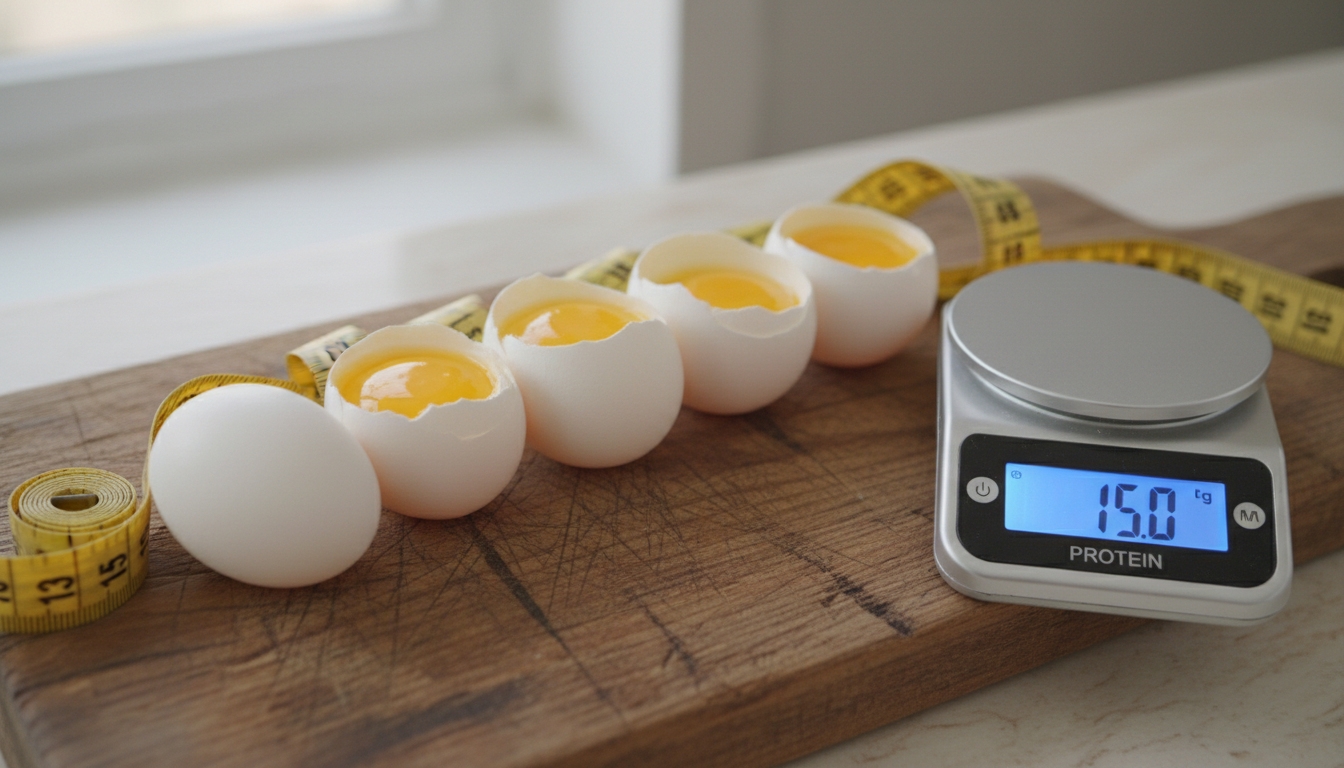
You can nail down boiled‑egg calories and protein in seconds by using size‑based averages—about 78 kcal and 6 g protein for a large egg. Dropping the yolk cuts calories to ~17 kcal, while a medium egg is around 68 kcal and 5 g protein. Roughly 1.5 kcal and 0.12 g protein per gram let you scale any size or batch, and a kitchen scale makes it exact. Keep these quick tips handy, and you’ll discover even more ways to track your egg nutrition.
How Many Calories Are in a Boiled Egg?
Ever wondered exactly how many calories a boiled egg packs? You’ll find that a large boiled egg—about 50 g—contains roughly 78 kcal. The yolk holds most of the energy, while the white adds a modest amount. If you drop the yolk, the calorie count falls to about 17 kcal; keep the yolk, and you’re at roughly 61 kcal.
Size matters: a medium egg (44 g) provides around 68 kcal, and an extra‑large (63 g) pushes close to 90 kcal.
Cooking method doesn’t change the calorie content unless you add butter or oil after boiling. To track intake accurately, weigh your egg and compare it to standard nutrition tables. Remember, these numbers are averages; natural variation can shift the count by a few calories. Use this baseline when planning meals, counting macros, or balancing daily energy needs.
How Much Protein Does a Boiled Egg Actually Give You?
A boiled egg’s calorie count is just the start; the real benefit lies in its protein. You get roughly 6 grams of high‑quality protein from a large boiled egg, which translates to about 12 % of the daily value for an average adult. This protein is complete, meaning it contains all nine essential amino acids your body can’t produce on its own. Because the egg is cooked, the protein is more digestible than in raw form, so you actually absorb a higher percentage. If you’re tracking macros, counting that 6 g helps you hit targets without adding many calories.
- One large egg → ~6 g protein
- Medium egg → ~5 g protein
- Small egg → ~4 g protein
- Extra‑large/jumbo → 7–8 g protein
Use these numbers to plan meals, balance snacks, or boost post‑workout recovery.
How Does Boiled‑Egg Size Change Calorie Count?
Wondering how an egg’s size influences its calorie count? The larger the boiled egg, the more calories it packs, because calories track directly to the amount of protein and fat inside. A small egg (≈38 g) delivers roughly 55 kcal, a medium (≈44 g) about 66 kcal, a large (≈50 g) around 78 kcal, and an extra‑large (≈56 g) hits close to 90 kcal. The difference isn’t mysterious; each gram of egg adds about 1.5 kcal, composed of about 0.1 g protein and 0.1 g fat.
When you’re counting intake, just weigh the egg or refer to its size label, then multiply the gram weight by 1.5 kcal/g. This quick math lets you adjust portions on the fly—whether you’re aiming for a low‑calorie snack or a protein‑rich boost. Remember, the shell adds no calories, so focus on the edible portion for accurate tracking.
How to Calculate Boiled‑Egg Calories and Protein for Multiple Eggs?
Knowing the size‑to‑calorie relationship lets you scale up easily: just multiply the per‑egg values by the number of eggs you plan to eat. First, pick the size category—small, medium, large, or extra‑large—and note its average calories and protein. Then, decide how many eggs you’ll consume. Multiply the per‑egg calories and protein by that count, and you have the total nutritional load. Keep a simple spreadsheet or note on your phone for quick reference, especially when you’re meal‑prepping.
- Use the exact per‑egg values from the label or a reliable database.
- Round to the nearest whole number for easier mental math.
- Adjust for cooking variations (e.g., adding butter adds calories).
- Verify totals against your daily macro goals before eating.
What Are Quick Tips for Tracking Boiled‑Egg Nutrition in Your Diet?
Curious how to keep boiled‑egg nutrition in check without hassle? First, log each egg as a single unit in your food‑tracking app; set a default of 78 kcal and 6 g protein per large egg. If you eat a batch, just tap “+3” (or whatever count) and let the app auto‑calculate totals.
Second, keep a small notebook in the fridge; jot down the date, size (small, medium, large), and any added ingredients like salt or mayo—those extra calories matter.
Third, use a kitchen scale for precise portions when you slice eggs into salads; weigh the whole egg, then apply the per‑gram values (≈1.55 kcal/g, 0.12 g protein/g).
Fourth, batch‑cook and pre‑portion into containers; label each with the number of eggs inside, so you can glance at the label and know the exact macros.
Finally, review your daily summary each evening; adjust portions if you’re over or under your protein goal. This routine keeps tracking quick, accurate, and stress‑free.
Frequently Asked Questions
Can Boiled Eggs Be Eaten Raw Without Losing Nutritional Value?
You can eat raw boiled eggs, but you’ll miss the heat‑induced protein denaturation that makes nutrients more digestible, and you risk bacterial contamination, so the nutritional value isn’t fully realized.
Do Boiled Egg Yolks Contain More Cholesterol Than the Whites?
Yes, the yolk holds most of the cholesterol—about 186 mg per large boiled egg—while the white has virtually none. If you’re watching cholesterol, focus on the whites and limit yolk intake.
How Does the Cooking Method Affect the Vitamin Content of Boiled Eggs?
You’ll find that longer cooking times and higher temperatures degrade heat‑sensitive vitamins like B12 and riboflavin, so steaming or soft‑boiling preserves more nutrients than hard‑boiling for extended periods.
Are There Any Allergens Introduced by Boiling Eggs?
You won’t get new allergens from boiling eggs; the heat doesn’t add proteins, so any reactions you have are from the egg itself, not the cooking method.
Can Boiled Eggs Be Safely Stored at Room Temperature for Extended Periods?
You shouldn’t keep boiled eggs at room temperature for long; they’ll spoil after two hours. If you need them later, refrigerate within that window, and they’ll stay safe for about a week.
Conclusion
Now you’ve got the facts, you can easily fit boiled eggs into your meals without guessing. Remember: a large egg packs about 70‑80 calories and 6‑7 grams of protein, while smaller or extra‑large eggs shift those numbers slightly. Use a simple calculator or a food‑tracking app to tally multiple eggs, and keep an eye on portion size when you’re counting macros. Quick tracking saves time and keeps your diet on point.


No Comments