
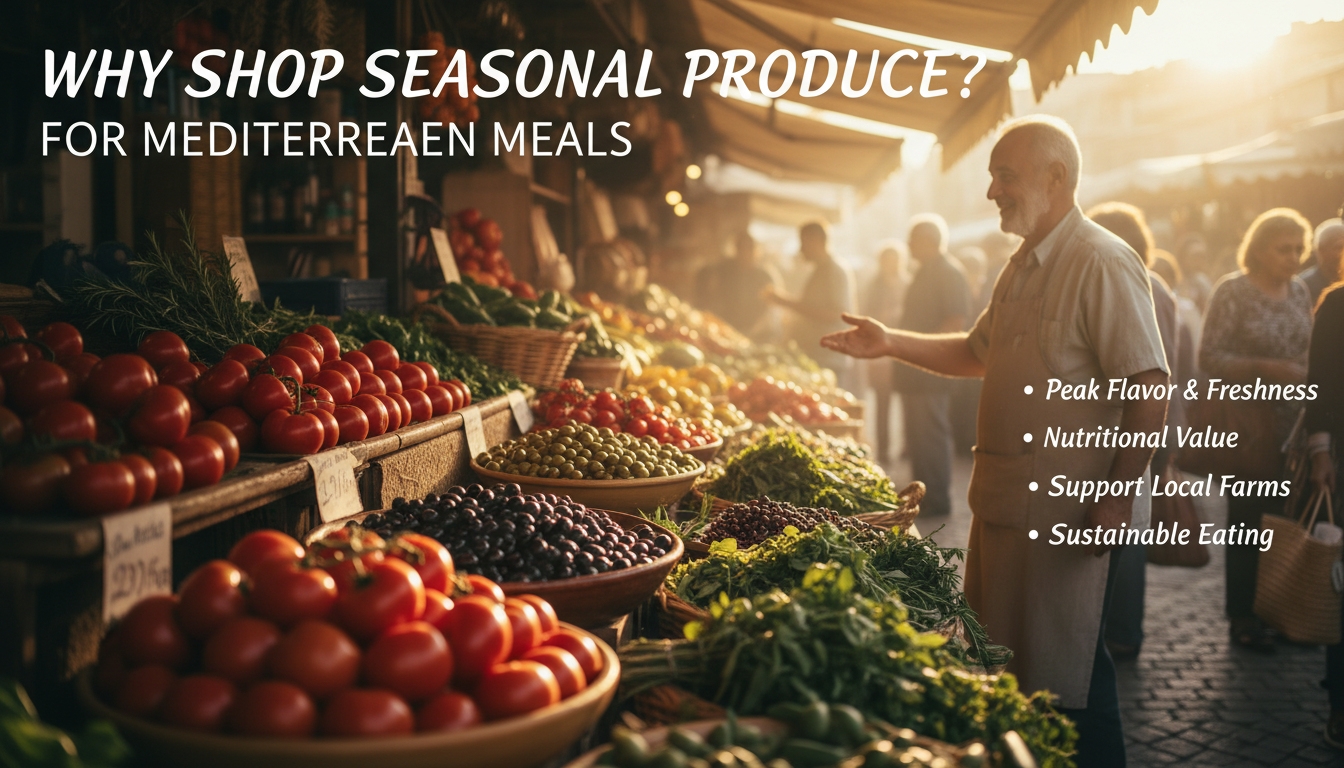
Why Shop Seasonal Produce for Mediterranean Meals?
You’ll taste the difference because seasonal Mediterranean produce ripens in its native climate, soaking up full sunlight, minerals and rain, so it reaches peak maturity with firm, juicy texture and natural flavor—no artificial ripening agents. The shorter journey preserves nutrients, and herbs like rosemary and oregano release stronger oils when harvested at their height. This means brighter, more vibrant meals, and if you keep going you’ll discover how to shop, store, and pair these foods for maximum flavor.
What Makes Seasonal Mediterranean Produce Taste Better?
Why does seasonal Mediterranean produce taste so vibrant? You’ll notice the difference the moment you bite into a sun‑kissed tomato or a crisp bell pepper.
When crops ripen in their native climate, they absorb the full spectrum of sunlight, soil minerals, and rainfall, which amplifies sugars, acids, and aromatic compounds. You also avoid the stress of premature harvesting; the fruit reaches peak maturity, so its texture stays firm yet juicy.
Because growers don’t need to rely on artificial ripening agents, the natural balance of flavors remains intact. You’ll find that herbs like rosemary and oregano release stronger essential oils when harvested at their height, enhancing any dish you prepare.
Moreover, seasonal produce often travels shorter distances, preserving freshness and reducing nutrient loss. By choosing what’s in season, you’re tapping into a richer, more authentic Mediterranean palate.
Summer Picks: Tomatoes, Zucchini & Basil
You’ll notice the fresh tomato flavor brightens every Mediterranean dish you make.
Pairing zucchini with basil creates a harmonious balance that elevates simple recipes.
Let these summer picks become the core of your flavorful meals.
Fresh Tomato Flavor
Ever wondered how a single bite of sun‑kissed tomato can transform a simple summer dish? You’ll notice its bright acidity, sweet‑tart balance, and juicy texture instantly lift a salad, bruschetta, or pasta.
When tomatoes ripen under Mediterranean sun, their sugars concentrate while the skin thins, giving you a mellow, rich flavor that doesn’t need excess seasoning. Slice them raw for a crisp bite, or roast them briefly to deepen their umami and caramel notes.
Pair the fruit with a drizzle of extra‑virgin olive oil, a pinch of sea salt, and a splash of lemon juice to amplify its natural brightness. By choosing tomatoes at peak season, you capture peak nutrition—vitamin C, lycopene, and antioxidants—while keeping your Mediterranean meals light, vibrant, and unforgettable.
Zucchini‑Basil Harmony
How does the bright, grassy bite of fresh zucchini mingle with fragrant basil and sun‑ripened tomatoes? You’ll find that the crisp, mild flesh of zucchini balances the sweet acidity of tomatoes while basil adds a peppery, aromatic lift.
Slice zucchini thin, toss with halved tomatoes, drizzle olive oil, and sprinkle chopped basil; the heat of a quick sauté or grill intensifies the flavors without overwhelming them.
This trio creates a harmonious base for salads, pastas, or grain bowls, letting each ingredient shine yet work together.
Quick Summer Mediterranean Recipes Using Those Veggies
Craving fresh, sun‑kissed flavors? Toss sliced zucchini, cherry tomatoes, and sweet corn into a hot skillet with olive oil, garlic, and a pinch of sea salt. Stir until veggies soften, then finish with a splash of lemon juice and a handful of chopped basil. Serve over couscous for a light lunch.
Next, whisk together feta, cucumber, red onion, and a drizzle of red‑wine vinegar. Add a spoonful of olive‑oil‑marinated artichoke hearts and a sprinkle of oregano. Mix in cooked quinoa and let the flavors meld while you prep a simple grilled salmon fillet. The salad’s crispness balances the fish’s richness.
Finally, blend roasted red peppers, toasted pine nuts, and a dash of smoked paprika into a creamy dip. Spread it on whole‑grain pita and top with sliced olives, sun‑dried tomatoes, and a few arugula leaves. These quick, vibrant dishes let you enjoy summer’s bounty in minutes.
Autumn Harvest: Eggplant, Bell Peppers & Kale
You’ll love how autumn eggplant adds a silky texture and mild sweetness to Mediterranean dishes while keeping calories low.
Pair it with kale, which packs a powerful nutrient boost of vitamins A, C, and K, and you get a hearty, antioxidant‑rich base.
Toss both with bell peppers for color, crunch, and extra vitamin C, and you’ve got a vibrant, health‑forward plate ready in minutes.
Autumn Eggplant Benefits
Ever wondered why autumn eggplant shines on the Mediterranean table? You’ll love its buttery texture, which softens quickly in olive‑oil sauté, letting you build silky sauces without heavy cream. Its deep‑purple skin packs antioxidants like nasacin and chlorogenic acid, protecting cells from oxidative stress while adding a subtle earthy flavor. Because the fruit ripens in cooler months, the sugar‑acid balance peaks, giving a naturally sweet bite that balances salty feta or briny olives. You can grill slices for smoky moussaka, roast cubes for a rustic ratatouille, or blend it into a velvety baba ganoush that pairs perfectly with crusty pita. Plus, the high fiber content supports digestion, making each Mediterranean meal both satisfying and health‑forward.
Kale Nutrient Boost
Often overlooked, kale delivers a powerhouse of nutrients that perfectly complements the autumn trio of eggplant and bell peppers. You’ll find vitamin K, vitamin C, and A in generous amounts, supporting bone health and immune function while you sauté or grill. Its leafy texture soaks up olive‑oil‑based sauces, letting you enjoy antioxidants like lutein and zeaxanthin without bitterness.
When you toss kale with roasted eggplant and sweet bell peppers, the iron and calcium become more bioavailable thanks to the vitamin C from the peppers.
A quick pinch of sea salt and a drizzle of lemon juice finish the dish, making it a nutrient‑dense, Mediterranean‑inspired meal that fuels you through cooler evenings.
Winter Gems: Citrus, Brussels Sprouts & Spinach
What makes winter’s bounty so inviting? You’ll find bright citrus, crisp Brussels sprouts, and tender spinach, each at peak flavor and nutrition. The season’s oranges and lemons burst with vitamin C, adding a zing to Mediterranean salads, sauces, and marinades. Slice a grapefruit for a refreshing breakfast or zest a lemon into a garlic‑olive‑oil dressing for grilled fish.
Brussels sprouts, when roasted with olive oil and a pinch of sea salt, develop a caramelized crunch that pairs perfectly with chickpeas or feta.
Spinach, harvested young, stays vivid green and buttery; toss it into a quick sauté with garlic, then finish with pine nuts and a splash of sherry vinegar for a vibrant side.
These winter gems not only enrich your dishes with color and texture but also boost immunity and support heart health, making them essential staples for any Mediterranean‑inspired table.
Mediterranean‑Market Shopping Tips for Fresh Seasonal Produce
After enjoying citrus, Brussels sprouts, and spinach, you’ll want to know how to source them at their best. First, visit the local farmers’ market early on Saturday; vendors bring the day’s harvest, so you’ll see the crispest, most vibrant produce. Look for bright orange lemons, deep‑green sprouts, and dark, glossy spinach leaves—these signs mean freshness. Ask the farmer when the batch was picked; a recent harvest guarantees peak flavor and nutrients. Bring reusable bags and a small basket to keep delicate items from bruising. If a stall offers a “pick‑your‑own” option, select the firmest specimens and avoid any that feel limp or have blemishes. Compare prices across stalls, but remember that quality often justifies a modest premium. Finally, trust your senses: a fresh citrus scent, crisp snap from sprouts, and a slight peppery aroma from spinach signal you’ve found the perfect Mediterranean ingredients.
How to Store Seasonal Mediterranean Veggies Year‑Round
Ever wonder how to keep Mediterranean vegetables fresh all year? You can extend harvest flavor and texture by mastering a few storage tricks. First, sort veggies by moisture level; leafy greens need high humidity, while root crops thrive in a dry environment. Second, use airtight containers or reusable silicone bags to lock in freshness and prevent wilting. Third, blanch and freeze delicate items like zucchini or eggplant to preserve color and nutrients. Finally, label everything with dates so you rotate stock and avoid waste.
- High‑humidity crisper for tomatoes, peppers, and herbs
- Dry, dark pantry for onions, garlic, and carrots
- Blanch‑then‑freeze method for squash, eggplant, and beans
- Label & rotate to track freshness and minimize spoilage
Pair Seasonal Mediterranean Greens With Classic Proteins
Keeping your Mediterranean veggies fresh all year sets the stage for perfect pairings with classic proteins. When you toss baby spinach, arugula, or kale into a salad, add grilled lamb chops, seared sea bass, or roasted chicken thighs for a balanced meal. The peppery bite of arugula brightens the richness of lamb, while tender kale holds up to the buttery texture of sea bass. Pair wilted Swiss chard with a poached egg and a drizzle of olive oil for a quick brunch, or mix romaine with sliced prosciutto and shaved Parmesan for a light dinner. Use citrus‑marinated shrimp to complement bitter dandelion greens, and sprinkle feta over warm beet leaves for a salty‑sweet contrast. The key is matching the green’s texture and flavor intensity with a protein that either amplifies or tempers it, creating harmony on the plate without overcomplicating the dish.
Frequently Asked Questions
What Are the Nutritional Differences Between Seasonal and Non‑Seasonal Mediterranean Produce?
You’ll find seasonal Mediterranean produce richer in vitamins, antioxidants, and fiber, while non‑seasonal options often lose nutrients during transport and storage, making them less flavorful and slightly lower in health‑boosting compounds.
How Does Climate Change Affect the Availability of Traditional Mediterranean Crops?
You’ll see traditional Mediterranean crops shrinking as hotter, drier summers and erratic rains stress vines, olives, and figs, forcing farmers to switch varieties, reduce yields, and sometimes replace them with heat‑tolerant alternatives.
Can I Grow Mediterranean Vegetables at Home in Non‑Mediterranean Climates?
Yes, you can grow Mediterranean vegetables at home in non‑Mediterranean climates by selecting hardy varieties, using containers or raised beds, providing ample sunlight, and adjusting watering and soil conditions to mimic their native environment.
Are There Specific Certifications to Look for When Buying Sustainable Mediterranean Produce?
You should look for certifications like USDA Organic, EU Organic, Fair Trade, Rainforest Alliance, and MSC for seafood; these labels confirm sustainable farming practices, reduced chemical use, and ethical sourcing of Mediterranean produce.
How Do Price Fluctuations of Seasonal Mediterranean Produce Impact Household Budgeting?
You’ll see prices dip when crops peak, letting you stretch your grocery budget, but spikes during off‑season or bad weather force you to allocate extra funds or swap for cheaper alternatives.
Conclusion
By choosing seasonal Mediterranean produce, you’ll enjoy brighter flavors, better nutrition, and lower prices—all while supporting local growers. Fresh, in‑season veggies like summer tomatoes, autumn eggplant, and winter citrus bring authentic taste to every dish. Keep them crisp with proper storage, pair them with classic proteins, and let the market’s bounty guide your cooking. Embrace the seasons, and your Mediterranean meals will always feel vibrant and satisfying.


No Comments