
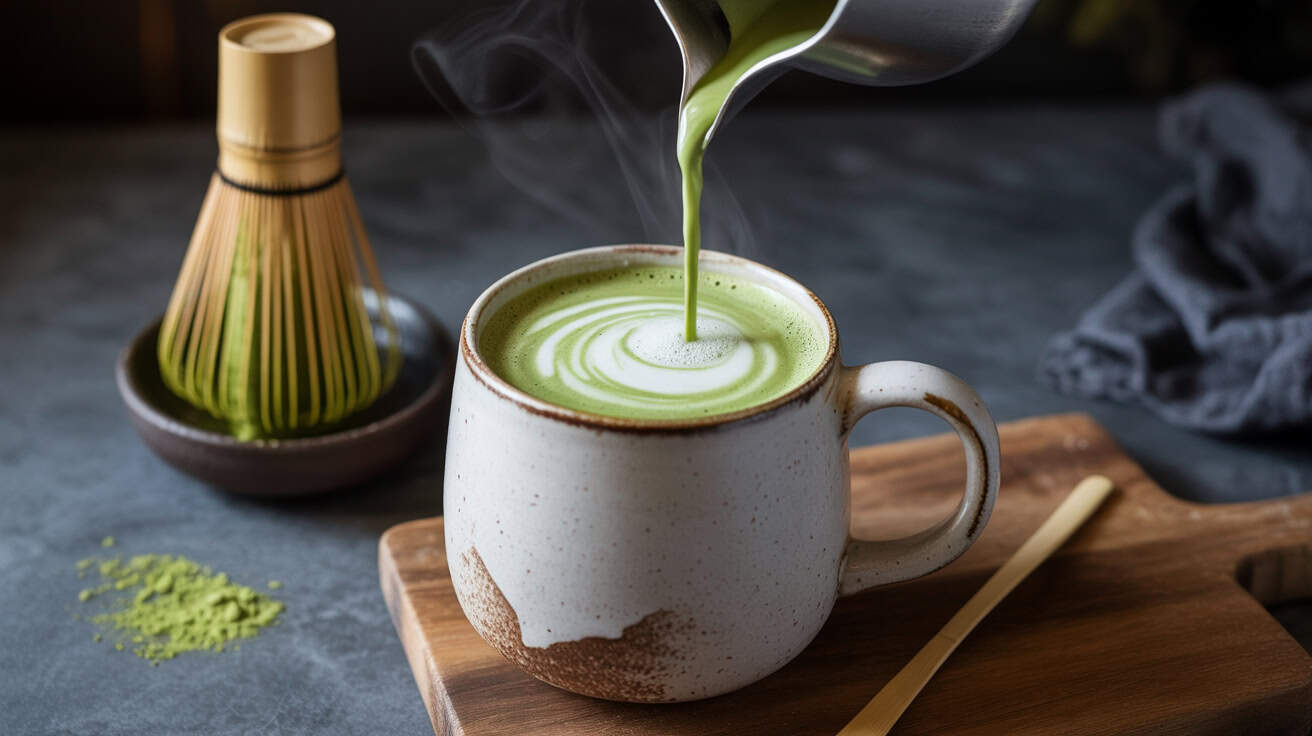
Choose quality culinary or ceremonial matcha and measure about 1.5–2 g (1 teaspoon) per serving. Sift the powder, heat 60–80 ml of water to 70–80°C (158–176°F), then whisk into a smooth paste with a bamboo chasen or electric frother. Warm and froth 180–240 ml milk (or barista oat milk) until velvety, combine with the matcha paste, sweeten to taste, and pour gently for a silky top. Keep going to learn tips, troubleshooting, and variations.
Table of Contents
Key Takeaways
- Use ceremonial matcha (1–2 g) for sipping or culinary matcha (2–4 g) for a bolder latte, weighed for consistency.
- Sift matcha, then whisk with 60–80 ml water at 70–80°C to make a smooth, clump-free paste.
- Whisk briskly with a bamboo chasen using quick “W” or zigzag motions until a fine, creamy foam forms.
- Heat milk to about 60°C (140°F) and froth with a frother, jar, or French press for stable microfoam.
- Sweeten gradually with honey, maple, or syrup, and reduce the matcha or water temperature to fix bitterness.
Matcha Grades Explained
There are two main matcha grades you should know: ceremonial and culinary. You choose based on purpose.
Ceremonial matcha is for drinking straight; it offers delicate, sweet umami, vivid green color, and an ultra-fine texture. You use one to two grams with cooler water around seventy to eighty degrees Celsius and whisk briskly to a smooth, frothy layer so you taste subtle nuance.
Culinary matcha suits lattes, smoothies, and baking; it’s bolder, slightly bitter, and darker. You’ll use more—two to four grams—because milk and sweeteners mute taste. Expect a coarser grind and less focus on terroir; it stands up to heat and added ingredients.
Decide whether you want a pure ceremonial sip or a robust blended latte, and match the grade to your preparation for balanced, bright results.
If you’re unsure, start with culinary for lattes, then upgrade to ceremonial when you want cleaner, more nuanced flavor daily.
Essential Tools and Ingredients
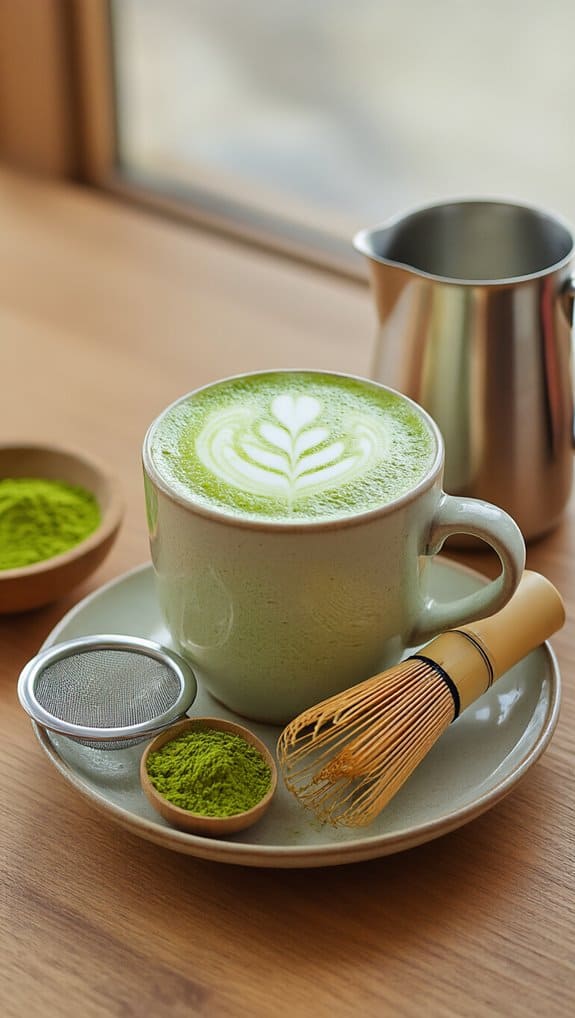
Start by choosing high-quality matcha powder—ceremonial or culinary grade, depending on how vibrant and smooth you want the flavor.
You’ll also need the right tools: a chasen whisk for traditional froth or an electric frother if you want speed and consistent foam.
I’ll show how powder grade affects taste and how to use each whisking method to get a creamy latte.
Matcha Powder Quality
If you want a truly creamy, vibrant matcha latte, choose powder quality first: the best matcha is bright, grassy green, ultrafine, and smells fresh rather than vegetal or hay-like. You’ll decide between ceremonial vs. culinary based on taste and budget: ceremonial is sweeter and delicate; culinary withstands milk and sweeteners. When sourcing matcha, look for recent harvest dates, sealed tins, and origin (Uji, Nishio, Kagoshima). Store it in a cool, dark place. Use the table below to compare quick traits and typical uses.
| Type | Best for |
|---|---|
| Ceremonial | Pure whisked tea, delicate lattes |
| Culinary | Baked goods, robust milk drinks |
Prefer organic options if possible; higher grade often costs more per gram but yields brighter color, smoother texture, and less bitterness—worth the investment. Buy small amounts.
Whisk and Frother
A good matcha latte hinges on the right tools: you’ll use a bamboo whisk (chasen) to break up clumps and create that fine, frothy crema, and a frother or steam wand to texture milk into silky microfoam.
Start by sifting matcha, add a small amount of hot (not boiling) water, then use quick zigzag motions—whisk techniques focus on speed and wrist motion—to form a smooth, airy emulsion.
For milk, choose a frother type that fits your routine: battery handheld for convenience, electric wand for thicker foam, or a steam wand for café-quality microfoam.
Heat milk to about 60–65°C (140–149°F), then incorporate foam gently.
Clean tools immediately to preserve performance and flavor.
Practice a few times and you’ll notice consistency and smoother flavor every time.
How to Measure Matcha
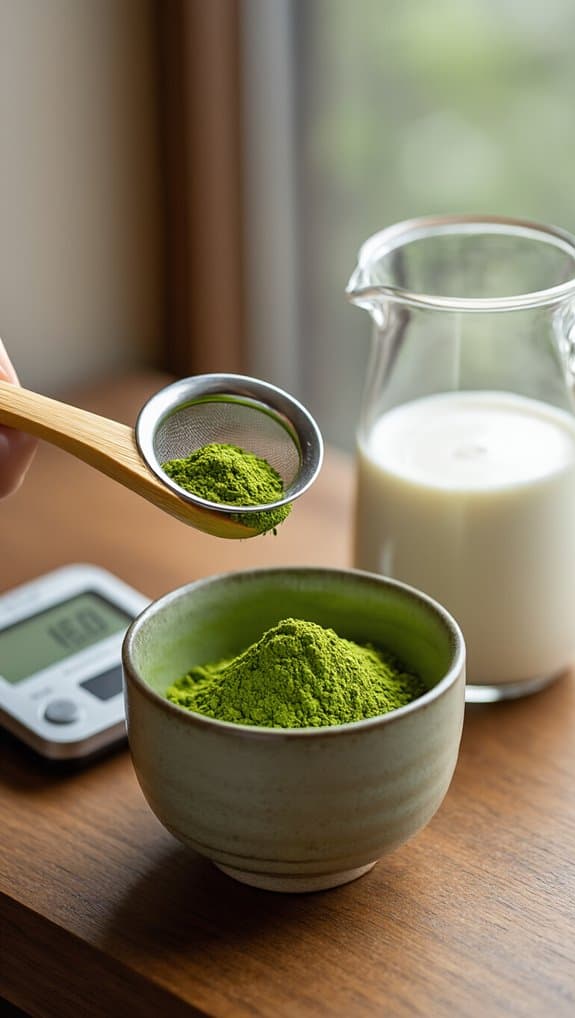
Pick a small, flat teaspoon or a dedicated matcha scoop so you get consistent servings every time.
For precision, weigh your matcha in grams—about 1.5–2 g for a single, 3–4 g for a bolder cup.
Taste and adjust, adding or subtracting roughly 0.5 g until the strength matches your preference.
Choosing the Right Scoop
One chashaku (bamboo scoop) usually holds about 1 gram of matcha, which is ideal for a standard usucha (thin) serving.
When you choose a scoop, consider scoop sizes: some are shallower or wider, so test how many scoops match your taste. For a creamier latte, add an extra half to one scoop; for a lighter cup, stick with a single scoop.
Use consistent measuring tools—bamboo chashaku, metal spoon, or plastic scoop—so your results repeat. Level each scoop by tapping or brushing off excess rather than packing, and transfer matcha directly into your bowl or frother to avoid waste.
Label your preferred scoop for future brews and note the number of scoops you liked. Adjust gradually until you find your ideal balance of flavor profile.
Weighing by Grams
Because precision matters, use a digital kitchen scale that reads to at least 0.1 g (0.01 g if you want extreme accuracy) and tare it with the container before you add matcha.
Place your scoop or small bowl on the scale, reset to zero, then spoon matcha until you reach your target weight. For a single latte, you’ll typically aim for 1.5–2.0 grams; for a stronger crema, use up to 3 grams.
Record gram measurements for consistency, and rinse the scoop between batches to avoid packing. Practice precision scaling to reproduce results every time: small variances change texture and mouthfeel.
When you finish, clean and store the scale and matcha in an airtight tin away from light and moisture. Weighing ensures repeatable, reliable lattes.
Adjusting for Flavor Strength
You’ve learned to use a scale, and now you’ll use measured doses to control taste: aim for 1.5–2.0 g for a balanced latte, 2.5–3.0 g for a noticeably bolder cup, and adjust in 0.25–0.5 g increments until it suits you.
Start with the lower dose if you’re sensitive to matcha’s vegetal notes and increase while tasting. Track grams per serving so you can repeat results.
If the cup tastes flat, add a touch more matcha; if it’s harsh, reduce the amount and focus on the whisking technique. Consider adjusting sweetness separately rather than overloading matcha to hide flavor.
Balance bitterness with milk temperature and foam density for mouthfeel.
- Weigh precisely every time
- Increase in small steps
- Taste between adjustments
- Record your preferred dose
Water Temperature and Ratio
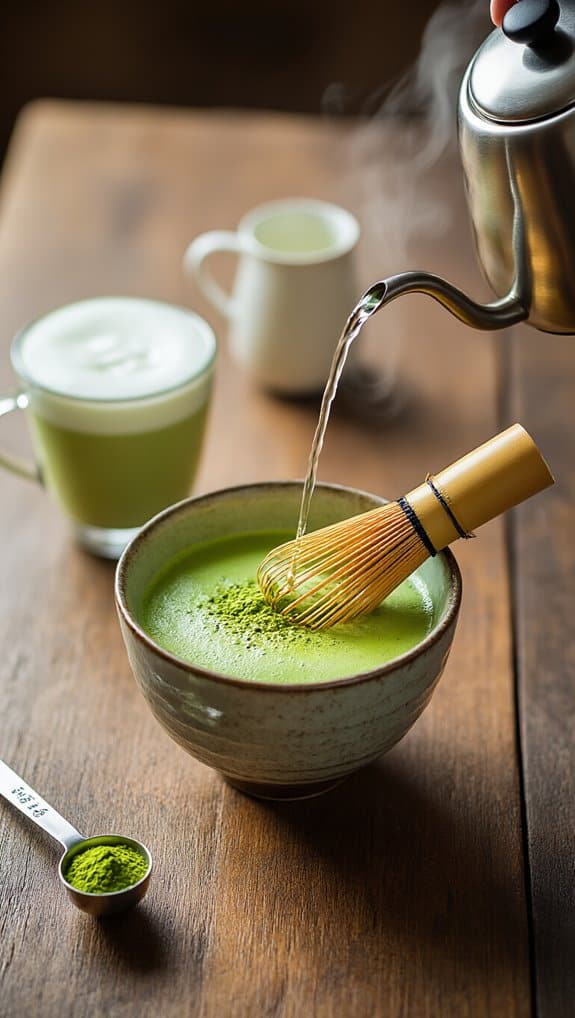
If you want a smooth, non-bitter matcha, heat water to about 175°F (80°C) — not boiling — and use roughly 1 teaspoon (about 2 g) of matcha with 2 ounces (60 ml) of hot water to make the concentrated paste you’ll whisk.
Use filtered or spring water; water quality affects flavor and bloom. Measure precisely, because small changes change strength quickly.
For a standard creamy latte, combine that paste with 6–8 ounces (180–240 ml) of heated milk or milk alternative.
If you prefer stronger or lighter drinks, adjust matcha by ¼ teaspoon increments and keep the same paste-to-milk ratio.
Let the matcha sit in the hot water for no more than 15 to 30 seconds before finishing—extended brewing time can bring out bitterness.
Cool slightly if your milk is very hot, then combine. Taste and tweak the ratio next time until you hit your ideal balance. Record your adjustments.
Whisking Techniques for a Silky Froth
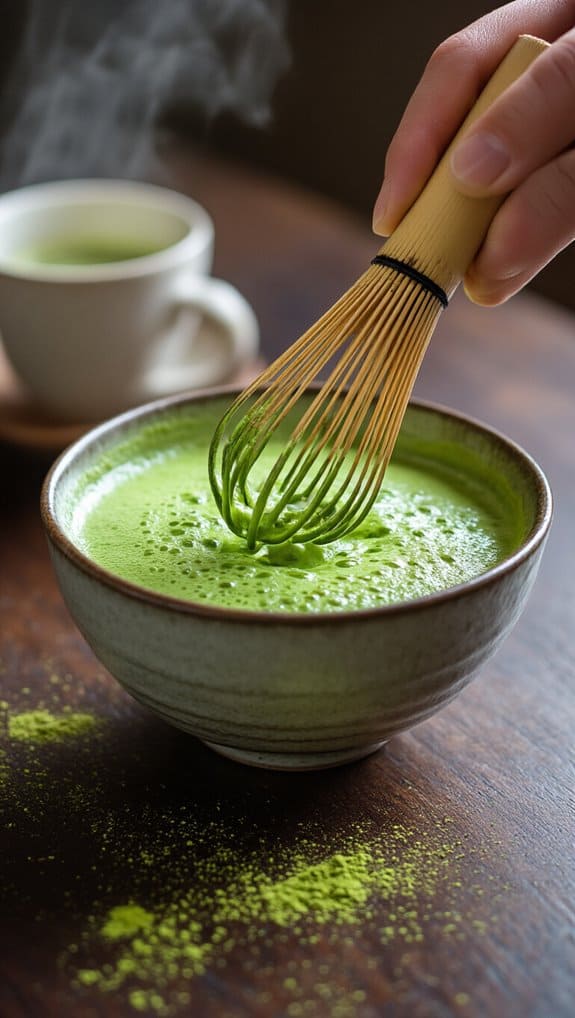
Choose a bamboo chasen for traditional froth or a small electric whisk for convenience, and make sure it’s clean and flexible.
Use about 1–2 grams of matcha to 60–80 ml of water to form a concentrated paste that whisks into creamy foam.
Hold the bowl steady and whisk in quick, light “W” or zigzag motions without splashing, finishing with a gentle circular motion to smooth the crema.
Choosing the Right Whisk
How do you get that smooth, airy froth that makes a matcha latte feel silky? Start by choosing a whisk that fits your routine and tools.
Bamboo whisks are traditional; stainless or silicone options suit electric pitchers. Consider whisk materials and whisk sizes: denser tines make thicker foam, wider crowns handle larger bowls. Use a whisk that matches the bowl diameter and milk volume, and keep motions brisk and controlled.
- Use a fine-tined bamboo whisk for classic, even froth.
- Choose stainless steel for durability with warm milk.
- Pick smaller crowns for single servings.
- Opt for wider crowns for lattes and larger pitchers.
Always rinse and dry the whisk promptly to prolong life and performance.
Replace worn tines and store loosely to avoid mold and maintain shape.
Matcha-To-Water Ratio
1 teaspoon (about 2 g) of matcha to 60 ml (2 oz) of water gives you a balanced usucha base, while 3–4 g to 15–30 ml makes a thick koicha if you want an intense, syrupy concentrate.
Use the lighter blend for lattes and the koicha when you want to stir a rich core into steamed milk. Measure precisely—small changes shift bitterness and texture.
Consider matcha origin: younger leaves yield sweeter, greener notes, older or shaded cultivars give deeper umami, which affects how much water you’ll prefer.
Hot water around 70–80°C (158–176°F) preserves delicate flavors and boosts the health benefits without burning the powder.
Sift your matcha before mixing to prevent clumps and ensure an even, creamy integration into milk.
Taste and adjust accordingly.
Whisking Motion Tips
Once you’ve dissolved the matcha, switch to quick, wrist-driven zigzag motions—think a rapid “M” or “W”—to build a fine, silky froth without big bubbles.
Keep the whisk near the surface, maintain a steady speed, and let tiny air pockets form; you’ll stop once the surface looks like brushed satin. Use short bursts rather than long arm strokes to avoid splatter.
- Keep your wrist loose and responsive.
- Aim for 2–3 inches of headspace under the whisk.
- Pause briefly, then resume to control texture.
- Finish with a gentle circular polish.
These whisking techniques are simple frothing tips that give you consistent crema and a smooth mouthfeel every time.
Repeat practice a few times and you’ll master texture quickly with minimal effort.
Frothing Milk Without a Machine
If you don’t have a frothing machine, you can still create creamy, airy foam with just the right tools and technique. Use a jar with a lid, a French press, or a hand whisk — these simple frothing techniques give consistent results.
Warm milk to about 140°F (60°C); avoid boiling. For a jar, fill to one-third, shake vigorously for 30 to 60 seconds until foam forms. For a French press, pump the plunger up and down for 20 to 30 seconds.
With a whisk, use back-and-forth motions at an angle until microfoam appears. Choose whole or barista oat milk for more stable foam; skim produces large bubbles. Knock any large bubbles by tapping the container, then swirl to integrate foam and milk.
Pour slowly over whisked matcha, hold back foam with a spoon if you want a layered texture. These alternative methods are reliable and require no special equipment.
Sweetening and Flavor Variations
How sweet do you like your matcha? You’ll want to adjust the syrup or sweetener to taste while preserving matcha’s grassy notes. Start with a small amount, taste, then add more.
Choose natural sweeteners like honey, maple, or agave for subtle depth, or use simple syrup for even blending. For richer drinks, try a touch of condensed milk.
Think about flavor infusions to complement matcha without overpowering it. Add a drop of vanilla extract, a pinch of cinnamon, or a few drops of citrus zest oil. For floral notes, steep a tiny basil or mint leaf briefly in warmed milk.
- Start small, taste frequently
- Use natural sweeteners for depth
- Try subtle flavor infusions only
- Don’t mask the tea’s character
Measure carefully, stir thoroughly, and balance sweetness so your latte stays creamy and true to matcha. You’ll get a balanced cup every time you practice daily.
Iced Matcha Latte Method
When making an iced matcha latte, remember that sweetness and flavor behave differently in cold drinks—chilled temperatures mute sweetness and dilute intensity, so you’ll often need a touch more syrup or a concentrated infusion to keep flavors vivid.
Start by sifting one to two teaspoons of matcha into a bowl, add a small amount of hot water (not boiling), and whisk until smooth; this concentrated base compensates for cold dilution.
Fill a glass with ice, pour in cold milk or milk alternative, then add the matcha concentrate over ice to preserve crema and color.
For iced preparation, sweeten with simple syrup or honey syrup so it blends evenly; add syrup to the concentrate if you want uniform sweetness.
Experiment with flavor combinations like vanilla and oat milk, coconut and lime, or almond with a touch of cinnamon.
Stir gently, taste, and adjust syrup or matcha strength before serving immediately.
Troubleshooting Common Problems
Everyone runs into slip-ups with matcha lattes, and you can fix most of them quickly by checking a few key variables.
If your latte tastes bitter, you’re likely using too much powder or water that’s too hot; reduce scoop size, whisk with cooler water, and focus on adjusting sweetness to balance flavor.
If the drink separates, whisk longer or use a blender; a fine sieve helps remove clumps.
For weak flavor, use slightly more matcha and whisk vigorously for a smooth suspension.
If your foam’s thin or large-bubbled, improve foam consistency by using a milk frother, warmer milk, or a pumping technique.
- Bitter taste: less powder, cooler water
- Clumpy matcha: sift first, whisk harder
- Watery cup: increase powder, less dilution
- Poor foam: change frother speed or milk temp
Follow these checks step by step, taste as you go, and tweak only one variable at a time for best results.
Storage and Care for Matcha
After you’ve fixed bitterness, clumps, or weak flavor, keep matcha fresh so those issues don’t return.
Store opened tins in an airtight container, squeeze out air, and seal tightly. Keep matcha storage cool, dry, and dark—avoid heat, sunlight, and humid spots like above the stove.
If you buy bulk powder, portion small amounts into a secondary airtight jar so you expose the main supply less often. Refrigerate only if your container is truly airtight and you’ll use it within a month; condensation risks staling if the seal fails.
For long-term keeping, freeze unopened originals or long-term portions in vacuum-sealed bags, then thaw at room temperature before opening to prevent moisture.
Label containers with open dates and rotate stock by earliest use. When scooping, use a dry, clean utensil and close the tin immediately.
These simple steps lock in matcha freshness and make every latte taste consistent. And vibrant.
Frequently Asked Questions
How Much Caffeine Is in a Typical Matcha Latte?
A typical matcha latte contains about 35–70 mg of caffeine per serving, depending on how much matcha you use.
You’ll estimate caffeine content by weighing scoops: 1 teaspoon (1–2 g) gives about 35 mg; 2 teaspoons about 70 mg.
Lighter ceremonial and stronger culinary matcha varieties influence strength, so adjust portions to control energy and taste.
You can experiment with half or double doses until you find your ideal buzz.
Are There Health Benefits or Risks From Daily Matcha Latte Consumption?
You can get health benefits from daily matcha latte—steady antioxidants, gentle caffeine boost, and improved focus, but you should watch potential risks like excess caffeine, liver strain from high intake, and added sugars from sweetened milk.
Drink moderate portions (about 1 tsp matcha daily), choose unsweetened milk, and avoid late consumption to protect sleep.
If you’re pregnant, have liver issues, or take stimulants, check with your clinician today, please now.
Is Matcha Latte Safe During Pregnancy or Breastfeeding?
Yes, you can often enjoy a matcha latte during pregnancy or while breastfeeding, but you should limit caffeine and choose lower-dose preparations.
For matcha safety, stick to about 200 mg total caffeine daily and use ½ to 1 teaspoon ceremonial-grade matcha per serving.
Follow pregnancy guidelines, monitor how you feel, and avoid added herbal stimulants.
Ask your healthcare provider for personalized advice; they’ll help you balance benefits and risks safely.
What Foods Pair Best With a Creamy Matcha Latte?
You’ll love pairing a creamy matcha latte with delicate pastry pairings like butter croissants, almond financiers, or mochi; they balance its grassy bitterness.
For savory contrast, try avocado toast with sesame or smoked salmon bites.
For light snack suggestions, offer plain yogurt with honey, citrus shortbread, or pistachio biscotti.
Serve slightly warm pastries and chilled bites to highlight texture, and sip slowly to enjoy layered flavors and savor each mouthful.
Can I Use Matcha in Baking or Other Non-Drink Recipes?
Yes, you can use matcha in baking and other non-drink recipes.
For matcha baking, whisk fine ceremonial or culinary-grade matcha into dry ingredients, adjust sugar to balance bitterness, and fold gently to preserve color.
Use in cakes, cookies, muffins, custards, and matcha desserts like panna cotta or ice cream.
Start with 1–2 teaspoons per batch, taste, then you’ll increase.
Store matcha sealed, away from light and heat for best results.
Conclusion
Now that you know matcha grades, tools, measuring, water temperature, whisking, sweetening options, iced method, troubleshooting, and storage, you’re ready to make a creamy matcha latte at home. Start with good ceremonial or culinary matcha, sift and measure precisely, use 175–185°F water, whisk vigorously in an “M” motion for froth, and adjust milk and sweetener to taste. Practice and you’ll get a silky, balanced latte every time. Enjoy the ritual. Share it with friends often.


No Comments