
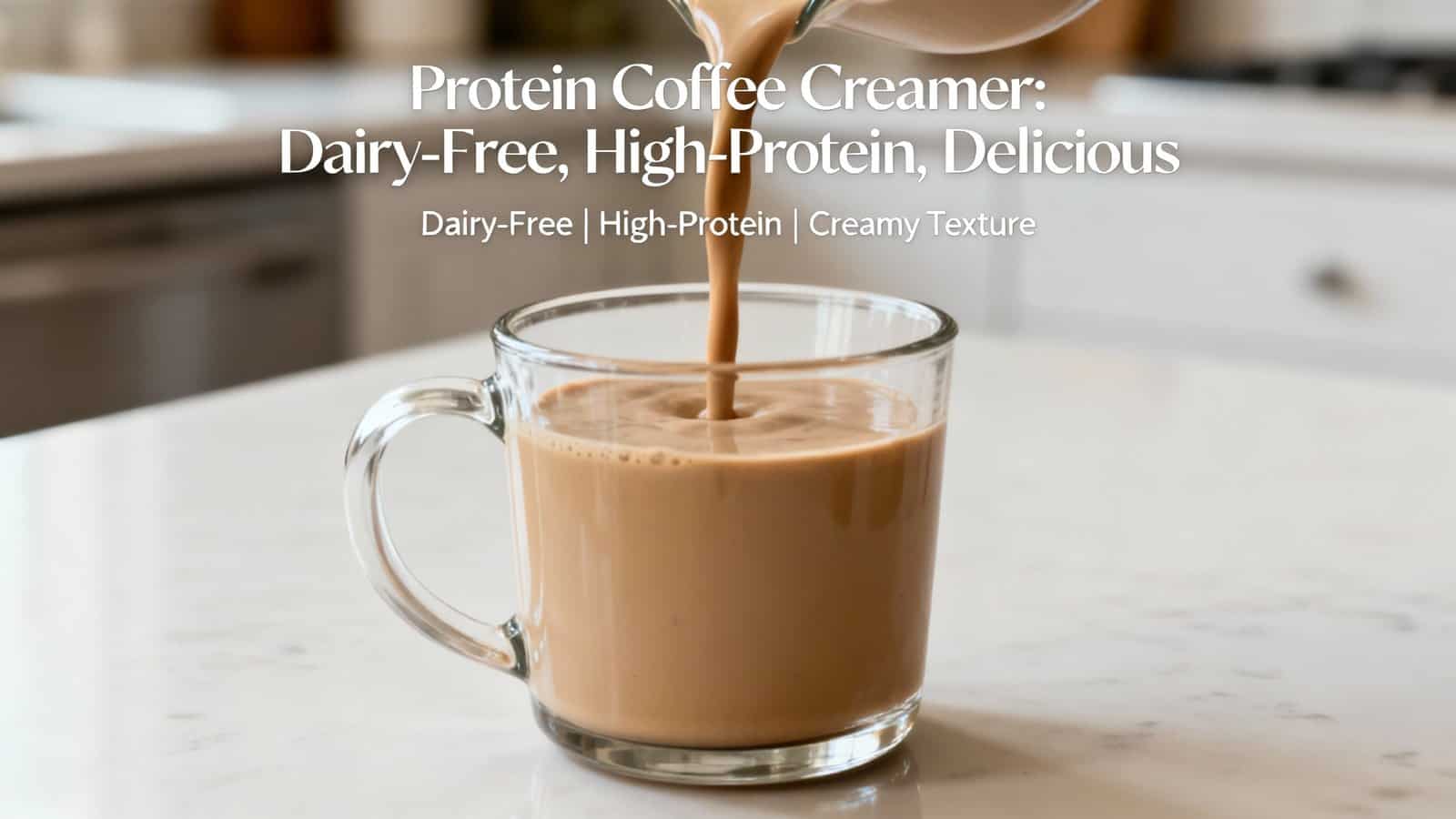
Protein Coffee Creamer Recipe Dairy-Free, High-Protein, Delicious
You’ll create a delicious dairy-free protein coffee creamer by blending unsweetened non-dairy milk with vanilla or unflavored protein powder, MCT oil, and vanilla extract. This homemade creamer delivers 15-20g of quality protein per serving while replacing empty calories with muscle-building nutrients. Simply blend ingredients for 30-60 seconds, store in an airtight container, and refrigerate for up to 7 days. The perfect combination of convenience and nutrition awaits below.
Table of Contents
Key Takeaways
- Blend 1 cup unsweetened non-dairy milk with 2 scoops vanilla protein powder, 1 tablespoon MCT oil, and 1 teaspoon vanilla extract.
- Choose plant-based protein powders like pea, rice, or hemp blends for 15-20 grams protein per serving without dairy.
- Add sunflower lecithin as natural emulsifier to prevent separation and create smooth, creamy texture that mixes perfectly with coffee.
- Store in airtight glass containers refrigerated for 5-7 days; shake well before each use for best consistency.
- Each tablespoon provides 4-6 grams protein with only 20-30 calories, replacing sugary creamers while supporting muscle-building goals.
Essential Ingredients for Your Dairy-Free Protein Coffee Creamer
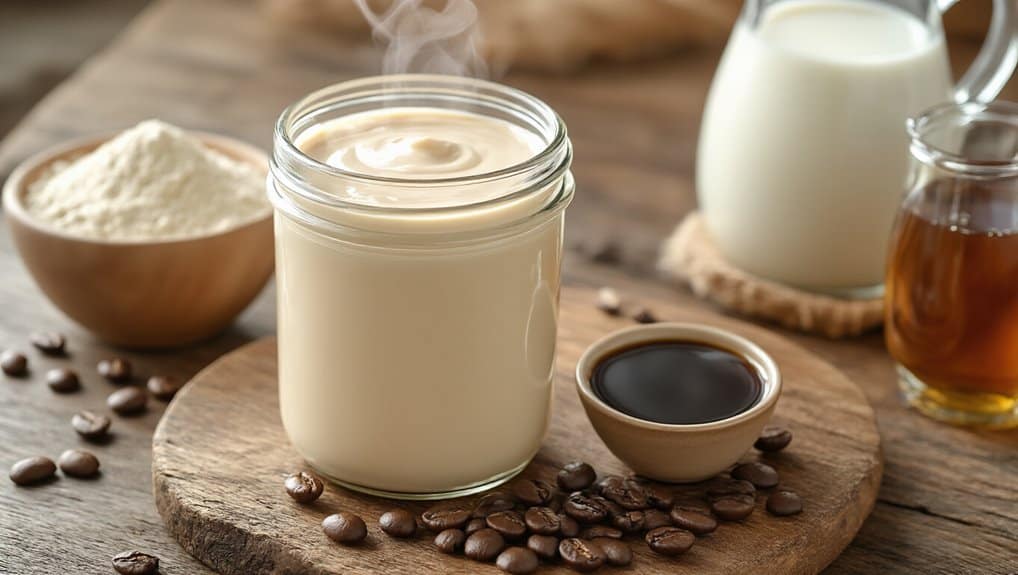
When you’re crafting your own dairy-free protein coffee creamer, you’ll need just a handful of simple ingredients that deliver both nutrition and flavor.
Start with your protein base: vanilla or unflavored plant-based protein powder works best. You’ll need 1-2 scoops per batch, depending on your protein goals.
For the creamy foundation, choose unsweetened coconut milk, almond milk, or oat milk. These provide the smooth texture you’re after without dairy.
Add a plant-based emulsifier like sunflower lecithin to prevent separation and ensure your creamer blends seamlessly into hot coffee.
Natural sweeteners like maple syrup or dates enhance taste without refined sugars.
Include shelf stability enhancers such as vitamin E oil or rosemary extract to extend freshness.
A pinch of sea salt balances flavors, while vanilla extract adds depth.
Optional additions include MCT oil for energy and cinnamon for warmth. These ingredients create a creamer that’s nutritious, delicious, and perfectly mixable.

Step-by-Step Instructions for Making Protein Coffee Creamer
Start by gathering all your ingredients on a clean countertop for easy access during preparation.
Pour one cup of unsweetened non-dairy milk into a blender. Add two scoops of unflavored protein powder and blend on low speed for 15 seconds to prevent clumping.
Next, you’ll add your flavor enhancers. Include one tablespoon of MCT oil for creaminess and a teaspoon of vanilla extract. If you’re using a sweetener, add it now. Blend on high for 30 seconds until the mixture becomes smooth and frothy.
Pour the creamer into an airtight container. The MCT oil improves foam stability when you’re frothing later. Store it in the refrigerator and shake well before each use.
For optimal brewing timing, add the creamer to your coffee immediately after brewing while it’s still hot. This ensures proper mixing and prevents the protein from curdling.
Your homemade creamer stays fresh for up to five days.
Best Protein Powders for Coffee Creamer
Although dozens of protein powder options exist, you’ll want to choose one that dissolves smoothly without altering your coffee’s taste.
Whey isolates rank among the top choices because they’re virtually flavorless and mix seamlessly into hot liquids. They’ll provide complete amino acids while maintaining your coffee’s original flavor profile.
If you’re avoiding dairy, plant blends offer excellent alternatives. Look for combinations of pea, rice, and hemp proteins that complement each other’s amino acid profiles. These dissolve best when you’ve pre-mixed them with your liquid creamer base before adding to coffee.
Vanilla-flavored proteins work universally well, adding subtle sweetness without overwhelming your brew. Unflavored varieties give you complete control over taste.

Avoid casein proteins—they’ll clump in hot coffee and create an unpleasant texture. Similarly, skip cheap protein concentrates that contain fillers and artificial thickeners. They’ll leave grainy residue and chalky aftertaste. Choose fine-milled powders specifically labeled as “instantized” for the smoothest results.
Storage Tips and Shelf Life Guidelines
Because homemade protein coffee creamer lacks commercial preservatives, you’ll need to store it properly to maintain freshness and prevent spoilage. Transfer your creamer immediately into airtight containers after preparation. Glass mason jars or BPA-free plastic bottles work best, as they’ll prevent oxidation and contamination.
Your refrigeration timelines depend on the ingredients you’ve used. Plant-based creamers typically last 5-7 days when refrigerated at 40°F or below. If you’ve added dairy products, consume within 3-4 days. Always shake before use since protein powder can settle at the bottom.
You can’t freeze protein coffee creamer successfully—it’ll separate and develop a grainy texture upon thawing. Instead, make smaller batches more frequently. Label your containers with preparation dates to track freshness. If you notice any off-smell, unusual thickness, or separation that doesn’t mix when shaken, discard the creamer immediately. Store containers toward the back of your refrigerator where temperatures remain most consistent.
Flavor Variations and Mix-In Ideas
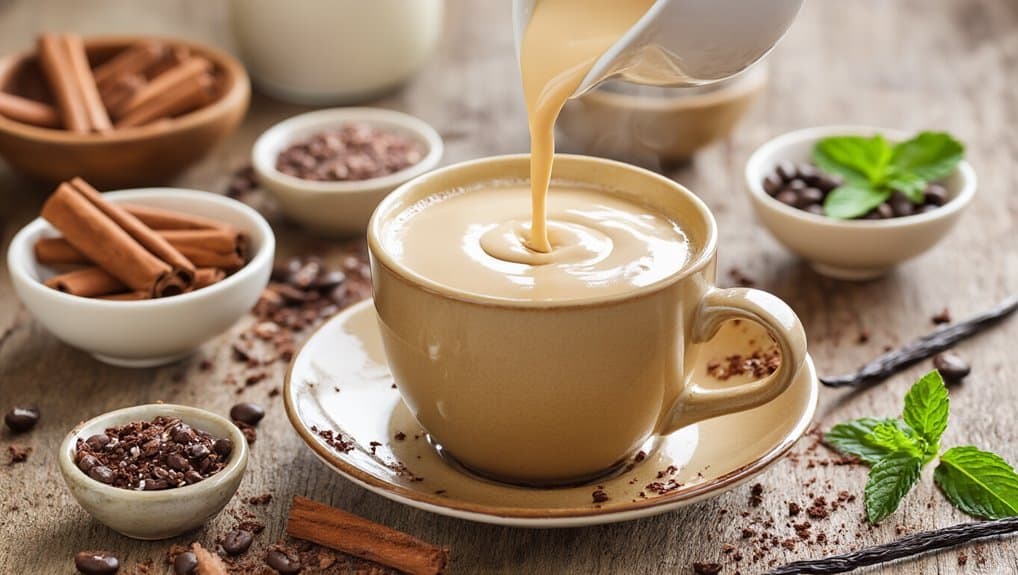
Once you’ve mastered proper storage, you’ll want to experiment with exciting flavors that transform your basic protein creamer into a coffeehouse-worthy treat. Start with seasonal spices like cinnamon, nutmeg, or a pumpkin spice blend. Add a teaspoon directly to your base recipe and adjust to taste.
Create dessert-inspired variations by incorporating cocoa powder for mocha, vanilla extract for crème brûlée, or sugar-free caramel syrup for salted caramel. These additions won’t compromise your protein content while satisfying sweet cravings.
Try fruit infusions using freeze-dried strawberry or raspberry powder. They’ll dissolve completely without adding unwanted moisture that fresh fruits bring.
Nut butters elevate both flavor and nutrition. Blend in a tablespoon of almond, cashew, or peanut butter powder for richness without oil separation. You can also combine flavors—think chocolate-hazelnut or vanilla-almond.
Mix ingredients thoroughly when preparing larger batches, ensuring even distribution throughout your creamer.
Nutritional Benefits and Macro Breakdown
You’ll get 15-20 grams of high-quality protein per serving, depending on your chosen protein powder and recipe ratios. This creamer provides all nine essential amino acids your body can’t produce on its own, supporting muscle recovery and metabolic function.
With roughly 80-120 calories and 2-5 grams of fat per serving, you’re adding substantial nutrition without the empty calories found in traditional creamers.
Protein Content Per Serving
When you add protein powder to your coffee creamer, you’re transforming a simple beverage addition into a nutritional powerhouse that delivers 15-20 grams of protein per serving. You’ll maximize your morning nutrition without sacrificing flavor or convenience.
Your protein sources directly impact the final content:
- Whey protein provides 20-25g per scoop
- Plant-based blends offer 15-20g per scoop
- Collagen peptides contribute 10-15g per scoop
- Casein protein delivers 24g per scoop
The portion size you choose determines your protein intake. Using two tablespoons of creamer with one protein scoop gives you optimal results. If you’re making a batch, calculate 30ml creamer per serving to maintain consistent protein levels. This method ensures you’re getting adequate protein distribution throughout your day while keeping calories controlled.
Essential Amino Acid Profile
Complete protein absorption depends on getting all nine essential amino acids, and protein coffee creamer delivers this full spectrum when you choose quality protein sources.
You’ll maximize your amino scoring by selecting complete proteins like collagen peptides, pea protein blends, or hemp powder. These options provide leucine, isoleucine, and valine for muscle synthesis, plus methionine, tryptophan, and lysine for metabolic functions.
Different protein sources offer varying digestion rates that affect how quickly you’ll absorb these nutrients. Whey alternatives like pea protein digest moderately, giving you sustained amino acid release throughout your morning.
Plant-based blends often combine complementary proteins to achieve optimal profiles. You’re essentially turning your coffee into a muscle-supporting beverage that rivals traditional protein shakes while maintaining that creamy texture you love.
Calorie and Fat Breakdown
While traditional coffee creamers pack 35-50 calories per tablespoon from sugar and unhealthy fats, protein coffee creamer transforms your macro profile with just 20-30 calories, delivering 4-6 grams of quality protein.
You’ll optimize your calorie density by replacing empty calories with muscle-building nutrients that support energy balance throughout your day.
Your smart fat distribution strategy includes:
- MCT oil for rapid morning fuel without saturated fat overload
- Coconut cream providing 2-3g healthy fats per serving
- Zero trans fats disrupting your metabolism
- Perfect fat timing to enhance protein absorption
You’re getting superior portion control since protein naturally increases satiety.
One tablespoon satisfies longer than sugary alternatives that spike insulin.
This macro-friendly creamer fits seamlessly into cutting phases, maintenance diets, or lean bulking protocols without compromising your daily targets.
Troubleshooting Common Texture and Mixing Issues
You’ve mixed up your protein coffee creamer perfectly, but now it’s separating, clumping, or creating an unpleasant foam on top of your coffee. Don’t worry—these issues are fixable with simple adjustments.
For separation solutions, blend your creamer for 30-60 seconds instead of just shaking. Add a pinch of xanthan gum or sunflower lecithin to emulsify the ingredients. If you’re using plant milk, switch to a barista blend version that’s designed to withstand heat without splitting.
Clumping happens when protein powder hits hot liquid directly. Mix your creamer with cold coffee first, then gradually add hot coffee while stirring. For viscosity adjustments, thin out thick creamers with extra liquid or thicken runny ones with coconut cream.
Excessive foam usually means you’ve over-blended or your protein powder contains too much air. Pulse-blend instead of continuous mixing, and let the creamer settle for 30 seconds before adding to coffee.
Serving Suggestions and Coffee Pairing Tips
You’ve mastered the texture, so now it’s time to match your protein creamer with the right coffee and get creative with presentation. Different coffee roasts and brewing methods will complement your creamer’s flavor profile in unique ways, from bold espressos that cut through vanilla sweetness to smooth cold brews that enhance chocolate varieties.
You’ll discover countless ways to elevate your morning routine, whether you’re crafting layered iced lattes or adding a frothy protein boost to your afternoon pick-me-up.
Best Coffee Types
When you’re ready to pair your protein coffee creamer with the perfect brew, certain coffee types enhance both the flavor and nutritional benefits. Cold brew offers a smooth, less acidic base that won’t overpower your creamer’s taste. Single origin beans provide distinct flavor profiles that complement protein additions beautifully.
Consider these optimal coffee choices:
- Medium roast Colombian – Balances chocolate notes with your creamer’s richness
- Light roast Ethiopian – Adds fruity brightness that cuts through protein thickness
- Dark roast Sumatra – Creates bold, earthy depth perfect for morning workouts
- Espresso blend – Delivers concentrated flavor that stands up to creamy texture
You’ll find that stronger coffees work best since protein creamers can dilute weaker brews. Experiment with different roasts to discover your ideal combination.
Creative Serving Ideas
Now that you’ve selected your coffee, let’s explore creative ways to serve and enjoy your protein coffee creamer beyond the standard morning cup.
Transform your afternoon pick-me-up into an iced affogato by pouring espresso mixed with protein creamer over vanilla ice cream. You’ll get extra protein while satisfying your sweet tooth. For evening enjoyment, create a dessert latte using decaf espresso, warm protein creamer, and a sprinkle of cinnamon or cocoa powder.
Try layering cold brew with protein creamer for Instagram-worthy gradient drinks. Blend frozen coffee cubes with your creamer for a frappé-style treat.
You can also use the creamer in overnight oats or chia pudding for coffee-flavored breakfast options. Don’t forget to experiment with different temperatures—your protein creamer works beautifully in both hot and cold preparations.
Frequently Asked Questions
Can I Use This Protein Creamer in Cold Brew or Iced Coffee?
Yes, you’ll love using this protein creamer in cold brew and iced coffee! The cold brew compatibility works perfectly since the creamer blends smoothly without heat.
You won’t experience clumping like some protein powders do in cold liquids. Consider the iced dilution effects, though – you’ll want to use slightly more creamer than usual since ice melts and waters down your drink.
It’ll maintain its creamy texture beautifully.
Is This Recipe Suitable for People With Diabetes or Blood Sugar Concerns?
You’ll find this creamer diabetes-friendly since it’s typically low glycemic and protein-rich, which helps stabilize blood sugar.
You can easily incorporate it into your carb counting routine by checking the specific ingredients’ nutritional values.
Always consider potential medication interactions with any protein supplements you’re using.
Practice portion control by measuring your serving size, as even healthy creamers add calories.
Consult your healthcare provider about incorporating this into your meal plan.
How Many Calories Does One Serving of This Protein Creamer Contain?
You’ll get approximately 35-50 calories per serving, depending on your chosen ingredients. The calorie breakdown typically includes 20-25 calories from protein powder, 10-15 from unsweetened almond milk, and 5-10 from optional flavorings.
Serving variations affect total calories – using coconut milk instead adds 15-20 calories, while vanilla extract contributes virtually none. You can customize portions to fit your needs, doubling ingredients for a creamier texture while proportionally increasing calories.
Can I Make This Recipe Without a Blender or Food Processor?
Yes, you can make this without a blender or food processor! Try the jar shaking method by combining all ingredients in a mason jar with a tight lid and shaking vigorously for 2-3 minutes until smooth.
Alternatively, use the hand whisking technique with a wire whisk, though you’ll need to whisk energetically for about 5 minutes to break down any lumps and achieve a creamy consistency.
Will Heating the Creamer in Coffee Denature the Protein?
Yes, heating will partially denature the protein, but you’ll still get the nutritional benefits. Your coffee’s temperature affects protein stability, though most protein powders have decent thermal resistance.
The amino structure changes when exposed to heat, reducing enzyme activity, but the amino acids remain intact for absorption. You’re essentially breaking down the protein’s 3D shape while preserving its nutritional value. Don’t worry – denatured protein still provides the same muscle-building benefits.
Conclusion
You’ve now got everything you need to create your own dairy-free protein coffee creamer that’ll transform your morning routine. Whether you’re choosing vanilla, chocolate, or experimenting with unique flavors, you’ll enjoy a nutritious boost with every sip. Remember to store it properly, shake well before using, and don’t be afraid to adjust the recipe to match your taste preferences. Your coffee game just got a serious protein-packed upgrade that’s both healthy and delicious.


No Comments