
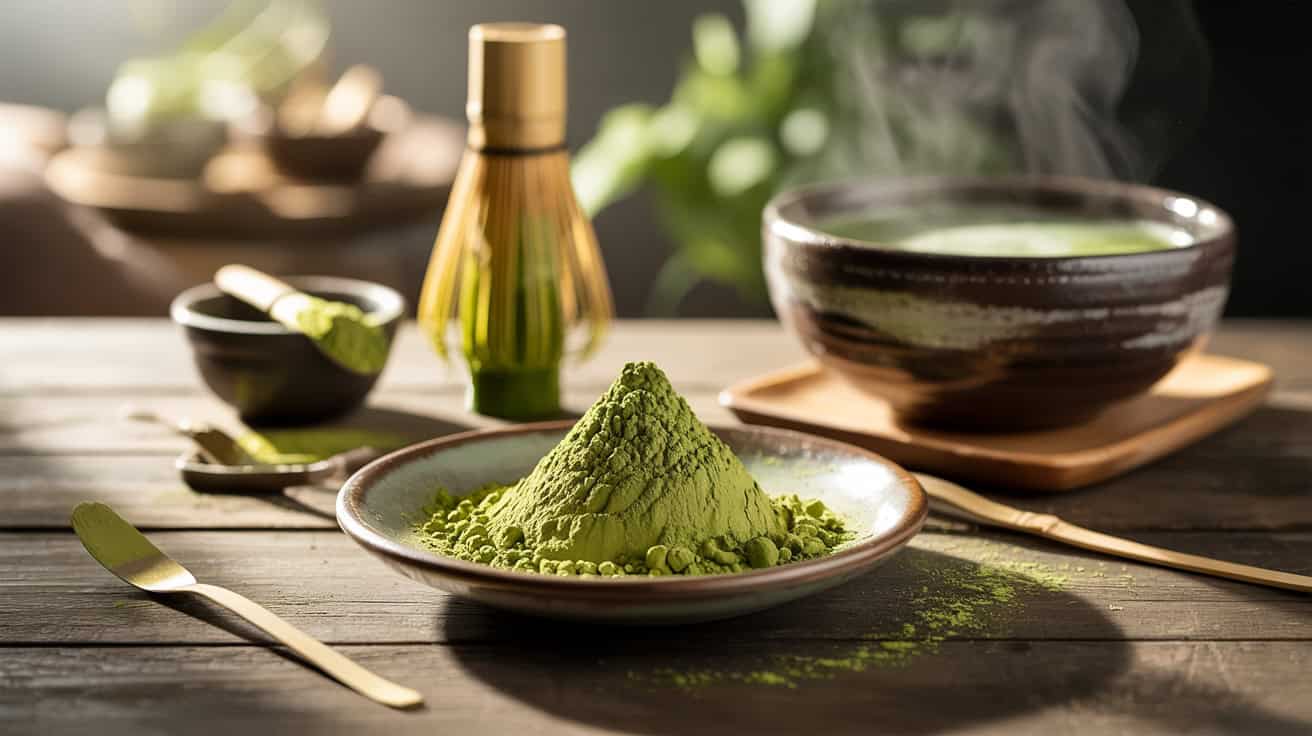
You’ll get concentrated antioxidants, a calm focused lift from caffeine plus L‑theanine, and culinary uses with matcha powder. It’s made from shade‑grown tea leaves ground into fine powder so you consume the leaf. Studies link it to improved attention, modest metabolic boosts, and cardiometabolic markers. Use ceremonial matcha for whisked tea and culinary grades for lattes, baking and sauces. Keep it sealed and cool for best flavor. Keep going to learn recipes and prep tips.
Table of Contents
Key Takeaways
- Matcha is powdered shade-grown green tea rich in catechins, L-theanine, and antioxidants, offering focused energy and cognitive benefits.
- Regular matcha consumption may modestly boost metabolism, support heart health, and reduce LDL cholesterol and blood pressure.
- Use ceremonial grade for whisked tea (usucha/koicha) and culinary grade for lattes, smoothies, baking, and savory dishes.
- For the best flavor, sift matcha, balance the sweetness in recipes, and pair with white chocolate, citrus, or nuts.
- Store matcha airtight, opaque, cool, and dry; discard when aroma turns flat to preserve color and potency.
What Is Matcha and How Is It Made?
Matcha is a finely ground powder made from shade-grown leaves of the Camellia sinensis plant, and you’re consuming the whole leaf rather than an infusion, which concentrates its nutrients and compounds.
You’ll notice that matcha production begins with the selection of a specific cultivar and weeks of shading to increase chlorophyll and amino acids; these controlled steps define matcha origins and influence its flavor and color.
After harvest, leaves are steamed to halt oxidation, destemmed, and stone-ground into a talc-like powder called tencha.
Matcha cultivation requires precise timing, soil care, and careful processing to maintain quality.
When you shop, look for bright green color, fine texture, and origin information—regional practices affect taste and pesticide standards.
Store matcha in airtight, opaque containers in cool conditions to preserve aroma.
If you’re preparing it, whisk with hot (not boiling) water for a frothy emulsion or blend into cold beverages and recipes for consistent results and storage.
Health Benefits Backed by Research
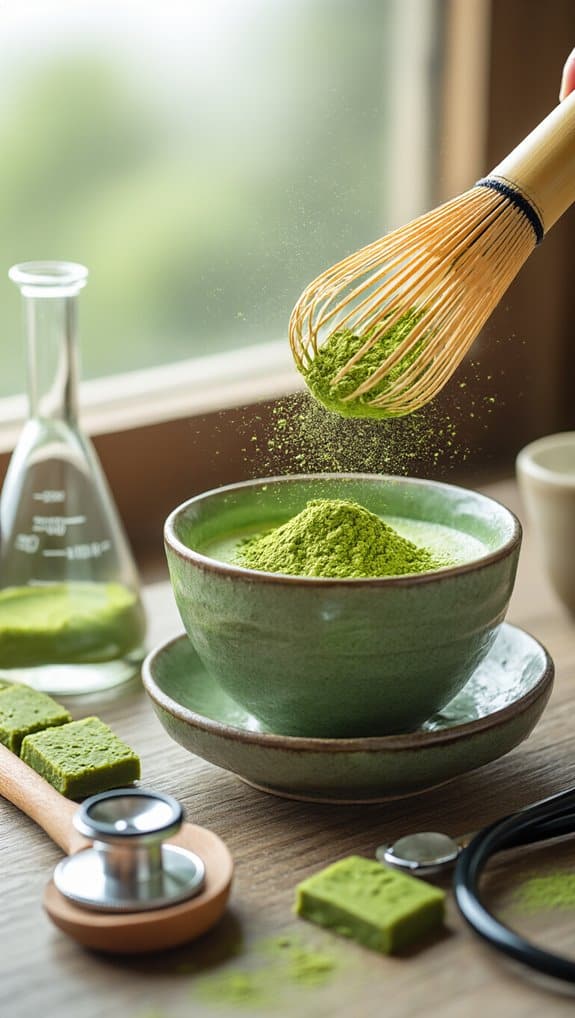
Because you consume the whole leaf, matcha delivers higher concentrations of catechins (especially EGCG), L‑theanine, caffeine, and antioxidants than steeped green tea, and clinical and observational studies link these compounds to measurable benefits: improved attention and cognitive performance, modest increases in calorie burning and fat oxidation that can support weight management, and favorable effects on cardiometabolic markers such as lower LDL cholesterol and systolic blood pressure. You’ll see consistent evidence for antioxidant properties protecting cells from oxidative stress and for modest cognitive enhancement in short-term trials. Focus on quality: ceremonial-grade matcha has higher polyphenols. Incorporate matcha into smoothies, yogurt, or baked goods to reach effective intake without excess calories. Monitor tolerance and lipids if you have cardiovascular risk. Below is a quick evidence-to-action summary.
| Benefit | Evidence | Practical Tip |
|---|---|---|
| Antioxidant properties | EGCG lowers oxidative markers | 1–2 g/day in recipes |
| Cognitive enhancement | Trials show improved attention | Use before focused tasks |
Caffeine, L-Theanine, and Energy Balance
You’re getting a unique combination of stimulating caffeine and calming L-theanine that together shape how matcha affects alertness and energy balance.
Research shows L‑theanine moderates caffeine’s jittery effects, promoting sustained focus rather than spikes and crashes. If you want an immediate energy boost for work or exercise, a single serving of matcha can help while smoothing cognitive arousal.
Still, individual caffeine sensitivity varies; start with smaller doses (half a teaspoon) and note sleep or anxiety changes. For clients managing anxiety, suggest consuming matcha earlier in the day and monitoring heart rate and sleep.
Combine matcha with water or milk to control absorption and reduce peak caffeine concentration. Expect effects within 30–60 minutes and lasting several hours, often with clearer concentration than coffee.
If you have concerns about medications or health conditions, consult a healthcare professional before use. Simple tracking of dose and response will help tailor matcha to your needs.
How to Choose High-Quality Matcha
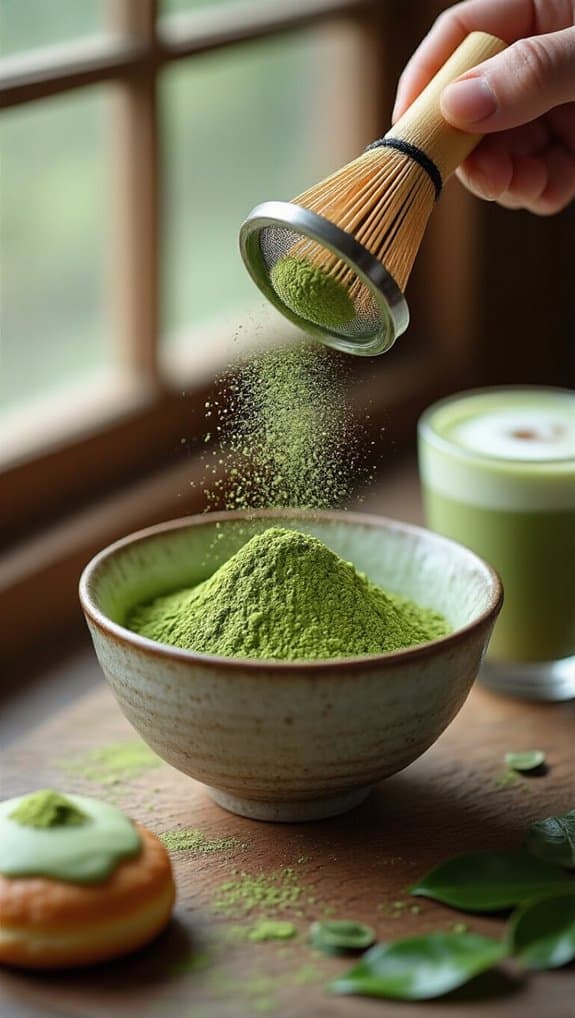
When choosing matcha, you should pick ceremonial grade for straight whisked tea and culinary grade for cooking or lattes.
Look for a vibrant, bright green powder—dull or yellowish hues usually mean lower quality or oxidation.
Smell for a fresh, grassy aroma and taste for a sweet, umami-rich flavor rather than bitterness to confirm quality.
Ceremonial Vs Culinary Grade
Decide what you’ll use matcha for first—ceremonial grade suits straight whisked tea, while culinary grade is made for lattes, baking, and cooking.
Choose ceremonial grade when you want matcha with documented ceremonial characteristics: finely ground leaf, minimal stems, and production focused on tea tradition.
Pick culinary grade when you need robustness for recipes; it’s formulated for culinary applications and holds up to heat and dairy.
Evaluate supplier transparency, origin, and testing for contaminants to ensure quality.
Use small trials: whisk a spoonful or stir into a recipe to judge performance in context.
Practical checklist:
- leaf processing: stone-ground vs coarse
- intended use: tea vs recipes
- supplier lab reports: pesticides, heavy metals
- portion size: single-serve vs bulk
Make choices based on needs.
Color, Aroma, Flavor
Although color alone doesn’t tell the whole story, bright, vivid emerald-green powder is your first clear indicator of high-quality matcha—it signals good shading, young leaves, and higher chlorophyll and amino acids.
You should also assess color variations: paler or yellow-tinged powders often mean older leaves or inferior processing.
Smell the powder; clean, fresh grassy-sweet notes and subtle umami indicate careful cultivation. Avoid stale or overly vegetal aromas.
Taste to confirm: a smooth, slightly sweet, umami-forward flavor with minimal bitterness points to high-grade ceremonial matcha; stronger astringency suits culinary uses.
Store matcha airtight, cold, and dark to preserve aroma profiles and color.
Use small samples to compare batches so you can select matcha that matches your preparation and palate, and delivers consistent quality every time.
Traditional Preparation: Usucha and Koicha
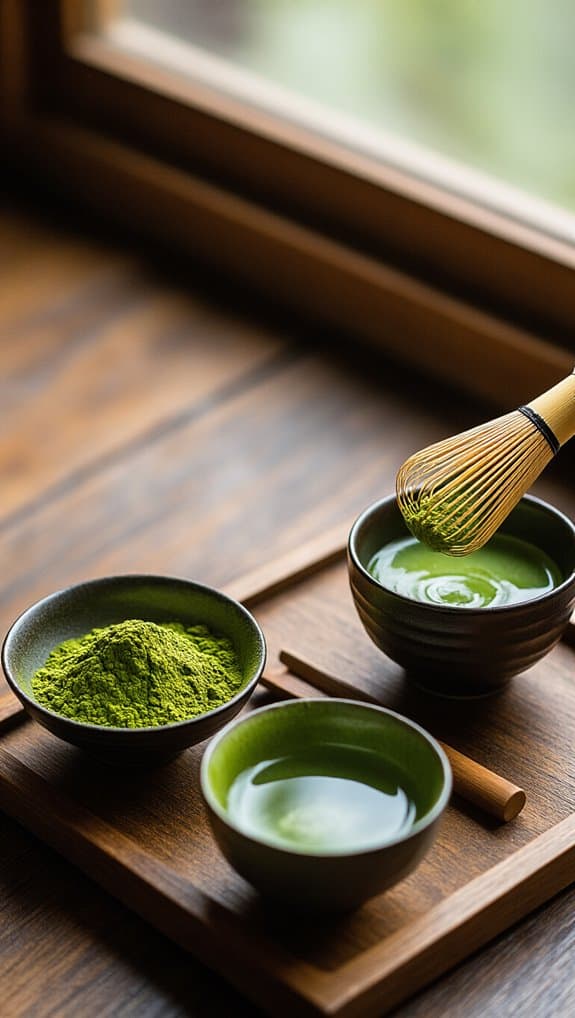
Because concentration and whisking method directly shape flavor and texture, you’ll choose usucha (thin) or koicha (thick) according to ceremony, taste preference, and matcha grade.
For usucha preparation, you’ll use about one to two grams of matcha with sixty to eighty milliliters of hot water at roughly seventy to eighty degrees Celsius, whisking briskly in an M pattern to aerate and create a light foam; this yields a delicate, slightly bitter cup suited to casual service.
By contrast, the koicha technique calls for a higher grade of matcha, roughly three to four grams with twenty to thirty milliliters of water, stirred slowly with a thicker bamboo whisk to form a viscous, umami-rich paste; it’s ideal for formal tea ceremonies.
You’ll select tools and temperatures based on the desired outcome and evidence about flavor extraction.
- Sift matcha
- Warm bowl
- Measure precisely
- Taste, adjust
Follow these steps to match your client’s taste preferences.
Matcha-Based Drinks: Lattes, Smoothies, and More
After mastering usucha and koicha, you can apply the same attention to ratio, temperature, and whisking when crafting lattes, smoothies, and iced drinks. You’ll prioritize quality powder, steady water below eighty degrees Celsius, and a proper froth to maximize L-theanine and caffeine balance. For a matcha latte, use one to two grams of matcha with sixty to eighty milliliters of water, then steamed milk; that ratio preserves flavor without bitterness. When making a smoothie bowl, blend one to two grams of matcha into fruit and yogurt for antioxidant density without overwhelming sweetness. I recommend measuring, tasting, and adjusting to individual caffeine sensitivity and palate. Below is a quick guide to common preparations and serving notes.
| Drink | Tip |
|---|---|
| Matcha Latte | one to two grams, frothed milk |
| Iced Matcha | dissolve in warm water then chill |
| Smoothie Bowl | one to two grams, fruit and yogurt |
| Matcha Shot | concentrated energy, small volume |
Baking and Sweet Recipes Featuring Matcha
You can use matcha to add vibrant color, concentrated flavor, and antioxidants to cakes, cupcakes, cookies, bars, and brownies.
Try swapping a portion of flour or cocoa for culinary matcha and slightly reducing sugar, since research shows catechins are relatively stable at typical baking temperatures.
For finishing, fold matcha into frostings, glazes, or fillings and test small batches to optimize color, bitterness, and texture for your audience.
Matcha Cakes & Cupcakes
While matcha brings concentrated antioxidants (notably EGCG), a vibrant green color, and a delicate umami that complements sweet batters, successful cakes and cupcakes hinge on technique and ingredient choices.
You’ll balance matcha flavor by sifting fine powder, tempering liquid, and adjusting sugar so the vegetal notes stay bright without bitterness. Use quality ceremonial or culinary matcha to control intensity; weigh ingredients for consistency.
Consider pairing matcha with citrus, white chocolate, and toasted nuts to complement the texture and acidity.
- Fluffy sponge with pale green crumb and glossy buttercream.
- Moist loaf cake studded with candied yuzu and almond slivers.
- Mini cupcakes topped with white chocolate ganache and sesame.
- Layered matcha chiffon with light cream and toasted pistachio.
Test bake small batches and log adjustments. Track results.
Cookies, Bars, Brownies
Moving from light cakes to denser sweets, matcha adapts well to cookies, bars, and brownies but asks for different handling to preserve color, texture, and flavor.
When you bake matcha cookies, measure powder precisely and sift to prevent clumping; reduce sugar slightly since matcha adds bitterness.
For chewy matcha bars, prefer brown sugar and slightly underbake to retain moisture; line pans with parchment for easy removal.
In matcha brownies, balance cocoa or chocolate with white chocolate or vanilla to showcase the green hue without masking tea notes.
Use gentle folding, avoid overmixing to keep a tender crumb. Test doneness early; residual heat continues cooking.
These adjustments help you deliver a consistent appearance, stable texture, and pronounced matcha flavor in dense baked goods.
Adjust quantities for altitude only.
Frostings, Glazes, Fillings
Because matcha is heat- and acid-sensitive and delivers a concentrated bitter-green flavor, you’ll need to adjust sweeteners, fats, and handling to keep its color and tea notes front and center.
When making matcha frosting, matcha glaze, matcha filling, or matcha cream, balance is key to preventing dullness and bitterness. Use fine ceremonial or culinary matcha, cool bases, and slightly increase the sugar or cream fat.
Whisk or sift to avoid lumps and dissolve in minimal warm liquid. Test pH with citrus-containing recipes.
For texture and stability, chill, stabilize with powdered sugar or gelatin alternatives, and beat to medium peaks.
- Glossy pale-green matcha glaze coating a tart
- Light, airy matcha cream piped on a cake
- Dense matcha filling between sponge layers
- Smooth, spreadable matcha frosting on cupcakes today
Savory Applications: Noodles, Sauces, and Seasonings
Although matcha’s delicate aromatics and bitter catechins mean you should use it sparingly, it can reliably boost umami, color, and antioxidant content in savory dishes when you apply it correctly.
Use matcha noodles to introduce subtle vegetal notes: replace up to 10% of flour when making noodles or dust cooked strands lightly to avoid clumping.
For matcha sauces, whisk fine powder into warm emulsions—soy, sesame, miso—starting at ¼ teaspoon per cup and adjust to taste; this preserves flavor balance while adding chlorophyll and catechins.
You’ll also use matcha as a dry rub or finishing sprinkle; blend with sea salt, toasted sesame, or citrus zest and apply before serving for maximal aroma.
If you’re pairing proteins, choose mild, fatty fish or tofu to let matcha’s grassy nuances show.
Test small batches, document proportions, and adjust for bitterness; objective tasting and client preferences should guide final dosing for consistent results.
Storage, Shelf Life, and Best Practices
If you want to keep matcha at its peak, control oxygen, light, heat, and moisture: store powder in an airtight, opaque container and keep it in a cool, dark place (or refrigerated for longer storage).
You’ll prolong color and flavor by minimizing exposure; seal immediately after scooping and avoid humidity. For optimal storage, buy small amounts and note the production date—matcha’s shelf life depends on quality and packaging.
- Fresh tin in a dark pantry — daily use.
- Sealed jar in the fridge — weekly to monthly use.
- Vacuum-sealed packs — extended shelf life.
- Small single-serve sachets — travel and tasting.
You should let refrigerated matcha return to room temperature before opening to avoid condensation.
Taste and aroma are reliable indicators: if it smells grassy and bright, it’s fine; if it smells flat or stale, discard.
These practical steps help you preserve potency and enjoy results.
Beginner-Friendly Recipes to Try at Home
Now that you’ve preserved your matcha correctly, you can try a handful of simple, reliable recipes that highlight its flavor and help use small quantities without waste.
Start with a basic whisked bowl: sift 1–2 teaspoons into 60–90 ml hot water (not boiling), whisk briskly in an M motion until frothy; this gives you the purest baseline and consistent caffeine delivery tested in beverage studies.
For breakfast, blend matcha smoothies with a banana, 200 ml plant milk, a handful of spinach, and 1 teaspoon matcha for balanced carbs, fiber, and steady matcha energy.
If you want a snack, fold matcha into yogurt with a drizzle of honey and toasted nuts for protein and satiety.
For baking, substitute 1 tablespoon of flour with 1 teaspoon of matcha in muffins to add antioxidants without overpowering taste.
Measure, taste, and adjust; keep notes to refine portions that suit your palate and tolerance.
Frequently Asked Questions
How Can I Verify Matcha Authenticity Versus Counterfeit Products?
Check origin, lab tests, and vendor transparency to verify authenticity.
You’ll request documentation on matcha sourcing methods and third-party testing, and inspect matcha quality indicators like vibrant green color, fine texture, and sweet-umami aroma.
Smell, taste, and dissolve a sample; counterfeit matcha often tastes bitter and gritty.
Buy from reputable suppliers with clear harvest dates and shading practices.
Keep receipts and compare certificates to ensure traceability and accountability, too.
Are There Sustainability or Fair-Trade Certifications for Matcha Producers?
Yes — you can find certifications for matcha that address sustainable sourcing and fair trade practices.
Look for organic, Rainforest Alliance, Fairtrade International, and UTZ labels; they verify environmental standards, worker rights, and supply-chain transparency.
You’ll request origin details and batch certificates, check producer audits, and prefer brands with traceability and third-party verification.
That practical approach helps you choose ethically produced matcha backed by evidence from reputable, certified growers today.
Can Matcha Be Used in Skincare or Cosmetic Products?
Yes, you can use matcha in skincare and cosmetics. You’ll leverage matcha benefits like antioxidants and anti-inflammatory catechins for soothing, oil-control, and UV-protective formulations.
For practical matcha applications, suggest serums, masks, cleansers, and creams at tested concentrations; patch-test first and source standardized extracts to ensure stability and safety.
Work with formulators to confirm pH, preservative compatibility, and clinical claims. Include consumer-facing instructions and reference evidence for ingredient efficacy and dosing.
How Do I Remove Matcha Stains From Clothing and Fabrics?
You should treat matcha stains promptly: scrape dry powder, flush cold water through back, pre-treat with liquid detergent or enzyme stain remover, then launder per garment label.
For delicate fabrics, test a mild detergent on an inconspicuous spot and hand-wash. Avoid heat until stain’s gone.
These matcha stain removal steps follow standard fabric care recommendations and reduce permanent setting; if stain persists, consult a professional cleaner for best results quickly.
What Are Appropriate Matcha Gift-Giving Customs or Etiquette?
Offer matcha gifting thoughtfully: choose high-quality, fresh powdered matcha, wrap it respectfully, and include brewing instructions.
Acknowledge cultural significance by noting ceremonial origins and avoiding trivializing rituals. If you’re unsure, ask recipients about preferences and dietary needs, and consider pairing matcha with appropriate utensils or sweets.
For formal exchanges, follow local customs—present with both hands, offer thanks, and accept reciprocation gracefully.
These steps respect tradition and ensure meaningful giving, sincerely.
Conclusion
You can integrate matcha into your routine knowing it’s more than a trendy green powder—it’s a concentrated source of antioxidants, L‑theanine, and moderate caffeine, with benefits supported by research when consumed sensibly. Choose high-grade ceremonial matcha for tea, culinary grades for cooking, and store it cold and airtight. Start with simple recipes and monitor how caffeine affects you. By prioritizing quality, portion control, and fresh storage, you’ll maximize matcha’s flavor and potential health gains daily.


No Comments