
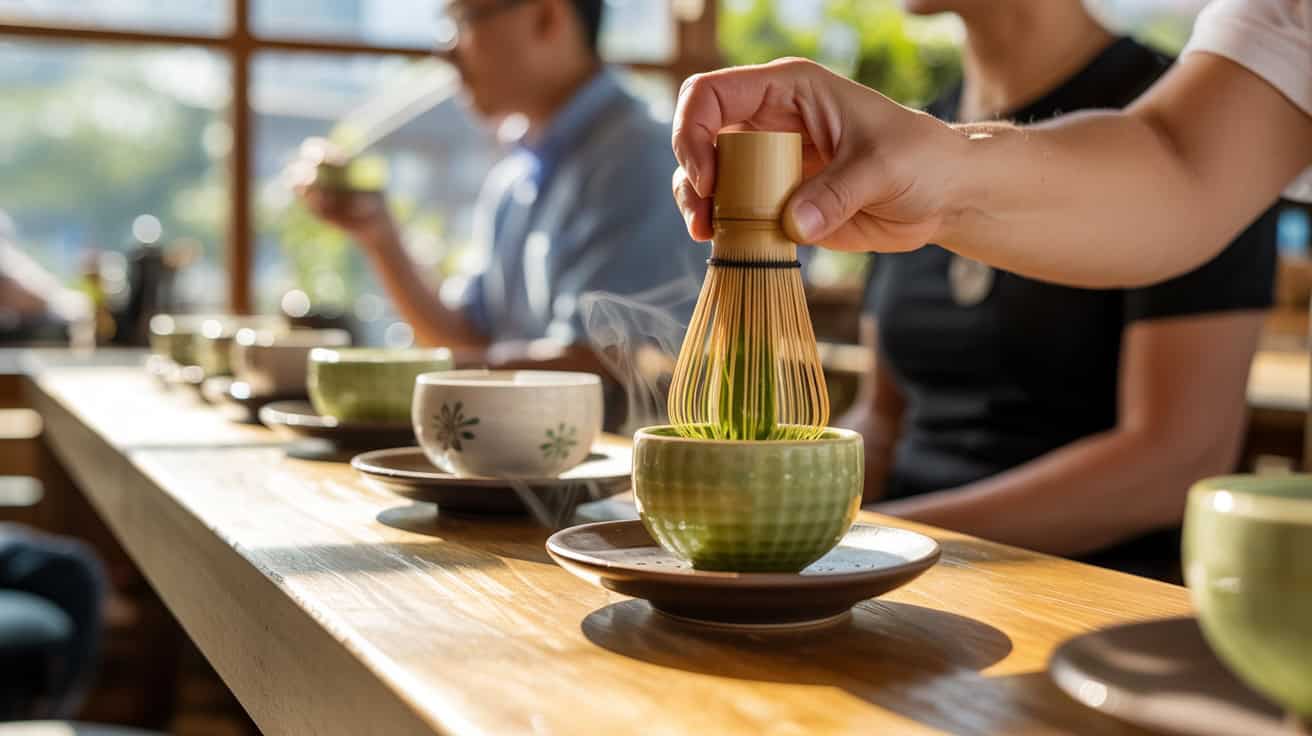
You step into Matcha Ya and inhale bright emerald powder and sweet grassy aroma; you’ll taste velvety umami in a bowl whisked to a frothy crema. You’ll learn about shade-grown tencha, stone-milling, and seasonal harvests that shift from floral spring to toasty autumn. Try ceremonial matcha, a creamy latte, or hojicha cold brew with sesame senbei. Minimalist light-filled rooms and hands-on workshops sharpen your senses. Keep exploring to uncover pairing tips, grades, rituals, and history.
Table of Contents
Key Takeaways
- Specializes in freshly stone‑ground ceremonial matcha, emphasizing vibrant color, silky texture, and authentic tasting rituals.
- Offers educational experiences: tea lineage, farmer stories, weekly workshops, and guided tastings for sensory training.
- The menu features five signature drinks, matcha desserts, hojicha cold brew, and savory pairings like grilled salmon with genmaicha.
- Sourcing emphasizes shade‑grown tencha, seasonal harvest profiles, and clear quality indicators such as emerald color and balanced umami.
- Welcoming minimalist space with daily hours, online tasting reservations, and recommended mid‑morning or late‑afternoon visits for the best experience.
The Story Behind Matcha Ya
Origins trace back to a small storefront opened in 2014, where two friends set out to share the vivid green of freshly stone-ground matcha.
You step into that story through scent and sight: powdered emerald that smells of warm grass and toasted seaweed, sunlight slicing through paper lanterns, and timber counters worn by hands.
They researched Matcha origins, visited shaded fields, and learned grading, harvesting, and milling so you can understand provenance.
Their narrative highlights ceremonial history and practical trade routes, explaining cultivation microclimates, leaf shading, and the fine millstone’s effect on texture.
You’ll find plaques that explain tea lineage, farmers’ photos, and timelines that show cultural significance, linking Zen ritual to modern cafés without assuming you already know.
The shop teaches you to read color, aroma, and label numbers, grounding appreciation in facts and senses so your admiration is informed, not merely aesthetic.
It invites careful curiosity.
The Matcha Experience: From Bowl to Cup
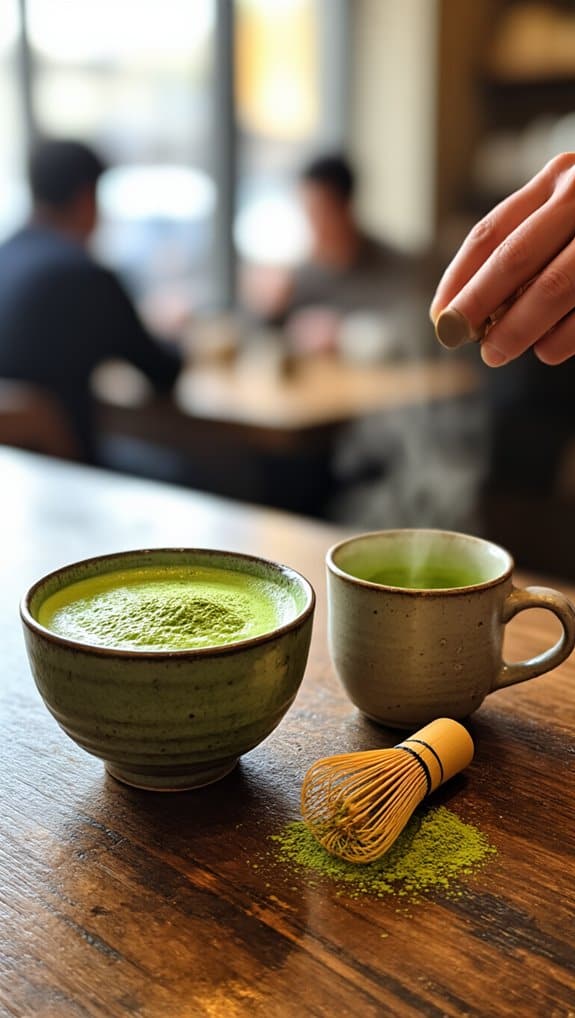
When you scoop a tablespoon of vibrant, finely milled matcha into a warm bowl and pour in water just off the boil (about 75–80°C / 167–176°F), the ritual shifts from preparation to practice. You whisk briskly until a bright verdant foam rises, inhaling grassy, umami notes as the aroma opens. Your hands learn tempo and pressure; a bamboo whisk yields a velvety texture, while temperature and timing shape bitterness and sweetness. This matcha preparation teaches attentive breathing and a measured pace—tea rituals that focus the senses. Serve immediately in a small cup, noticing color, viscosity, and the faint sweet aftertaste. Below is a quick guide to adjust technique.
| Tool | Indicator | Tip |
|---|---|---|
| Chawan (bowl) | Warmth | Preheat with hot water |
| Chasen (whisk) | Foam | Use quick “M” strokes |
| Water Temp | 75–80°C | Cool slightly if bitter |
Practice daily; your palate refines, and each bowl teaches subtlety in flavor and calm presence today.
Menu Highlights and Must-Try Items
You’ll start with the signature matcha drinks—vibrant emerald crema, grassy umami, and a velvety mouthfeel from finely whisked powder.
Pair those with must-try snacks like buttery matcha madeleines or crisp sesame senbei, which contrast sweetness and salt to accentuate the tea’s astringency.
You’ll learn key flavor notes, ideal pairings, and how simple preparation tweaks—temperature and whisking—shape the final cup so you can order with confidence.
Signature Matcha Drinks
Matcha Ya’s signature drinks showcase the vivid jade color, velvety mouthfeel, and concentrated umami that mark quality matcha, and they’ll teach you how subtle changes—grind, whisking, milk ratio, or temperature—shift flavor and texture.
You’ll sample straight usucha for brisk, grassy brightness, koicha for syrupy intensity, and milk-forward lattes that soften tannins; those drink variations demonstrate why matcha health benefits pair with mindful preparation.
Pay attention to aroma—seaweed sweet, toasted cereal—and to viscosity, which coats your tongue. The baristas measure powder precisely, adjust water under 80°C, and froth milk to silk.
Ask for single-origin or ceremonial grade to taste terroir. Sip slowly: you’ll notice umami lingering, a gentle astringency, and a clean, lingering finish.
Compare sweetness levels and adjust to your preferred balance each visit.
Must-Try Snacks
A lineup of small bites complements the tea program, and you’ll want to sample items that highlight matcha’s vegetal brightness and balance its tannins.
You’ll notice how crisp textures and subtle sweetness change the cup: creamy mochi tames bitterness, while sesame crackers add savory lift.
Discover snack pairings that accentuate umami, and explore flavor combinations that clarify how palate weight shifts between sips.
Taste intentionally—note aroma, mouthfeel, finish.
Try these menu highlights:
- Yuzu mochi: pillowy, citrus-laced, cools the tongue.
- Sesame crackers: nutty, crunchy, amplify umami.
- Red bean tart: sweet, dense, softens astringency.
- Citrus shortbread: buttery, bright, cleanses the palate.
- Shiso pickles: herbal, tangy, refresh before the next cup.
Use these snack pairings to experiment with contrast and continuity across cups.
Note serving temperature carefully.
Signature Drinks That Define the Cafe
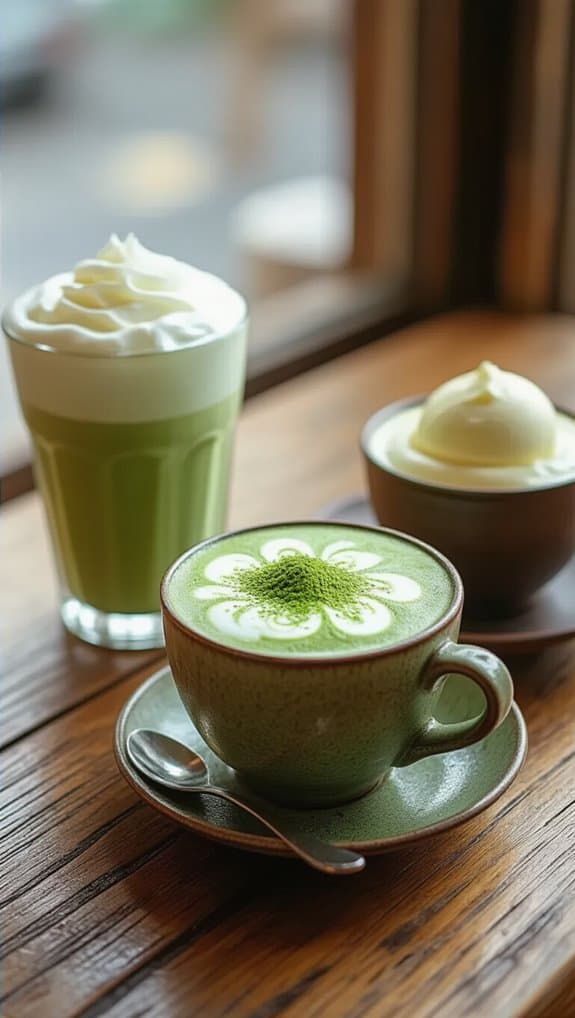
Five signature drinks define the cafe’s menu, each showcasing distinct grades of powdered green tea, brewing techniques, and sweetening balances so you can taste what makes this spot unique.
You’ll encounter a ceremonial matcha—vibrant jade, whisked into a froth that smells grassy and oat-like, with a clean, lingering umami; a creamy matcha latte that balances earthy bitterness with steamed milk; a hojicha cold brew offering toasty, caramelized aromatics and a smooth finish; a genmaicha infusion that perfumes rice-crisp notes against bright green leaf; and a seasonal flavored matcha that introduces citrus or floral accents.
The baristas explain origin, sifting, and water temperature so you learn how each grade alters mouthfeel and astringency.
Pay attention to signature flavors and drink presentation: clay bowls, glassware, and the angle of the pour all influence aroma release and the way you experience each sip.
You’ll learn to discern nuance with each tasting.
Desserts and Savory Pairings
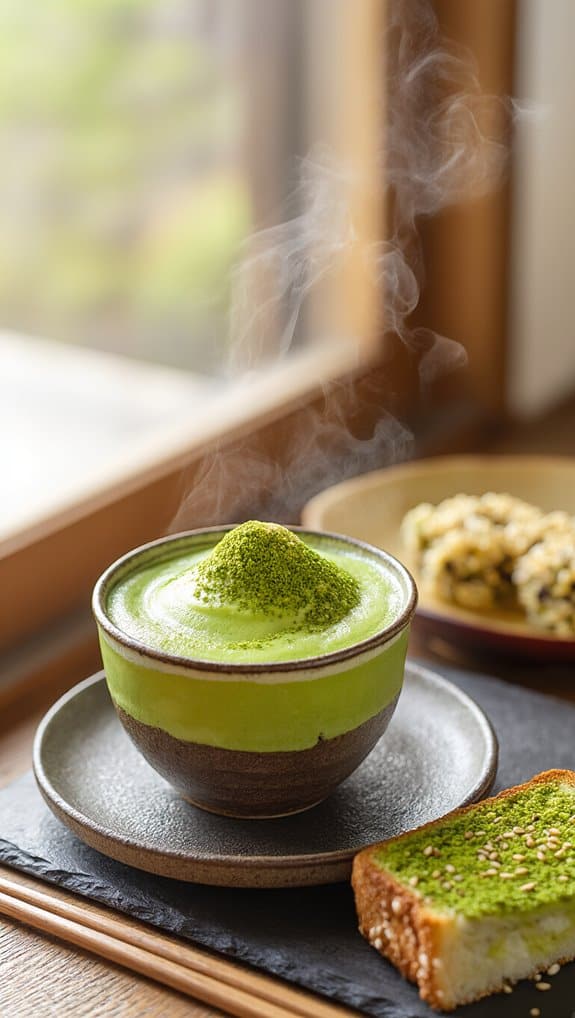
You can heighten matcha’s vegetal, umami-rich aroma by pairing a creamy matcha latte with a sweet red bean mochi or a bright yuzu tart, letting sugar and acid soften the tea’s bitterness.
For savory contrast, try a toasty genmaicha with grilled salmon on crisp rice crackers or a salty miso croquette to amplify the tea’s nutty backbone.
Taste each bite then sip slowly, noting how texture, salt, and acid shift the tea’s finish so you can repeat pairings that balance sweetness, richness, and astringency.
Dessert Pairing Ideas
When you’re choosing a dessert or savory bite to enjoy with matcha, think in terms of balance: the tea’s vegetal, slightly bitter umami cuts through rich, creamy sweets and brightens acidic or citrusy treats, while its tannins harmonize with nutty, caramelized, or sesame-forward flavors.
Use dessert flavors and pairing techniques to map contrasts: matcha’s grassy mouthfeel lifts citrus meringue, its astringency cleanses buttery textures, and its sweet finish echoes white chocolate notes. Smell, texture, and aftertaste guide you—focus on temperature and density.
- Lemon tart: bright acidity, crisp crust, silky curd.
- Black sesame mochi: toasted nuttiness, chewy, subtle salt.
- White chocolate panna cotta: creamy, cooling, sweet echo.
- Red bean parfait: earthy sweetness, varied textures, light cream.
- Almond financier: browned butter, caramel notes, tender crumb, always.
Savory Tea Pairings
Although many think of matcha with sweets, its savory range is just as vivid and rewarding: lean toward umami-rich, salty, and textured bites that echo or contrast the tea’s vegetal sweetness and brisk astringency.
You’ll notice how a spoonful of miso-glazed eggplant complements matcha’s creamy mouthfeel, while sesame-crusted tuna amplifies toasted notes.
Try light soy, pickled ginger, or nori for clean saline edges; finish with a citrus zest to lift lingering bitterness.
For cheese, choose mild, aged varieties that won’t overpower—think Manchego or a subtle goat.
When planning tea pairings, balance intensity: matcha’s grade and concentration guide portion size and seasoning.
Tasting slowly, you’ll map how savory flavors reveal new tea dimensions.
Note tasting temperatures—slightly cooler tea highlights umami, hotter brings briskness and nuance.
Seasonal Specials and Limited Releases
Because harvests shift with the seasons, Matcha Ya rolls out specials that spotlight fleeting flavors—spring’s bright, grassy first flush; summer’s bolder, umami-rich leaves; autumn’s nutty, toasty notes; and winter’s deep, earthy blends.
You’ll encounter seasonal flavors and limited-edition products that arrive in small batches, each defined by its aroma, color, and mouthfeel. When you sip a spring release, you taste floral sweetness and a brisk, green finish; summer teas offer brothy depth and a velvety sensation on your tongue; autumn brings suggestions of roasted chestnuts; winter settles in as molasses and warm earth.
These offerings teach you to read the calendar in your cup and notice texture, aftertaste, and temperature’s effect on scent.
- Small-batch spring first flush: bright, citrusy aroma
- Summer umami release: savory, lingering finish
- Autumn roast edition: toasted, nutty midpalate
- Winter reserve: deep, molasses undertones
- Floral infusion series: perfumed, delicate top notes
You’ll track arrivals and savor rarity with reverent attention.
Matcha Preparation, Quality, and Sourcing
If you want a cup that sings, start with proper leaf and technique: authentic culinary and ceremonial matcha comes from shade-grown tencha that’s stone-milled into a talc-fine powder, and you can tell quality by sight, smell, and mouthfeel—vibrant emerald color, a sweet grassy aroma with umami depth, and a silky texture that dissolves rather than grits.
When you prepare it, whisk briskly in a W-shaped motion to create a dense, frothy crema; feel the warmth of the bowl, inhale the steam, and notice how the flavor unfolds from brisk green to mellow sweetness.
Learn about matcha cultivation methods so you can ask vendors about shading duration, leaf selection, and processing timelines. Taste for balance: no bitterness should dominate.
Source ceremonial-grade for traditional bowls and culinary-grade for lattes. Ask where farms are, whether leaves were single-harvested, and if stone mills were used. That scrutiny elevates every sip and memory.
Atmosphere, Design, and Seating
After mastering the whisk and choosing your grade, pay attention to how the room frames the cup: light, materials, and seating shape how you taste and remember matcha.
You’ll notice wood grain under your wrist, tatami warmth, and paper lanterns casting amber pools. Minimalist decor keeps focus on aroma and foam, while cozy corners invite slow sips.
Seating matters: low benches encourage grounding; single stools prioritize quick tasting; window nooks offer movement and view.
- Sit where natural light hits the bowl; color and depth change with angle.
- Prefer solid wood for tactile warmth and thermal neutrality.
- Choose seating that supports posture to stabilize your wrist.
- Look for textured surfaces that contrast with smooth ceramic.
- Seek quiet zones to heighten scent and umami perception.
These design choices guide attention, refine your tasting technique, and make each cup memorable.
They also calm the mind and sharpen focus with deliberate intention daily.
Events, Workshops, and Community Offerings
You can join hands-on weekly tea workshops where you learn whisking techniques, aroma profiling, and the precise timing that brings out matcha’s umami.
Community tea tastings pair small-batch matchas and seasonal blends with guided scent and flavor notes so you can compare texture, bitterness, and finish.
These events invite questions and tasting notes, teaching simple rituals you can replicate at home to deepen your appreciation.
Weekly Tea Workshops
While steam curls from the kettles and the bright green of whisked matcha catches the light, our weekly workshops invite you to taste, touch, and learn the craft behind each cup.
You’ll feel warm porcelain, inhale vegetal sweetness, and practice measured scoops. Instructors demonstrate precise tea techniques—whisk rhythm, water temperature, and leaf evaluation—then guide you through hands-on drills.
You’ll record observations, receive participant feedback, and refine technique in real time. Sessions focus on sensory vocabulary, brewing science, and ritual etiquette, so you leave confident and curious.
Every class lasts ninety minutes and includes printed guides and recommended reading for home practice.
- Whisking rhythm and texture
- Water chemistry and temperature control
- Leaf inspection and aroma mapping
- Tasting notes and sensory language
- Troubleshooting common brewing errors
Community Tea Tastings
When community tasters gather, steam and scent weave through the room as hosts lead you through small, focused flights of tea—two to five samples served in warmed cups so you can compare mouthfeel, astringency, and finish side by side.
You learn to cup like a pro: observe the liquor color, inhale the dry and wet leaf, and note the transition from floral top notes to a buttery midpalate and a mineral finish.
Hosts demonstrate proper steeping times, water temperatures, and leaf-to-water ratios, allowing you to reproduce results at home.
Tastings double as mini-lessons in provenance and harvest terms, connecting flavors to regions and seasons.
This hands-on approach fosters community engagement and strengthens local tea culture, inviting questions and shared tasting notes.
You’ll leave with precise brewing notes attached.
Visiting Tips, Hours, and Location
If you visit around midday, you’ll hear the low clink of ceramic and smell the warm aroma of matcha as a steady line moves quickly, thanks to the efficient staff.
Aim for the best visiting times—mid-morning for quiet sipping, late afternoon for golden light—so you catch ceremonial pours and easy seating near nearby attractions like the botanical garden.
Check hours: weekdays 9–6, weekends 10–7, and arrive 15 minutes early for reserved tastings. Bring cash for small purchases; the card works for larger orders. Note peak flavors shift seasonally, so ask staff for current single-origin notes.
- Reserve a tasting slot online to guarantee a seat.
- Try a cold latte on hot days for bright, grassy refreshment.
- Ask about pairing suggestions for wagashi.
- Take photos of tea bowls for inspiration, not for long shoots.
- Combine your visit with a stroll to local galleries.
Wear comfortable shoes and savor each sip while you explore nearby streets.
Frequently Asked Questions
Do You Sell Gift Cards?
Yes, we sell gift cards you can buy online or in-store; you’ll feel the smooth paper, see vibrant designs, and choose flexible gift card options that suit any budget.
You’ll learn how gift card benefits include easy redeeming, no expiration on select cards, and personalized messages.
We guide you step-by-step so you’ll gift a fragrant, warm experience someone can savor, making your present thoughtful, tactile, and wonderfully memorable today.
Do You Ship Matcha Products Internationally?
Yes, we ship matcha products internationally.
You’ll receive carefully packed tins that preserve aroma, color, and umami, with vacuum seals and silica packets to keep powder dry.
Our international shipping options include tracked, insured methods and customs documentation; you’ll learn estimated transit times and duties at checkout.
Smell the sweet grass when you open it, and follow our storage tips to keep vibrant green flavor longer for months if sealed.
Are You Currently Hiring or Accepting Job Applications?
Yes, we’re hiring and accepting job applications.
You’ll find current job openings listed on our careers page, where crisp role descriptions and required qualifications smell like fresh ink and feel tactile under your fingertips.
You’ll learn the step-by-step application process, including resume upload, cover letter tips, and interview stages.
Pay attention to deadlines and follow-up etiquette; you’ll gain a clear roadmap that guides you confidently from submission to offer.
Do You Offer Wholesale or Corporate Orders?
Yes, you can place wholesale and corporate orders with us, and we’ll guide you through wholesale pricing and corporate discounts tailored to your needs.
You’ll smell fresh matcha, see vibrant green canisters, and taste consistency in every cup as we explain minimums, lead times, and packaging options.
You’ll learn how bulk roasting, grind size, and storage affect flavor, so you can choose the best profile for gifting, events, or retail.
Do You Have a Customer Loyalty or Rewards Program?
Yes, we do, you’ll find a rewards program that delivers tangible customer benefits and tasty loyalty perks.
You’ll feel points accumulating with every sip and see them translate into discounts on fragrant teas, exclusive blends, and early access to seasonal offerings.
We explain how points work, redemption steps, and expiration dates so you’ll manage rewards confidently.
Sign up in-store or online, and you’ll start enjoying richer, more flavorful experiences sooner.
Conclusion
You’ll leave Matcha Ya with a warm, whisked aroma lingering on your fingers and a sharper appreciation for tea’s craft. You’ll taste vegetal sweetness, creamy froth, and subtle umami, noting how stone-ground powder, water temperature, and whisk technique change texture and flavor. Take photos of latte art, but memorize the tactile weight of the bowl and the calming clink of porcelain. You’ll walk away knowing how sourcing, roasting, and ritual shape every bright, verdant, steaming cup.


No Comments