
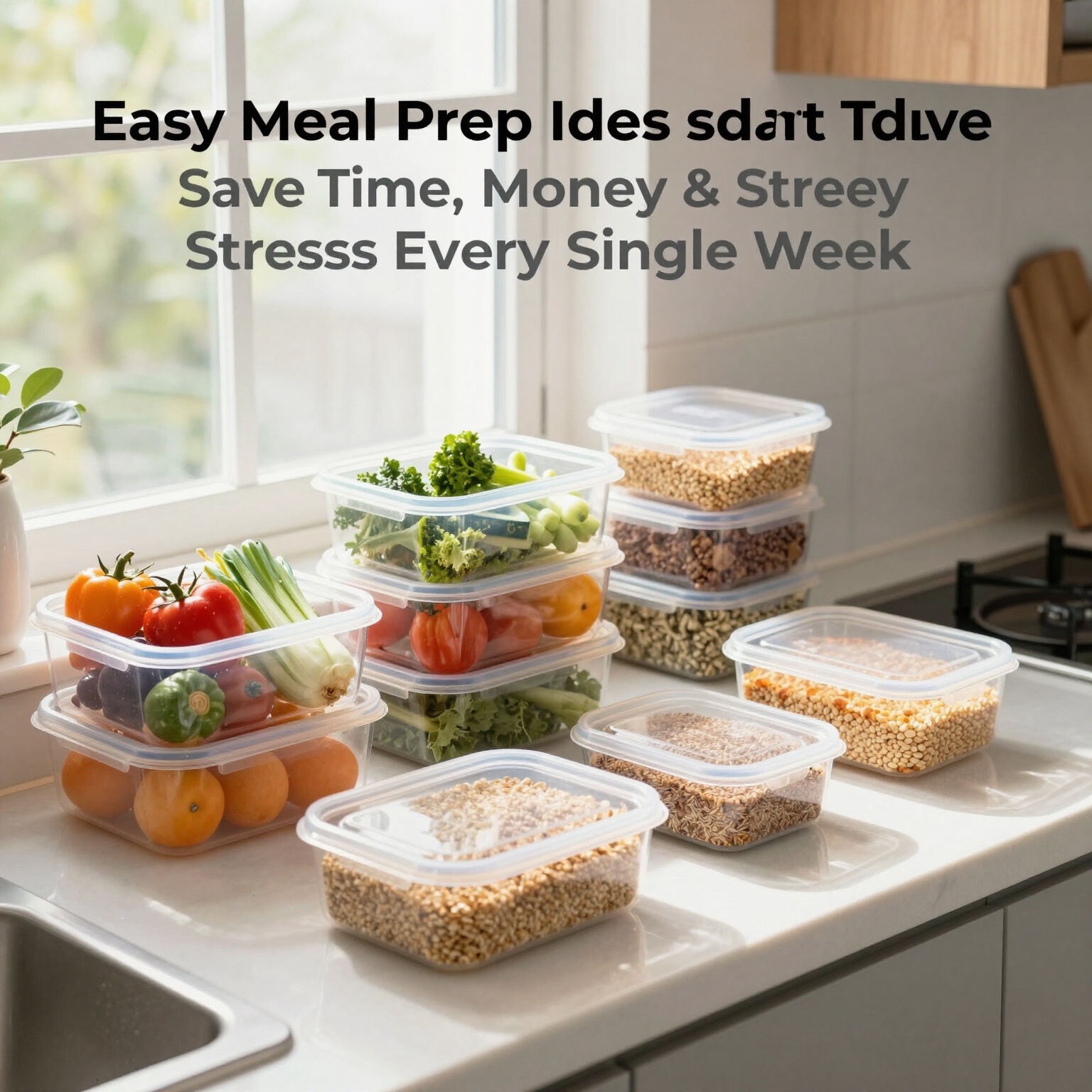
Start with a 5‑minute weekly checklist: glance at your pantry, fridge, and freezer, note fresh and expiring items, then jot down family‑favorite meals using reusable staples like rice, lentils, chicken thighs, or tofu. Fill gaps with quick‑cook items (frozen veggies, canned beans) and group your shopping list by aisle. Batch‑cook grains, beans, and proteins, portion and freeze them, then assemble one‑pot or sheet‑pan dishes that turn one protein into three tasty meals while keeping cleanup minimal. Follow these steps to slash grocery bills, cut cooking time, and stress dinner‑night chaos, and you’ll discover even more time‑saving hacks.
Table of Contents
Create a 5‑Minute Weekly Meal Checklist
A quick, five‑minute weekly meal checklist keeps you organized, cuts waste, and saves money. First, glance at your pantry, fridge, and freezer; note what’s still fresh and what’s about to expire. Then, write down the meals you’ll make, focusing on family favorites and simple recipes that reuse ingredients. Mark any gaps with quick‑cook items like frozen veggies or canned beans. Finally, draft a shopping list that includes only the missing pieces, grouping them by aisle to speed up the store run. By repeating this routine every Sunday, you’ll avoid impulse buys, reduce food waste, and keep your budget on track. You’ll also spend less time deciding what to cook each day, freeing up mental space for other priorities. Stick to the checklist, and you’ll see stress melt away as meals become predictable, affordable, and effortless.
Batch‑Cook Grains, Beans, and Proteins for Meal‑Planning Success
Pick a few versatile staples—rice, lentils, chicken, or tofu—and cook them in one go.
Portion the batches into containers, freeze what you won’t use right away, and keep the rest ready for quick mix‑and‑match meals.
This way you’ll have a rotating base that saves time, cuts waste, and keeps your menu interesting.
Choose Versatile Staples
Ever wondered how a few staple ingredients can power an entire week of meals? Pick items that morph easily—brown rice, quinoa, lentils, canned beans, and a protein like chicken breast or tofu. Cook a big pot of rice, a batch of seasoned lentils, and grill a tray of chicken on Sunday. Store each in separate containers, then mix and match: rice‑bean bowls, quinoa‑taco salads, lentil‑soup with shredded chicken, or tofu stir‑fry over couscous. Because the flavors are neutral, you can add different sauces, herbs, or veggies each day without extra cooking. This approach cuts prep time, trims grocery costs, and keeps your menu fresh while using the same core staples.
Cook in Bulk, Freeze
Why not turn your weekend into a culinary time‑machine? Cook a big pot of brown rice, a batch of seasoned black beans, and a tray of roasted chicken thighs. Portion each into freezer‑safe bags, label with dates, and you’ll have protein‑rich staples ready for any weekday. When you pull a bag, just reheat and toss with fresh veggies or sauce—no guesswork, no extra grocery trips. This habit cuts prep time, slashes waste, and stabilizes your food budget.
- Grains: Cook extra, cool quickly, freeze in 1‑cup portions for easy side swaps.
- Beans: Simmer a large pot, drain, flash‑freeze; they’re perfect for salads, soups, or tacos.
- Proteins: Roast a sheet pan of chicken, beef, or tofu; slice and freeze for quick stir‑fries or bowls.
Mix‑Match for Variety
How can you keep meals exciting while still reaping the time‑saving benefits of batch cooking? Mix‑match your pre‑cooked grains, beans, and proteins to create endless combos. Cook a big pot of quinoa, a batch of black beans, and roasted chicken thighs on Sunday. Then pair them with different sauces, veggies, and spices each day: curry‑spiced quinoa with chickpeas and roasted cauliflower, Mexican‑style rice with shredded chicken, salsa, and avocado, or Mediterranean couscous with feta, olives, and grilled salmon. Store each component in airtight containers, then assemble in 5‑minute bursts. This method lets you swap flavors, keep nutrition balanced, and avoid monotony without extra cooking time. Your weekly menu stays fresh, affordable, and stress‑free.
Cook One‑Pot & Sheet‑Pan Meals for Easy Clean‑Up
When you toss everything into a single skillet or sheet pan, you cut dish count, save time, and keep flavors mingling. One‑pot and sheet‑pan meals let you prep, cook, and serve in one step, so you spend less time scrubbing and more time enjoying. Choose a protein that cooks quickly, add a starch, toss in veggies, and season with a single sauce or spice blend. The heat circulates evenly, caramelizing veggies while the protein stays juicy. You can even double the recipe for leftovers that reheat beautifully.

- Simplify prep: Chop all ingredients before heating; you’ll never hunt for a knife mid‑cook.
- Layer flavors: Start with aromatics, then add protein, followed by starch and veggies to build depth.
- Batch freeze: Portion cooked meals into containers; they thaw fast and stay tasty for weeks.
Swap to Budget‑Smart Protein Options
If you swap pricey ground beef for beans, chicken thighs, or tofu, you’ll slash your grocery bill without sacrificing protein. Beans—especially dried—cost a fraction of meat and store for months, so cook a big pot, freeze portions, and toss them into salads, soups, or stir‑fries.
Chicken thighs are cheaper than breasts and stay juicy; grill a batch, then shred for tacos, add to grain bowls, or stir into a quick curry.
Tofu absorbs flavors, making it perfect for marinades; pan‑fry it for a crispy topping on noodles or crumble it into a breakfast scramble.
Canned tuna or salmon provide omega‑3s at low cost; mix with Greek yogurt for a protein‑rich spread on whole‑grain toast.
Bulk‑buy frozen vegetables and grain staples like rice or quinoa; they pair well with any of these proteins, letting you mix and match meals throughout the week while keeping expenses low.
Turn One Protein Into Three Different Meals
After swapping pricey ground beef for budget‑smart proteins, you can stretch that single ingredient across three distinct meals, keeping variety high and waste low. Pick a versatile protein—like chicken thighs, tofu, or canned tuna—and cook a batch that works in a salad, a stir‑fry, and a hearty soup. Store each portion in airtight containers, label with the date, and you’ll have a ready‑to‑go base that saves time and money. Rotate flavors by swapping sauces, spices, and veggies, so nothing feels repetitive. This approach also cuts grocery trips and minimizes leftovers.
- Salad protein: Toss cooked protein with greens, beans, and a tangy vinaigrette for a light lunch.
- Stir‑fry protein: Sauté the same protein with frozen veggies, soy sauce, and rice for a quick dinner.
- Soup protein: Simmer the protein in broth with carrots, noodles, and herbs for a comforting bowl.
Prep Quick Breakfasts for Stress‑Free Mornings
Ever wonder how a few minutes of prep can turn chaotic mornings into a smooth routine? You can start by assembling overnight oats in mason jars: mix rolled oats, milk, a drizzle of honey, and a handful of berries, then seal and refrigerate. In the morning, grab a jar and you’re done.
Next, batch‑make breakfast burritos. Scramble eggs, add black beans, cheese, and salsa, wrap in a tortilla, and freeze. A quick microwave reheats in under a minute.
For a grab‑and‑go option, bake a tray of muffin‑size banana‑oat cups sweetened with maple syrup and studded with cranberries. Store them in an airtight container; they stay fresh all week.
Finally, prep smoothie packs: portion frozen fruit, spinach, and protein powder into zip‑top bags. In the morning, dump a bag into a blender, add liquid, and blend. With these simple steps, you’ll breeze through mornings without stress.

Freeze‑Ready Meals: Assemble, Store, Reheat
Morning prep becomes even smoother when you turn your batch‑cooked dishes into freeze‑ready meals, letting you assemble, store, and reheat with minimal effort. Pick a sturdy container, portion the food, and label it with the date and reheating instructions. This habit cuts daily decision‑making and keeps nutrition consistent. When you pull a freezer meal out, you’ll notice the aroma of a fully cooked dish, not a half‑baked idea. A few simple tricks make the process foolproof: cool food completely before sealing, leave a little headspace for expansion, and use freezer‑safe bags to save space.
- Portion control: Separate meals into single‑serve sizes to avoid waste and make reheating faster.
- Label clearly: Include cooking method, time, and date to prevent mystery meals.
- Protect texture: Add a splash of broth or sauce before freezing to keep dishes moist.
Meal‑Planning Pantry Audit: Freshness & Rotation
How often do you walk into your pantry and wonder what’s still good and what’s already past its prime? Grab a pen and a sticky note, then pull every container, jar, and box onto the counter. Check expiration dates, sniff for off‑odors, and toss anything moldy or discolored. Group similar items—canned beans, grains, spices—so you can see at a glance which products need to be used first. Rotate older stock to the front and place newer purchases behind; this “first‑in, first‑out” system cuts waste and saves money. While you’re at it, note any gaps—maybe you’re low on olive oil or whole‑grain pasta—so your next shopping list targets those essentials. A quick weekly audit keeps your pantry lean, your meals fresh, and your prep plan on track without extra stress.
Frequently Asked Questions
How Many Servings Should I Prep for a Single‑Person Household?
You should prep about three to four servings per meal, giving you leftovers for lunch or dinner, and a little extra for occasional snacks, keeping portions manageable for a single‑person household.
Can I Substitute Fresh Herbs for Dried in Batch‑Cooked Sauces?
Yes, you can swap fresh herbs for dried in batch‑cooked sauces—use about one‑third the amount, add them early for flavor development, and consider a pinch more if you like a stronger herb note.
What’s the Best Way to Reheat Frozen Meals Without Drying Them Out?
Reheat your frozen meals in a covered microwave‑safe dish on medium power for two minutes, then stir and add a splash of broth or water. Finish on the stovetop or oven, uncovered, until steaming hot.
Do I Need a Separate Container for Each Component of a One‑Pot Dish?
No, you don’t need separate containers; just keep the one‑pot dish in a single airtight jar or BPA‑free container, and store it whole so flavors meld and reheating stays quick and easy.
How Often Should I Rotate Pantry Staples to Avoid Spoilage?
You should rotate pantry staples every six to eight weeks: check dates, pull the oldest items to the front, use them first, and replace any that’re past their prime to keep everything fresh.
Conclusion
You’ve got a system that saves time, money, and stress. By checking your weekly list, batch‑cooking staples, mastering one‑pot and sheet‑pan dishes, swapping in budget‑friendly proteins, and turning a single protein into three meals, you’ll breeze through prep. Quick breakfasts keep mornings calm, and freezer‑ready meals mean you never scramble. Finally, a pantry audit keeps everything fresh and rotating, so every week feels organized and effortless.


Sorry, the comment form is closed at this time.