
Vintage Crisco Christmas Baking Recipes That Still Shine
You can recreate your grandmother’s cherished holiday magic with vintage Crisco recipes that’ve stood the test of time. From crispy sugar cookies with royal icing to flaky pie crusts and tender fruitcakes, these time-tested favorites deliver authentic nostalgia in every bite. Crisco’s superior creaming and shelf stability made these Depression-era and 1950s classics reliable standbys for generations. Whether you’re crafting spritz cookies, candy canes, or a festive tree cake, you’ll discover why this shortening became a holiday baking essential—and there’s much more about perfecting each recipe ahead.
Key Takeaways
- Classic 1950s Crisco Christmas Tree Cake delivers tender crumb and moist texture using shortening’s superior creaming properties.
- Heritage Peanut Butter Blossoms emerged from mid-century Crisco advertising; soft texture maintains freshness for days during holiday gifting.
- Vintage Spritz Cookies achieve uniform definition and crisp edges with room-temperature Crisco pressed through cookie press patterns.
- Traditional Crisco Fruitcakes stay moist for weeks using shortening’s stability; essential to family heirloom holiday traditions.
- Candy Cane Cookies showcase 1950s Crisco reliability for consistent shapes, enhanced with crushed peppermint and royal icing drizzles.
Classic Crisco Sugar Cookies With Royal Icing
Transform your holiday baking with classic Crisco sugar cookies that deliver the perfect tender texture and buttery flavor.
You’ll cream one cup of Crisco with three-quarters cup sugar, then add one egg and two teaspoons vanilla.
Mix in two and one-quarter cups flour, one teaspoon baking powder, and half teaspoon salt until dough forms.
Roll the dough quarter-inch thick and cut with festive shapes.
Bake at 375°F for six to eight minutes until edges barely brown.
Let cookies cool completely before decorating.
Master the icing chemistry by combining two cups powdered sugar, three tablespoons meringue powder, and five tablespoons warm water.
Beat until peaks form, then thin with additional water for flooding consistency.
Use thick icing for outlines and thin icing for filling.


These decorated cookies excel at packaging gifts for neighbors and teachers.
Store between parchment layers in airtight containers, and they’ll maintain their crisp texture for weeks.
Old-Fashioned Crisco Pie Crust for Holiday Pies
While decorated cookies showcase Crisco’s ability to create tender textures, the real test of this versatile shortening comes with pie crust. You’ll discover that Crisco’s unique chemistry creates consistently flaky layers that butter simply can’t match. The shortening’s higher melting point prevents premature melting during rolling, giving you more control over your dough.
| Ingredient | Amount | Purpose | Temperature |
|---|---|---|---|
| All-purpose flour | 2 cups | Structure | Room temp |
| Crisco shortening | ⅔ cup | Flakiness | Cold |
| Cold water | 4-5 tbsp | Binding | Ice cold |
| Salt | 1 tsp | Flavor | Room temp |
Crisco’s shelf stability means you can stock up during sales without worrying about spoilage like butter. Cut the shortening into flour until mixture resembles coarse crumbs, then gradually add ice water. This method ensures your holiday pies have that coveted flaky crust that’ll impress guests every time.
Vintage Spritz Cookies Made With Crisco
The delicate ridges of spritz cookies emerge from your cookie press with remarkable precision when you use Crisco instead of butter.
This consistency made spritz cookies a featured recipe in Crisco’s advertising history throughout the mid-20th century, when home bakers discovered that room-temperature Crisco produced more uniform results than temperamental butter.
You’ll achieve perfect definition in every star, wreath, and tree shape because Crisco maintains its texture without the temperature variations that cause butter-based dough to become too soft or too firm.
The packaging evolution of Crisco cans often showcased these elegant pressed cookies on holiday-themed labels during the 1950s and 1960s.
Mix one cup Crisco with half a cup powdered sugar, one egg, and two cups flour.
Add vanilla and a pinch of salt.
Fill your cookie press and create dozens of identical cookies that’ll maintain their crisp edges and delicate patterns through baking.
Traditional Crisco Christmas Fruitcake Recipe
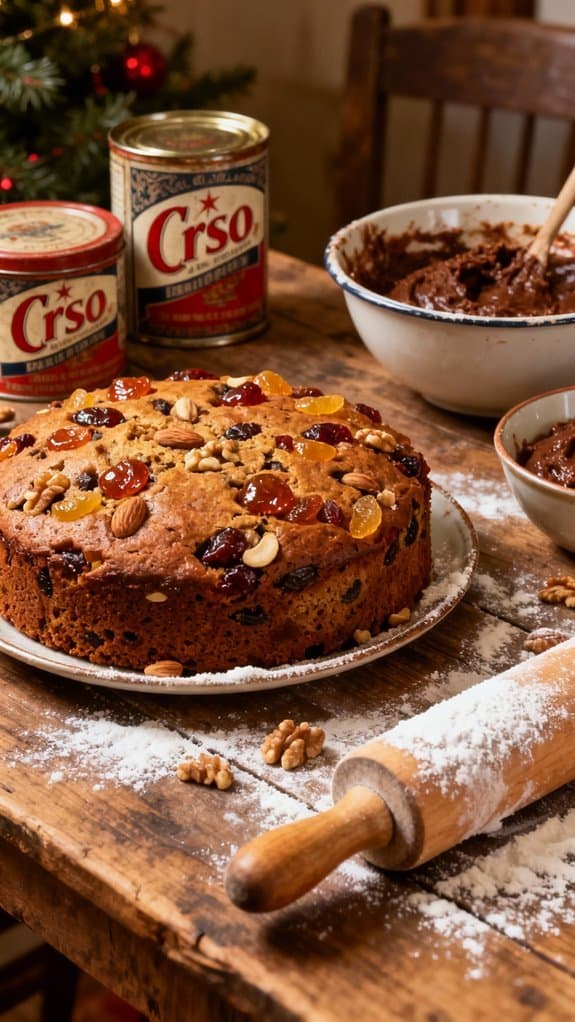
Beyond pressed cookies, Crisco’s reliable consistency made it the secret weapon for Christmas fruitcakes that actually stayed moist for weeks.
You’ll find that Crisco creates tender, long-lasting fruitcakes that won’t dry out like butter-based versions. This recipe became essential to community traditions, with families passing down their perfected techniques through generations.
Your grandmother’s fruitcake tin likely contained one made with Crisco’s dependable formula.
The vegetable shortening binds fruits and nuts while maintaining moisture that keeps these heirloom keepsakes fresh throughout the holiday season.
Essential ingredients for traditional Crisco fruitcake:
- Mixed candied fruits – Use quality pieces, not artificially colored bits
- Chopped pecans or walnuts – Toast lightly for enhanced flavor
- Crisco shortening – Room temperature for proper creaming
- Dark rum or brandy – Adds depth and acts as natural preservative
You’ll cream Crisco with brown sugar, add eggs gradually, then fold in flour-coated fruits. Bake low and slow for perfect texture.
Depression-Era Crisco Chocolate Crinkles
During the Great Depression, resourceful bakers discovered that Crisco’s affordability made it perfect for creating chocolate crinkles—those distinctive cracked-surface cookies that became a holiday staple.
You’ll find these cookies represented community resilience during harsh economic times when families couldn’t afford butter.
The original recipe showcased clever ration adaptations.
You’d mix Crisco with cocoa powder, flour, and minimal sugar to create rich-tasting treats without breaking the family budget.
The signature crinkled appearance came from rolling dough balls in powdered sugar before baking—the sugar coating would crack beautifully as cookies spread.
You’ll appreciate how this recipe stretched ingredients while delivering maximum flavor.
One batch could feed a large family or provide treats for neighborhood sharing.
The soft, fudgy texture proved that Crisco could create bakery-quality results at home.
These depression-era crinkles remain popular today, proving that necessity truly sparked culinary innovation.
Grandmother’s Crisco Shortbread Cookies
You’ll discover that grandmother’s Crisco shortbread cookies trace back to Scottish traditions, where butter shortages made vegetable shortening a practical substitute.
These tender, crumbly treats require specific techniques like proper creaming and chilling to achieve that perfect melt-in-your-mouth texture.
Today’s bakers can enhance the classic recipe with exciting additions like lavender, lemon zest, or chocolate chips while maintaining the cookie’s signature buttery flavor.
Classic Recipe Origins
When your grandmother first discovered Crisco in the 1920s, she likely didn’t realize she was about to create a family legacy that would span generations. The brand evolution of Crisco transformed home baking, making consistent, tender shortbread cookies achievable for every household.
This kitchen folklore began when home bakers discovered Crisco’s superior creaming properties created unmatched texture.
The original shortbread recipe’s success stemmed from four key advantages:
- Consistent results – Unlike butter’s variable fat content
- Extended shelf life – Cookies stayed fresh longer
- Year-round availability – No seasonal butter shortages
- Economic efficiency – More affordable than premium butter
Your grandmother’s handwritten recipe cards became treasured heirlooms, passed down through decades. Today’s bakers still rely on these time-tested formulations, proving that authentic flavor transcends generations.
Essential Baking Tips
Mastering your grandmother’s Crisco shortbread requires attention to three fundamental techniques that consistently separate amateur attempts from bakery-quality results.
First, you’ll measure Crisco at room temperature for optimal creaming with sugar.
Cold shortening won’t incorporate properly, while overheated fat creates greasy cookies.
Cream for exactly three minutes until light and fluffy.
Second, you’ll handle dough minimally once flour’s added.
Overworking develops gluten, creating tough cookies instead of tender, crumbly perfection.
Third, you’ll maintain consistent oven temperature and positioning.

Use an oven thermometer for kitchen safety and accurate baking.
Rotate pans halfway through baking for even browning.
Proper storage solutions include airtight containers with parchment layers.
These shortbread cookies maintain freshness for two weeks when stored correctly, preserving that authentic homemade taste.
Modern Flavor Variations
While traditional shortbread remains timeless, today’s bakers can transform grandmother’s classic recipe with exciting flavor additions that respect the original’s simplicity. You’ll find countless ways to enhance the classic Crisco shortbread while maintaining its tender, buttery texture.
Consider these popular modern variations:
- Citrus twists – Add lemon or orange zest for bright, festive flavors
- Chocolate chip integration – Fold in mini chocolate chips for extra indulgence
- Spiced versions – Incorporate cardamom, cinnamon, or vanilla extract
- Vegan alternatives – Replace butter with vegan Crisco and use plant-based ingredients
You can experiment with lavender, rosemary, or even matcha powder. These adaptations honor grandmother’s foundation while creating unique treats that reflect contemporary tastes and dietary needs.
1950s Crisco Christmas Tree Cake
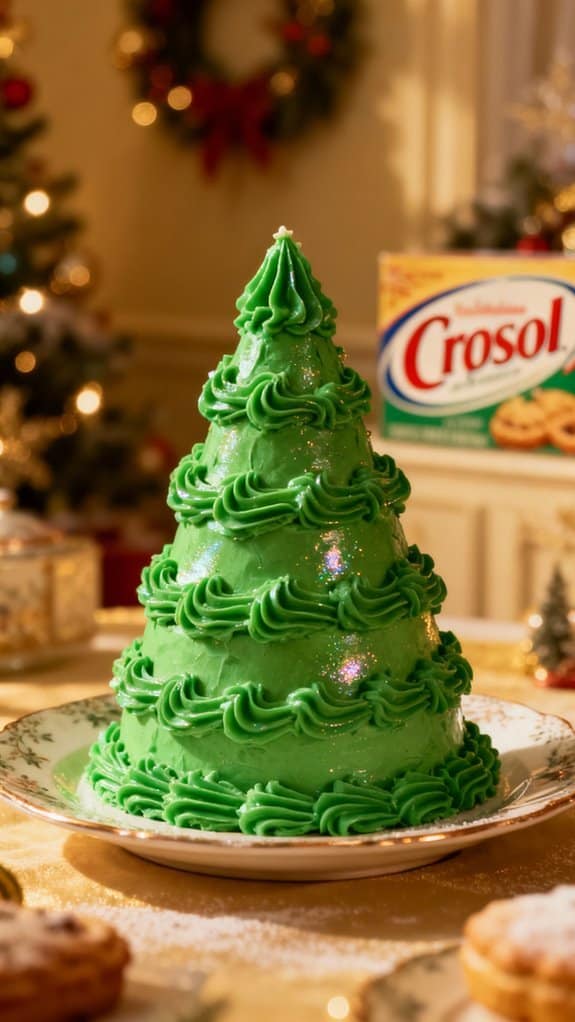
You’ll create this festive centerpiece using classic ingredients like Crisco shortening, flour, sugar, and eggs for a moist, tender crumb.
Master the decorating techniques with green-tinted frosting, piped rosettes, and candy ornaments to transform your cake into a stunning Christmas tree. Bake at 350°F for 25-30 minutes, watching carefully to achieve the perfect golden color without overbaking.
Classic Recipe Ingredients
The classic Crisco Christmas Tree Cake relies on a handful of pantry staples that create its signature tender crumb and festive appeal.
You’ll need basic ingredients that deliver exceptional results when combined properly.
These Pantry Essentials form your foundation:
- Crisco shortening – Creates the cake’s distinctive moist texture
- All-purpose flour – Provides structure without heaviness
- Fresh eggs – Adds richness and helps bind ingredients
- Pure vanilla extract – Enhances overall flavor depth
Ingredient Substitutions aren’t recommended for this vintage recipe, as Crisco’s unique properties ensure the cake’s characteristic lightness.
The shortening creams beautifully with sugar, creating air pockets that make each slice incredibly tender.
You’ll also need baking powder, salt, milk, and granulated sugar to complete this timeless holiday dessert that’s captivated families for generations.
Decorating Tips Techniques
Transforming your freshly baked Crisco Christmas Tree Cake into a stunning centerpiece requires strategic decorating techniques that highlight its festive shape. You’ll want to start with a smooth buttercream base, then add textural elements like coconut flakes for snow or green-tinted frosting for realistic branches.
| Decoration Element | Application Technique |
|---|---|
| Star Cookie Topper | Press gently into cake summit |
| Powdered Sugar Snow | Dust lightly with fine sieve |
| Candy Ornaments | Attach with small frosting dabs |
| Rosemary Sprigs | Insert fresh pieces as garland |
| Edible Glitter | Sprinkle while frosting’s wet |
For table centerpieces, place your decorated tree on a festive platter surrounded by holiday cookies. When considering packaging presentation for gifting, wrap carefully in clear cellophane to preserve decorative details while showcasing your artistic handiwork.
Baking Time Temperature
Perfect baking results for your Crisco Christmas Tree Cake depend on maintaining a consistent 350°F oven temperature throughout the entire baking process.
You’ll achieve optimal texture and doneness by baking for 25-30 minutes, testing with a toothpick inserted in the center.
Oven calibration ensures accurate temperature readings.

Heat mapping helps you identify hot spots that could cause uneven baking.
Consider these essential timing guidelines:
- Preheat your oven for 15 minutes before baking
- Rotate the pan halfway through baking time
- Check doneness at 25 minutes, then every 2-3 minutes
- Cool completely before removing from pan
You’ll know it’s done when the cake springs back lightly when touched and pulls slightly from the pan’s edges.
Heritage Crisco Peanut Butter Blossoms
When December arrives and cookie tins start appearing on kitchen counters, you’ll want these Heritage Crisco Peanut Butter Blossoms in your baking repertoire.
This beloved recipe emerged from Crisco’s advertising history during the 1950s, becoming an instant classic that’s survived generations of holiday baking.
You’ll create these showstoppers using heirloom techniques that haven’t changed since your grandmother’s day.
Cream Crisco with peanut butter and sugars until light, then add eggs and vanilla.
Mix flour, baking soda, and salt separately before combining.
Roll dough into balls, coat in granulated sugar, and bake at 375°F for 8-10 minutes.
Here’s the magic: immediately press chocolate kisses into warm cookie centers.
The contrast between salty-sweet peanut butter and rich chocolate creates an irresistible combination.
These cookies maintain their soft texture for days, making them perfect for gift-giving or holiday entertaining.
Classic Crisco Snickerdoodles for the Holidays
Rolling cinnamon-sugar dough between your palms brings back memories of childhood kitchens filled with the warm spice of snickerdoodles.
These tender, chewy cookies showcase Crisco’s ability to create perfectly soft textures that stay fresh for days.
Your classic Crisco snickerdoodles deliver consistent results every time.
The vegetable shortening creates cookies that won’t spread too much while baking, maintaining their signature slightly cracked tops and pillowy centers.
Perfect snickerdoodle preparation involves these essential steps:
- Cream Crisco with sugar until light and fluffy
- Roll dough balls in cinnamon-sugar mixture generously
- Bake at 400°F for exactly 8-10 minutes
- Cool on wire racks to maintain texture
Beverage Pairings work beautifully with snickerdoodles – try hot chocolate, spiced cider, or coffee.
For Gift Packaging, layer these cookies in decorative tins with parchment paper between rows.
Their sturdy texture makes them ideal for shipping to distant relatives during the holiday season.
Timeless Crisco Christmas Candy Cane Cookies
You’ll love creating these iconic striped cookies that have been a holiday tradition since the 1950s, when home bakers first started using Crisco’s reliable consistency to achieve perfect candy cane shapes. The key to success lies in properly dividing your dough, rolling even ropes, and twisting them together before the classic curved shaping that makes these cookies instantly recognizable.
Once baked, you can enhance their festive appeal with crushed peppermint, royal icing drizzles, or a simple dusting of powdered sugar.
Classic Recipe Origins
Since their debut in American kitchens during the 1950s, Crisco Christmas Candy Cane Cookies have become a beloved holiday tradition that combines buttery shortening with festive peppermint flavoring.
The Procter & Gamble Company’s manufacturer history reveals how they strategically positioned these cookies as the perfect family baking project during post-war America’s domestic revival.
You’ll find the recipe’s advertising evolution fascinating – it transformed from simple product demonstrations to elaborate holiday marketing campaigns.
The original recipe emphasized:
- Easy preparation for busy homemakers
- Reliable results using Crisco’s stable shortening
- Kid-friendly shaping techniques
- Cost-effective ingredients during economic uncertainty
These cookies represented more than dessert; they symbolized American prosperity and family togetherness.
You’re continuing a tradition that connected generations through shared baking experiences and holiday memories.
Shaping and Baking Tips
When you master the art of shaping candy cane cookies, you’ll transform simple dough into festive holiday masterpieces that rival bakery displays.
Start with proper tool selection—a bench scraper and rolling pin ensure consistent results.
Roll your dough to even thickness of about 1/8 inch, preventing thin spots that burn or thick sections that bake unevenly.
Cut strips carefully and twist them into candy cane shapes while dough’s still pliable.
Work quickly; cold dough cracks when bent.
Place shaped cookies on parchment paper, spacing them two inches apart.
Bake at 375°F for 8-10 minutes until edges just turn golden.
Don’t overbake—they’ll harden as they cool.
Remove from the oven when centers still look slightly soft; residual heat completes the baking process perfectly.
Festive Decorating Techniques
Once your candy cane cookies cool completely, they’re ready for the decorating magic that transforms them into show-stopping treats.
You’ll want to elevate these festive favorites with thoughtful edible garnishes and strategic packaging presentation.
Consider these decorating approaches:
- Dust cookies with fine powdered sugar for a frosted appearance
- Drizzle white or red royal icing in elegant stripes
- Top with crushed candy canes for added texture and sparkle
- Apply edible pearl dust for a sophisticated shimmer
For packaging presentation, you’re creating an experience.
Line boxes with parchment paper and arrange cookies in single layers.
Add tissue paper between rows to prevent breakage.
Include a handwritten tag explaining the homemade touch.
This attention to detail transforms your candy cane cookies into memorable gifts that showcase both your baking skill and thoughtfulness.
Frequently Asked Questions
Is Crisco Still Available, and How Does It Compare to Modern Shortening Products?
Yes, you’ll find Crisco readily available at most grocery stores today.
When you compare it to modern shortening products, you’ll notice ingredient labeling now emphasizes trans fat removal—a major market trend shift. You’re getting a reformulated product that performs similarly for baking.
However, you’ll discover newer alternatives like coconut oil and butter-based shortenings gaining traction as consumers seek less processed options.
Crisco remains competitive, though it’s no longer the only player.
Can I Substitute Butter or Oil for Crisco in These Vintage Christmas Recipes?
You can substitute butter or oil for Crisco, but you’ll notice Texture Differences in your results.
Butter creates denser, more tender crumbs, while oil yields moister baked goods.
You’ll also need Flavor Adjustments—butter adds richness that Crisco doesn’t provide, potentially altering your recipe’s taste profile.
For best results, use equal amounts when substituting, though you may need to reduce other liquids slightly since oil contains more moisture than solid shortening.
How Should I Store Crisco Baked Goods to Maintain Freshness Throughout the Holiday Season?
You’ll maximize freshness by using airtight packaging like sealed containers or freezer bags for your Crisco baked goods. Store them in cool, dry places for short-term keeping.
For extended storage throughout the holiday season, freezer tips include wrapping items individually, labeling with dates, and freezing at 0°F or below.
Most Crisco baked goods maintain quality for three months frozen, ensuring you’ve got fresh treats available whenever you need them.
Why Did Crisco Become so Popular for Baking During the Depression Era?
During the Depression, you found Crisco incredibly appealing because it was affordable and versatile. The industrialization impact made mass production possible, lowering costs when you needed budget-friendly options most.
Crisco’s marketing innovation positioned it as a modern, economical substitute for butter and lard. You could stretch your baking budget further while achieving reliable results. The product’s affordability, combined with aggressive advertising campaigns, made it an essential pantry staple you couldn’t resist during America’s hardest economic times.
What Is the Shelf Life of Unopened and Opened Crisco Containers?
You’ll find unopened Crisco containers last approximately two years when you store them properly.
Once you’ve opened a container, you’ve got about six months before oxidation rates accelerate significantly.
Packaging integrity matters tremendously—you’ll want to keep opened containers tightly sealed in cool, dark spaces. Proper storage slows oxidation, extending your product’s usability and maintaining its baking performance throughout that window.
Conclusion
You’ve discovered that Crisco remains a holiday baking staple for good reason. These vintage recipes deliver consistent results, whether you’re crafting delicate sugar cookies or flaky pie crusts. They’re tried-and-true formulas that’ve satisfied generations of bakers. You’ll find that these timeless treats bring authentic nostalgia and genuine flavor to your Christmas celebrations, proving that some ingredients and recipes simply never go out of style.


Table of Contents






No Comments