

Silkiest Christmas Gravy No Lumps, Big Flavor
You’ll create silky, lump-free Christmas gravy by starting with a proper roux from your turkey’s pan drippings and flour, whisking constantly over medium heat until golden. Gradually add warm stock using figure-eight motions, then switch to tight circular whisking to eliminate any stubborn lumps. Season with fresh thyme, sage, salt, and pepper while maintaining a gentle simmer—never a rolling boil. Master these fundamental techniques and you’ll discover the secrets to restaurant-quality gravy that’ll impress every guest.
Key Takeaways
- Use quality pan drippings and cook roux to golden brown for deep, nutty flavor foundation.
- Whisk constantly in figure-eight motions when adding liquid gradually to prevent lumps from forming.
- Strain finished gravy through fine-mesh sieve and maintain gentle simmer, never rolling boil.
- Sauté fresh herbs like thyme and sage directly in roux to bloom essential oils.
- Finish with butter for glossy richness and taste throughout cooking to adjust seasoning.
Essential Ingredients for Perfect Christmas Gravy
Creating exceptional Christmas gravy starts with selecting the right foundation ingredients. You’ll need quality pan drippings from your roasted turkey or chicken as your flavor base. These drippings contain concentrated essence that makes homemade gravy superior to store-bought alternatives.
For thickening, use all-purpose flour or butter to create a proper roux. This combination ensures your smooth velvety texture without unwanted lumps. You’ll also need good stock—chicken, turkey, or vegetable—to add depth and richness.
Essential seasonings include salt, black pepper, fresh thyme, and sage. These herbs complement traditional Christmas flavors perfectly. Consider adding a splash of white wine or sherry for complexity.
Don’t forget butter for finishing—it adds glossy richness and helps achieve that coveted smooth consistency. A balanced seasoning profile comes from tasting and adjusting throughout the cooking process. Fresh herbs beat dried ones every time for maximum impact.
Preparing Your Pan Drippings
After you’ve roasted your turkey or other meat, you’ll need to work with the pan drippings that remain in the roasting pan. Start by straining out the fat and solid bits to create a clean base for your gravy.
Then deglaze the pan properly to capture all those flavorful browned bits that’ll make your Christmas gravy truly exceptional.
Strain Fat and Solids
Once your roast has finished cooking and you’ve removed it from the pan, you’ll need to separate the fat from the flavorful meat juices to create a smooth gravy base.
Pour the pan drippings into a fat separator or measuring cup and let it rest for five minutes. The fat rendering process creates distinct layers—golden fat rises to the top while darker, concentrated meat juices settle below. This oil separation makes skimming straightforward.
Use a spoon to remove excess fat, leaving about two tablespoons for flavor. Alternatively, use a fat separator’s spout to pour clean drippings while fat remains trapped above.
Strain the liquid through a fine-mesh sieve to eliminate any remaining solids or burnt bits that could create lumps in your finished gravy.
Deglaze Pan Properly
Deglazing transforms the caramelized bits stuck to your roasting pan into liquid gold for your gravy. Place your roasting pan directly on the stovetop over medium heat. Pour in wine, stock, or water—about half a cup works perfectly. Use a wooden spoon to scrape up every brown bit from the bottom, working quickly before the liquid reduces too much. These fond particles contain concentrated flavor that’ll make your gravy exceptional.
Proper pan preparation makes deglazing techniques more effective. Don’t wash the pan first—you want those drippings intact. If your pan won’t fit across burners, transfer drippings to a large skillet instead. Keep scraping until the bottom looks clean and the liquid turns rich brown. This flavorful mixture becomes your gravy’s foundation.
Creating the Perfect Roux Base
The foundation of exceptional Christmas gravy lies in mastering your roux—that magical combination of fat and flour that’ll transform your pan drippings into liquid gold. Start with equal parts fat and flour, whisking constantly over medium heat.
Your cooking oil selection matters tremendously. Turkey drippings provide the richest flavor, but you can supplement with butter or neutral oil if needed. The key roux preparation techniques involve patience and constant motion—cook until your mixture turns golden brown and develops a nutty aroma.
| Roux Type | Cook Time | Color | Best For |
|---|---|---|---|
| White | 2-3 minutes | Pale yellow | Delicate gravies |
| Blonde | 4-5 minutes | Light tan | Traditional Christmas gravy |
| Brown | 6-8 minutes | Golden brown | Rich, robust flavors |
| Dark | 10+ minutes | Deep brown | Cajun-style gravies |
| Burnt | Too long | Black | Start over! |
Watch carefully—burnt roux means starting fresh.
Incorporating Liquid Without Lumps
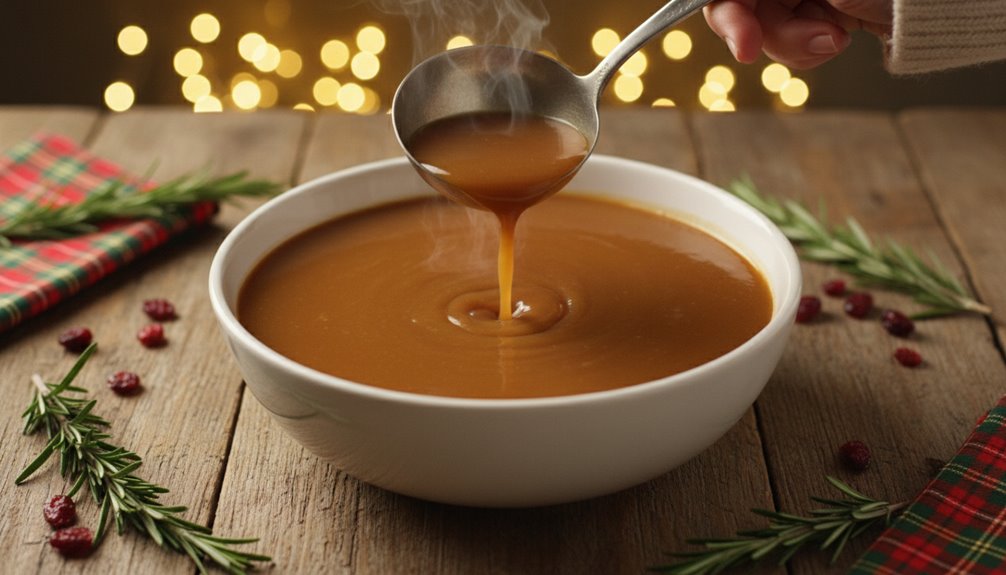
Once you’ve perfected your roux, the key to lump-free gravy lies in controlling the temperature of both your base and the liquid you’re adding. You’ll need to master the art of whisking continuously while gradually incorporating your stock or pan drippings, never rushing the process.
The combination of proper whisking technique, careful temperature management, and slow liquid addition will ensure your Christmas gravy stays silky smooth.
Temperature Control Matters Most
Why does gravy turn lumpy when you’re rushing to get it ready? Temperature shock creates clumps when cold liquid hits hot roux too quickly. You’ll achieve silky perfection by maintaining proper temperature control throughout the entire process.
Keep these temperature guidelines in mind:
- Heat liquid gradually – Warm your stock or pan drippings before adding to prevent thermal shock
- Maintain consistent simmering – Never let your gravy reach a rolling boil, which breaks the emulsion
- Match temperatures – Both your roux and liquid should be similarly warm when combined
You’re aiming for gentle, steady heat that allows the flour to cook properly while keeping proteins from seizing up. Proper temperature management transforms your gravy from a lumpy disaster into restaurant-quality smoothness every time.
Whisking Technique Tips
Beyond controlling temperature, mastering your whisking technique makes the difference between smooth gravy and a lumpy mess. Use efficient whisking motions by creating figure-eight patterns rather than circular stirring. This technique breaks up flour clumps more effectively while ensuring thorough ingredient incorporation throughout your gravy.
Add liquid gradually—never dump it all at once. Pour in small amounts while whisking continuously, allowing each addition to fully integrate before adding more. Keep your whisk moving constantly during this process.
When lumps do appear, don’t panic. Switch to rapid, vigorous whisking in tight circles to break them down. If stubborn lumps persist, strain your gravy through a fine-mesh sieve. This rescue technique saves even the most challenging batches, delivering silky-smooth results every time.
Gradual Addition Method
Since timing determines whether you’ll achieve silky gravy or a lumpy disaster, the gradual addition method requires your complete attention and patience. You’ll add liquid slowly while whisking continuously to ensure even cooking throughout your roux.
Follow this three-step process:
- Start with small amounts – Add just 2-3 tablespoons of warm stock initially, whisking vigorously until completely smooth
- Increase gradually – Pour in slightly larger amounts (¼ cup at a time) once each addition incorporates fully
- Maintain constant motion – Never stop whisking until you’ve added all liquid and achieved your desired consistency
This methodical approach prevents flour clumps from forming while promoting consistent thickness. Don’t rush—each addition must blend completely before adding more liquid to maintain that coveted silky texture.
Building Deep Flavor With Seasonings
The magic of exceptional Christmas gravy lies in your deliberate layering seasonings throughout the cooking process. You’ll start building aromatic base by sautéing fresh herbs like thyme and sage directly in your roux, allowing their essential oils to bloom in the hot fat. This technique creates depth that can’t be achieved by adding seasonings at the end.
| Timing | Seasoning | Purpose |
|---|---|---|
| Early Stage | Fresh herbs, garlic | Build aromatic foundation |
| Mid-Process | Salt, white pepper | Enhance natural flavors |
| Final Touch | Fresh parsley, lemon zest | Brighten and balance |
You’ll want to taste continuously, adjusting salt and pepper as your gravy develops. White pepper maintains the gravy’s elegant appearance while delivering heat. A pinch of garlic powder amplifies the savory notes without overpowering the turkey drippings. Finish with fresh parsley and a whisper of lemon zest to brighten the rich, complex flavors you’ve carefully constructed.
Achieving the Ideal Consistency
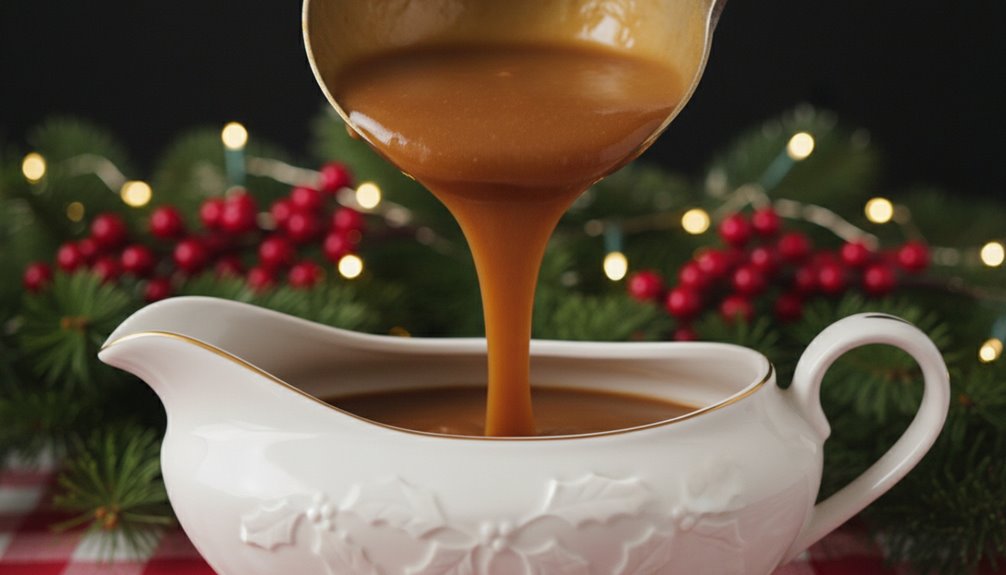
With your flavor foundation perfectly established, you’ll now focus on achieving that signature velvety texture that makes Christmas gravy memorable. Achieving the ideal viscosity requires careful attention to your thickening technique and temperature control.
The key to maintaining smooth texture lies in these essential steps:
- Whisk constantly while adding your slurry or roux to prevent flour from clumping together
- Control your heat by keeping the gravy at a gentle simmer, not a rolling boil
- Strain if needed through a fine-mesh sieve to eliminate any stubborn lumps
Your gravy should coat the back of a spoon without being too thick or runny. If it’s too thin, simmer longer to reduce moisture. If it’s too thick, gradually whisk in warm stock. Remember, gravy will thicken slightly as it cools, so aim for a consistency that’s just slightly thinner than your final goal.
Serving and Storage Tips
Once your Christmas gravy reaches that perfect velvety consistency, proper serving technique ensures it maintains its appeal throughout your holiday meal. Keep gravy warm in a thermal carafe or slow cooker on low heat, stirring occasionally to prevent skin formation. Serve immediately in a heated gravy boat for best results.
| Storage Method | Duration | Best Practice |
|---|---|---|
| Refrigerator | 3-4 days | Store in airtight container |
| Freezer | 2-3 months | Freeze in portion-sized containers |
| Room Temperature | 2 hours maximum | Keep covered and warm |
For storing leftovers, cool gravy completely before refrigerating. When reheating techniques are needed, use gentle heat while whisking constantly. Add small amounts of warm stock if the gravy becomes too thick. Microwave reheating works well in 30-second intervals, stirring between each heating cycle. Never reheat gravy more than once for food safety.
Frequently Asked Questions
Can I Make Christmas Gravy Ahead of Time and Reheat It?
Yes, you can make gravy ahead of time and reheat it successfully.
Freeze gravy in portions using freezer-safe containers or bags for up to three months. When ready to serve, thaw overnight in your refrigerator.
Reheat gravy gently over low heat, whisking constantly to maintain smoothness. Add a splash of broth if it’s too thick after reheating.
What’s the Best Way to Fix Gravy That Turned Out Too Salty?
You can reduce sodium content by diluting your gravy with unsalted stock, milk, or cream. Add small amounts gradually while whisking until you reach the desired saltiness.
To adjust seasoning balance, incorporate a pinch of sugar or honey to counteract the salt, or add more herbs and spices. If it becomes too thin from diluting, thicken it back up with a cornstarch slurry or flour roux.
Can I Freeze Leftover Christmas Gravy for Next Year?
Yes, you can freeze leftover gravy for next year’s holiday meals. Pour it into freezer-safe containers or bags, making sure to store well sealed to prevent freezer burn. Label with the date and use within 3-4 months for best quality.
When you’re ready to use it, thaw overnight in the refrigerator, then reheat gently while whisking to restore its smooth texture.
How Do I Make Gravy if I Don’t Have Any Pan Drippings?
You’ll use store bought stock as your base instead of pan drippings. Start by making a roux with equal parts butter and flour, cooking until golden.
Gradually whisk in warmed chicken or beef stock until smooth. Season with salt, pepper, and herbs like thyme or sage. You can add soy sauce or Worcestershire for deeper flavor. Simmer until thickened with a roux consistency you prefer.
What Should I Do if My Gravy Breaks or Separates While Cooking?
Don’t panic if your gravy separates—you can fix it! Whisk in cornstarch or flour mixed with cold water to create a slurry, then add it gradually while whisking constantly. Reheat gravy slowly over low heat, continuing to whisk until it comes back together.
If it’s still broken, try blending it with an immersion blender or strain it through a fine mesh sieve for smoothness.
Conclusion
You’ve mastered the art of lump-free Christmas gravy that’ll have everyone asking for your secret. Remember to whisk constantly when adding liquids, taste and adjust seasonings throughout, and don’t rush the roux. Keep it warm until serving, and reheat gently with a splash of broth if needed. Your silky, flavorful gravy will be the perfect complement to your holiday feast and become a family tradition.


Table of Contents






No Comments