
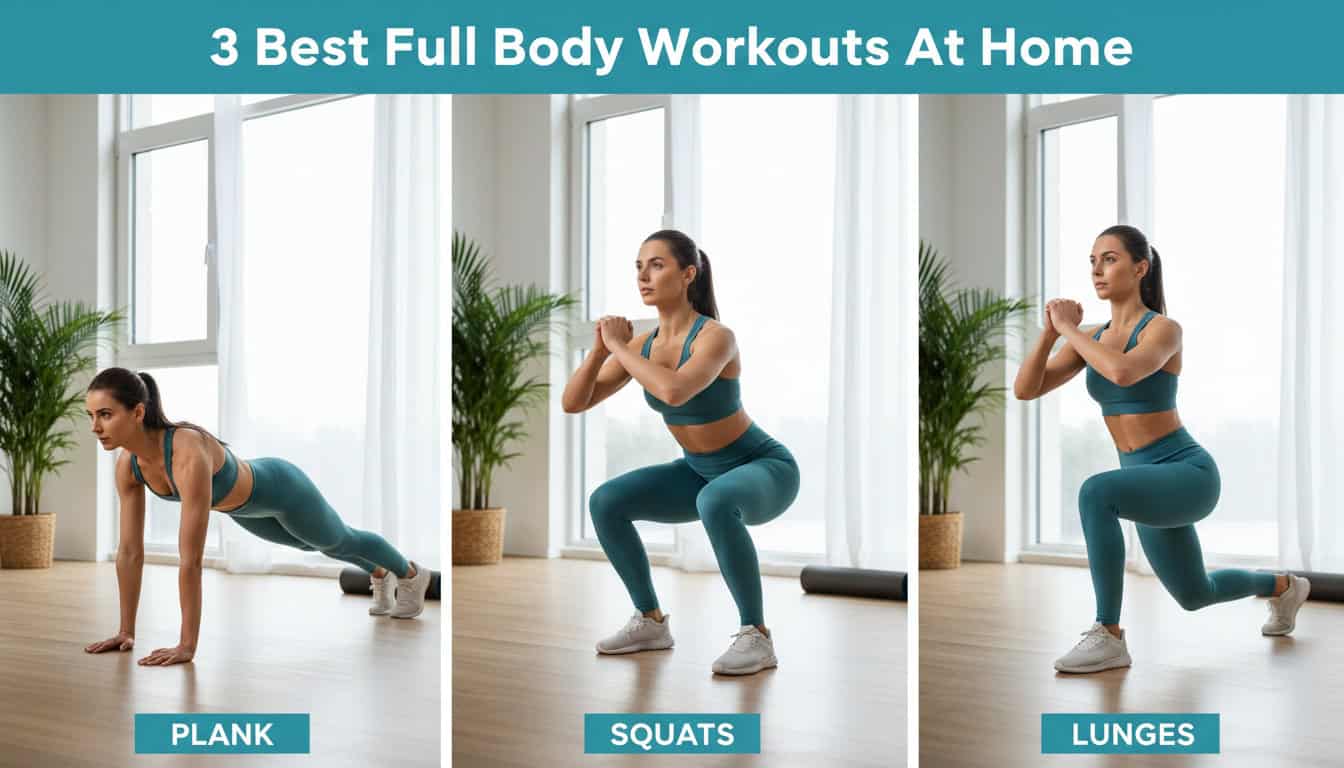
Pick a routine that matches your level: beginners stick to bodyweight squats, wall‑push‑ups, and glute bridges; intermediates add tempo work and lunges; advanced athletes crank up intensity with plyometrics, single‑leg deadlifts, and circuit bursts. Each 15‑45‑minute session starts with a quick warm‑up, cycles through push, pull, legs, and core moves for 30‑45 seconds with short rests, and ends with a brief stretch. You’ll also see how to scale, track progress, and avoid common pitfalls, so keep going for deeper details.
Table of Contents
How to Choose the Right Full‑Body Home Workout for Your Fitness Level
Wondering which full‑body routine fits you best? First, gauge your current fitness level. If you’re a beginner, pick movements that emphasize proper form and low impact—think bodyweight squats, wall‑supported push‑ups, and glute bridges. For intermediate trainees, add tempo work and moderate volume: incorporate lunges, plank variations, and inverted rows using a sturdy table. Advanced athletes should challenge themselves with high‑intensity circuits, plyometrics, and unilateral exercises like single‑leg Romanian deadlifts.
Next, consider your goals. Fat loss benefits circuits with short rest periods; strength gains favor slower reps with added resistance (e.g., backpacks). Time constraints matter too—short 15‑minute sessions suit busy schedules, while longer 45‑minute workouts allow more sets and skill work.
Finally, assess any limitations: joint issues, injuries, or space restrictions dictate which moves you can safely perform. Matching level, goals, time, and constraints ensures the routine supports progress without overreaching.
How to Perform and Progress Full‑Body Home Workouts Without Equipment
How can you get a complete, effective workout at home without a single piece of equipment? Start with a dynamic warm‑up—jumping jacks, high knees, and arm circles—for five minutes to raise your heart rate and mobilize joints.
Then move into a circuit of body‑weight moves: push‑ups, air‑squats, lunges, planks, and glute bridges.
Perform each exercise for 30‑45 seconds, rest 15 seconds, and repeat the circuit three to four times.
To progress, increase time under tension by slowing the eccentric phase, add a pause at the bottom of each rep, or transition to harder variations—e.g., incline push‑ups to decline push‑ups, or pistol squats to single‑leg box squats using a sturdy chair.
Track your reps or seconds, aiming for a 5‑10 % weekly improvement.
Finally, finish with a cool‑down stretch, focusing on hamstrings, chest, and shoulders, to promote recovery and maintain flexibility.
Which Full‑Body Home Workouts Are Really Worth It?
Which full‑body home workouts actually deliver results? You’ll find that compound movements—push‑ups, squats, lunges, and planks—are the backbone of any effective routine. Pair push‑ups with a shoulder tap for core stability, then transition to squat‑to‑alternating‑leg‑lifts to hit glutes, quads, and balance. Add a set of burpees for cardio bursts, and finish with a plank‑to‑side‑plank series to engage obliques and shoulders. These exercises require no equipment, can be scaled by tempo or reps, and hit every major muscle group. If you want extra resistance, grab a backpack filled with books for weighted squats or rows. Consistency matters more than fancy gear, so stick to 3‑4 sessions weekly, progress by adding 5‑10 reps or a 30‑second hold each week, and you’ll see strength, endurance, and muscle tone improve steadily.
Frequently Asked Questions
How Many Calories Does a Typical Full‑Body Home Workout Burn?
You’ll burn roughly 300‑500 calories per 45‑minute full‑body home session, depending on intensity, your weight, and fitness level; higher‑intensity circuits push the upper range, while lighter circuits stay nearer 300.
Can I Combine Cardio Intervals With a Full‑Body Strength Routine?
Yes, you can blend cardio intervals into a full‑body strength routine. Alternate 30‑second sprints or jump‑rope bursts with compound lifts, keeping rest short. This boosts calorie burn, improves endurance, and preserves muscle tone.
What Are the Best Warm‑Up Exercises Before a Full‑Body Home Session?
You should start with jumping jacks, arm circles, hip swings, body‑weight squats, lunges, and inchworms, then add dynamic stretches like leg swings and torso twists to raise heart rate and mobilize joints.
How Often Should I Change My Full‑Body Workout Routine?
You should switch your full‑body routine every six to eight weeks, or whenever you stop seeing progress. Changing exercises, set‑rep schemes, or order keeps muscles adapting, prevents plateaus, and maintains motivation.
Do Full‑Body Home Workouts Improve Flexibility as Well?
Yes, they do. By combining dynamic stretches, full‑range movements, and controlled tempo, you’ll boost joint mobility and muscle elasticity while building strength, so flexibility improves alongside overall fitness.
Conclusion
Now you’ve got the tools to pick the right routine, master the moves, and keep progressing without any gear. Stick to the plan, listen to your body, and crank up the intensity as you get stronger. Consistency and proper form will turn those home workouts into real results. Keep challenging yourself, and you’ll see the full‑body gains you’ve been aiming for.


Sorry, the comment form is closed at this time.