
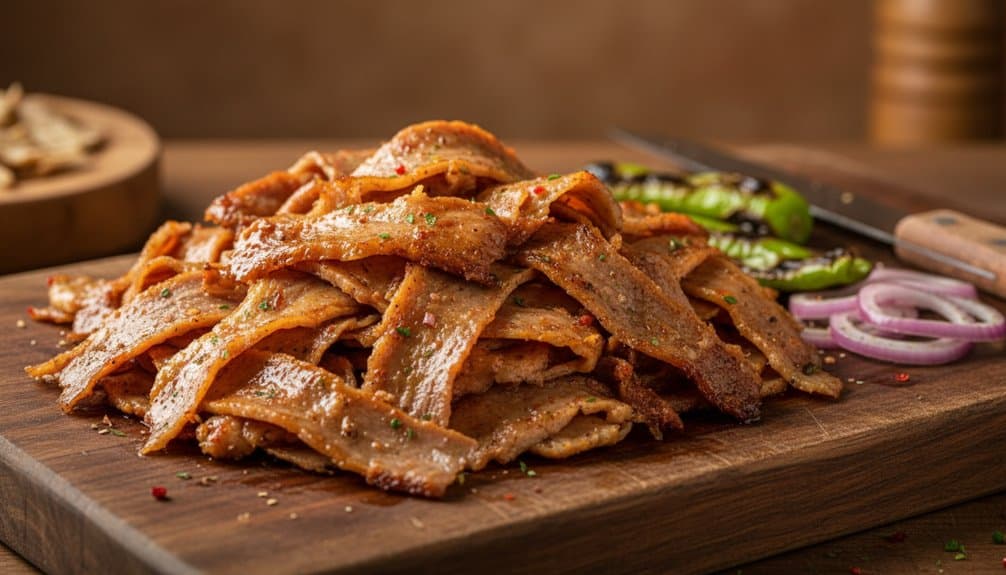
Viral Doner Kebab Recipe at Home: Rotisserie-Style Flavor Without Special Equipment
You’ll create viral doner kebab by mixing 70% ground lamb and 30% beef with paprika, cumin, oregano, garlic powder, cinnamon, and yogurt for binding. Layer the seasoned meat into a compact log, then pan-sear on high heat to develop crispy edges while keeping the interior juicy. Serve in warm pita with fresh vegetables, pickled turnips, and garlic sauce for authentic flavor. Master these techniques to unlock restaurant-quality results in your own kitchen.
Key Takeaways
- Mix 70% ground lamb and 30% ground beef with paprika, cumin, oregano, garlic powder, and yogurt for authentic flavor.
- Stack seasoned meat in flat layers, pressing firmly to create a compact cylindrical log wrapped in plastic wrap.
- Refrigerate the meat log for at least 4 hours to allow proteins to bind and form proper texture.
- Sear all sides in a hot cast iron pan until golden brown, then cook on medium heat for 15-20 minutes.
- Slice and serve in warm pita with fresh vegetables, pickled items, and creamy garlic or yogurt sauce.
Essential Ingredients and Spice Blend for Authentic Doner Kebab
Doner kebab mastery begins with selecting the right combination of meat and aromatics that’ll transform your kitchen into a Turkish street-food haven.
Your meat selection forms the foundation—combine 70% ground lamb with 30% ground beef for authentic richness, or use all beef for a milder flavor.
The spice proportions create that distinctive taste you’re craving.
Mix two tablespoons paprika, one tablespoon cumin, two teaspoons oregano, one teaspoon garlic powder, one teaspoon onion powder, half teaspoon cinnamon, and quarter teaspoon cayenne pepper.
Add one tablespoon tomato paste, two minced garlic cloves, and juice from half a lemon.
Salt generously—about two teaspoons per pound of meat.
Fresh herbs like parsley or mint add brightness.
Don’t skip the yogurt; two tablespoons help bind everything while tenderizing the meat.
These ingredients work together, creating layers of flavor that’ll make your homemade doner rival any street vendor’s creation.
Step-by-Step Method for Creating Rotisserie-Style Layers
Once you’ve prepared your seasoned meat mixture, creating authentic rotisserie-style layers requires a methodical approach that mimics the traditional vertical cooking method.
The assembly sequence starts with dividing your meat into flat, uniform portions about half-inch thick.
Begin vertical stacking by placing the first layer on a large sheet of plastic wrap or parchment paper.
Press firmly to compact and eliminate air pockets.
Add the second layer directly on top, pressing edges together to create seamless adhesion.
Continue this process until you’ve used all your meat, creating a solid, cylindrical log.
Wrap the assembled layers tightly in plastic wrap, then refrigerate for at least four hours or overnight.
This chilling period allows the proteins to bind naturally, forming the cohesive structure essential for slicing and cooking.
Your homemade doner will hold together beautifully when pan-seared or oven-roasted.
Cooking Techniques for Perfect Crispy Edges and Juicy Interior
After your doner log has chilled and set properly, achieving the perfect balance of crispy exterior and tender interior depends on controlling heat and timing.
Start with high heat searing in a cast iron skillet or heavy pan.
Heat oil until it shimmers, then carefully place your doner log seam-side down.
Don’t move it for 3-4 minutes—this creates the essential golden crust.
Rotate every few minutes, searing all sides until deeply browned.
Reduce heat to medium and continue cooking, turning regularly.
Use resting intervals between high-heat bursts to prevent overcooking the center while ensuring even browning.
Cook for 15-20 minutes total, depending on thickness.
Check internal temperature reaches 165°F for poultry or 160°F for lamb.
Let rest 5 minutes before slicing—this redistributes juices throughout the meat.
Slice thinly against the grain using a sharp knife, revealing perfectly layered, restaurant-quality doner with crispy edges and succulent interior.
Serving Suggestions and Traditional Accompaniments
While your freshly sliced doner awaits serving, you’ll want to prepare the classic accompaniments that transform this seasoned meat into an authentic Middle Eastern feast.
Flatbread choices form the foundation of your doner experience.
Warm pita pockets create perfect vessels for stuffing, while lavash or naan provide flexible wrapping options. Toast them lightly for added texture and warmth.
Traditional vegetables include crisp lettuce, diced tomatoes, thinly sliced red onions, and cucumber rounds. Fresh parsley adds herbaceous notes that complement the rich meat perfectly.
Sauce pairings elevate every bite significantly.
Creamy garlic sauce (toum) provides cooling contrast, while spicy harissa adds heat. Tahini sauce offers nutty richness, and tangy yogurt sauce balances the meat’s intensity. Don’t forget pickled turnips or jalapeños for acidic brightness.
Serve everything family-style, allowing guests to build their own combinations. This interactive approach lets everyone customize their doner experience while maintaining authentic Middle Eastern dining traditions.
Frequently Asked Questions
Can I Make Doner Kebab Ahead of Time and Reheat It Later?
Yes, you can make doner kebab ahead of time for effective meal planning.
Cook the meat completely, then store it refrigerated for up to three days.
When reheating, use a skillet over medium heat with a splash of broth to maintain moisture.
The flavor development actually improves as spices meld together during storage, making your reheated doner taste even better than fresh.
How Long Does Homemade Doner Kebab Meat Stay Fresh in the Refrigerator?
Your homemade doner kebab meat stays fresh in the refrigerator for 3-4 days when stored properly.
Follow temperature guidelines by keeping it at 40°F or below in airtight containers.
You’ll notice visual cues when it’s spoiling – look for color changes, slimy texture, or off odors.
If you’ve cooked the meat thoroughly and refrigerated it within two hours, it’ll maintain quality and safety within this timeframe.
What’s the Difference Between Doner Kebab and Shawarma or Gyros?
You’ll find these dishes share similar cooking methods but differ in regional origins and spice profiles.
Doner kebab comes from Turkey, shawarma originates from the Middle East, and gyros hail from Greece.
Each uses distinct spice blends – Turkish doner features cumin and paprika, shawarma includes Middle Eastern spices like sumac, while Greek gyros traditionally use oregano and Mediterranean herbs.
Can I Freeze the Seasoned Meat Mixture Before Cooking It?
Yes, you can freeze the seasoned meat mixture for up to three months. Wrap it tightly in plastic wrap, then place in freezer bags to prevent freezer burn.
The freezer won’t affect the texture significantly since you’ll be cooking it from frozen or thawed.
Flavor preservation remains excellent because the spices and seasonings actually penetrate deeper during freezing, enhancing taste.
Is It Safe to Eat Doner Kebab Made at Home Without a Rotisserie?
Yes, you can safely make doner kebab at home without a rotisserie. You’ll need proper temperature monitoring to ensure the meat reaches 165°F internally.
Even cooking is crucial – use methods like oven roasting, grilling, or pan-searing while rotating frequently. Don’t rely on color alone; always use a meat thermometer.
Slice thinly and serve immediately for best safety and flavor results.
Conclusion
You’ve mastered the art of creating authentic doner kebab at home without expensive equipment. Your carefully layered meat will deliver that coveted rotisserie flavor, while the proper cooking technique ensures you’ll get those crispy, caramelized edges everyone craves. Don’t forget to warm your pita, prepare fresh vegetables, and whip up that creamy garlic sauce. You’re now ready to impress family and friends with restaurant-quality doner kebab from your own kitchen.


Table of Contents






No Comments