
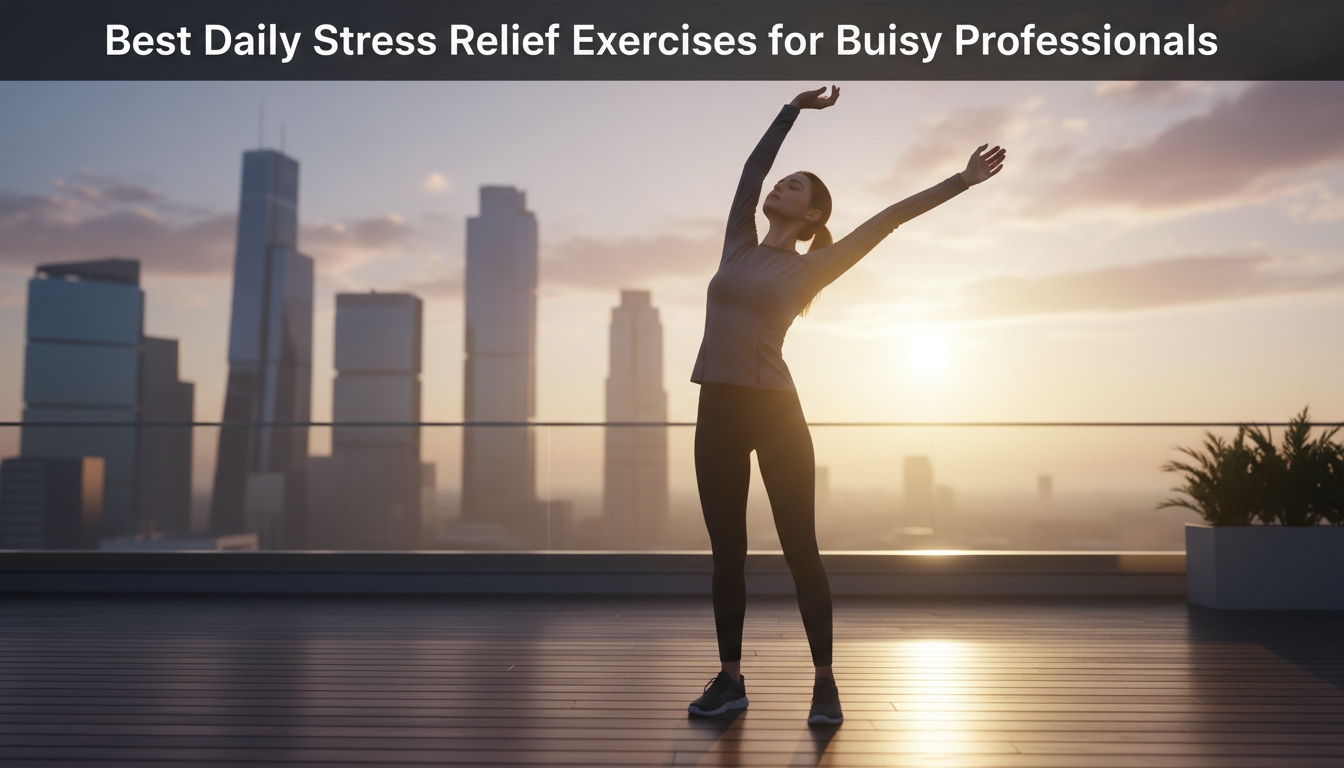
Best Daily Stress Relief Exercises for Busy Professionals
As a busy professional, take a few minutes each day to breathe deeply, cultivate mindfulness through meditation, relieve physical tension with simple stretches, boost energy and focus with midday movement, manage stress through nutritious eating and hydration, and unwind with soothing sensory experiences. Build your personalized stress relief toolkit to stay balanced and productive throughout the day.
Key Takeaways
- Engage in 5-10 minutes of deep breathing and breath awareness to activate the parasympathetic nervous system and promote relaxation.
- Practice short, focused attention meditations and journaling to calm the mind and process emotions.
- Incorporate simple stretches, neck tilts, and brief movement breaks to relieve physical tension throughout the workday.
- Stay hydrated, eat nourishing foods, and unwind with soothing sensory experiences like calming scents or nature-inspired music.
- Establish a daily routine that integrates these quick-reset tools, helping busy professionals manage stress and boost productivity.
Breathe Deeply to Calm the Mind
Why not start your day with a simple breathing exercise? Deep breathing is an effective way to calm the mind and body. Take a few minutes to sit quietly and focus on your breath. Inhale slowly through your nose, feeling your belly expand. Hold for a moment, then exhale slowly through your mouth. Repeat this cycle several times. You’ll notice your heart rate and tension levels decrease as you become more centered. Breathing deeply triggers the parasympathetic nervous system, which promotes rest and relaxation. It’s a powerful tool to manage stress and improve focus. Give it a try each morning – it only takes a few minutes, but the benefits can last all day.
Cultivate Mindfulness Through Meditation
Take time each day to prioritize a mindful practice. Engage breath awareness techniques to calm your mind.
Sustain focused attention meditation to cultivate presence.
Prioritize Daily Mindful Practice
Although modern life is often filled with constant distractions and busyness, prioritizing a daily mindful practice can provide a profound sense of calm and clarity.
Even just 5-10 minutes of focused breathing, meditation, or gentle movement can reset your mind and body.
You’ll feel more grounded, focused, and resilient in the face of stress.
Commit to a regular practice, whether it’s first thing in the morning or during a midday break.
Over time, this deliberate pause will become a cherished moment of self-care that enhances your overall well-being and productivity.
Engage Breath Awareness Techniques
How can you engage in breath awareness techniques to cultivate mindfulness through meditation? Breath awareness is a powerful tool to anchor your attention in the present moment. Start by finding a comfortable seat, closing your eyes, and focusing on the natural flow of your inhalations and exhalations. Observe the sensations of air moving in and out of your nostrils or abdomen.


- Experiment with different breathing rhythms to calm your mind.
- Notice when your mind wanders, and gently redirect your focus to your breath.
- Tune in to the pauses between breaths.
- Cultivate a sense of curiosity and self-compassion throughout your practice.
- Commit to a regular, even brief, daily breath awareness routine.
Sustain Focused Attention Meditation
While breath awareness lays the foundation for mindfulness, sustained focused attention meditation takes your practice to the next level. Hone your ability to focus by fixing your gaze on a single point or object. When your mind wanders, gently guide your attention back without judgment.
This trains your brain to stay present, even amid distractions. Regular practice enhances your capacity for concentration, boosts emotional regulation, and cultivates a greater sense of calm. Commit just 5-10 minutes daily to reap the benefits – you’ll feel more centered, clear-headed, and resilient in the face of stress.
Relieve Tension With Simple Stretches
When you’re feeling tense and stressed, simple stretches can provide quick relief. Gently stretching the major muscle groups can help release built-up tension and improve circulation. Try these easy stretches during your workday:
- Shoulder rolls: Lift your shoulders up towards your ears, then roll them back and down in a circular motion.
- Neck tilts: Slowly tilt your head to one side, feeling the stretch in the opposite side of your neck. Repeat on the other side.
- Wrist and hand stretches: Extend your arms in front of you, then flex and extend your wrists and fingers.
- Seated spinal twist: Twist your torso to one side, keeping your hips facing forward. Switch sides.
- Calf raises: Stand up, lift your heels off the ground, and lower back down to stretch your calves.
Boost Energy and Focus With Midday Movement
Struggling to power through the afternoon slump? Boost your energy and focus with midday movement. Even brief bouts of activity can revive your mind and body. Try a few quick desk stretches – roll your shoulders, clasp your hands behind your back, or gently twist your torso. Or step away for a brisk walk around the block. The fresh air and change of scenery will get your blood pumping.
Feeling ambitious? Do some light calisthenics like jumping jacks or squats. Just a few minutes of movement can elevate your mood, enhance concentration, and leave you feeling refreshed. Incorporate these simple midday exercises into your routine, and reclaim your productivity.
Manage Stress Through Nutritious Eating and Hydration
Fueling your body with whole, nutrient-dense foods is essential for managing stress. Stay hydrated throughout the day by drinking plenty of water.
Be mindful of your caffeine intake, as too much can exacerbate anxiety.
Prioritize Whole Foods
Proper nutrition is essential for managing stress as a busy professional. Prioritizing whole foods can provide your body with the nutrients it needs to function optimally during times of high stress. Incorporate these whole food tips into your daily routine:
- Focus on plant-based foods like fruits, vegetables, whole grains, and legumes
- Choose lean proteins such as chicken, fish, or tofu
- Limit processed and high-sugar items that can disrupt your energy levels
- Stay hydrated by drinking plenty of water throughout the day
- Opt for healthy fats from nuts, seeds, avocados, and olive oil
Nourishing your body with whole, nutrient-dense foods can help you better cope with the demands of your fast-paced lifestyle.
Stay Hydrated Daily
Alongside nourishing your body with whole foods, staying hydrated is just as important when managing stress as a busy professional. Dehydration can exacerbate feelings of fatigue, headaches, and irritability – making it harder to cope.
Aim to drink at least eight 8-ounce glasses of water daily. Carry a refillable bottle and set reminders to sip throughout the day. Herbal teas and infused waters also count towards your hydration goals.
Staying hydrated boosts energy, improves concentration, and supports your overall well-being. Make it a habit to hydrate consistently, and you’ll feel the difference in your stress levels.
Avoid Caffeine Excess
While caffeine can provide a temporary energy boost, consuming it in excess can actually worsen stress and anxiety. Be mindful of your caffeine intake and opt for healthier alternatives like herbal tea or infused water. Excessive caffeine can disrupt sleep, amplify jitters, and contribute to the depletion of essential nutrients.
Instead, focus on a balanced, nutritious diet that includes:
- Whole, unprocessed foods
- Healthy fats like avocados and nuts
- Lean proteins for sustained energy
- Fiber-rich fruits and veggies
- Hydrating beverages like water and herbal tea
Moderating your caffeine consumption and fueling your body with nourishing foods can help you better manage stress and maintain your well-being.
Unwind With Soothing Sensory Experiences
In today’s fast-paced world, it’s essential to find moments of tranquility to recharge and rejuvenate. One way to do this is by immersing yourself in soothing sensory experiences. Light a candle with a calming scent, like lavender or chamomile. Slip into a warm bath, letting the water’s soothing temperature envelop you. Listen to gentle, nature-inspired music that transports you to a serene setting. Run your fingers through a sand tray or squeeze a stress ball to engage your sense of touch. These simple yet powerful activities can help you unwind, lower your heart rate, and alleviate mental stress.
Incorporate them into your daily routine to cultivate a sense of peace and balance amidst the demands of your busy professional life.
Build Your Personalized Stress Relief Toolkit
What’s the next step in managing stress? Building a personalized stress relief toolkit. Choose a variety of activities that work best for you. This could include:
- Journaling to process emotions
- Listening to calming music
- Trying a short meditation
- Going for a brisk walk
- Practicing deep breathing
These tactics can help you feel more in control when life gets overwhelming. Experiment to find the right mix that soothes your mind and body. With a personalized toolkit, you’ll have go-to strategies to quickly unwind and recharge. Remember, small steps each day can make a big difference in managing stress as a busy professional.
Frequently Asked Questions
How Can I Manage Work-Related Stress Effectively?
You can manage work-related stress effectively by taking regular breaks, practicing relaxation techniques, prioritizing tasks, and seeking support from colleagues or professionals when needed. Stay organized, communicate openly, and don’t be afraid to ask for help.
What Are Some Easy-To-Implement Stress Relief Techniques?
Take short breaks, practice deep breathing, go for a quick walk, listen to calming music, and keep a gratitude journal. These easy techniques can help you manage stress throughout your busy workday.
How Can I Boost My Energy Levels During the Workday?
Take short breaks, go for a brisk walk, and stay hydrated. Eat nutrient-rich snacks, practice deep breathing, and listen to upbeat music. These simple strategies can boost your energy throughout the workday.
What Are the Best Foods to Eat for Stress Reduction?
Eat foods rich in B vitamins, omega-3 fatty acids, and magnesium to help reduce stress. Opt for whole grains, leafy greens, nuts, seeds, and lean proteins for optimal stress management.
How Can I Create a Personalized Stress Relief Routine?
Create a personalized stress relief routine by choosing activities you enjoy, scheduling them into your day, and making them a consistent habit. Start small and gradually build up your routine.
Conclusion
You’ve learned various stress relief exercises to help you manage your busy workday. Incorporate a mix of these techniques into your daily routine to combat burnout and maintain your well-being. Remember, taking time for yourself is essential. Experiment with different approaches and find what works best for you. With a little practice, you can build a personalized toolkit to thrive under pressure.


Table of Contents





No Comments