
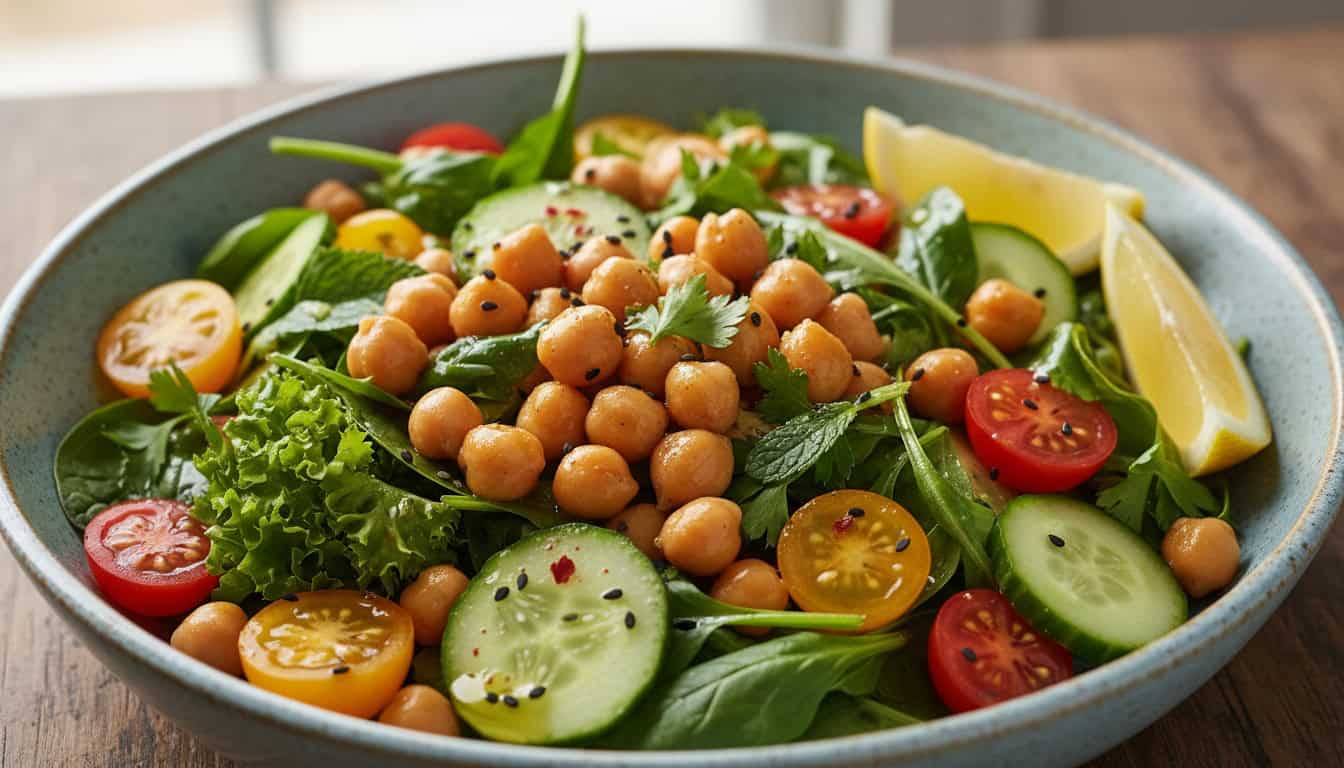
You can toss together this fresh vegan chickpea salad in under ten minutes, getting a nutrient‑dense bowl with about 340 kcal, 12 g protein, 9 g fiber, and heart‑healthy fats. Just drain and dry two cans of chickpeas, dice cucumber, tomato, bell pepper, and red onion, then whisk a lemon‑olive‑oil dressing into a glossy emulsion and toss everything for 20‑30 seconds. The salad stays crisp for three to four days if you keep the dressing separate, and the next sections reveal quick variations and perfect pairings.
Table of Contents
Why This Salad Is Perfect for Everyday Vegan Meals
A vegan chickpea salad hits the sweet spot for everyday meals because it’s quick, nutrient‑dense, and endlessly adaptable. You’ll get roughly 340 kcal, 12 g protein, 9 g fiber, and 15 g heart‑healthy fat per serving, so it fuels you without excess calories. The chickpeas supply a complete plant protein, while lemon‑juice vitamin C boosts iron uptake. You can toss it together in under ten minutes, and the simple dressing—olive oil, lemon, cumin, garlic—creates a stable emulsion that coats every bite.
Because the salad stays fresh for three to four days in an airtight container, you can prep a batch and grab it for lunch, dinner, or a snack. It pairs effortlessly with pita, grain bowls, or roasted veggies, letting you vary flavors without extra cooking. The high fiber keeps you full, supports digestion, and helps regulate blood sugar, making it a reliable, wholesome staple for any vegan routine.
Assemble the Chickpea Salad in Under 15 Minutes
You’ve already seen why this salad fits any vegan routine; now let’s get it on the table in under fifteen minutes.
Start by opening two cans of chickpeas, draining, and patting them dry—this cuts excess moisture and lets the dressing cling.
While the beans sit, dice cucumber, tomato, bell pepper, and red onion into uniform one‑centimeter pieces; a sharp knife speeds the process.
Toss the veggies with the chickpeas in a large bowl, then drizzle the pre‑measured lemon‑olive oil mixture over everything.
Use a sturdy spoon or spatula to toss for twenty‑thirty seconds, ensuring each bite gets a thin coating without bruising the vegetables.
Let the salad rest for ten minutes at room temperature; this brief pause lets flavors meld while you set the table.
Serve immediately, or cover and refrigerate for later—still crisp and vibrant after a short chill.
Master the Dressing for a Stable, Flavor‑Rich Emulsion
How can you achieve a silky, flavor‑rich dressing that clings to every chickpea and veggie? Start with a small bowl of lemon juice, a teaspoon of Dijon mustard, minced garlic, cumin, salt, and pepper. Whisk gently, then drizzle olive oil in a thin, steady stream while you keep whisking. The mustard and acid act as emulsifiers, binding the oil to the juice and creating a stable, glossy coat. If the mixture looks thin, add a splash more oil; if it thickens too quickly, thin it with a few drops of water or extra lemon juice. Taste and adjust seasoning—more salt for depth, a pinch of pepper for bite. Once the emulsion holds a smooth, thick texture, pour it over the rinsed chickpeas and diced vegetables. Toss for 20‑30 seconds, ensuring each piece is evenly coated without bruising. Let the salad rest ten minutes so flavors meld and the dressing adheres perfectly.
Create Three Quick Variations: Mediterranean, Spicy, Protein‑Boosted
Now that the dressing’s emulsion is locked in, you can customize the salad in three minutes: add Kalamata olives and crumbled vegan feta for a Mediterranean twist, stir in a teaspoon of harissa and cut the lemon a bit for a spicy kick, or fold in cooked quinoa and extra chickpeas for a protein‑boosted version.
For the Mediterranean style, toss the olives and feta gently so they stay intact, then sprinkle a pinch of oregano and a drizzle of extra‑virgin olive oil for depth.
The spicy version benefits from a quick balance: after adding harissa, taste and adjust with a splash more lemon juice or a dash of maple syrup if the heat feels sharp.
For the protein boost, pre‑cook quinoa, let it cool, then mix it with an additional 120 g of chickpeas; this raises the protein to roughly 20 g per serving while keeping the texture light and satisfying.
Store the Chickpea Salad for Maximum Freshness
You’ll keep the salad fresh longest by sealing it in an airtight container right after you toss it.
Keep the dressing in a separate jar until you’re ready to serve, so the veggies stay crisp.
This simple split prevents sogginess and preserves flavor for up to four days.
Seal in Airtight Container
Preserving the salad’s crispness and flavor hinges on sealing it tightly. Choose a container with a snap‑lock lid or a silicone gasket that squeezes out every drop of air. Before you close it, tap the salad gently to level the surface and push any excess liquid toward the edges, then press the lid down until you hear the click that confirms a vacuum‑like seal. Store the container upright to avoid pressure on the lid, and keep it in the fridge’s main compartment—not the door—where temperature stays consistent. If you notice a slight bulge after a day, reopen, pat the surface dry, and reseal. This method locks in moisture, prevents oxidation, and keeps the vegetables crunchy for up to four days.
Separate Dressing Until Serving
Keeping the lid sealed is only half the battle; the next step is to keep the dressing apart until you’re ready to eat. Store the salad veggies a dry container and the vinaigrette in a separate, tightly‑fitted jar. When you’re set to serve, give the dressing a quick shake, then pour it over the chickpeas, cucumber, tomato, and bell pepper. Toss for just 20‑30 seconds so every bite stays crisp and the vegetables don’t wilt. This method preserves the salad’s texture for up to four days and prevents the oil from soaking into the veggies, which would make them soggy. If you notice excess liquid after a long sit, drain it before adding the dressing for a fresh, vibrant finish.
Chickpea Salad Nutrition: Fiber, Protein, and Healthy Fats Explained
Each serving of the vegan chickpea salad delivers about 9 g of dietary fiber, 12 g of plant‑based protein, and 15 g of mostly monounsaturated fat, giving you a balanced mix of macronutrients that supports satiety, muscle maintenance, and heart health.
The fiber comes from chickpeas and fresh veggies, slowing glucose absorption and keeping your digestive system running smoothly.
Protein, though plant‑based, offers a complete amino‑acid profile thanks to the legumes, helping you repair tissue and stay full longer.
The monounsaturated fat, primarily from olive oil, lowers LDL cholesterol and improves endothelial function without adding excess saturated fat.
Together, these nutrients keep energy levels steady, curb cravings, and provide essential micronutrients like vitamin C from lemon, which boosts iron absorption from the chickpeas.
Best Pairings: Pita, Grain Bowls, and Roasted Veggies
Looking for a way to turn your chickpea salad into a complete meal? Pair it with warm pita to scoop up every bite, adding a soft, carb‑rich base that balances the salad’s crisp veggies. For a heartier option, toss the salad over a grain bowl—cooked quinoa, brown rice, or farro work best—so you get extra protein, fiber, and a satisfying texture contrast. Drizzle a little extra lemon‑olive oil dressing to meld flavors. If you crave roasted veggies, spread chopped carrots, sweet potatoes, and Brussels sprouts on a sheet pan, roast until caramelized, then serve alongside the salad. The smoky, sweet notes of the roasted veg complement the tangy lemon and cumin in the chickpea mix, creating a well‑rounded plate that feels both light and filling. Each pairing boosts nutrients, adds variety, and keeps your meals interesting day after day.
Frequently Asked Questions
Can I Substitute Canned Chickpeas With Cooked Dry Chickpeas?
Yes, you can swap canned chickpeas for cooked dry ones; just rinse, dry, and use roughly the same volume. The texture will be firmer, and you’ll avoid extra sodium and preservatives.
How Long Does the Dressing Stay Stable After Mixing?
You’ll find the dressing stays stable for about 30 minutes to an hour after whisking; it holds its emulsion if you keep it cool, then toss the salad promptly for best texture.
Is It Safe to Eat This Salad Without Refrigeration for a Few Hours?
Yes, you can leave it out for up to four hours, but keep it cool, covered, and avoid direct heat; beyond that, bacterial growth rises, so refrigerate or discard.
Can I Add Nuts or Seeds Without Affecting the Texture?
Yes, you can toss in nuts or seeds; they’ll stay crunchy and won’t sog the the salad. Just keep the dressing light and add them right before serving to preserve texture.
What’s the Best Way to Make the Salad Gluten‑Free?
You keep it gluten‑free by using only chickpeas, fresh veggies, olive oil, lemon, and spices—no breadcrumbs, croutons, or wheat‑based dressings. Check canned chickpeas for hidden gluten additives, and avoid processed sauces containing malt or soy sauce.
Conclusion
You’ve just discovered a go‑to vegan chickpea salad that’s quick, nutritious, and endlessly adaptable. With a simple prep, a creamy emulsified dressing, and three tasty twists, it fits any meal plan—from pita pockets to grain bowls. Store it right, and it stays fresh for days, delivering fiber, protein, and healthy fats every bite. Make this salad a daily staple and enjoy effortless, wholesome eating all week long.


Sorry, the comment form is closed at this time.