
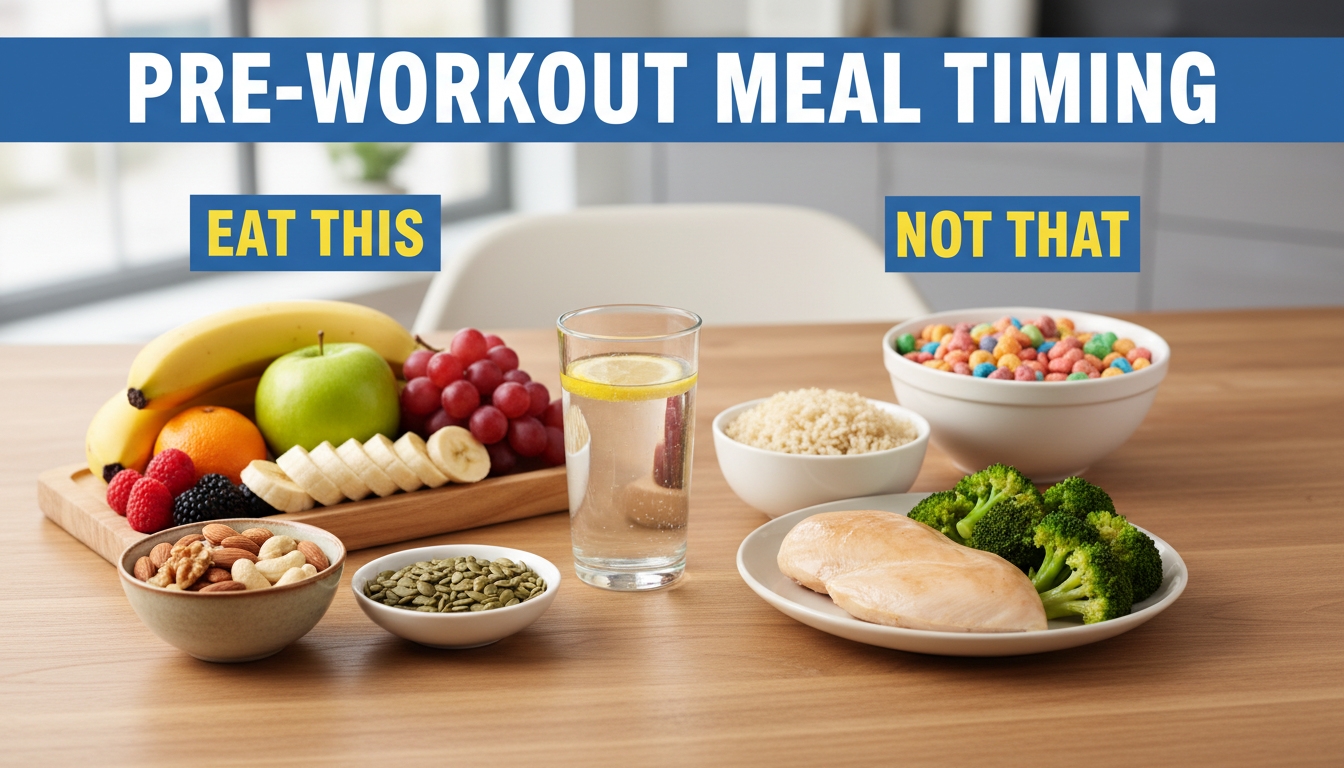
Eat a solid, balanced meal 60–90 minutes before you train—think complex carbs like oatmeal or sweet potatoes, a moderate amount of lean protein, and a splash of healthy fat. If you’re short on time, grab a light snack 30–60 minutes ahead, such as a banana with a small granola bar or a whey‑isolate shake mixed with easy‑digesting carbs. Skip high‑fat or high‑fiber foods right before the session to avoid cramps, and stay hydrated. Keep reading to discover more specific timing tricks for different workouts.
Table of Contents
How Early Should You Eat Before a Workout?
When should you eat before a workout? You’ll want to give your body enough time to digest and convert food into usable energy without feeling heavy. Aim for a solid meal 2–3 hours prior, focusing on complex carbs, moderate protein, and low fat. This window lets insulin rise, glycogen stores fill, and amino acids become available for muscle repair.
If you’re short on time, a light snack 30–60 minutes before can boost blood glucose; choose easily digestible carbs like a banana or a small granola bar, paired with a bit of protein. Avoid large portions or high‑fat foods close to training, as they slow gastric emptying and may cause cramping. Listen to your gut: if you feel sluggish, shift the meal earlier; if you’re hungry, add a quick snack.
Consistently timing your intake will help you sustain intensity, protect muscle, and recover faster after each session.
What Foods Make a Balanced Pre‑Workout Nutrition Meal?
A solid pre‑workout plate should blend carbs, protein, and a touch of healthy fat to fuel performance and protect muscle. Think oatmeal topped with a spoonful of almond butter and a handful of berries, or a whole‑grain wrap filled with hummus, sliced turkey, and avocado.
Choose complex carbs like brown rice, quinoa, or sweet potatoes for steady energy, and pair them with lean protein sources such as Greek yogurt, cottage cheese, or eggs.
Add a modest amount of healthy fat—olive oil drizzle, nuts, or seeds—to slow digestion just enough to keep you satiated without feeling heavy.
For quick convenience, blend a banana with whey‑free protein powder, a splash of oat milk, and a pinch of cinnamon, then toss in a tablespoon of chia seeds.
Aim for a meal 60‑90 minutes before training, sizing portions to your body weight and intensity level, so you hit the gym feeling energized and ready.
Fast‑Digesting Protein Choices for Pre‑Workout Nutrition
Looking for a protein that hits your muscles fast without weighing you down? Whey isolate is your go‑to: it digests in 30–60 minutes, delivers a full amino‑acid profile, and spikes blood flow quickly. If you’re dairy‑sensitive, try plant‑based pea protein isolates; they’re low‑fiber and absorb within an hour. Egg white powder offers a lean, high‑quality option that clears the stomach swiftly, while collagen peptides add connective‑tissue support without bulk. For ultra‑quick delivery, consider liquid or ready‑to‑drink whey blends, which bypass the chewing step and start amino‑acid flow almost immediately. Pair any of these with a small amount of simple carbs—like a banana or a splash of juice—to further speed insulin‑mediated uptake. Keep portions modest (15‑20 g protein) to avoid gastrointestinal discomfort, and consume 30–45 minutes before training for optimal muscle‑building fuel.
Timing Strategies for Pre‑Workout Nutrition by Exercise Type
The fast‑digesting proteins you just read about work best when matched to the timing demands of your specific workout. For high‑intensity interval training (HIIT) and sprint sessions, aim to fuel 30–45 minutes beforehand with a light carb‑protein blend; the quick energy spikes your muscles just as you need it.
Strength and hypertrophy days benefit from a slightly earlier window—about 60–90 minutes pre‑lift—so you can digest the protein and replenish glycogen without feeling heavy.
Endurance activities like long runs or cycling call for a 90‑minute lead‑time, pairing carbs with a modest protein dose to sustain energy and curb muscle breakdown.
Tailor your timing to the exercise type, and you’ll maximize performance while minimizing stomach discomfort.
- HIIT/sprints: 30‑45 min before, light carb‑protein mix.
- Strength/hypertrophy: 60‑90 min before, balanced carb‑protein.
- Endurance: 90 min before, higher carbs, modest protein.
Typical Pre‑Workout Nutrition Mistakes and Quick Fixes
If you skip the basics of timing, portion size, or macronutrient balance, you’ll quickly hit a wall of fatigue, cramping, or sluggish performance. One common mistake is loading up on a huge, protein‑only shake right before training; without carbs, your muscles lack quick energy, and excess protein can cause stomach upset. Fix it by pairing 20–30 g of protein with 30–50 g of easily digestible carbs like a banana or oat muffin) 60–90 minutes pre‑workout.
Another error is eating a high‑fiber, high‑fat meal too close to the session, which slows gastric emptying and triggers nausea. Swap that for a low‑fiber option—Greek yogurt with honey or a rice cake with almond butter—at least two hours prior.
Finally, many skip hydration, assuming a sip of water suffices. Aim for 300–500 ml of water plus electrolytes 30 minutes before you start moving.
These quick fixes keep energy steady and performance sharp.
Frequently Asked Questions
Should I Hydrate Differently on a Cardio vs. Strength Day?
Yes, you should tweak hydration: cardio days need a bit more water before and during to replace sweat losses, while strength days focus on maintaining steady fluid levels to support muscle function and recovery.
Can Caffeine Replace a Carbohydrate Source in a Pre‑Workout Meal?
No, caffeine can’t replace carbs. It boosts alertness, but carbs supply the glucose your muscles need for sustained energy. Pair caffeine with a modest carbohydrate snack to fuel performance and avoid early fatigue.
How Does Intermittent Fasting Affect Pre‑Workout Nutrition Timing?
You’ll need to shift your eating window so the meal falls within your feeding period, otherwise you’ll train on empty stomachs. Aim for a light carbs‑protein snack 30‑60 minutes before you start.
Are Pre‑Workout Supplements Necessary if I Eat a Balanced Meal?
You don’t need supplements if your balanced meal already supplies carbs, protein, and healthy fats; the nutrients will fuel your workout, support recovery, and maintain performance without extra pills.
Does My Gender Influence the Ideal Pre‑Workout Meal Composition?
Your gender only tweaks minor details—men usually benefit from slightly more protein and carbs for muscle fuel, while women may favor a lighter carb load; overall, balance and timing matter most.
Conclusion
By now you know that timing, balance, and the right protein can boost your performance. Eat a light, carb‑rich snack 30‑60 minutes before you train, pair it with fast‑digesting protein, and adjust the timing for cardio versus strength sessions. Avoid heavy, fatty meals that linger, and fix any missteps with quick, nutrient‑dense options. Stick to these guidelines, and you’ll fuel your workouts efficiently and feel stronger every time.


Sorry, the comment form is closed at this time.