
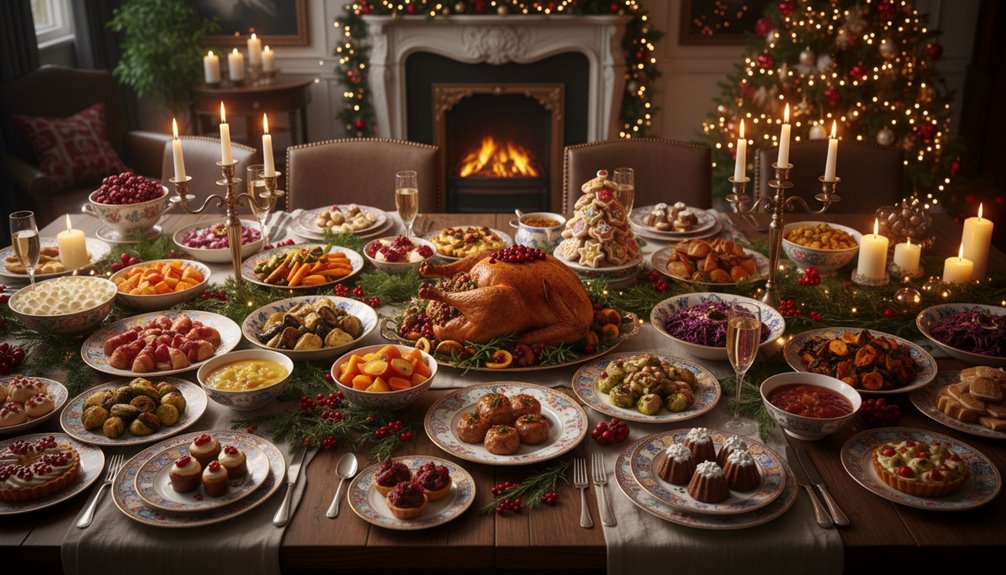
40 Festive Dishes to Elevate Your Holiday Table
You’ll master the perfect Brown Sugar and Mustard Glazed Pork Tenderloin by whisking brown sugar and mustard until smooth, then gradually adding liquid to prevent lumps. Apply thin glaze coats every 10 minutes during the final cooking at 425°F, letting each layer set for optimal caramelization. Your mixture should coat a spoon’s back but drip slowly. Cook to 140°F internal temperature for slightly pink, juicy meat. These techniques unlock professional results for all your holiday centerpieces.
Table of Contents
Key Takeaways
- Glazed pork tenderloin creates an elegant centerpiece with caramelized exterior and juicy interior when cooked at 425°F.
- Apply thin glaze coats every 10 minutes during final cooking for optimal caramelization and festive presentation.
- Brown sugar and mustard glaze adds holiday sweetness and tang that elevates simple pork to celebration-worthy status.
- Temperature control ensures perfectly cooked meat: 135°F for medium-rare, 140°F for medium, maintaining moisture and tenderness.
- Reserve uncontaminated glaze for final presentation to create glossy, professional finish that impresses holiday guests.
Honey-Glazed Spiral Ham With Pineapple and Cloves
When you’re looking for a centerpiece that’ll impress your holiday guests, this honey-glazed spiral ham delivers both stunning presentation and irresistible flavor. You’ll start your ham preparation by scoring the surface in a diamond pattern, creating pockets for the glaze to penetrate deeply. Insert whole cloves at each intersection for aromatic warmth that’ll fill your kitchen.
For the pineapple glaze, you’ll combine fresh pineapple juice with honey, brown sugar, and Dijon mustard. Brush this mixture generously over the ham every twenty minutes during baking. The sugars caramelize beautifully, forming a glossy coating that’s both sweet and tangy.
You’ll arrange pineapple rings on top during the final thirty minutes, securing them with toothpicks. They’ll caramelize alongside the ham, adding tropical sweetness. The spiral cut makes serving effortless—you’ll simply slice between the pre-cut sections. Your guests won’t resist returning for seconds of this holiday showstopper.
Herb-Crusted Prime Rib With Red Wine Jus
You’ll want to choose a well-marbled prime rib roast with even fat distribution and a bright red color for the best flavor and tenderness.
Start your red wine jus by deglazing the roasting pan with a bold red wine, then reduce it with beef stock and aromatics until it reaches a silky consistency.
The key to both elements is timing—let your meat rest properly while you finish the jus to ensure everything comes together perfectly at serving.
Selecting Prime Rib Cuts
Before heading to the butcher counter, know that selecting the right prime rib cut determines whether you’re serving a memorable centerpiece or an expensive disappointment. You’ll want bone in prime rib for maximum flavor—the bones act as natural heat conductors and add richness to the meat. Look for cuts with bright red color and abundant marbling throughout.
While prime grade costs more, choice grade prime rib offers excellent quality at a better price point. Ask your butcher for cuts from the loin end, which contain less connective tissue than the chuck end. You’ll need approximately one pound per person with bone-in cuts, or three-quarters pound for boneless. Request that your butcher French the bones for an elegant presentation that’ll impress your guests.

Making Red Wine Jus
After your prime rib reaches its perfect internal temperature, transform the pan drippings into a luxurious red wine jus that elevates the entire dish. Pour the drippings through a fine-mesh strainer into a saucepan, removing any solids.
Add a cup of quality red wine and bring to a gentle simmer over medium heat. You’ll create the perfect red wine reduction by cooking it down for 10-12 minutes, stirring occasionally. The liquid should reduce by half, concentrating those rich flavors.
Add fresh thyme and a tablespoon of cold butter, whisking until glossy. The ideal jus consistency coats the back of a spoon but still pours smoothly. If it’s too thick, add beef stock; if too thin, continue reducing. Season with salt and pepper before serving.
Maple-Bourbon Turkey With Sage Butter
You’ll transform your holiday turkey into a showstopper by mastering three essential techniques.
First, you’ll create a glossy maple-bourbon glaze that caramelizes beautifully while adding layers of sweet and smoky flavor.
Then you’ll whip up compound sage butter to slip under the skin, and finally apply proven roasting methods that ensure perfectly juicy meat with crispy, golden skin.
Maple-Bourbon Glaze Preparation
While the turkey rests before carving, prepare the maple-bourbon glaze that’ll transform this holiday centerpiece into something extraordinary. You’ll create this glaze through a simple bourbon reduction process that intensifies both flavor and aroma.
Pour one cup of bourbon into a medium saucepan and simmer over medium-low heat until it reduces by half, about eight minutes.
Add three-quarters cup of pure maple syrup for the maple infusion, along with two tablespoons of butter and a pinch of cayenne. Whisk continuously as the mixture bubbles gently. You’re looking for a consistency that coats the back of a spoon but still drizzles easily. The glaze should taste boldly of bourbon with maple’s sweetness balancing the alcohol’s bite. Strain through fine mesh before serving.
Sage Butter Technique
Fresh sage butter elevates your maple-bourbon turkey from memorable to unforgettable. You’ll create this herb infused compound by combining softened butter with finely chopped fresh sage leaves, minced garlic, and a pinch of salt. Work these ingredients together until they’re fully incorporated, then transfer the mixture onto parchment paper and roll it into a log.

Gently loosen the turkey’s skin and spread the sage butter directly on the meat, focusing on the breast and thigh areas. This technique ensures the butter melts into the turkey during roasting, creating an incredible flavor profile that complements the maple-bourbon glaze perfectly.
The sage’s earthy notes balance the sweetness while keeping the meat exceptionally moist. Reserve extra sage butter for basting halfway through cooking time.
Turkey Roasting Tips
After applying your sage butter, position the turkey breast-side up on a roasting rack inside a heavy-duty pan. You’ll achieve the best results by implementing proven brining techniques beforehand—either wet-brine for 12-24 hours or dry-brine for superior skin crispiness.
During roasting, follow these essential steps:
- Start at 425°F for 30 minutes to crisp the skin
- Reduce to 325°F and continue roasting until done
- Rest for 30 minutes before carving to redistribute juices
Temperature monitoring is crucial—you’re aiming for 165°F in the thickest part of the thigh. Don’t rely on pop-up timers; invest in a reliable meat thermometer instead. If the skin browns too quickly, tent with foil. Baste every 45 minutes with pan drippings mixed with maple-bourbon glaze for that signature holiday flavor.
Pomegranate-Glazed Cornish Game Hens
Why settle for ordinary roasted chicken when you can serve these stunning pomegranate-glazed Cornish game hens at your next celebration? These individual birds create an elegant presentation that’ll impress your guests while delivering incredible flavor in every bite.
Start your pomegranate glaze preparation by reducing pomegranate juice with honey, balsamic vinegar, and fresh thyme until it’s thick and syrupy. You’ll need about thirty minutes to achieve the perfect consistency.
Brush this mixture over your hens every fifteen minutes during roasting for a gorgeous mahogany finish.
When pairing Cornish game hens with sides, think beyond traditional accompaniments. Wild rice pilaf with dried cranberries complements the tart-sweet glaze beautifully. Roasted Brussels sprouts with pancetta add savory depth, while butternut squash brings earthy sweetness to the plate.
You’ll find these hens cook faster than turkey—just forty-five minutes at 425°F. Their smaller size means everyone gets their own perfectly portioned bird with crispy skin and juicy meat.
Brown Sugar and Mustard Glazed Pork Tenderloin
You’ll want to whisk your brown sugar and mustard glaze until it’s completely smooth, adding a splash of apple cider vinegar to balance the sweetness.
Set your oven to 425°F and roast the tenderloin for 20-25 minutes until it reaches an internal temperature of 145°F. Let the meat rest for five minutes before slicing to keep those flavorful juices from running out.
Glaze Preparation Tips
Setting up your glaze correctly can make or break this festive centerpiece. You’ll want to achieve the perfect glaze consistency by whisking brown sugar and mustard until smooth, adding liquid gradually to avoid lumps. The mixture should coat the back of a spoon but still drip slowly.
Master these glaze application techniques for professional results:
- Brush in layers – Apply thin coats every 10 minutes during the final cooking stage
- Reserve extra glaze – Keep some uncontaminated mixture for final presentation
- Let it caramelize – Allow each layer to set before adding more
Don’t rush the process. You’re building flavor complexity with each application. If your glaze seems too thick, thin it with apple juice or white wine. Too thin? Simmer it briefly to concentrate the flavors before brushing onto your pork.
Cooking Temperature Guide
Pulling off perfectly cooked pork tenderloin requires precise temperature monitoring throughout the cooking process. You’ll need to maintain your oven temperature at 425°F for optimal caramelization of the glaze while ensuring the meat stays juicy.
| Doneness Level | Internal Temperature | Result |
|---|---|---|
| Medium-Rare | 135°F | Pink, incredibly tender |
| Medium | 140°F | Slightly pink, juicy |
| Medium-Well | 145°F | USDA recommended, safe |
| Well-Done | 150°F | Fully cooked, drier |
| Overcooked | 155°F+ | Tough, disappointing |
Check the internal temperature every 5 minutes after the 15-minute mark. You’re aiming for 140-145°F for the perfect balance of safety and succulence. Remove the tenderloin when it’s 5°F below your target since it’ll continue cooking while resting. Let it rest for 5 minutes before slicing to redistribute the juices throughout the meat.
Roasted Duck À L’orange With Crispy Skin
Breaking into the world of French cuisine doesn’t get more impressive than mastering duck à l’orange, a dish that transforms a simple roasted bird into an elegant centerpiece with its glossy citrus glaze and shatteringly crisp skin. You’ll find duck preparation isn’t as daunting as it seems when you follow the right technique.
Start by scoring the skin in a crosshatch pattern to render out excess fat. This crucial step ensures you’ll achieve that coveted crispy exterior while keeping the meat succulent.
Your orange sauce requires three essential components:
- Fresh orange juice – provides bright acidity
- Grand Marnier – adds sophisticated depth
- Duck drippings – creates rich, complex flavor
Roast at 325°F for 20 minutes per pound, pricking the skin periodically to release fat. You’re building layers of flavor while the skin crisps to perfection. The final basting with your orange sauce creates that signature glossy finish that’ll have guests thinking you’ve trained in Paris.
Beef Wellington With Mushroom Duxelles
The crown jewel of British cuisine, beef Wellington demands precision but rewards you with tender beef wrapped in layers of savory mushroom duxelles and buttery puff pastry. You’ll transform a simple beef tenderloin into an impressive centerpiece that’ll have guests talking long after dinner ends.
Selecting beef cuts requires careful consideration. Choose center-cut tenderloin for uniform thickness and even cooking. Look for well-marbled meat with bright red color. Sear it perfectly to lock in juices before assembly.
Preparing duxelles forms the dish’s foundation. You’ll finely chop mushrooms, shallots, and garlic, then cook them until moisture evaporates completely. This concentrated mixture prevents soggy pastry while adding earthy depth. Spread it over prosciutto-lined crêpes before wrapping your beef.
Temperature control determines success. Use a meat thermometer to achieve your desired doneness—remove at 120°F for rare, 125°F for medium-rare. Rest the Wellington before slicing to redistribute juices throughout the meat.
Garlic and Rosemary Leg of Lamb
When you’re craving a show-stopping centerpiece that’s simpler than beef Wellington, garlic and rosemary leg of lamb delivers bold Mediterranean flavors with minimal fuss. You’ll transform an ordinary dinner into a memorable feast with this classic pairing that’s impressed guests for centuries.
The garlic flavor profile penetrates deep into the meat through strategic slits you’ll cut across the surface. Insert slivers of fresh garlic and rosemary sprigs directly into these pockets. As the lamb roasts, the rosemary aroma fills your kitchen while the herbs infuse every bite.
For perfect results, you’ll need:
- Score the fat cap in a crosshatch pattern for crispy rendering
- Rest the meat at room temperature for 45 minutes before roasting
- Use a meat thermometer to hit 135°F for medium-rare
Season generously with salt and pepper, then roast at 450°F initially to develop a golden crust. You’ll reduce the heat to finish cooking evenly throughout.
Cranberry-Stuffed Pork Loin Roast
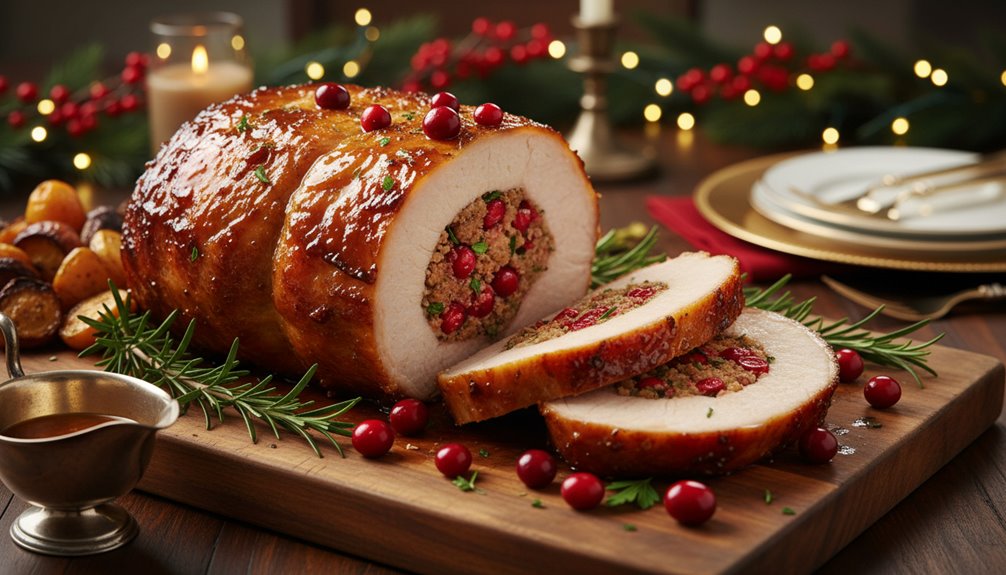
Rolling out a butterflied pork loin transforms this humble cut into an elegant holiday roast that’ll rival any turkey or ham. You’ll create a stunning spiral when you spread dried cranberries, breadcrumbs, and fresh sage across the meat’s surface before rolling and tying it tightly.
The magic happens through smart flavor pairings—tart cranberries cut through the pork’s richness while herbs like sage and thyme complement its natural sweetness. You’re building texture contrast with every component: the tender meat against chewy cranberries, crispy rendered fat meeting soft stuffing.
Score the skin in a crosshatch pattern and rub it with salt an hour before roasting. This ensures crackling that shatters at first bite. Roast at 425°F for 20 minutes, then reduce to 350°F until the internal temperature reaches 145°F. Let it rest for 15 minutes before slicing to reveal those gorgeous cranberry-studded spirals that’ll have everyone reaching for seconds.
Classic Roast Goose With Apple Stuffing
You’ll want to choose a young goose weighing 10-12 pounds for the most tender meat and manageable cooking time.
Start your apple stuffing by sautéing diced apples with onions, sage, and breadcrumbs to create a sweet-savory filling that complements the rich bird.
Master the roasting process by pricking the skin all over to render the fat, starting at high heat for crispy skin, then lowering the temperature for even cooking.
Selecting Your Goose
Although many home cooks feel intimidated by the prospect of roasting a goose, choosing the right bird makes all the difference between a memorable feast and a disappointing meal. You’ll want to focus on sourcing organic geese from reputable farms that prioritize ethical raising practices. These birds typically have better fat distribution, which you’ll appreciate when preserving goose fat for future cooking.
When selecting your goose, remember these essential criteria:
- Weight matters – Choose a 10-12 pound bird to serve 6-8 people comfortably
- Check freshness – Look for plump breasts, intact skin, and a clean smell
- Plan ahead – Order from your butcher two weeks before your event
A quality goose costs more than turkey, but you’re investing in superior flavor and texture that’ll transform your holiday table.
Apple Stuffing Preparation
While your goose rests at room temperature, prepare the apple stuffing that’ll complement its rich, gamey flavor perfectly. You’ll need tart apples, onions, and fresh herbs for optimal flavor pairings. Core and dice four Granny Smith apples, then sauté them with butter until slightly softened. Add diced onions and cook until translucent.
| Ingredient | Texture Role |
|---|---|
| Breadcrumbs | Absorbs juices, creates body |
| Apples | Provides moisture, slight crunch |
| Sage leaves | Adds aromatic depth |
Mix in day-old breadcrumbs for ideal texture combinations—they’ll soak up the goose fat while maintaining structure. Season with fresh sage, thyme, salt, and pepper. Don’t overmix; you want distinct pieces rather than mush. Let the mixture cool completely before stuffing your bird to ensure even cooking.
Roasting Techniques
Setting up your roast goose for success requires mastering the high-then-low temperature method that’s been perfected over centuries. You’ll start at 425°F for 30 minutes to crisp the skin, then reduce to 350°F for even heating throughout the remaining cook time.
Before roasting, ensure proper seasoning penetrates every surface:
- Score the skin in a crosshatch pattern to release fat
- Salt generously inside and out 24 hours ahead
- Pierce the skin around thighs and lower breast
You’re aiming for an internal temperature of 165°F at the thickest part of the thigh. Rotate your pan halfway through cooking to promote uniform browning. Don’t forget to drain the rendered fat every 45 minutes—you’ll use it later for roasting potatoes.
Truffle Mac and Cheese With Gruyère Crust
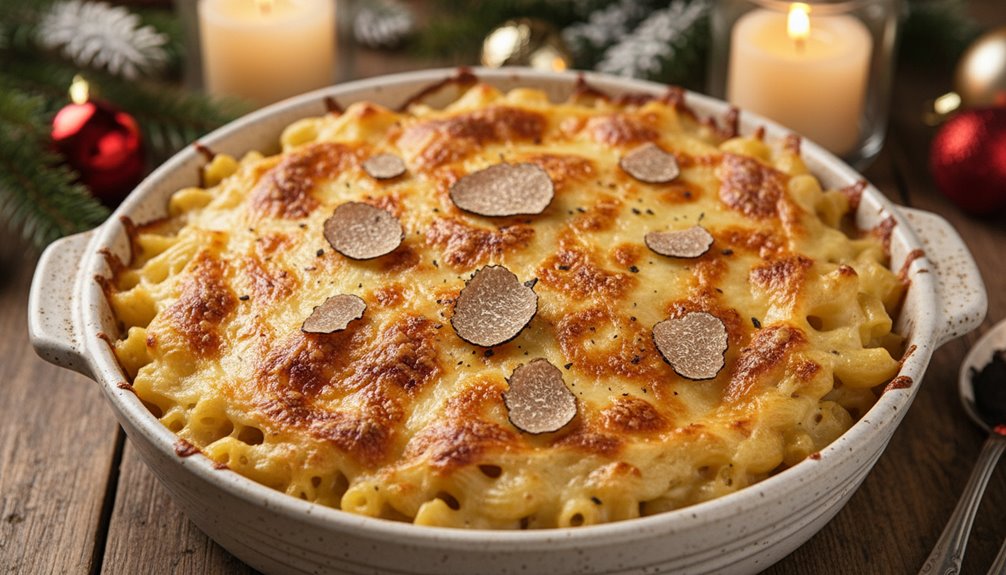
Few holiday side dishes command attention quite like truffle mac and cheese crowned with a golden Gruyère crust. You’ll transform this comfort food classic into an elegant showstopper by choosing truffle varieties wisely—white truffles offer delicate earthiness while black truffles deliver bolder, more robust flavors.
Start by blending cheese flavors strategically. You’ll want sharp white cheddar for tang, fontina for creaminess, and aged Gruyère for that nutty depth. Cook your pasta just shy of al dente since it’ll continue cooking in the oven. Fold in truffle oil or shaved fresh truffles with the cheese sauce, then transfer everything to your baking dish.
For the crust, you’ll combine panko breadcrumbs with extra Gruyère and a touch of butter. Broil until it’s bubbling and bronze. The contrast between the crispy top and creamy interior creates textural magic. Serve immediately while the truffle aroma’s at its peak—your guests won’t stop talking about it.
Roasted Brussels Sprouts With Bacon and Balsamic
You’ll want to choose Brussels sprouts that feel firm and heavy for their size, with bright green, tightly packed leaves and no yellowing or black spots.
To achieve perfect caramelization, cut them in half to create a flat surface that’ll make direct contact with your hot pan, and don’t move them around too much while they’re cooking. The key is letting them sit undisturbed in the oil or bacon fat until they develop that gorgeous golden-brown crust before tossing them with the balsamic.
Selecting Fresh Brussels Sprouts
Picking out the perfect Brussels sprouts at the market makes all the difference between a memorable side dish and one that falls flat. When selecting for freshness, you’ll want to examine each detail carefully. Look for sprouts that feel firm and heavy for their size, with tightly packed leaves showing vibrant green color.
Here’s what you should check:
- Size matters – Choose sprouts of similar size (1-1.5 inches) for even cooking
- Avoid yellowing – Skip any with yellow or wilted outer leaves
- Check the stem – Fresh cuts indicate recent harvesting
Once you’ve made your selection, storing Brussels sprouts properly extends their life. Keep them unwashed in a perforated plastic bag in your crisper drawer. They’ll stay fresh for up to a week, maintaining that perfect texture for roasting.
Achieving Perfect Caramelization
Cutting through to the secret of restaurant-quality Brussels sprouts starts with understanding how heat transforms their natural sugars into deep, golden-brown edges. You’ll need proper temperature control and patience to achieve that coveted caramelization.
Set your oven to 425°F and don’t crowd the pan—that’s how you’ll guarantee even browning. Space each sprout cut-side down with room to breathe.
| Time | Visual Cue | Action |
|---|---|---|
| 0-10 min | Sizzling edges | Don’t touch them |
| 10-15 min | Golden bottom | Flip once |
| 15-20 min | Deep bronze | Remove from heat |
You’re aiming for crispy exteriors while maintaining tender centers. If they’re blackening too quickly, reduce heat to 400°F. When edges turn mahogany and you can pierce them easily with a fork, they’re perfect.
Sweet Potato Casserole With Pecan Streusel
When you’re planning your holiday menu, sweet potato casserole with pecan streusel delivers the perfect balance of creamy sweetness and crunchy texture that guests expect at festive gatherings. You’ll appreciate this dish’s impressive nutrition profile—sweet potatoes provide vitamin A, fiber, and potassium while pecans add heart-healthy fats and protein.
To create the ultimate casserole, follow these essential steps:
- Select quality ingredients: Choose sweet potatoes from sustainable farming sources for optimal flavor and environmental responsibility
- Perfect the base: Steam potatoes until fork-tender, then mash with butter, cream, and warm spices
- Master the streusel: Combine chopped pecans with brown sugar, flour, and cold butter until crumbly
You’ll achieve best results by assembling everything in advance and baking just before serving. The contrast between the silky potato base and crispy pecan topping creates textural interest that elevates this traditional side dish. Your guests won’t resist returning for seconds of this holiday favorite.
Green Bean Almondine With Lemon Butter
While sweet potato casserole brings richness to your holiday table, green bean almondine with lemon butter offers a lighter counterpoint that won’t weigh down your guests. You’ll achieve restaurant-quality results by mastering the blanching technique: plunge trimmed green beans into boiling salted water for three minutes, then immediately transfer them to an ice bath. This preserves their vibrant color and perfect crisp-tender texture.
Toast sliced almonds in butter until they’re golden and fragrant. Add fresh lemon zest to brighten the nutty flavor profile. When you’re ready to serve, quickly sauté the blanched beans in the lemon butter, tossing them with the toasted almonds. Season with salt and freshly cracked pepper. The dish comes together in under fifteen minutes, making it ideal when you’re juggling multiple courses. Your guests will appreciate this elegant vegetable side that doesn’t compete with heavier mains yet still delivers sophisticated flavor.
Creamed Spinach With Parmesan and Nutmeg
Melt away any skepticism about creamed spinach with this elevated version that transforms humble greens into a luxurious side dish. You’ll create a velvety masterpiece that rivals any steakhouse offering while adding elegance to your holiday spread.
Start by wilting fresh spinach, then fold it into a rich béchamel sauce infused with garlic and shallots. The secret lies in achieving the perfect creamy texture without drowning the greens. Add freshly grated Parmesan for depth and a hint of freshly grated nutmeg that releases its warm, distinctive nutmeg aroma throughout the dish.
Follow these essential steps for success:
- Squeeze thoroughly – Remove excess moisture from cooked spinach to prevent watery results
- Layer flavors – Build complexity with sautéed aromatics before adding cream
- Finish properly – Fold in cheese off-heat to maintain smoothness
You’ll serve a side dish that converts even spinach skeptics into believers.
Honey-Roasted Rainbow Carrots With Thyme
Transform ordinary root vegetables into a stunning centerpiece by roasting rainbow carrots until they caramelize to perfection. You’ll achieve the best results when you toss whole, peeled carrots with olive oil, honey, and fresh thyme sprigs. The key roasting technique involves starting at 425°F for the first 20 minutes, then reducing to 375°F to prevent burning while ensuring tender interiors.
The honey’s natural sugars create a glossy coating that intensifies the carrots’ sweetness, while thyme adds an earthy complexity. This flavor pairing works because the herb’s subtle pine notes complement the vegetables’ natural earthiness without overpowering them. You can enhance the dish by adding a sprinkle of flaky sea salt and cracked black pepper just before serving.
Choose carrots of similar thickness so they’ll cook evenly. Purple, orange, yellow, and white varieties don’t just look beautiful—they each bring unique flavor profiles that make every bite interesting.
Butternut Squash Gratin With Sage
When you’re looking for a side dish that combines comfort with elegance, butternut squash gratin delivers on both counts. This golden masterpiece transforms humble squash into a show-stopping accompaniment that’ll complement any festive main course. The crispy sage leaves on top provide an aromatic finish that elevates the entire dish.
You’ll love how the flavor profile balances sweetness with savory depth:
- Caramelized edges develop as the squash roasts, creating natural sugars
- Fresh sage infuses each layer with earthy, peppery notes
- Gruyère cheese melts into a nutty, creamy sauce
The texture contrast makes every bite interesting—tender squash layers yield to your fork while the bubbly cheese top offers resistance. You’re essentially creating a lighter alternative to potato gratin that won’t weigh down your holiday spread. Slice the butternut squash uniformly thin for even cooking, and don’t skip the final broiling step that creates those irresistible golden-brown spots.
Wild Rice Pilaf With Dried Cranberries and Pecans
You’ll want to select true wild rice rather than paddy-grown varieties for its superior nutty flavor and firmer texture that won’t turn mushy. Choose plump, unsweetened cranberries and toast your pecans before adding them to intensify their richness.
The secret to perfect pilaf lies in sautéing the rice in butter first, then using a 3:1 ratio of warm stock to rice while keeping the pot covered during the entire cooking process.
Ingredient Selection Tips
How do you ensure your wild rice pilaf achieves that perfect balance of nutty, sweet, and savory flavors? Start with ingredient quality—it’s the foundation of any memorable dish. You’ll want genuine wild rice, not paddy-grown varieties that lack complexity.
Consider these selection priorities:
- Choose plump, unsweetened cranberries that haven’t been coated with excess oil or preservatives
- Select fresh pecans with intact halves that smell sweet, not rancid or bitter
- Buy rice from current harvest years for optimal texture and flavor
Seasonal availability affects pricing and freshness. You’ll find better pecans in fall, while cranberries peak from October through December. Don’t settle for stale nuts from bulk bins—they’ll ruin your pilaf’s delicate flavor profile.
Cooking Technique Secrets
Once you’ve gathered quality ingredients, mastering the cooking technique transforms them into an extraordinary pilaf. You’ll achieve restaurant-quality results by toasting the wild rice before adding liquid—this signature technique intensifies its nutty flavor. Always use a 3:1 liquid-to-rice ratio and maintain a gentle simmer.
| Step | Temperature | Duration |
|---|---|---|
| Toast Rice | Medium-High | 3-4 minutes |
| Simmer | Low | 45-50 minutes |
| Rest | Off Heat | 10 minutes |
Don’t lift the lid during cooking; you’ll release essential steam. These advanced techniques ensure perfectly tender grains. Add cranberries during the final 10 minutes to preserve their texture. Fold in toasted pecans after removing from heat—they’ll stay crisp. You’ve now mastered the secrets professional chefs use for exceptional wild rice pilaf.
Hasselback Potatoes With Garlic and Herbs
The Hasselback potato transforms an ordinary spud into an elegant accordion of crispy edges and creamy interior. You’ll achieve restaurant-quality results by mastering proper potato variety selection and precise roasting techniques. Choose starchy Russets or waxy Yukon Golds depending on your texture preference.
To create perfect Hasselbacks:
- Score precisely – Place wooden spoons alongside the potato as cutting guides, ensuring you don’t slice completely through
- Season generously – Brush with garlic butter between each slice, working herbs deep into the cuts
- Roast strategically – Start at 425°F for 30 minutes, then increase to 450°F for final crisping
You’re essentially creating dozens of mini roasted surfaces that’ll caramelize beautifully. The fanned slices allow heat to penetrate evenly while herbs and garlic infuse every layer. Baste twice during cooking to ensure golden perfection. These showstoppers pair brilliantly with prime rib or roasted chicken, delivering maximum visual impact with minimal effort.
Roasted Root Vegetable Medley With Maple Glaze
While individual roasted vegetables have their charm, combining roots into a maple-glazed medley creates complex flavors that’ll elevate your holiday spread. You’ll want to select carrots, parsnips, beets, and sweet potatoes for their complementary sweetness and varied textures. Cut them into uniform pieces to ensure even cooking.
Your roasting methods matter here. Start at 425°F to caramelize the edges, then reduce to 375°F after twenty minutes. This two-temperature approach prevents burning while achieving golden-brown perfection. Toss the vegetables halfway through for consistent browning.
Create your seasoning blend with rosemary, thyme, smoked paprika, and black pepper. Mix these with olive oil before coating the vegetables. During the last ten minutes, brush them with a glaze made from maple syrup, Dijon mustard, and butter. The glaze shouldn’t be too thick—you’re aiming for a glossy coating that won’t overwhelm the vegetables’ natural flavors. Finish with flaky salt before serving.
Traditional Bread Stuffing With Sausage and Sage
Moving from vibrant vegetables to hearty comfort food, bread stuffing with sausage and sage brings traditional warmth to your holiday table. You’ll create layers of flavor by browning Italian sausage first, then combining it with day-old bread cubes that maintain the perfect bread texture—crusty outside, tender inside.
Your herb pairing makes all the difference. Fresh sage’s earthy notes complement the sausage’s richness, while thyme and rosemary add depth. Here’s what elevates your stuffing:
- Toast your bread cubes before mixing—they’ll absorb broth without becoming mushy
- Sauté aromatics separately—onions, celery, and garlic need different cooking times
- Let it rest after baking—flavors meld during a 10-minute cooling period
You’re aiming for golden-brown edges with a moist center. Add beaten eggs for structure and chicken stock gradually until you’ve reached your desired consistency. The result? A stuffing that’s crispy on top yet creamy underneath, balancing savory sausage with fragrant herbs perfectly.
Cornbread Dressing With Andouille and Peppers
When you’re ready to elevate your holiday spread with Southern flair, cornbread dressing with andouille and peppers delivers bold, smoky flavors that contrast beautifully with traditional stuffing. You’ll start by crumbling day-old cornbread into large chunks to maintain that signature cornbread texture throughout the dish.
The andouille sausage brings intense smokiness while bell peppers and celery add essential aromatics.
Brown the sausage first to render its fat, then sauté your vegetables in those flavorful drippings. You can control the spice level adjustment by choosing mild or spicy andouille and adding cayenne to taste. Mix everything with beaten eggs and warm stock until the cornbread absorbs the liquid but isn’t soggy. Transfer to a buttered baking dish and bake at 375°F for 35-40 minutes until golden brown on top. The finished dressing should be moist inside with crispy edges that everyone’ll fight over.
Oyster and Chestnut Stuffing
You’ll find oyster and chestnut stuffing transforms your holiday table with its blend of briny seafood and earthy nuts—a pairing that’s graced American celebrations since the 1800s.
To prepare this dish successfully, you’ll want to shuck fresh oysters just before mixing them into your bread base and roast chestnuts until their skins crack for easy peeling.
The combination works because the oysters’ salinity balances the chestnuts’ natural sweetness, while herbs like sage and thyme unite both flavors into a cohesive stuffing.
Classic Holiday Pairing
Although oyster and chestnut stuffing might sound like an unusual combination today, this pairing has graced holiday tables for centuries, particularly in coastal regions where fresh oysters were readily available during winter months. You’ll discover this duo creates an unmatched umami depth that transforms ordinary stuffing into something extraordinary.
Master this classic with proper ingredient selection and roasting techniques:
- Choose plump oysters – They’ll shrink during cooking, so select larger ones that won’t disappear into the bread
- Pre-roast chestnuts – Score an X, roast at 425°F for 20 minutes, then peel while warm
- Balance moisture levels – Oyster liquor provides richness; adjust bread quantity accordingly
You’re combining briny seafood with sweet, earthy nuts—a contrast that’s defined sophisticated holiday dining for generations.
Preparation Tips
How can you ensure your oyster and chestnut stuffing achieves the perfect texture and flavor balance? Start with meticulous ingredient preparation. You’ll want to shuck oysters just before cooking to maintain their briny freshness. Score chestnuts with an X, roast them until the shells peel easily, then chop them coarsely for textural contrast.
Toast your bread cubes until they’re golden but not hard—they need to absorb the oyster liquor without becoming mushy. Sauté aromatics until fragrant before combining everything. Don’t overmix; you’re aiming for distinct layers of flavor.
For presentation techniques, transfer the stuffing to a buttered casserole dish, creating peaks and valleys on top. These ridges will crisp beautifully under the broiler. Garnish with fresh thyme sprigs and reserved chestnut halves for visual appeal.
Flavor Combinations
The marriage of briny oysters and earthy chestnuts creates a sophisticated stuffing that transforms through careful seasoning. You’ll discover these flavor profiles work harmoniously when balanced with aromatic herbs and savory elements.
Consider these essential ingredient pairings for depth:
- Fresh sage and thyme – Cut through the oysters’ richness while complementing chestnuts’ sweetness
- Shallots and celery – Add aromatic backbone without overpowering delicate seafood notes
- Dry sherry or white wine – Bridge the gap between oceanic and woodland flavors
You’re creating layers of taste that evolve with each bite. The oysters’ salinity enhances the chestnuts’ natural nuttiness, while butter ties everything together. Don’t forget finishing touches like fresh parsley and lemon zest—they’ll brighten the entire dish and prevent heaviness during your holiday feast.
Wild Mushroom and Leek Stuffing
When you’re looking to elevate your holiday table beyond traditional bread stuffing, wild mushroom and leek stuffing delivers rich, earthy flavors that’ll make guests forget all about the standard version. You’ll want to combine seasonal mushroom varieties like shiitake, oyster, and cremini for depth, while leeks provide subtle sweetness that complements the fungi’s umami notes.
Start your preparation techniques by sautéing sliced leeks in butter until they’re soft and translucent. Next, you’ll add your mushrooms in batches, allowing each variety to caramelize properly without overcrowding the pan. Don’t rush this step—it’s crucial for developing those complex flavors.
Mix these with day-old crusty bread cubes, fresh thyme, and sage. Pour warm vegetable stock over everything, ensuring the bread absorbs the liquid without becoming soggy. You can bake it inside your turkey or separately in a buttered dish at 375°F until the top turns golden and crispy.
Quinoa Stuffing With Apricots and Almonds
If you’re seeking a lighter, gluten-free alternative that doesn’t sacrifice flavor, quinoa stuffing with apricots and almonds brings Middle Eastern-inspired elegance to your holiday spread. The quinoa texture provides a delightful contrast to traditional bread-based stuffings—each grain maintains its distinctive pop while absorbing the aromatic cooking liquid.
You’ll discover the quinoa flavor profile serves as an ideal canvas for bold ingredients:
- Toast your quinoa first – This deepens its naturally nutty essence and prevents mushiness
- Bloom your spices – Sauté cinnamon and cumin in oil before adding liquid to amplify their warmth
- Finish with fresh herbs – Fold in parsley and mint just before serving for brightness
The dried apricots contribute concentrated sweetness that balances the earthiness, while toasted almonds add essential crunch. Cook your quinoa in vegetable or chicken stock instead of water, and you’ll transform this ancient grain into a memorable centerpiece that’ll have guests requesting your recipe.
Spiced Cranberry Sauce With Orange Zest
Breaking away from store-bought jellied cylinders, homemade spiced cranberry sauce with orange zest transforms humble berries into a jewel-toned condiment that’ll elevate every bite on your plate. You’ll discover that preparing cranberries couldn’t be simpler—just rinse them under cold water and discard any shriveled or soft ones before cooking.
Start by combining fresh cranberries with sugar, water, and a cinnamon stick in a saucepan. As the mixture simmers, you’ll hear the berries pop, releasing their natural pectin. Add cardamom, star anise, and freshly grated orange zest during the last few minutes of cooking. These cranberry flavor pairings create layers of warmth and citrus brightness that complement the fruit’s natural tartness.
Once thickened, remove the whole spices and let the sauce cool. It’ll continue to set as it chills, developing deeper flavors overnight. You can make this sauce three days ahead, freeing up precious kitchen time for other holiday preparations.
Classic Beef Bourguignon
Though Julia Child popularized it in American kitchens, beef bourguignon remains France’s ultimate cold-weather comfort food, transforming tough cuts of beef into fork-tender morsels through patient braising in red wine. You’ll master this cooking method by searing beef chunks until deeply browned, then slowly simmering them with aromatics and burgundy wine for hours.
Your success depends on three critical steps:
- Brown the beef properly – Don’t crowd the pan; you’re building flavor, not steaming meat
- Use quality burgundy – The wine you cook with becomes your sauce
- Maintain gentle heat – You want barely bubbling liquid, never a rolling boil
For wine pairing, serve the same burgundy you’ve cooked with, or choose a medium-bodied pinot noir. The dish’s rich, wine-infused sauce demands a wine with enough structure to complement without competing. Pearl onions and mushrooms aren’t optional—they’re essential components that absorb the sauce’s complex flavors while adding textural variety.
Lobster Bisque With Sherry Cream
You’ll master the art of lobster bisque by building a rich base from roasted shells, aromatic vegetables, and tomato paste that creates the soup’s signature depth. Your sherry selection makes all the difference—choose a quality dry fino or amontillado that complements rather than overpowers the sweet lobster meat.
You can elevate your presentation with a swirl of sherry-infused cream, fresh tarragon, and chunks of claw meat arranged atop each bowl.
Rich Bisque Base
The foundation of an exceptional lobster bisque lies in creating a deeply flavored base that balances sweetness and complexity. You’ll achieve that signature creamy texture by properly developing each layer of flavor before blending.
Start by sautéing your aromatics until they’re fragrant and golden. Add tomato paste and cook it down to eliminate raw acidity.
Here’s what transforms a good bisque into an unforgettable one:
- Shell roasting – Char lobster shells in the oven for intense seafood essence
- Cognac flambé – Ignite the alcohol to caramelize sugars and add depth
- Slow simmering – Extract maximum flavor over 45 minutes minimum
Your balanced seasoning comes from tasting throughout the process. Adjust salt, white pepper, and cayenne gradually. Strain everything twice through fine mesh for absolute smoothness before adding cream.
Perfect Sherry Selection
Now that you’ve mastered your bisque base, selecting the right sherry becomes your next consideration for achieving restaurant-quality results. Your sherry selection directly impacts the bisque’s depth and complexity. Don’t grab just any bottle—understanding sherry pairing principles elevates your dish from good to exceptional.
| Sherry Type | Flavor Profile | Best Use |
|---|---|---|
| Dry Fino | Crisp, nutty | Cooking liquid |
| Amontillado | Rich, caramel | Finishing drizzle |
| Cream Sherry | Sweet, velvety | Cream reduction |
You’ll want dry sherry for cooking since sweetness intensifies during reduction. Add it after sautéing aromatics but before adding stock. For the cream component, medium-dry Amontillado provides balanced sweetness without overpowering delicate lobster flavors. Reserve cream sherry exclusively for your finishing sauce—its concentrated sweetness complements the bisque’s natural richness perfectly.
Elegant Serving Ideas
A perfectly executed lobster bisque deserves presentation that matches its sophistication. You’ll transform this luxurious soup into a showstopping centerpiece with the right serving approach. Choose warmed, shallow bowls that showcase the bisque’s rich coral hue against elegant table settings.
Your presentation elevates with these essential touches:
- Drizzle sherry cream in a decorative spiral pattern across the surface
- Add fresh chervil sprigs or microgreens for color contrast
- Place buttery croutons strategically for textural interest
Don’t overlook thoughtful garnishes that enhance both flavor and visual appeal. You can float a perfectly cooked lobster claw meat medallion in the center or dust paprika along the bowl’s rim. Serve immediately while steam rises invitingly from each bowl. Your guests won’t just taste excellence—they’ll experience it through every carefully considered detail.
Baked Brie En Croûte With Fig Jam
Often considered the crown jewel of holiday appetizers, baked brie en croûte with fig jam transforms a simple wheel of cheese into an elegant centerpiece that’ll have your guests gathering around the table. Your cheese selection matters—choose a firm, young brie that won’t completely liquify during baking. Remove the rind’s top portion, spread fig jam generously, then wrap everything in puff pastry.
Master the brie baking technique by chilling your wrapped cheese for 30 minutes before baking. This prevents the pastry from becoming soggy. Brush with egg wash and bake at 375°F until golden brown, about 25 minutes. You’ll know it’s ready when the pastry puffs and turns deep gold.
Serve immediately with crackers, sliced baguette, or apple wedges. The contrast between the flaky, buttery crust and the molten, sweet-savory filling creates an unforgettable bite that’ll disappear within minutes of hitting your holiday spread.
Prosciutto-Wrapped Asparagus Bundles
You’ll want to choose bright green asparagus spears with firm, closed tips and trim the woody ends before wrapping them tightly with thin prosciutto strips. Master the spiral wrapping technique by overlapping each layer slightly, ensuring the delicate meat won’t unravel during cooking.
Set your oven to 400°F for perfectly crisp prosciutto and tender-crisp asparagus in just 12-15 minutes.
Selecting Fresh Asparagus
When you’re shopping for asparagus to create these elegant prosciutto-wrapped bundles, look for spears with tightly closed tips and firm, bright green stalks that snap crisply when bent. Following proper asparagus purchasing guidelines ensures you’ll serve the best possible appetizer.
Here’s what you’ll need to check:
- Examine the tips – They shouldn’t be flowering or mushy
- Test the stems – Fresh stalks feel rigid, not limp or bendable
- Check the ends – They should appear moist, not dried or split
You’ll find that selecting fresh asparagus tips becomes easier once you know these signs. Choose spears of uniform thickness so they’ll cook evenly when wrapped. Avoid bunches with yellowing stalks or woody bottoms.
Store your asparagus upright in water until you’re ready to prepare these showstopping bundles.
Wrapping Technique Tips
The secret to perfect prosciutto-wrapped asparagus lies in mastering the spiral wrapping method that keeps the delicate meat from unraveling during cooking. You’ll want to use the ribbon technique, starting at the bottom of each asparagus bundle and wrapping diagonally upward in a continuous spiral. Keep the prosciutto taut but don’t stretch it too thin—it’ll tear.
For thicker bundles, try the folding technique instead. Lay the prosciutto flat, place your asparagus spears at one edge, and roll tightly while tucking the ends underneath. This method works best when you’re wrapping four or more spears together. Secure with toothpicks if needed, but remove them before serving. Always wrap just before cooking since moisture from the asparagus can make the prosciutto soggy if left too long.
Cooking Temperature Guide
Once you’ve wrapped your asparagus bundles, getting the temperature right makes all the difference between crispy prosciutto and rubbery meat. You’ll want to preheat your oven to 400°F for optimal results. Use an oven thermometer to verify thermometer accuracy since built-in gauges can be off by 25 degrees.
Here’s what you need to monitor:
- Initial blast: Start at 400°F for the first 8 minutes to crisp the prosciutto
- Temperature drop: Reduce to 375°F to finish cooking without burning
- Final check: The prosciutto should register 145°F internally
Don’t rely solely on your oven’s temperature control dial. Place bundles on the middle rack where heat circulates evenly. If your prosciutto browns too quickly, tent with foil. You’re aiming for golden-brown edges with tender-crisp asparagus inside.
Smoked Salmon Blinis With Dill Cream
If you’re looking for an elegant appetizer that’ll impress your guests without keeping you trapped in the kitchen, smoked salmon blinis with dill cream deserve a spot on your holiday menu. These bite-sized treats combine buttery blini texture with silky smoked salmon and tangy cream flavors that’ll have everyone reaching for seconds.
Start by preparing your blinis using buckwheat flour for authenticity, or all-purpose flour for convenience. Keep them warm while you whip together sour cream, fresh dill, lemon zest, and a pinch of salt. The cream flavors should complement, not overpower, your salmon.
Assembly’s straightforward: place a small dollop of dill cream on each blini, drape a piece of smoked salmon on top, and garnish with fresh dill sprigs or capers. You can prep the components hours ahead and assemble just before serving. For best results, bring ingredients to room temperature fifteen minutes before assembly.
Bacon-Wrapped Dates With Blue Cheese
Sweet and savory combinations rarely hit the mark as perfectly as bacon-wrapped dates stuffed with blue cheese. You’ll discover these appetizers disappear quickly at any gathering, thanks to their irresistible contrast of textures and tastes.
The magic happens when you combine three distinct elements:
- Medjool dates – Their natural caramel sweetness balances the saltiness
- Crispy bacon – Adds smokiness and textural contrast
- Tangy blue cheese – Provides creamy richness and sharp notes
You can explore various flavor pairings by substituting goat cheese, manchego, or almonds for the blue cheese filling. These pairing options work especially well when you’re catering to different palates. Simply pit the dates, stuff them with cheese, wrap tightly with bacon, and secure with toothpicks. Bake at 400°F for 15-20 minutes until the bacon crisps.
Serve these immediately while they’re warm and the cheese remains melty. They’re guaranteed conversation starters that’ll elevate your appetizer spread.
Spinach and Artichoke Puff Pastry Bites
You’ll want to select frozen puff pastry that’s fully thawed, fresh baby spinach, and marinated artichoke hearts for the best flavor and texture in these bites.
When assembling, drain the spinach mixture thoroughly before spooning it into the pastry squares to prevent soggy bottoms. Bake at 400°F until the pastry turns golden brown and puffs up, which typically takes 15-18 minutes.
Ingredient Selection Tips
The right ingredients make all the difference when you’re creating spinach and artichoke puff pastry bites that’ll impress your guests. You’ll want to prioritize ingredient freshness by choosing vibrant green spinach leaves and firm artichoke hearts. Skip wilted produce or discolored items that’ll compromise your appetizer’s taste and appearance.
Consider these essential selection criteria:
- Puff pastry quality – Select all-butter varieties for superior flakiness and flavor
- Artichoke type – Choose water-packed over oil-packed for cleaner taste integration
- Cheese selection – Opt for freshly grated parmesan and quality cream cheese
Storage considerations matter too. Keep puff pastry frozen until you’re ready to use it, and drain artichokes thoroughly before mixing. Fresh spinach should be stored in breathable bags and used within three days for optimal results.
Assembly and Baking
Once you’ve gathered your quality ingredients, assembling these puff pastry bites requires careful technique to ensure even distribution and proper sealing. Start your ingredient preparation by thoroughly draining spinach and chopping artichokes into uniform pieces. This prevents soggy pastries during baking.
For optimal mixing techniques, combine cream cheese at room temperature with your vegetables, ensuring no lumps remain. Fold in parmesan and seasonings gently to maintain texture.
Cut thawed puff pastry into 2-inch squares and place a teaspoon of filling in each center. Don’t overfill—you’ll compromise the seal. Brush edges with egg wash before folding corners to meet at the center. Press firmly to secure.
Bake at 400°F for 15-18 minutes until golden brown. You’ll know they’re done when the pastry puffs and turns crispy.
Classic Pumpkin Pie With Whipped Cream
When autumn leaves begin to fall and holiday gatherings draw near, nothing captures the spirit of the season quite like a classic pumpkin pie crowned with billowy whipped cream. You’ll achieve the perfect texture by blending silky pumpkin puree with warming spices like cinnamon, nutmeg, and ginger. The key lies in balancing sweetness with spice while maintaining that signature custard-like consistency.
For exceptional results, follow these essential steps:
- Prebake your crust until golden to prevent sogginess
- Strain your filling through fine mesh for ultimate smoothness
- Bake at two temperatures – start high, then reduce for even cooking
You’re creating more than dessert; you’re crafting tradition. The creamy finish comes from adding heavy cream to your filling and avoiding overbaking. Watch for slight jiggling in the center when you remove it from the oven. Top with freshly whipped cream moments before serving, and you’ve mastered the quintessential holiday finale.
Chocolate Yule Log With Espresso Buttercream
Moving from America’s beloved pie to France’s festive centerpiece, you’ll find the chocolate yule log brings dramatic flair to your holiday table. This traditional Bûche de Noël transforms simple sponge cake into an edible masterpiece that’ll impress your guests.
You’ll start by baking a thin chocolate sponge, then spreading rich chocolate ganache filling across its surface before rolling it tightly. The espresso buttercream coating creates the bark-like texture you’re after—simply drag a fork through it for authentic wood grain. Don’t forget to slice diagonal pieces from each end and attach them as branches.
For extra elegance, you’ll pipe decorative meringue kisses to resemble mushrooms, lightly torching them for realistic coloring. Dust everything with powdered sugar “snow” and add fresh rosemary sprigs for a forest floor effect. While it requires patience, you’re creating more than dessert—you’re crafting an edible centerpiece that captures the magic of winter celebrations.
Gingerbread Trifle With Eggnog Custard
This layered showstopper combines two holiday classics into one irresistible dessert that’ll have everyone coming back for seconds. You’ll love how the spiced gingerbread cake absorbs the rich eggnog custard while maintaining its signature molasses flavor.
The key to perfecting this trifle lies in three essential steps:
- Bake your gingerbread slightly drier – it’ll soak up the custard without becoming mushy
- Master the custard technique – temper eggs slowly to prevent curdling when adding warm cream
- Layer strategically – alternate cake, custard, and whipped cream for optimal texture contrast
When preparing the custard, you’ll infuse heavy cream with authentic eggnog flavoring using nutmeg, vanilla, and a splash of rum extract. Don’t rush the cooling process; let each component chill completely before assembly. Build your trifle in a clear glass bowl to showcase those beautiful layers. Top with crushed gingersnaps and a dusting of cinnamon for that picture-perfect finish.
Pecan Pie Cheesecake With Caramel Drizzle
Two Southern favorites unite in this decadent dessert that’ll steal the spotlight at any holiday gathering. You’ll create magic by combining creamy cheesecake with classic pecan pie elements, topped with a luxurious caramel finish.
Start with a graham cracker crust mixed with chopped pecans for extra depth. Your cheesecake layer needs room temperature cream cheese, eggs, and vanilla—beat until silky smooth. Pour this over the crust and bake at 325°F for 25 minutes.
Meanwhile, prepare your pecan topping by mixing whole pecans with brown sugar, corn syrup, and melted butter. The pecan texture should remain chunky, not overly chopped. Spread this mixture over the partially baked cheesecake and continue baking for 30 minutes.
Once cooled, you’ll drizzle homemade caramel across the top. Achieve the perfect caramel consistency by cooking sugar until amber-colored, then adding cream slowly. The result should flow smoothly but cling to the dessert’s surface.
Red Velvet Bundt Cake With Cream Cheese Glaze
Master these essential techniques for bundt success:
- Grease thoroughly – Coat every ridge with butter and flour to prevent sticking
- Cool completely – Wait 15 minutes before inverting to maintain structural integrity
- Glaze at room temperature – Apply cream cheese topping when cake’s fully cooled for optimal coverage
You’re transforming simple ingredients into holiday magic when cream cheese glaze cascades down those elegant curves. The tangy sweetness complements the cake’s subtle chocolate notes perfectly.
Don’t overmix your batter; gentle folding preserves the tender crumb that distinguishes exceptional red velvet from ordinary chocolate cake.
Apple Cider Donuts With Cinnamon Sugar
While autumn’s signature flavor transforms ordinary donuts into seasonal treasures, you’ll achieve the best results by reducing fresh apple cider to concentrate its essence. Simmer two cups of cider down to half a cup, intensifying the cider flavor profile that’ll permeate every bite. You’re creating liquid gold that makes store-bought versions pale in comparison.
Mix your reduced cider into the batter with buttermilk, eggs, and melted butter. The key to perfect donut texture lies in not overmixing—fold ingredients until just combined. You’ll notice the batter’s slightly thick consistency ensures fluffy, cake-like results.
Bake at 350°F for 12 minutes, then immediately brush warm donuts with melted butter and roll in cinnamon sugar. The coating adheres best when they’re fresh from the oven. You can prepare the cider reduction ahead and refrigerate it for up to three days, streamlining your morning baking routine.
Peppermint Bark Brownies With White Chocolate
The warmth of cinnamon-spiced treats gives way to cool peppermint perfection when you combine rich chocolate brownies with a crisp white chocolate topping. You’ll transform ordinary brownies into show-stopping desserts that capture the essence of winter celebrations.
Start with your favorite fudgy brownie base and create a peppermint swirl through the batter before baking. Once cooled, you’ll spread a layer of chocolate ganache across the surface, creating a luxurious foundation for the white chocolate layer. The contrast between dark and white chocolate makes each square visually stunning.
Here’s why these brownies become holiday favorites:
- Temperature contrast – The cool peppermint sensation balances the rich, warm chocolate
- Textural variety – Fudgy brownie meets crisp bark topping
- Make-ahead friendly – They actually improve after resting overnight
Break the finished brownies into irregular pieces for a rustic presentation, or cut clean squares for elegant plating. Either way, you’re serving pure holiday magic.
Frequently Asked Questions
How Far in Advance Can I Prepare These Festive Dishes Before Serving?
You can prepare most festive dishes well ahead of time. You’ll want to refrigerate for 1-2 days if you’re making salads, assembled casseroles, or marinated items.
For longer storage, freeze for 2-3 weeks when preparing soups, baked goods, or cooked proteins. Just remember to thaw frozen items overnight in your fridge before reheating.
This advance prep strategy saves you precious time and reduces stress when you’re hosting.
What Are Budget-Friendly Alternatives to Expensive Ingredients Like Truffle and Lobster?
You’ll save money by substituting mushrooms for truffles – try porcini or shiitake varieties that offer rich, earthy flavors without the hefty price tag. Instead of using shrimp instead of lobster, you can create equally impressive dishes at a fraction of the cost. Crab, langostino, or even properly seasoned monkfish work wonderfully too.
Don’t forget that aged cheeses can replace pricier options, and sparkling wine makes an excellent champagne substitute.
How Do I Adjust Cooking Times for Multiple Dishes in One Oven?
You’ll master oven space utilization by placing dishes strategically – use upper racks for items needing less heat and lower racks for those requiring more.
Make temperature adjustments by finding a middle ground between recipes’ requirements, typically 25°F lower than the highest temperature needed.
Rotate dishes halfway through cooking, add 10-15% more time for crowded ovens, and use your oven’s convection setting if available to improve air circulation.
Which Dishes Are Suitable for Guests With Dietary Restrictions or Allergies?
You’ll find plant based options like roasted vegetable tarts, stuffed acorn squash, and mushroom Wellington work beautifully for vegan guests.
For gluten free alternatives, try quinoa-stuffed bell peppers, naturally gluten-free proteins like glazed ham or turkey, and cauliflower gratin.
Don’t forget sides like roasted Brussels sprouts with cranberries or sweet potato casserole topped with pecans instead of breadcrumbs.
Label each dish clearly so guests can easily identify what they’re able to enjoy.
How Many Side Dishes Should I Serve per Main Course?
You’ll typically want to serve 3-5 side dishes per main course for holiday meals. Consider appropriate portion sizes when planning – guests usually take 3-4 ounces of each side.
Your accompaniment options should balance textures and flavors: include one starch, one vegetable, and one salad minimum. If you’re serving turkey or ham, add cranberry sauce or gravy. Don’t forget bread rolls – they’re essential for soaking up delicious sauces.
Conclusion
You’ve discovered countless ways to transform your holiday gathering into an unforgettable feast. From honey-glazed ham to peppermint bark brownies, these festive dishes won’t just feed your guests—they’ll create lasting memories. Don’t be afraid to mix traditional favorites with bold new flavors. Start planning early, prep what you can in advance, and remember that the best celebrations happen when you’re enjoying yourself too. Now it’s time to create your own holiday magic.


No Comments