
17 BBC Good Food Christmas Hits You Shouldn’T Miss
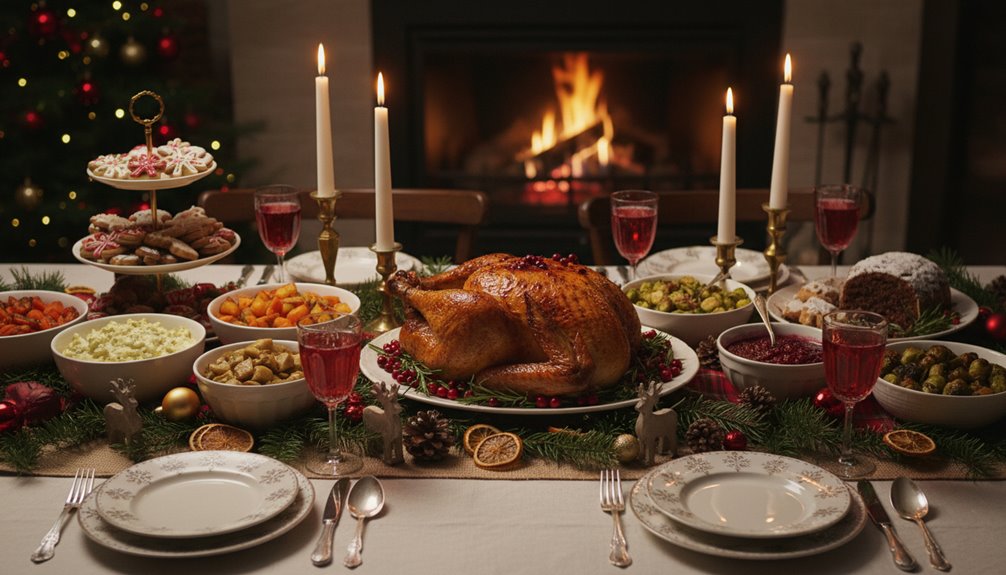
You’ll create an unforgettable Christmas feast with BBC Good Food’s essential recipes that blend tradition with modern flair. From glazed ham with caramelized pineapple to herb butter turkey wrapped in bacon, these dishes guarantee success. Master crispy goose fat potatoes, traditional Christmas pudding with brandy butter, and show-stopping beef Wellington. Don’t forget festive sides like cranberry port sauce and creamy Brussels sprouts gratin. These proven recipes transform your holiday table into something extraordinary.
Table of Contents
Key Takeaways
- Classic Christmas Ham with pineapple and cloves creates a stunning centerpiece requiring only 3 hours with minimal hands-on effort
- Roast Turkey wrapped in bacon lattice and herb butter ensures succulent meat with maple-thyme glazed crispy exterior
- Traditional Christmas Pudding requires weekly brandy feeding during maturation and 2-hour steaming on Christmas Day
- Festive Beef Wellington demands properly seared tenderloin and dry mushroom duxelles to prevent soggy pastry
- Boxing Day Turkey and Ham Pie transforms leftovers into hearty comfort food with creamy mustard-thyme sauce
Classic Glazed Christmas Ham With Clove-Studded Pineapple
When you’re planning your Christmas feast, nothing makes quite the statement like a glistening glazed ham crowned with caramelized pineapple rings. You’ll start by scoring the ham’s skin in a diamond pattern, creating pockets that’ll catch and hold the glaze beautifully.
The glaze preparation combines brown sugar, mustard, and honey – you’ll brush this mixture over the ham every twenty minutes during roasting.
For the pineapple presentation, you’ll arrange fresh rings directly on the ham’s surface during the final hour of cooking. Push whole cloves through each ring’s center, securing them to the meat while adding aromatic depth. The fruit caramelizes as it bakes, creating a stunning golden finish that’ll impress your guests. You’re essentially creating edible decoration that doubles as a sweet complement to the ham’s savory richness.
This showstopper takes three hours total but requires minimal hands-on effort.
Ultimate Roast Turkey With Herb Butter and Bacon
Now that you’ve mastered the glazed ham, it’s time to tackle the centerpiece of your Christmas feast—the ultimate roast turkey.
You’ll start by creating a fragrant herb butter that melts beneath the skin to keep the meat succulent, then wrap the bird in bacon for an extra layer of flavor and protection against drying out.
These two techniques transform an ordinary turkey into a show-stopping main course that’ll have everyone asking for seconds.
Herb Butter Preparation
The foundation of exceptional roast turkey lies in creating a richly flavored herb butter that’ll transform your bird from ordinary to extraordinary. You’ll need room-temperature butter for optimal mixing, so remove it from the refrigerator 30 minutes before preparation. This butter temperature adjustment ensures you won’t struggle with lumpy, uneven distribution.

Your herb mixing technique determines the butter’s final quality. Finely chop fresh sage, rosemary, and thyme, then fold them gently into the softened butter using a spatula. Don’t overmix—you’re preserving the herbs’ essential oils. Add minced garlic, lemon zest, salt, and black pepper, incorporating each ingredient thoroughly.
Once combined, you’ll spread this mixture under the turkey’s skin, creating a self-basting layer that’ll keep the meat moist while infusing it with aromatic flavors throughout roasting.
Bacon Wrapping Technique
After securing the herb butter beneath the skin, you’ll create an additional moisture barrier using strips of streaky bacon. Lay the strips horizontally across the turkey breast, overlapping each piece slightly.
For enhanced flavor, brush your bacon with a flavorful bacon marinade made from maple syrup, black pepper, and fresh thyme before applying.
You’ll achieve the best coverage using the bacon weave technique. Start by placing vertical strips along the breast’s length, then weave horizontal strips through them in an over-under pattern. This creates a tight lattice that won’t shift during roasting.
Tuck the bacon edges beneath the turkey to prevent burning. The rendered fat will baste your bird continuously while the bacon crisps to golden perfection, delivering both protection and incredible taste.
Crispy Goose Fat Roast Potatoes With Rosemary Salt
You’ll transform ordinary spuds into golden, shatteringly crisp roast potatoes by heating goose fat to exactly 200°C before adding your parboiled potatoes. The secret to maximum crispiness lies in roughing up the potato edges after boiling and turning them every 20 minutes during their 45-minute roast.
While they’re cooking, you’ll grind fresh rosemary with flaky sea salt to create an aromatic finishing touch that elevates these potatoes from side dish to star.
Perfect Goose Fat Temperature
Getting your goose fat to exactly the right temperature transforms ordinary potatoes into golden, shatteringly crisp treasures that’ll rival any restaurant’s. You’ll want to heat your goose fat to 180-190°C (355-375°F) – this optimal goose fat temperature creates the perfect conditions for that coveted crunch.
Test the temperature by dropping in a small potato cube. It should sizzle vigorously and rise to the surface within seconds. If it doesn’t, you’re not hot enough. Too hot, and you’ll burn the exterior before cooking the interior.

Ensuring perfect goose fat consistency means keeping it liquid but not smoking. Watch for gentle ripples across the surface – that’s your visual cue. Once you’ve nailed this temperature sweet spot, you’re guaranteed roasties with glass-like exteriors and fluffy centers every time.
Achieving Maximum Crispiness
Break through to potato perfection by mastering the crucial techniques that separate soggy spuds from crispy masterpieces. You’ll need to roughen your parboiled potatoes’ edges by shaking them vigorously in the colander—these jagged surfaces create extra crunch when they hit the hot fat.
Pour your goose fat into the roasting tin and heat it until it’s shimmering at 200°C. Don’t skip temperature monitoring; use a thermometer to ensure you’re maintaining consistent heat throughout cooking.
For optimal drippings management, tilt your tin every 20 minutes to redistribute the fat, coating each potato evenly. You’re aiming for deep golden-brown exteriors that shatter at first bite. Turn the potatoes twice during their 45-minute roasting time, ensuring all sides develop that coveted crispy shell while keeping fluffy centers.
Rosemary Salt Preparation
While your potatoes roast to golden perfection, prepare the aromatic rosemary salt that’ll elevate them from excellent to extraordinary. Strip fresh rosemary leaves from their woody stems and chop them finely. You’ll need about two tablespoons of chopped herbs for every three tablespoons of flaky sea salt.
Combine the rosemary with salt in a mortar and pestle, grinding them together until the oils release and create a fragrant winter seasoning. If you don’t have a mortar, pulse the mixture briefly in a spice grinder—but don’t overprocess it. The rosemary flavoring intensifies when you bruise the leaves, infusing the salt crystals with essential oils.
Make extra batches since this versatile blend keeps for weeks in an airtight container and works brilliantly on roasted vegetables, grilled meats, and crusty bread.
Traditional Christmas Pudding With Brandy Butter
As you gather ingredients for your traditional Christmas pudding, you’ll discover why this centuries-old dessert remains the crowning glory of British holiday tables. You’ll need dried fruits, suet, breadcrumbs, flour, eggs, and generous amounts of brandy. The traditional preparation involves everyone in your household stirring the mixture while making wishes – a Victorian custom that’ll charm your guests.
You’re creating layers of complexity when you feed your pudding with brandy weekly during its maturation period. The brandy flavor profile develops from sharp and alcoholic to mellow and caramelized, infusing every morsel with warmth.
On Christmas Day, you’ll steam the pudding for two hours before serving.
Your brandy butter couldn’t be simpler – just beat softened butter with brandy and icing sugar until fluffy. You’ll watch it melt into golden pools over the hot pudding slices, creating the perfect marriage of textures and flavors that defines British Christmas tradition.
Festive Beef Wellington With Mushroom Duxelles
Moving from sweet to savory, you’ll find that Beef Wellington stands as another showstopping centerpiece worthy of your Christmas table. You’ll need to master proper beef tenderloin preparation first—sear the meat until golden brown on all sides, then brush with mustard and let it cool completely. This crucial step ensures the pastry won’t get soggy later.
Your mushroom duxelles techniques will make or break this dish. You’ll finely chop mushrooms, shallots, and garlic, then cook them until they’re completely dry. Any moisture left will ruin your pastry’s crispness. Spread this mixture over prosciutto, wrap your beef tightly, and chill for thirty minutes.
When you’re ready to bake, encase everything in puff pastry, brush with egg wash, and score decoratively. You’ll achieve perfect medium-rare at 425°F for 25-30 minutes. Let it rest before slicing—this prevents the juices from escaping and keeps your Wellington intact.
Honey-Roasted Parsnips and Carrots With Thyme
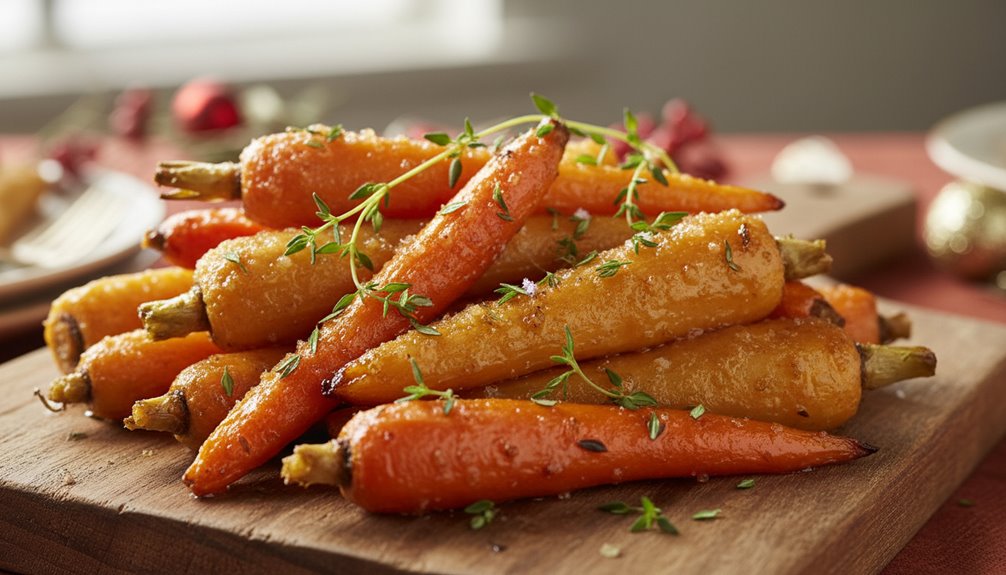
You’ll achieve perfectly caramelized honey-roasted parsnips and carrots by maintaining your oven at 200°C (400°F), which allows the vegetables’ natural sugars to develop without burning.
Fresh thyme’s aromatic oils release best during roasting, infusing the root vegetables with an earthy complexity that dried thyme can’t match. This temperature sweet spot ensures your vegetables turn golden and tender inside while the honey creates that signature glossy coating you’re after.
Perfect Roasting Temperature
The oven’s heat transforms humble root vegetables into caramelized treasures when you nail the right temperature. You’ll achieve the optimal roasting temperature at 200°C (180°C fan), which creates the perfect balance between tender interiors and crispy, golden edges.
Your roasting technique determines success. Here’s what you need to remember:
- Preheat your oven for at least 15 minutes
- Cut vegetables into uniform 2-inch pieces
- Toss thoroughly with honey and oil mixture
- Spread in a single layer without overcrowding
You’ll know you’ve mastered the temperature when the parsnips develop deep golden patches and the carrots’ natural sugars caramelize beautifully. Don’t rush the process—these vegetables need 40-45 minutes to reach perfection. Turn them halfway through for even browning and maximum flavor development.
Fresh Thyme Benefits
Fresh thyme elevates this festive dish with its distinctive earthy-lemon notes that perfectly complement the sweetness of honey-glazed vegetables. You’ll discover that fresh thyme flavor transforms ordinary roasted roots into an extraordinary Christmas side dish.
| Thyme Benefit | Impact on Dish | Pairing Notes |
|---|---|---|
| Aromatic oils | Enhances caramelization | Balances honey sweetness |
| Antioxidants | Boosts nutritional value | Supports immunity |
| Natural preservative | Extends freshness | Prevents oxidation |
When you’re exploring fresh thyme recipes, remember that this herb releases maximum flavor when added during the final 15 minutes of roasting. You’ll achieve the perfect balance by using 2-3 sprigs per pound of vegetables. Strip the leaves from woody stems and toss them with your parsnips and carrots just before they’re golden-brown. The heat activates thyme’s essential oils without burning its delicate leaves.
Rich Christmas Trifle With Sherry-Soaked Sponge
Every layer of this showstopping trifle delivers pure festive indulgence, from the sherry-soaked sponge fingers that form its boozy foundation to the silky custard and billowing cream that crown it. You’ll master the boozy soaking technique by generously brushing medium-dry sherry across each sponge finger, ensuring they’re moist but not soggy.
The flavorful sponge layers absorb the sherry while maintaining their structure, creating the perfect base for your masterpiece.
- Raspberry jam spread between sponge layers adds fruity sweetness
- Fresh berries provide bursts of tartness throughout
- Thick vanilla custard creates a velvety middle layer
- Whipped cream topping finishes with lightness and elegance
You can prepare this dessert a day ahead, letting the flavors meld beautifully. The sherry intensifies overnight, while the custard settles into dreamy smoothness. Don’t skimp on quality ingredients—they’ll transform your trifle into the Christmas centerpiece everyone remembers.
Spiced Mulled Wine With Orange and Cinnamon
A single pot of mulled wine fills your entire home with Christmas aromas as cinnamon sticks, star anise, and fresh orange slices simmer gently with red wine. You’ll need a full-bodied red wine, two cinnamon sticks, three star anise, one sliced orange, four cloves, and brown sugar to taste. Heat everything slowly—don’t let it boil or you’ll cook off the alcohol.
The mulled wine aroma intensifies after twenty minutes of gentle simmering, signaling it’s ready to serve. You can keep it warm on low heat throughout your party, letting guests ladle their own portions. For the perfect mulled wine garnish, add a fresh orange wheel and cinnamon stick to each glass. They’re not just decorative—they’ll continue infusing flavor as your guests sip.
Store any leftovers in the fridge and reheat gently the next day. The spices actually deepen overnight, making day-two mulled wine even better than the first batch.
Pigs in Blankets With Maple Glaze
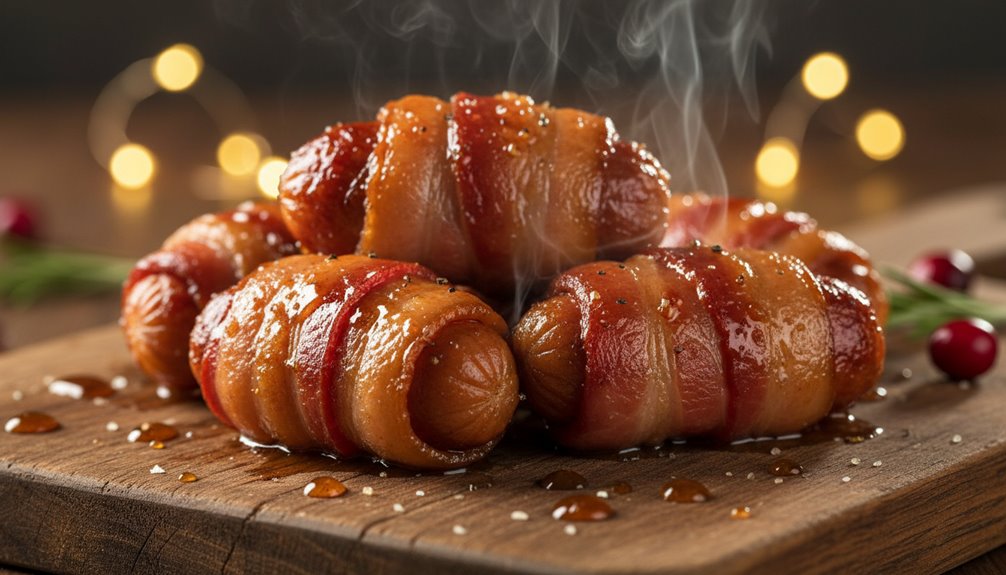
While your turkey roasts in the oven, you’ll want to prepare these irresistible pigs in blankets that disappear faster than any other Christmas side dish. You’ll wrap quality chipolatas in streaky bacon, securing each with a toothpick before they hit the oven.
The secret lies in your glazing technique. Here’s what makes them exceptional:
- Brush the maple glaze application halfway through cooking for caramelization
- Mix pure maple syrup with Dijon mustard and smoked paprika
- Turn the pigs every 10 minutes for even browning
- Reserve extra glaze for serving
You’ll bake them at 200°C for 25-30 minutes until the bacon crisps perfectly. The maple glaze application transforms ordinary sausages into glossy, sticky perfection. Don’t skip the final brush of warm glaze just before serving – it’s what creates that restaurant-quality shine. Make double the batch because they’ll vanish from your serving platter within minutes of arriving at the table.
Chocolate Yule Log With Ganache Filling
You’ll need a few key tools and techniques to create this classic Christmas showstopper. Start by gathering your essential baking equipment—a Swiss roll tin, electric whisk, and offset spatula—then master the perfect sponge technique by gently folding flour into whisked eggs to maintain that crucial airy texture.
Your ganache filling requires careful attention too: heat cream just to boiling point before pouring it over chopped chocolate, letting it sit briefly, then stirring until silky smooth.
Essential Baking Equipment
How can the right equipment transform your Yule log from amateur attempt to showstopping centerpiece? You’ll need specific tools to achieve that signature spiral and velvety ganache. Start with quality silicone bakeware—it ensures even baking and makes rolling easier without sticking.
Your essential toolkit includes:
- Swiss roll tin – Creates the perfect thin, flexible sponge
- Electric whisk – Achieves proper aeration for light texture
- Offset spatula – Spreads ganache smoothly without tearing
- Wire cooling rack – Prevents soggy bottoms
Don’t overlook precision measuring spoons for accurate ingredient ratios. They’re crucial when balancing cocoa and flour. You’ll also want parchment paper for easy release and a clean tea towel for rolling. With these tools, you’re ready to create professional-looking swirls and bark-textured ganache coating.
Perfect Sponge Technique
Now that you’ve assembled your equipment, mastering the sponge itself becomes your focus. You’ll achieve perfect sponge structure by whisking eggs and sugar until they triple in volume and turn pale. This creates the foundation for your chocolate yule log’s light texture.
Your ideal sponge ingredients include room-temperature eggs, caster sugar, plain flour, and quality cocoa powder. Sift the dry ingredients twice before gently folding them into your whisked mixture. Don’t overmix—you’ll knock out precious air bubbles that create the tender crumb.
Pour the batter onto your prepared Swiss roll tin immediately. Spread it evenly to the corners using an offset spatula. Bake at 180°C for exactly 10-12 minutes. You’ll know it’s ready when the surface springs back lightly to touch.
Ganache Making Tips
Every successful ganache starts with the right chocolate-to-cream ratio—use 200g dark chocolate to 200ml double cream for a firm yet spreadable consistency. You’ll achieve the perfect ganache consistency by heating cream just until bubbles form around the edges, then pouring it over chopped chocolate. Let it sit for two minutes before stirring from the center outward.
Chop chocolate into uniform pieces for even melting. Don’t overheat cream—it shouldn’t boil. Add ganache flavoring like vanilla or rum after mixing. Cool at room temperature before chilling.
You can adjust thickness by tweaking ratios—more chocolate creates firmer ganache, while extra cream makes it softer. Once it’s cooled to spreading consistency, you’re ready to fill and coat your Yule log perfectly.
Creamy Brussels Sprouts Gratin With Gruyère
Transform those humble Brussels sprouts into a show-stopping side dish that’ll convert even the staunchest sprout skeptics at your Christmas table. You’ll achieve an irresistibly creamy texture by blanching the sprouts first, then layering them with a rich béchamel sauce. The nutty Gruyère cheese complementary flavors elevate this gratin beyond ordinary vegetable sides.
| Preparation Step | Time Required |
|---|---|
| Blanch sprouts | 5 minutes |
| Make béchamel | 8 minutes |
| Bake gratin | 25-30 minutes |
Start by halving your sprouts and arranging them cut-side down in a buttered dish. You’ll pour the warm béchamel over them, ensuring every crevice gets coated. Top generously with grated Gruyère and breadcrumbs for that golden, bubbling crust everyone fights over.
The magic happens when the cheese melts into the sauce, creating pockets of stringy goodness throughout. You’re essentially turning Brussels sprouts into comfort food that’ll have guests requesting seconds.
Sticky Toffee Christmas Pudding Cheesecake
After mastering those savory sides, you’ll want to end your Christmas feast with a dessert that combines British holiday traditions in one spectacular creation. The Sticky Toffee Christmas Pudding Cheesecake transforms two beloved desserts into one show-stopping finale that’ll have your guests requesting seconds.
You’ll love how this dessert delivers multiple textures and flavors:
- Digestive biscuit base provides the perfect crunchy texture
- Creamy filling infused with Christmas pudding spices
- Sticky toffee sauce drizzled throughout each layer
- Candied fruit and nuts scattered on top
The genius lies in folding Christmas pudding pieces directly into the cheesecake batter. You’re essentially creating a hybrid that honors tradition while offering something refreshingly different. The toffee sauce isn’t just a topping—you’ll swirl it through the creamy filling before baking, ensuring every bite contains that butterscotch richness. Make it two days ahead and let those flavors meld together in the fridge.
Boxing Day Turkey and Ham Pie
When Boxing Day arrives and you’re faced with leftover turkey and ham, this hearty pie transforms yesterday’s feast into today’s comfort food masterpiece. You’ll combine chunky pieces of turkey and ham with sautéed leeks, carrots, and mushrooms in a creamy white sauce infused with fresh thyme and mustard. The filling gets its richness from double cream and chicken stock, creating the perfect balance of flavors.
Top everything with buttery puff pastry that’ll turn golden and crispy in the oven. You can prepare this pie ahead as part of your holiday meal planning, assembling it on Christmas night and baking it fresh the next day. It’s the ultimate solution for boxing day leftovers, feeding six hungry people without any waste. Serve it alongside pickled vegetables or a simple green salad. Your family won’t believe you’ve created something this delicious from yesterday’s dinner – they’ll actually look forward to the day after Christmas.
Cranberry and Port Sauce With Fresh Orange
Why settle for store-bought cranberry sauce when you can create this elegant version that’ll elevate your entire Christmas dinner? This BBC Good Food recipe transforms basic cranberries into a sophisticated condiment that’s become a holiday classic. You’ll love how the port’s richness balances the tart cranberry notes while fresh orange adds brightness.
Here’s what makes this sauce exceptional:
- Port wine adds depth and subtle sweetness
- Fresh orange zest brings zesty orange flavor to every spoonful
- Quick 15-minute cooking time fits your busy schedule
- Keeps refrigerated for up to one week
You’ll simmer fresh cranberries with sugar until they burst, then stir in port and orange juice. The sauce thickens naturally as pectin releases from the fruit. Don’t skip the orange zest—it’s crucial for achieving that perfect citrus lift. Serve it warm or chilled alongside turkey, ham, or even cheese boards. This versatile sauce also makes an impressive homemade gift.
Mince Pies With Frangipane Topping
Those cranberry flavors pair beautifully with festive desserts, especially these upgraded mince pies that’ll transform your Christmas baking. You’ll create magic by topping traditional mincemeat with almond frangipane, adding sophistication to this classic treat.
Start with flaky pastry that crumbles perfectly. Roll it thin, cut circles, and press into muffin tins. Fill each with quality mincemeat, then pipe or spoon the frangipane mixture on top. The almond cream creates a golden dome that’ll impress everyone.
| Ingredient | Purpose | Result |
|---|---|---|
| Ground almonds | Frangipane base | Moist texture |
| Butter & sugar | Creaming agent | Light filling |
| Egg | Binding element | Sturdy topping |
| Almond extract | Festive flavor | Aromatic finish |
Bake at 180°C for 20-25 minutes until golden. You’ll know they’re ready when the frangipane springs back gently. Let them cool slightly before dusting with icing sugar. These elevated mince pies offer bakery-quality results you can achieve at home.
Smoked Salmon Blinis With Dill Cream
Moving from sweet to savory, you’ll find these elegant blinis are the perfect canvas for silky smoked salmon and tangy dill cream. These bite-sized delights elevate any holiday gathering with their festive presentation that’ll impress even your pickiest guests.
You’ll love how simple they’re to assemble. The key components include:
- Fluffy buckwheat blinis as your foundation
- Premium smoked salmon draped artfully on top
- Fresh dill-infused sour cream for brightness
- Creative garnishes like capers, lemon zest, or microgreens
Start by warming store-bought or homemade blinis until they’re slightly crisp. Spread a dollop of dill cream, then fold the salmon into delicate roses. You can prep the cream ahead by mixing chopped dill, lemon juice, and sour cream with cracked black pepper.
For creative garnishes, try edible flowers or pomegranate seeds that add color and texture. Arrange them on tiered platters for dramatic height, and watch them disappear within minutes of serving.
Gingerbread House With Royal Icing
When you’re ready to create a showstopping centerpiece that doubles as an activity, nothing beats building a gingerbread house with royal icing. You’ll need sturdy gingerbread pieces baked from a reliable recipe that won’t warp or crack during assembly. Cut your walls and roof panels precisely for seamless construction.
Your gingerbread house design determines the royal icing application techniques you’ll use. Mix royal icing to two consistencies: thick for structural gluing and thin for decorative piping. You’ll apply thick icing along edges to cement walls together, holding each piece for thirty seconds until set. Let the structure dry completely before adding the roof.
Transform your house into art with candy decorations. Pipe icing icicles along the roofline, create window frames with white details, and dust everything with powdered sugar snow. You’ve built more than dessert—you’ve crafted an edible masterpiece that’ll enchant guests throughout the season.
Frequently Asked Questions
How Far in Advance Can I Prepare These BBC Good Food Christmas Recipes?
You can typically prepare BBC Good Food Christmas recipes 1-3 days ahead, depending on the dish.
When storing recipes, you’ll find most desserts and baked goods keep well for 2-3 days in airtight containers. You’re able to prep vegetables and refrigerating ingredients like stuffing components the night before.
Casseroles and sides can be assembled 24 hours early and refrigerated. Always check each recipe’s specific make-ahead instructions for best results.
What Are Suitable Vegetarian Alternatives for the Meat-Based Christmas Dishes?
You’ll find excellent healthy vegetarian dishes can replace traditional meat centerpieces perfectly. Try a stunning butternut squash wellington, mushroom and chestnut roast, or glazed whole cauliflower as your main.
Seasonal vegetable options like roasted root vegetables, Brussels sprouts with chestnuts, and spiced red cabbage make fantastic sides.
You can also create impressive veggie terrines, stuffed portobello mushrooms, or a rich lentil loaf that’ll satisfy everyone at your Christmas table.
How Many People Will Each BBC Good Food Christmas Recipe Typically Serve?
You’ll find that most BBC Good Food Christmas recipes typically serve 4-8 people, though recipe portions vary considerably. Their roast dinners often feed 6-8, while desserts usually serve 8-10.
You can easily adjust recipe ingredients to accommodate your guest list – they’re designed to scale up or down. Side dishes generally serve 4-6 as accompaniments.
You’ll notice each recipe clearly states serving sizes, making your holiday planning much simpler.
Can These Recipes Be Scaled up for Larger Christmas Gatherings?
Yes, you can scale up these recipes for larger gatherings. You’ll need to multiply ingredients proportionally based on your desired recipe yields.
When doubling or tripling portions, you’ll face cooking time adjustments – larger quantities often require 25-50% more time in the oven. You’ll also need bigger cookware and should consider cooking in batches.
Don’t forget to taste-test seasonings since they don’t always scale linearly with other ingredients.
What’s the Total Estimated Cost for Making Multiple BBC Christmas Dishes?
You’ll typically spend £80-150 for multiple BBC Christmas dishes serving 8-10 people, though estimated costs vary by menu choices. Premium recipe ingredients like beef wellington or whole turkey drive prices higher, while vegetarian options cost less.
You can reduce expenses by buying seasonal produce, using supermarket own-brands, and preparing sides like roasted vegetables yourself. Planning three courses plus appetizers usually averages £10-15 per person when you’re shopping smartly for quality ingredients.
Conclusion
You’ve discovered BBC Good Food’s most beloved Christmas recipes that’ll transform your holiday table into something extraordinary. Whether you’re glazing that perfect ham, mastering crispy roast potatoes, or building a gingerbread masterpiece, these dishes guarantee you’ll create unforgettable festive memories. Don’t wait until the last minute – start planning your Christmas menu now. Pick your favorites, gather your ingredients, and get ready to impress everyone around your table with these tried-and-true holiday hits.


No Comments