
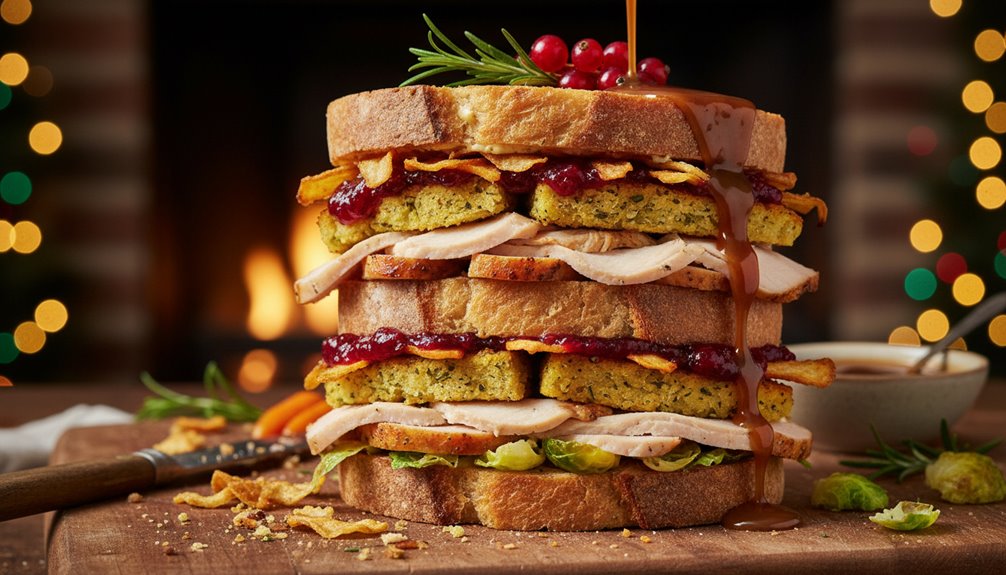
The Ultimate Christmas Sandwich With All the Trimmings
You’ll create the perfect Christmas sandwich by layering quality roasted turkey or ham on toasted sourdough that won’t collapse under generous fillings. Add stuffing for that festive transformation, cranberry sauce for sweet-tart contrast, and crispy bacon for textural variety. Place cheese as a moisture barrier between wet ingredients, keeping crispy elements above the cranberry center. Whether you prefer it cold to maintain distinct flavors or heated to melt everything together, mastering the layering technique ensures your towering creation stays intact.
Key Takeaways
- Layer roasted turkey or ham, stuffing, cranberry sauce, crispy bacon, and cheese between sturdy toasted sourdough bread for maximum flavor and structural integrity.
- Place proteins at the bottom, use cheese as a moisture barrier, and position wet ingredients like cranberry sauce between firmer elements.
- Toast the bread to prevent sogginess and add crunch while providing essential structural support for generous festive fillings.
- Include all traditional Christmas dinner components: quality meat, stuffing for transformation, cranberry sauce for sweet-tart contrast, and bacon for umami depth.
- Apply compression after assembly and use adhesive barriers like cranberry sauce or mayo to secure layers and prevent sandwich collapse.
Essential Components of the Perfect Christmas Sandwich
Every great Christmas sandwich starts with quality bread that can hold up to generous fillings without falling apart. You’ll want thick-cut sourdough or a crusty baguette that provides structure while complementing your festive ingredients. Choose bread that’s fresh but sturdy enough to handle multiple layers.
Your protein foundation should include roasted turkey or ham—preferably both. Layer these meats generously, ensuring even distribution across the bread’s surface. You can’t skip the stuffing; it’s what transforms an ordinary sandwich into a Christmas masterpiece.
Add cranberry sauce for that essential sweet-tart contrast. This seasonal condiment ties everything together while providing moisture. Include crispy bacon for textural variety and umami depth. Don’t forget the gravy—whether you spread it directly on the bread or use it as a dipping sauce.
Finally, incorporate fresh greens like peppery arugula or watercress. They’ll cut through the richness and add necessary freshness to balance your creation.
Choosing Your Bread: Foundation for Festive Layers
Your bread choice sets the stage for every bite of your Christmas sandwich. You’ll want to weigh sourdough’s tangy chew against white bread’s neutral softness—each brings different textures and flavors to complement your festive fillings.
Consider toasting either option to add structural integrity and a satisfying crunch that prevents soggy disappointment.
Sourdough Vs White Bread
When you’re building the perfect Christmas sandwich, the bread you choose sets the stage for every flavor that follows. You’ll find sourdough’s tangy complexity elevates rich turkey and stuffing, while white bread’s neutral profile lets cranberry sauce shine. Consider artisanal bread quality when selecting your base—hand-crafted loaves offer superior structure for hefty fillings.
| Feature | Sourdough | White Bread |
|---|---|---|
| Flavor Profile | Tangy, complex | Mild, neutral |
| Texture | Dense, chewy | Soft, pillowy |
| Structural Support | Excellent for thick layers | Best for lighter builds |
| Pairing Strength | Complements bold flavors | Highlights delicate tastes |
Sourdough’s fermented crust won’t get soggy from gravy, making it ideal for loaded sandwiches. If you’re exploring organic bread options, sourdough often features fewer additives. White bread works brilliantly when you’re craving classic comfort—its softness creates that nostalgic Boxing Day experience.
Toasting for Extra Crunch
How much difference can thirty seconds under the broiler make? You’ll transform your Christmas sandwich from good to extraordinary with proper toasting techniques. The ideal toast temperature sits between 350-375°F, creating golden edges while maintaining a tender center that won’t shred your mouth’s roof.
Here’s what perfect toasting delivers:
- Structural integrity – prevents soggy collapse from cranberry sauce
- Textural contrast – crispy exterior against soft turkey
- Flavor enhancement – caramelized edges add nutty sweetness
- Temperature balance – warm bread melts butter and cheese perfectly
You’ve got options: use your oven’s broiler for even browning, try a panini press for ridged marks, or butter both sides and pan-fry for maximum crunch. Don’t walk away—bread transitions from golden to burnt in seconds. Your patience now means every bite delivers that satisfying crunch.
The Art of Layering: Building Your Christmas Creation
You’ve selected your bread, and now it’s time to master the layering technique that transforms ingredients into a cohesive Christmas sandwich.
Start with your foundation layer—typically a spread or leafy green that creates a moisture barrier—then position proteins and cheeses strategically to distribute weight and flavor evenly throughout each bite.
Remember that structural stability depends on placing wet ingredients like cranberry sauce between protective layers, preventing your festive creation from becoming a soggy mess.
Foundation Layer Basics
While turkey and stuffing might seem like obvious starting points, the foundation of your Christmas sandwich actually begins with the bread itself—it’s the structural element that’ll determine whether you’re eating a masterpiece or wearing it. You’ll need bread that’s sturdy enough to handle multiple layers yet soft enough to bite through comfortably.
Your bread texture should strike the perfect balance:
- Crusty exterior that won’t collapse under pressure
- Dense crumb that absorbs juices without disintegrating
- Fresh softness that complements rather than competes
- Toasted surface that creates a moisture barrier
Don’t overlook bread flavor either—it shouldn’t overpower your fillings. Choose something neutral like sourdough or whole grain that’ll enhance your ingredients. You’re building a sandwich throne, and every great throne needs a solid foundation.
Strategic Filling Placement
The foundation’s set, but now comes the real engineering challenge—arranging your fillings in an order that maximizes both flavor and structural integrity. Your filling arrangement determines whether you’ll achieve perfect bites or structural collapse.
| Layer Position | Filling Type |
|---|---|
| Bottom | Sturdy proteins (turkey, ham) |
| Lower-Middle | Cheese (acts as moisture barrier) |
| Center | Stuffing, cranberry sauce |
| Upper-Middle | Crispy elements (bacon, roasted vegetables) |
| Top | Leafy greens, final condiments |
Start with dense proteins against your bread base—they’ll anchor everything above. Place cheese next to create a protective shield against wet ingredients. Your balanced layering continues with stuffing and cranberry sauce in the middle, where they’re contained by firmer elements. Position crispy components above the wet center to preserve their texture. Finally, add greens on top where they won’t wilt from trapped heat below.
Structural Stability Tips
A towering Christmas sandwich demands more than just stacking—it requires architectural planning to prevent the dreaded mid-bite collapse. You’ll need strategic placement of structural support components throughout your build. Start with dense bread that won’t buckle under pressure.
Your foundation matters when ensuring stability. Follow these proven techniques:
- Create adhesive barriers – Spread cranberry sauce and mayo to opposite bread faces, acting as edible glue
- Use cheese as mortar – Place slices between wet ingredients to prevent sliding
- Build central pillars – Position firm vegetables like roasted carrots vertically for internal support
- Apply compression – Press gently after assembly, then secure with cocktail sticks at corners
You’ve invested too much effort to watch your masterpiece topple. These methods guarantee your sandwich stays intact from first bite to last.
Hot vs. Cold: The Great Christmas Sandwich Debate
Few culinary questions divide households quite like whether to heat your Christmas sandwich or enjoy it cold. You’ll find passionate advocates on both sides, each claiming their method delivers the superior experience.
If you’re team cold, you’ll appreciate how chilled leftovers maintain distinct seasonal flavor combinations. Your turkey stays firm, cranberry sauce remains tangy, and stuffing holds its texture. Cold sandwiches travel better and won’t fall apart during Boxing Day walks.
However, heating transforms your creation entirely. You’ll get melted cheese binding everything together, warmed gravy soaking into bread, and brussels sprouts releasing their roasted essence. The contrast between crisp versus soggy elements becomes more pronounced – your toasted bread stays crunchy while interior ingredients meld beautifully.
The compromise? Try heating individual components before assembly. You’ll warm the turkey and vegetables while keeping cranberry sauce cool. This method gives you temperature variety without sacrificing structural integrity or making everything uniformly mushy.
Creative Additions and Regional Variations
While traditional Christmas sandwiches follow familiar formulas, you’ll discover countless regional twists and creative additions that transform this holiday staple into something extraordinary. Yorkshire’s famous addition of pickled walnuts brings sharp complexity, while Scotland’s inclusion of haggis creates an unexpectedly rich layer. Southern states often incorporate cornbread stuffing and sweet potato spread.
You can elevate your sandwich with these festive ingredient combinations:
- Brie and cranberry chutney – melts into turkey for creamy indulgence
- Bacon-wrapped Brussels sprouts – adds crispy texture and smoky depth
- Caramelized onion and blue cheese – creates bold, savory contrast
- Apple butter and sage mayo – delivers sweet-herbaceous balance
Don’t overlook holiday themed garnishes like pomegranate seeds, candied orange peel, or rosemary sprigs. Welsh versions feature leek confit, while New England sandwiches incorporate maple-glazed ham. Mexican-inspired variations add chipotle cranberry sauce and queso fresco. These regional interpretations prove there’s no single way to build your perfect Christmas sandwich.
Storage Tips for Christmas Dinner Leftovers
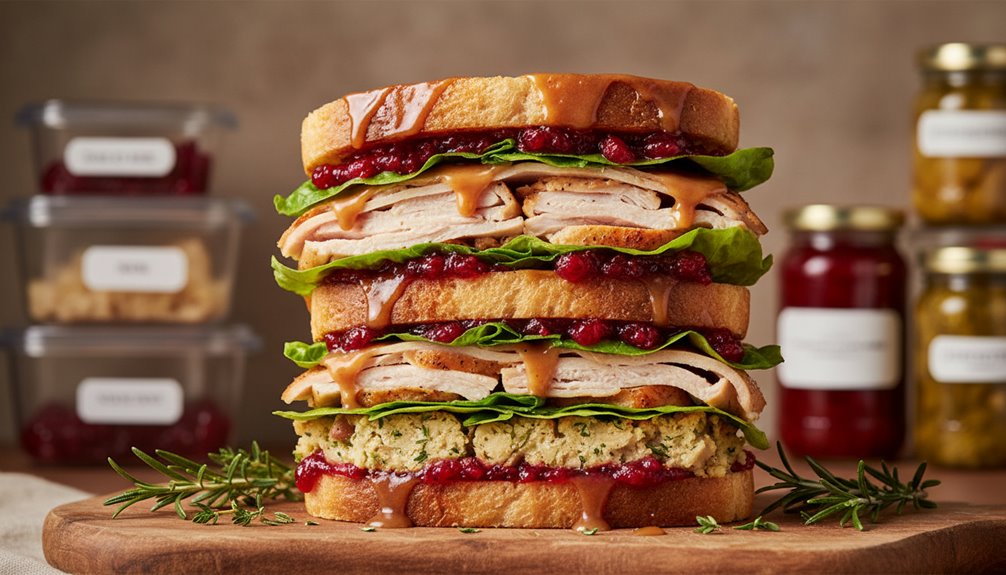
Since proper storage determines whether you’ll enjoy delicious sandwiches or risk foodborne illness, you’ll need to refrigerate turkey and other cooked meats within two hours of serving. Store each component separately in airtight containers to maintain optimal texture and prevent cross-contamination. Your turkey stays fresh for three to four days, while stuffing and cranberry sauce last up to five days.
For leftovers preservation, wrap meats tightly in aluminum foil or plastic wrap before placing them in containers. You’ll prevent freezer burn by removing excess air. Label everything with dates so you’ll know what needs using first. Proper refrigeration requires keeping your fridge at 40°F or below. Don’t stack warm containers directly on top of each other—they’ll take longer to cool down.
If you won’t use leftovers within four days, freeze them immediately. Frozen turkey maintains quality for up to three months, giving you Christmas sandwich opportunities well into the new year.
Boxing Day Sandwich Traditions Around the World
Boxing Day transforms leftover Christmas feast components into beloved sandwich creations across different cultures, each region adding its unique twist to this post-holiday tradition. You’ll discover that cultural influences shape how families worldwide reimagine their holiday meals between bread slices.
In Britain, you’re stacking turkey, stuffing, and cranberry sauce on thick white bread. Meanwhile, Australians pile prawns and ham with mango chutney on sourdough. Canadian households layer tourtière meat pie filling with pickled vegetables, while New Zealanders combine lamb, mint jelly, and kumara.
These festive flavors reflect each nation’s Christmas dinner preferences:
- British Ross Sandwich – You’ll feel nostalgic with every moistmaker-enhanced bite
- Australian Beach Box – You’re transported to summer celebrations with tropical accompaniments
- Canadian Comfort Stack – You’ll experience warmth through savory-sweet combinations
- Kiwi Classic – You’re embracing heritage through traditional indigenous ingredients
Each sandwich tells your family’s story, turning yesterday’s feast into today’s cherished comfort food.
Frequently Asked Questions
Can I Make a Christmas Sandwich Suitable for Vegetarians or Vegans?
Yes, you can definitely create a delicious vegetarian or vegan Christmas sandwich! You’ll want to use plant based protein options like roasted mushrooms, marinated tofu, or tempeh as your main filling.
Add dairy free cheese alternatives such as cashew cheese or coconut-based spreads. Include traditional festive elements like cranberry sauce, stuffing, roasted vegetables, and gravy (made with vegetable stock). You’ll achieve all the holiday flavors without any animal products.
How Many Calories Are Typically in a Fully Loaded Christmas Sandwich?
You’ll typically find a fully loaded Christmas sandwich contains 600-900 calories, though calorie count variations depend on ingredients and portions.
Your nutritional information overview should consider that turkey, stuffing, cranberry sauce, and bacon significantly impact totals.
If you’re using thick bread, mayo, and cheese, you’re looking at the higher end. Removing bacon saves about 100 calories, while extra gravy or butter adds 50-100 more to your festive creation.
What Condiments Pair Best With Traditional Christmas Sandwich Ingredients?
You’ll find cranberry spread options perfectly complement turkey and stuffing, while holiday mustard varieties like honey mustard or whole grain Dijon add festive zing. Try mixing cranberry sauce with orange zest for extra brightness.
You can’t go wrong with garlic aioli or herb mayo alongside your roasted meats. Don’t overlook classic bread sauce or even leftover gravy as spreadable options that’ll enhance every bite of your Christmas sandwich creation.
Should I Season the Sandwich Fillings Before Assembling?
Yes, you should definitely season your fillings before assembling. You’ll want to adjust seasoning levels for each component separately – turkey benefits from sage and thyme, while stuffing needs salt and pepper checks.
Don’t oversalt since you’re layering multiple flavor profiles together. Season cranberry sauce with orange zest and cinnamon. Taste each element individually first, then consider how they’ll combine. Remember that condiments and gravy will add additional saltiness to your final creation.
Can I Prepare Christmas Sandwiches in Advance for a Party?
Yes, you can prepare them ahead with smart planning. You’ll want to refrigerate ingredients separately to maintain freshness and prevent soggy bread.
Prep your turkey, stuffing, and cranberry sauce the day before, storing each in airtight containers. For best results, assemble shortly before serving to keep everything crisp and delicious. You can set up an assembly line 30 minutes before guests arrive, making multiple sandwiches quickly while maintaining quality.
Conclusion
You’ve discovered that the perfect Christmas sandwich isn’t just about leftovers—it’s about creating something magical from your holiday feast. Whether you’re team hot or cold, thick bread or thin, you’ll find endless combinations work. Don’t forget to experiment with cranberry placement and gravy distribution. Your Boxing Day tradition starts with smart leftover storage tonight. Now grab that turkey, pile on those trimmings, and create your own legendary sandwich that’ll make next year’s Christmas dinner worth it.


No Comments