
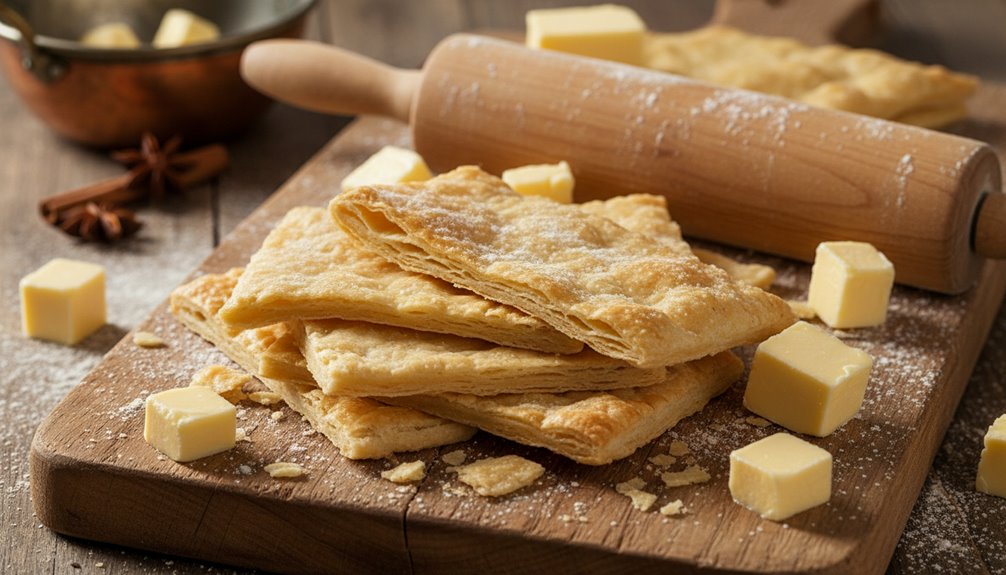
The Flakiest Pastry for Mince Pies 3 Secrets Bakers Swear by
You’ll achieve bakery-quality flaky mince pie pastry by mastering three essential techniques. First, grate frozen butter directly into your flour mixture using a box grater’s large holes—this creates distinct fat pockets that form steam during baking. Second, rest your dough for at least 30 minutes to let gluten relax and butter firm up again. Third, roll from the center outward in short strokes, turning 90 degrees regularly. These professional methods will transform your mince pies completely.
Table of Contents
Key Takeaways
- Grate frozen butter directly into flour using a box grater to maintain cold temperature and create uniform distribution throughout the dough.
- Rest pastry dough in the refrigerator for at least 30-60 minutes to allow gluten relaxation and butter firming for optimal texture.
- Roll from center outward in short strokes, turning dough 90 degrees frequently while maintaining cold temperature throughout the process.
- Keep butter in solid state with distinct fat pockets that create steam during baking, lifting pastry layers for maximum flakiness.
- Aim for 3mm thickness when rolling and work quickly to prevent butter from softening, ensuring professional-quality flaky pastry results.
The Cold Butter Technique That Creates Perfect Layers
When you keep butter cold during pastry making, you create distinct pockets of fat that transform into flaky layers as the pie bakes. The key lies in maintaining butter’s solid state throughout the mixing process.
Start with frozen butter cubes straight from the freezer. Grate them directly into your flour mixture using a box grater’s large holes. This method ensures uniform distribution while keeping the fat cold. Work quickly to prevent melting from your hands’ warmth.
Alternatively, cut cold butter chunks into small pieces and toss them with flour before rubbing between your fingertips. You’ll know it’s ready when the mixture resembles coarse breadcrumbs with visible butter pieces.
The science is simple: cold butter creates steam pockets during baking. As moisture evaporates, it lifts the pastry layers, creating that coveted flaky texture. Never let butter soften completely—those distinct fat pockets are your secret to professional-quality mince pie pastry.
Why Resting Your Pastry Dough Is Non-Negotiable
After you’ve mixed your pastry dough, the urge to roll it immediately might feel overwhelming, but this crucial step will ruin your mince pies. Resting allows the flour to fully hydrate while gluten strands relax, preventing tough, chewy pastry that’ll disappoint your guests.
During this downtime, the butter firms up again, which you’ve carefully incorporated using the cold technique. This prevents it from melting when you roll, maintaining those essential fat layers that create flakiness.
Optimizing chilling time requires at least 30 minutes in the refrigerator, though an hour works better. You’ll notice the dough becomes less sticky and more manageable, rolling out smoothly without tearing.
This resting period also allows flavors to meld, enriching dough texture and developing that buttery taste you’re after. Don’t skip this step—it’s the difference between mediocre pastry and the professional-quality results that’ll make your mince pies legendary.

The Professional Baker’s Rolling Method for Ultimate Flakiness
Your chilled dough is ready, and the rolling technique you use will determine whether you achieve professional-level flakiness or dense, heavy pastry. Professional bakers roll with purpose, maintaining optimal pastry dough temperature while creating distinct layers that’ll transform into flaky perfection.
Start from the center and roll outward in short, decisive strokes. Don’t press hard—let the rolling pin’s weight do the work. Turn your dough 90 degrees every few rolls to maintain even thickness and prevent sticking.
Key professional techniques that make the difference:
- Keep it cold: If the dough becomes sticky or soft, pop it back in the fridge for 10 minutes
- Roll between parchment: This prevents sticking without adding excess flour that toughens pastry
- Aim for 3mm thickness: Perfect for supporting mince pie filling without cracking
Monitor your pastry dough temperature constantly. When you’re ready for the blind baking technique later, this careful rolling will ensure your pastry holds its shape beautifully.
Frequently Asked Questions
What Type of Flour Works Best for Mince Pie Pastry?
You’ll want to use all purpose flour for your mince pie pastry. It’s got the perfect protein content to create tender, flaky results without being too tough.
Avoid self rising flour since it contains leavening agents that’ll make your pastry puff up instead of staying crisp and delicate. All purpose flour gives you complete control over texture, ensuring that buttery, melt-in-your-mouth pastry that perfectly complements your festive filling.
How Long Can I Store Unbaked Mince Pie Pastry in the Freezer?
You can store unbaked mince pie pastry in the freezer for up to three months without losing quality. The storage duration depends on proper freezer storage conditions—wrap your pastry tightly in plastic wrap, then place it in an airtight container or freezer bag. Label with the date you’re freezing it.
You’ll maintain the pastry’s flaky texture when you’re ready to roll and bake.
Can I Make Flaky Pastry Without Butter Using Alternative Fats?
Yes, you can create flaky pastry using alternative fats instead of butter. Plant based fats like vegan butter or coconut oil work well for dairy-free options.
Lard substitutes such as vegetable shortening also produce excellent flakiness. You’ll want to keep these fats cold and use the same lamination technique as traditional butter pastry. The key is maintaining proper fat distribution throughout your dough layers.

What’s the Ideal Oven Temperature for Baking Mince Pies With Flaky Pastry?
Bake your mince pies at 400°F (200°C) for optimal flaky pastry results. If you’re using a convection baking temperature, reduce it to 375°F (190°C) since convection ovens circulate heat more efficiently.
Start with a precise baking duration of 15-18 minutes, checking at 15 minutes for golden-brown tops. You’ll know they’re ready when the pastry’s crisp and the filling’s bubbling slightly around the edges.
How Do I Prevent Soggy Bottoms When Making Mince Pies?
You’ll prevent soggy bottoms by blind baking mince pie crusts for 10-12 minutes before adding filling. Prick the pastry base with a fork and use baking beans or pie weights. This creates a moisture barrier that stops wet mincemeat from soaking through.
Additionally, you’re preventing moisture buildup in mince pies by ensuring your mincemeat isn’t too wet and cooling it completely before filling the pre-baked shells.
Conclusion
You’ve got the three essential secrets that’ll transform your mince pie pastry from ordinary to extraordinary. Keep that butter cold, don’t skip the resting time, and master the professional rolling technique. These aren’t just tips—they’re the foundation of bakery-quality flakiness. Your pastry will shatter at first bite, creating those perfect buttery layers that make mince pies irresistible. Practice these methods, and you’ll never settle for store-bought pastry again.


No Comments