
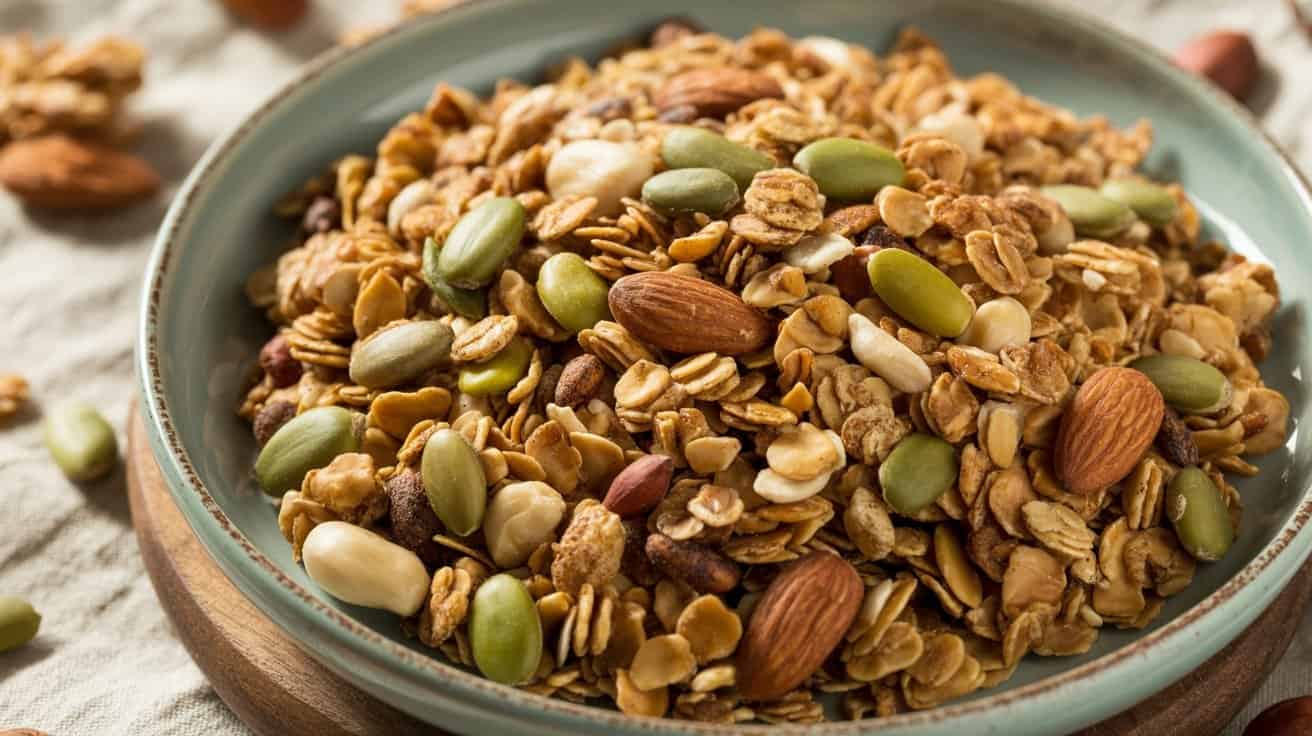
You’ll transform your breakfast routine with sugar-free granola that contains less than 1 gram of sugar per serving, compared to traditional versions’ 12-24 grams. By swapping refined sugars for natural alternatives like monk fruit or erythritol, you’re getting stable energy without blood sugar spikes. Mix rolled oats with nuts, seeds, and unsweetened dried fruits, then bind with egg whites or nut butter before baking at 300°F. Discover how simple ingredient swaps create the perfect crunchy, guilt-free morning staple.
Key Takeaways
- Sugar-free granola contains less than 1 gram of sugar per serving, compared to 12-24 grams in traditional varieties.
- Common natural sweeteners include monk fruit, stevia, erythritol, and yacon syrup, which don’t spike blood sugar levels.
- Base ingredients typically combine rolled oats with nuts, seeds, and ancient grains like quinoa flakes or buckwheat.
- Store-bought brands include Diabetic Kitchen, Keto Granola, Paleonola, and NuTrail, available online and at specialty stores.
- Homemade versions use egg whites, nut butters, or sugar-free syrups as binding agents to create clusters.
Health Benefits of Choosing Sugar-Free Granola
Switching to sugar-free granola can transform your breakfast routine while protecting your health from the dangers of excessive sugar consumption.
You’ll notice immediate benefits when you make this simple dietary change.
Your blood sugar levels remain stable throughout the morning without the typical spikes and crashes that sugary cereals cause.
This stability means you’ll experience sustained energy, improved focus, and reduced cravings before lunch.
You’re also significantly lowering your risk of developing type 2 diabetes and metabolic syndrome.
Sugar-free granola supports your gut microbiome by eliminating refined sugars that feed harmful bacteria.
Instead, you’re nourishing beneficial bacteria with fiber-rich oats, nuts, and seeds.
This promotes better digestion, stronger immunity, and enhanced nutrient absorption.
You’ll maintain a healthier weight since you’re cutting empty calories while still enjoying satisfying, nutrient-dense ingredients.
The natural sweetness from cinnamon, vanilla, or unsweetened coconut provides flavor without compromising your health goals or triggering inflammatory responses in your body.
Essential Ingredients for Making Sugar-Free Granola
You’ll need to select the right base grains like rolled oats, quinoa flakes, or puffed rice to create your sugar-free granola’s foundation.
Natural binding agents such as nut butters, mashed bananas, or egg whites will hold everything together without relying on sugary syrups.
These essential components determine your granola’s texture, nutritional value, and how well it clusters.
Base Grains Selection
Building up the perfect sugar-free granola starts with choosing the right base grains, and you’ve got plenty of nutritious options to consider. Gluten free oats serve as the classic foundation, providing beta-glucan fiber that’ll help stabilize your blood sugar levels. You can’t go wrong with rolled or old-fashioned varieties for optimal texture.
Don’t overlook ancient grains like quinoa flakes, amaranth, or buckwheat groats. They’ll add protein, essential amino acids, and a satisfying crunch to your mix. Puffed millet and rice create lightness without excess calories.
When selecting your base, aim for a 70-30 ratio of primary grain to secondary additions. This balance ensures you’ll achieve proper clustering while maintaining variety. Store your chosen grains in airtight containers to preserve freshness until you’re ready to create your batch.
Natural Binding Agents
After selecting your base grains, natural binding agents become the key to achieving those coveted crunchy clusters without relying on sugar. You’ll find that egg whites work exceptionally well, creating a protein-based coating that crisps beautifully when baked. They’ll bind your ingredients while adding minimal calories and no sweetness.
For vegan options, you can use plant gums like xanthan or guar gum mixed with water. These create a sticky consistency that holds everything together during baking. Nut butters also serve double duty—they’ll bind your granola while contributing healthy fats and subtle flavor.
Some recipes incorporate egg yolks for richness, though they’re less common than whites. You can also try mashed banana or unsweetened applesauce, but remember, they’ll add moisture that requires longer baking times for proper crispness.
Step-by-Step Recipe for Homemade Sugar-Free Granola
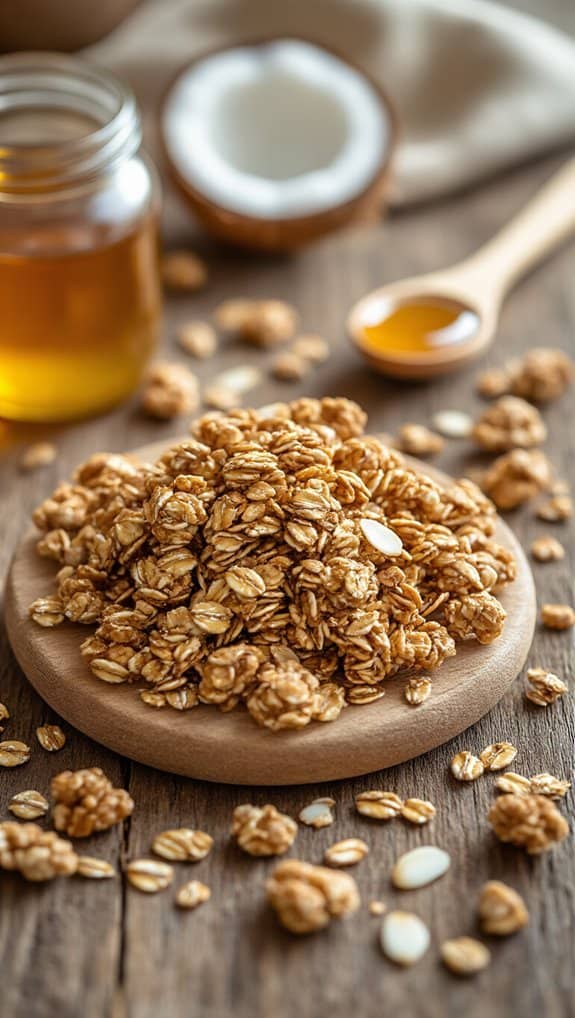
Three simple steps stand out when making homemade sugar-free granola: mixing dry ingredients, combining wet ingredients, and baking until golden. You’ll start by combining oats, nuts, seeds, and spices in a large bowl. This low-sugar base creates a gut-friendly foundation that’s naturally nutritious.
Next, you’ll whisk together your binding agents—typically egg whites, oil, and sugar-free sweetener. Pour this mixture over your dry ingredients and stir until everything’s evenly coated. Don’t skip this thorough mixing; it ensures each cluster develops properly during baking.
Spread your mixture on a parchment-lined baking sheet and bake at 300°F for 20-25 minutes, stirring halfway through. You’re aiming for a golden-brown color and crispy texture. For savory granola variations, add herbs and reduce sweetener amounts.
Once cooled, store in airtight containers for a travel-friendly snack that’ll last two weeks. Remember: lower temperatures prevent burning while achieving that perfect crunch you’re after.
Best Natural Sweetener Alternatives for Granola
Your sugar-free granola needs the right sweetener to achieve that perfect balance of flavor and texture without the blood sugar spike. You’ll find several excellent natural alternatives that won’t compromise taste or health benefits.
Monk fruit stands out as a zero-calorie option that’s 150-200 times sweeter than sugar, so you’ll only need small amounts. It won’t affect blood glucose levels and adds subtle sweetness without an aftertaste. Yacon syrup offers prebiotic benefits while providing caramel-like notes that complement nuts and seeds perfectly. Its low glycemic index makes it diabetic-friendly.
| Sweetener | Key Benefits | Best For |
|---|---|---|
| Stevia | Zero calories, heat-stable | Light sweetness |
| Erythritol | Crystalline texture, cooling effect | Crunchy clusters |
| Allulose | Browns like sugar, 70% sweetness | Golden color |
When choosing your sweetener, consider how it’ll interact with your granola’s baking temperature and desired texture. Liquid options like yacon syrup help bind clusters, while powdered alternatives distribute more evenly through dry ingredients.
Storage Tips to Keep Your Granola Fresh and Crunchy
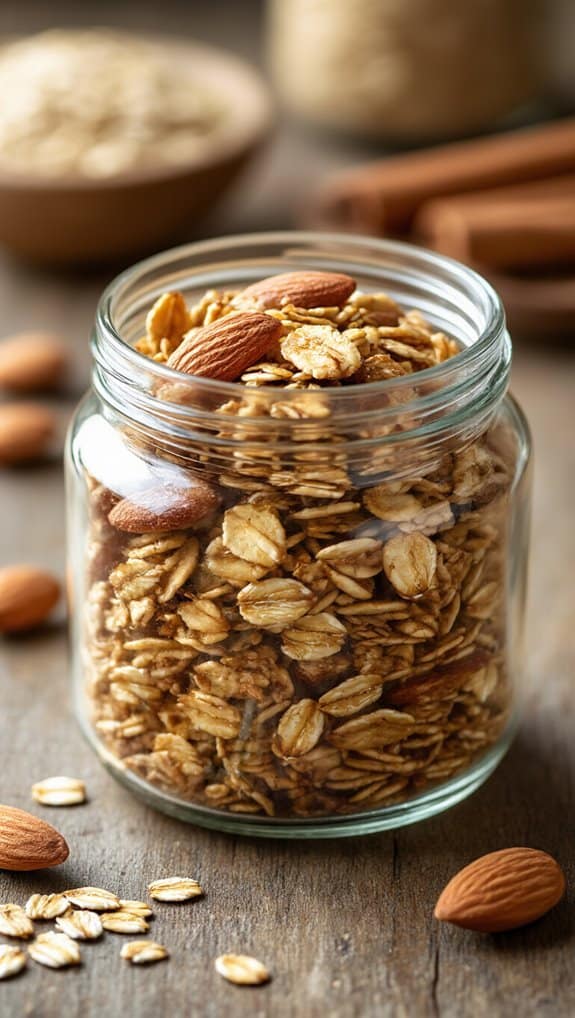
You’ve crafted the perfect batch of sugar-free granola, but now you’ll need to store it properly to maintain that satisfying crunch.
The right storage container makes all the difference—airtight glass jars or sealed plastic containers will protect your granola from moisture that causes sogginess. You’ll also want to keep your container in a cool, dry pantry away from direct sunlight and heat sources that can make the oils go rancid.
Best Storage Containers
After making a batch of homemade sugar-free granola, you’ll want to store it properly to maintain that perfect crunch. Airtight jars work excellently for countertop storage, while vacuum canisters remove excess air that causes staleness. You’ll find glass containers ideal since they don’t absorb odors or flavors.
| Container Type | Best For |
|---|---|
| Mason Jars | Small batches, pantry display |
| Vacuum Canisters | Long-term freshness (3+ weeks) |
| Glass Containers | Odor-free storage |
| Stainless Steel | Light protection, durability |
Choose containers with wide mouths for easy scooping. Don’t use plastic bags—they’ll trap moisture and make your granola soggy. If you’re storing large batches, divide them into smaller containers. This way, you’re not repeatedly exposing all your granola to air when grabbing portions.
Ideal Storage Conditions
Once you’ve selected the right container, temperature and humidity control become crucial for maintaining your granola’s texture. Store your sugar-free granola in a cool, dry pantry away from heat sources like stoves or dishwashers. Ambient humidity is your granola’s enemy—it’ll turn crispy clusters into chewy clumps within days. Keep your storage area below 70°F and maintain humidity levels under 50% for optimal freshness.
Light exposure can degrade nuts and seeds in your granola, causing rancidity and off-flavors. Choose a dark cupboard or opaque container to block UV rays. Don’t store granola near windows or under cabinet lighting. If you’re using clear glass jars, place them in closed pantries. Your granola will stay fresh for up to three weeks when you control these environmental factors properly.
Creative Ways to Enjoy Sugar-Free Granola Throughout the Day
| Time of Day | Serving Idea | Pairing |
|---|---|---|
| Morning | Smoothie bowl topper | Fresh berries |
| Mid-Morning | Apple slices coating | Almond butter |
| Lunch | Salad crunch element | Balsamic dressing |
| Afternoon | Energy bite mix-in | Dark chocolate chips |
| Evening | Ice cream topping | Whipped cream |
Transform your granola into portable travel snacks by creating trail mix portions or pressing it into homemade bars. You can sprinkle it over baked sweet potatoes, fold it into muffin batter, or use it as a crispy coating for baked chicken. Don’t overlook dessert applications—you’ll love how it adds texture to puddings and fruit crisps without compromising your sugar-free lifestyle.
Nutritional Comparison: Sugar-Free Vs Traditional Granola
While traditional granola often contains 12-24 grams of sugar per serving, sugar-free versions typically have less than 1 gram, making them a game-changer for blood sugar management.
You’ll notice the glycemic impact differs dramatically – sugar-free granola won’t spike your insulin levels, helping you maintain steady energy throughout the day.
The calorie density often surprises people. Traditional granola packs 400-500 calories per cup, while sugar-free alternatives typically contain 350-400 calories.
That’s because manufacturers replace sugar with nuts, seeds, and whole grains that offer better nutritional value.
You’re getting superior fiber content with sugar-free options – usually 5-7 grams versus 3-4 grams in regular varieties.
This boost comes from increased whole-grain ratios and added seeds.
Additionally, vitamin retention improves without sugar’s interference in nutrient absorption.
You’ll absorb more B vitamins, vitamin E, and minerals from nuts and grains when they’re not competing with added sugars for processing in your digestive system.
Common Mistakes to Avoid When Making Sugar-Free Granola
Even though you’re eliminating sugar, you can’t just remove it without replacing its binding properties – that’s the fastest way to end up with loose, crumbly granola that won’t form clusters. You’ll need alternatives like nut butter, egg whites, or sugar-free syrup to achieve that satisfying crunch.
Don’t rush the baking process. Undercooked clusters won’t hold together and will taste raw. Set your oven to 300°F and bake for 20-25 minutes, stirring halfway through. Watch carefully during the final minutes – there’s a thin line between golden perfection and overbaked bitterness.
You’re also making a mistake if you’re adding dried fruit too early. Mix it in after baking to prevent burning. Skip artificial sweeteners that lose sweetness when heated; opt for monk fruit or erythritol instead. Finally, don’t store your granola while it’s warm – you’ll trap moisture and lose that crisp texture you’ve worked hard to achieve.
Top Store-Bought Sugar-Free Granola Brands Worth Trying
Standing in the cereal aisle searching for truly sugar-free granola can feel overwhelming when most “healthy” options still pack 10-15 grams of added sugars per serving. You’ll need to look beyond low sugar marketing claims and examine actual ingredient lists carefully.
Brands like Diabetic Kitchen and Keto Granola lead with transparent ingredient sourcing, using monk fruit and stevia instead of hidden sweeteners. Their texture variations range from extra crunchy clusters to softer, nut-forward blends that won’t hurt your teeth.
Consumer reviews consistently praise Paleonola‘s grain-free options and NuTrail’s keto-friendly varieties for maintaining satisfying crunch without sugar alcohols that cause digestive issues. You’ll find these brands online rather than in traditional stores.
When shopping, you’re looking for products with zero grams of sugar and no maltodextrin, honey, or fruit juice concentrates. Check specialty health food stores and Amazon for the widest selection of legitimate sugar-free options that don’t compromise on taste.
Customizing Your Sugar-Free Granola With Mix-In Ideas
You’ll transform basic sugar-free granola into a personalized breakfast treat by adding your favorite mix-ins. Choose from unsweetened dried fruits like coconut flakes, freeze-dried berries, or chopped dates for natural sweetness without added sugars.
Boost the nutrition and crunch factor with almonds, pumpkin seeds, pecans, or sunflower seeds that complement your granola’s base flavors.
Dried Fruit Options
With countless possibilities at your fingertips, dried fruits can transform your sugar-free granola into a personalized breakfast masterpiece. You’ll want to choose unsweetened varieties to maintain the sugar-free integrity of your recipe.
Consider these top dried fruit options:
- Unsweetened cranberries – Tart and vibrant, perfect with almonds
- Freeze-dried strawberries – Crispy texture that won’t add moisture
- Unsulfured apricots – Natural sweetness without added sugars
- Golden raisins – Milder than regular raisins, pair well with coconut
- Dried blueberries – Antioxidant-rich with concentrated flavor
For optimal flavor pairings, match tart fruits with nuts and sweet fruits with seeds. If you prefer softer textures, try fruit rehydration by soaking dried pieces in warm water for 10 minutes before adding them to your finished granola. This technique prevents them from becoming too hard during storage.
Nut and Seed Varieties
Transform your sugar-free granola’s texture and nutritional profile by incorporating a diverse array of nuts and seeds. You’ll boost protein content while adding satisfying crunch to every bite.
Start with almond variations—try sliced, slivered, or roughly chopped pieces for different textures. You can also experiment with blanched versus skin-on almonds to alter both flavor and appearance. Mix in walnuts for omega-3s, pecans for buttery richness, or cashews for natural sweetness.
Don’t overlook seeds’ potential. Create pumpkin seed blends by combining pepitas with sunflower seeds, chia, and flax. These combinations deliver essential minerals like magnesium and zinc. Toast larger nuts before adding them, but mix smaller seeds in raw—they’ll crisp up during baking. You’re creating a personalized superfood mix that transforms basic granola into a nutrient-dense breakfast.
Frequently Asked Questions
Is Sugar-Free Granola Safe for Diabetics to Eat Regularly?
You can eat sugar-free granola regularly if you’re diabetic, but you’ll need to practice careful carb counting since it still contains carbohydrates from oats, nuts, and dried fruits.
These carbs will affect your blood sugar levels even without added sugars. Check the nutrition label, measure portions, and monitor how it impacts your glucose readings.
You’ll find that pairing it with protein or healthy fats helps stabilize your blood sugar response.
Can I Make Sugar-Free Granola Without Using an Oven?
Yes, you can make sugar-free granola without an oven! You’ll create delicious no-bake clusters by mixing oats, nuts, and seeds with sugar-free sweeteners and nut butter on your stovetop.
Heat the mixture in a large pan, stirring constantly until everything’s toasted and fragrant. Once it’s cooled, you’ve got perfect stovetop granola that’s crunchy and satisfying.
Press the mixture into bars or break it into bite-sized pieces for easy snacking.
How Many Calories Are in a Typical Serving of Sugar-Free Granola?
You’ll typically find 120-150 calories in a 1/4 cup serving size of sugar-free granola, though this varies by recipe.
Since nuts, seeds, and oils create high-calorie density, your homemade version might reach 180 calories per serving.
You’re getting concentrated nutrition without added sugars, but don’t assume “sugar-free” means low-calorie. Watch your portions carefully – it’s easy to pour double or triple a standard serving without realizing it.
Will Sugar-Free Granola Help With Weight Loss Goals?
Sugar-free granola can support your weight loss goals when you practice portion control, since it’s still calorie-dense despite lacking sugar.
You’ll benefit from its fiber content, which feeds your gut microbiome and promotes healthy digestion.
The protein and healthy fats help you feel fuller longer, reducing cravings.
However, you shouldn’t rely on it alone – combine it with balanced meals and regular exercise for effective weight management results.
Is Sugar-Free Granola Suitable for a Keto Diet?
You’ll find sugar-free granola isn’t automatically keto-friendly since oats and other grains remain high in carbohydrates.
Check net carb counts carefully – most varieties contain 15-30g per serving, exceeding keto limits.
You’re better off choosing low-carb swaps like crushed nuts, coconut flakes, and seeds mixed with sugar-free sweeteners.
These alternatives provide the crunch you want while keeping your daily carbs under 20-30g for maintaining ketosis.
Conclusion
You’ve discovered that sugar-free granola isn’t just healthier—it’s incredibly versatile and easy to make. Whether you’re crafting your own batch with natural sweeteners or choosing quality store-bought options, you’re making a smart choice for your health. Remember to store it properly, avoid common mistakes, and don’t be afraid to experiment with mix-ins. Your breakfast routine will thank you, and you’ll enjoy all the crunch without the sugar crash that follows traditional granola.


No Comments