
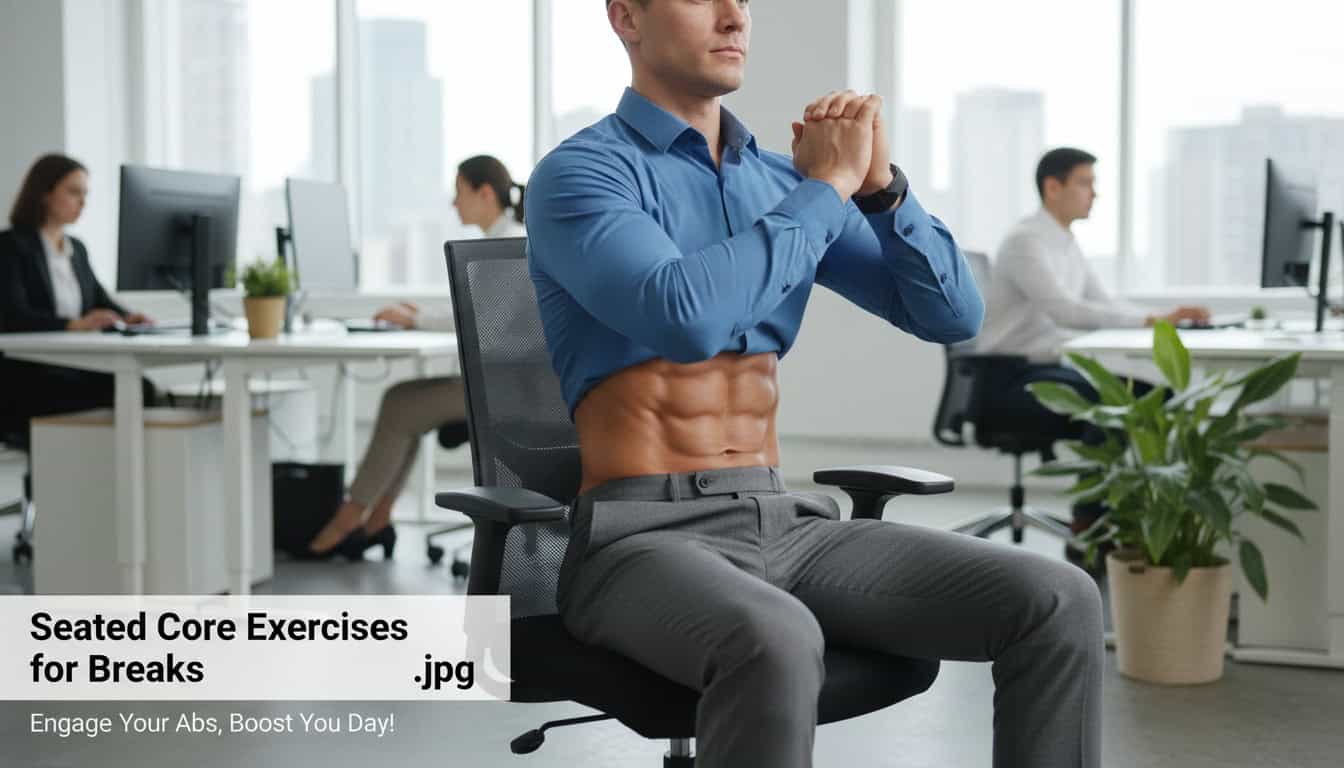
What Seated Core Exercises Work During Breaks?
You can fire up your deep abs, obliques, and lower back in just five minutes by staying seated. Start with a brisk seated march, then move into a seated bicycle crunch—12‑15 reps per side—to hit the transverse and rectus muscles. Follow with 10‑12 controlled torso twists per side, pausing at the peak rotation. Add leg raises on the chair, 8‑10 reps per leg, and finish with a stability‑ball twist or balance hold for extra activation. Keep breathing deep and steady, and you’ll feel the core fire up; keep going and you’ll discover more ways to track progress.
Table of Contents
5‑Minute Core Routine to Do While Your Coffee Brews
Looking for a quick way to engage your core while the kettle whistles? Sit tall, feet flat, and brace your spine.
Start with a seated march: lift one knee, then the other, keeping your torso upright for 30 seconds.
Next, perform a seated Russian twist—hands clasped, rotate your torso left and right, tapping the floor beside you each time.
Follow with a 20‑second plank hold: lean forward, forearms on the chair, and keep your body in a straight line.
Then, do a seated leg lift: extend one leg, hold for two seconds, lower, and repeat on the other side, 10 reps each.
Finish with a deep‑breathing stretch: inhale, lift your arms overhead, exhale, and fold forward, feeling the stretch in your lower back.
You’ve just turned a coffee break into a compact, effective core workout that fits into any office routine.
Activate Deep Abs With a Seated Bicycle Crunch
Ever wondered how to fire up those deep abdominal muscles without leaving your chair? Sit upright, feet flat, and place your hands lightly behind your head. Lift your right knee toward your chest while simultaneously twisting your torso to bring your left elbow toward that knee. Reverse the motion, extending the right leg and pulling the left knee in, letting the right elbow meet it. Continue alternating in a smooth, controlled rhythm, mimicking a bicycle motion. Keep your core engaged, avoid pulling on your neck, and breathe steadily—exhale on each twist, inhale as you reset. Aim for 12‑15 repetitions per side, then pause and feel the burn in the transverse abdominis and rectus abdominis. This seated bicycle crunch isolates the deep abs, improves spinal stability, and fits perfectly into a short coffee‑break or Zoom pause. No equipment needed, just a chair and a commitment to move.
Seated Torso Twists for Oblique Strength During a Zoom Break
You’ll start by sitting tall, feet flat, and turning your torso slowly to each side while keeping your hips stable.
Aim for 10‑12 controlled twists per side, pausing a second at the peak of each rotation.
Keep the movement fluid and breathe out as you twist, then inhale as you return to center.
Seated Twist Form
Why not turn a Zoom break into a quick oblique workout? Sit upright with feet flat, spine tall, and shoulders relaxed. Place your hands lightly behind your head, elbows flared to the sides. Initiate the twist by engaging your core, then rotate your torso left, keeping your hips stable and your lower back neutral. Exhale as you reach the maximum comfortable stretch, then inhale returning to center. Mirror the movement to the right, maintaining the same speed and control. Keep the motion fluid, avoid jerking, and focus on the muscles along your sides rather than the arms. A tight core, steady breath, and proper alignment ensure you target the obliques efficiently without straining the neck or lower back.
Twist Repetition Timing
How long should each twist last to maximize oblique activation without overtaxing your core? Aim for a controlled two‑second pause at the peak of each rotation, then a one‑second return to center. This 3‑second cycle balances tension and recovery, keeping the muscles engaged without fatigue.
Perform eight to twelve repetitions per set, then rest for 15‑20 seconds before starting the next set. If you feel your breath hitch, shorten the hold to 1.5 seconds and focus on smooth, deliberate movement. Consistency beats speed—maintain the rhythm throughout the Zoom break, and you’ll stimulate the obliques effectively while staying seated and professional. Adjust the timing if you notice excess strain, but keep the total cycle under five seconds.
Leg Raises on a Chair – Lower‑Abs Work Without Standing
Sit tall with your back against the chair, keep your feet flat, and engage your core before you lift.
Raise one leg slowly, keeping it straight and your pelvis stable, then lower it with control.
Remember to breathe, maintain tension in your abs, and repeat on both sides for a solid lower‑abs workout without standing.
Proper Seat Position
A sturdy chair lets you target the lower abs without getting up, as you keep your spine neutral and feet flat while lifting one leg at a time. Sit all the way back so your lower back touches the seat, and engage your core before you move. Align your hips with your knees, and keep your shoulders relaxed. This posture stabilizes the pelvis, preventing excessive arching or rounding, which lets the lower abdominal muscles fire efficiently. When you raise a leg, the tension stays in the core instead of shifting to the lower back. Consistently using this seat position maximizes the workout’s effectiveness and reduces strain.
- Sit upright, back against the chair
- Keep feet flat, knees at 90°
- Engage core before each leg lift
Controlled Leg Lift
A controlled leg lift on a chair isolates the lower abs while keeping you seated, letting you work the core without standing. Sit tall, feet flat, and grip the edge of the seat for stability. Engage your belly, then straighten one leg, lifting it a few inches off the floor. Keep the movement smooth, avoid swinging, and pause briefly at the top. Lower the leg slowly, maintaining tension. Switch legs after 8‑10 repetitions, then repeat the set.
Aim for three sets, resting 30 seconds between each. Focus on breathing—inhale as you lower, exhale as you lift. This simple motion activates the rectus abdominis and hip flexors, delivering a quick, effective core burn during any work break.
Core Engagement Tips
Stabilizing your pelvis and bracing your core before you lift a leg on a chair maximizes lower‑abs activation and protects your lower back. You’ll feel the tension in your transverse abdominis as you engage your glutes and hip flexors, creating a solid foundation for each raise.
Keep your spine neutral, avoid arching, and breathe deliberately—inhale to prep, exhale to lift. This mindful approach ensures the movement targets the lower rectus abdominis without over‑relying on momentum, making the exercise safe for office chairs and quick breaks.
- Sit tall, feet flat, and pull your belly button toward your spine.
- Squeeze glutes and engage hip flexors before each leg lift.
- Exhale while raising the leg, keep the torso still, and lower slowly.
Sit on a Stability Ball for Core Work
Wondering how to turn a quick break into a powerful core workout? Sit on a stability ball and feel the subtle wobble engage your deep abdominal muscles. Keep your feet flat, knees at a 90‑degree angle, and spine neutral. As you balance, your transverse abdominis fires to prevent the ball from rolling away, giving you a continuous isometric contraction.
To intensify, lift one foot a few inches off the floor, then switch sides, maintaining steady breathing. You can also perform seated twists: clasp your hands, rotate torso left and right, letting the ball’s movement guide your range. Each twist forces the obliques to stabilize, while the ball’s instability challenges the lower back.
Hold each position for 10‑15 seconds, repeat three to five cycles, and you’ll transform a brief pause into an effective core‑strength session without leaving your desk.
Breathing‑Driven Core Activation for Stress Relief
Ever notice how a slow, deliberate breath can instantly calm your mind while tightening your midsection? When you sync breathing with core engagement, you create a natural tension that steadies nerves and sculpts strength. Start by sitting tall, shoulders relaxed, and inhale deeply through the nose, expanding the belly. As you exhale through the mouth, draw your navel toward your spine, holding the contraction for a count of three before releasing. This rhythmic pattern trains the diaphragm and transverse abdominis to work together, reducing cortisol spikes and fostering a sense of control during hectic desk intervals. You’ll feel a subtle lift in your lower back and a smoother flow of thoughts, turning a brief pause into a restorative micro‑session.
- Diaphragmatic inhale, belly expansion
- Controlled exhale with navel‑to‑spine contraction
- Three‑second hold before gentle release
How to Track Core Gains During Desk Breaks
How can you tell if those quick seated core moves are actually building strength? First, note your posture: a flatter lower back and tighter belly button indicate activation. Use a simple timer—set it for 30 seconds and count how many reps you can complete without breaking form. Over weeks, the count should rise.
Next, grab a flexible tape measure and record your waist circumference each morning; a modest reduction signals muscle tone.
For a more objective readout, place a smartphone on a desk and record a short video of your seated twist or leg‑raise. Compare the angle of your torso or hip lift across sessions; a larger range means improved flexibility and strength.
Finally, track perceived effort on a 1‑10 scale after each break. If the rating drops while you maintain the same or more reps, you’re gaining core endurance.
Log all data in a spreadsheet to spot trends and stay motivated.
Frequently Asked Questions
Can I Do These Seated Core Moves if I Have a Herniated Disc?
Yes, you can try them, but modify each move, keep your spine neutral, and avoid excessive flexion or rotation. Start slowly, listen to pain signals, and consult a therapist before proceeding.
How Many Calories Does a 5‑Minute Seated Core Routine Burn?
You’ll burn roughly 30–45 calories in a five‑minute seated core routine, depending on intensity, your weight, and muscle engagement, so keep movements controlled and maintain steady breathing to maximize the burn.
Do I Need Any Special Equipment for Seated Bicycle Crunches?
You don’t need any special equipment for seated bicycle crunches—just a sturdy chair, your own body weight, and enough space to move your legs and torso comfortably while you twist.
Can Seated Core Exercises Improve My Posture Over Time?
Yes, you’ll notice better posture as you consistently do seated core moves; they strengthen your deep abdominals and lower back, keeping your spine aligned and reducing slouching throughout the day.
How Often Should I Repeat These Desk Break Core Workouts?
You should repeat those desk‑break core workouts every 60‑90 minutes, aiming for 2‑3 sets of 8‑12 reps each time, and gradually increase frequency as your stamina improves.
Conclusion
By squeezing a few minutes into your day, you can keep your core engaged without leaving your desk. These seated moves—bicycle crunches, torso twists, leg raises, ball sits, and mindful breathing—target deep abs, obliques, and lower‑abs while you wait for coffee or a Zoom call. Consistency is key, so log each session, watch your posture improve, and feel the difference in strength and focus throughout your workday.


Sorry, the comment form is closed at this time.