
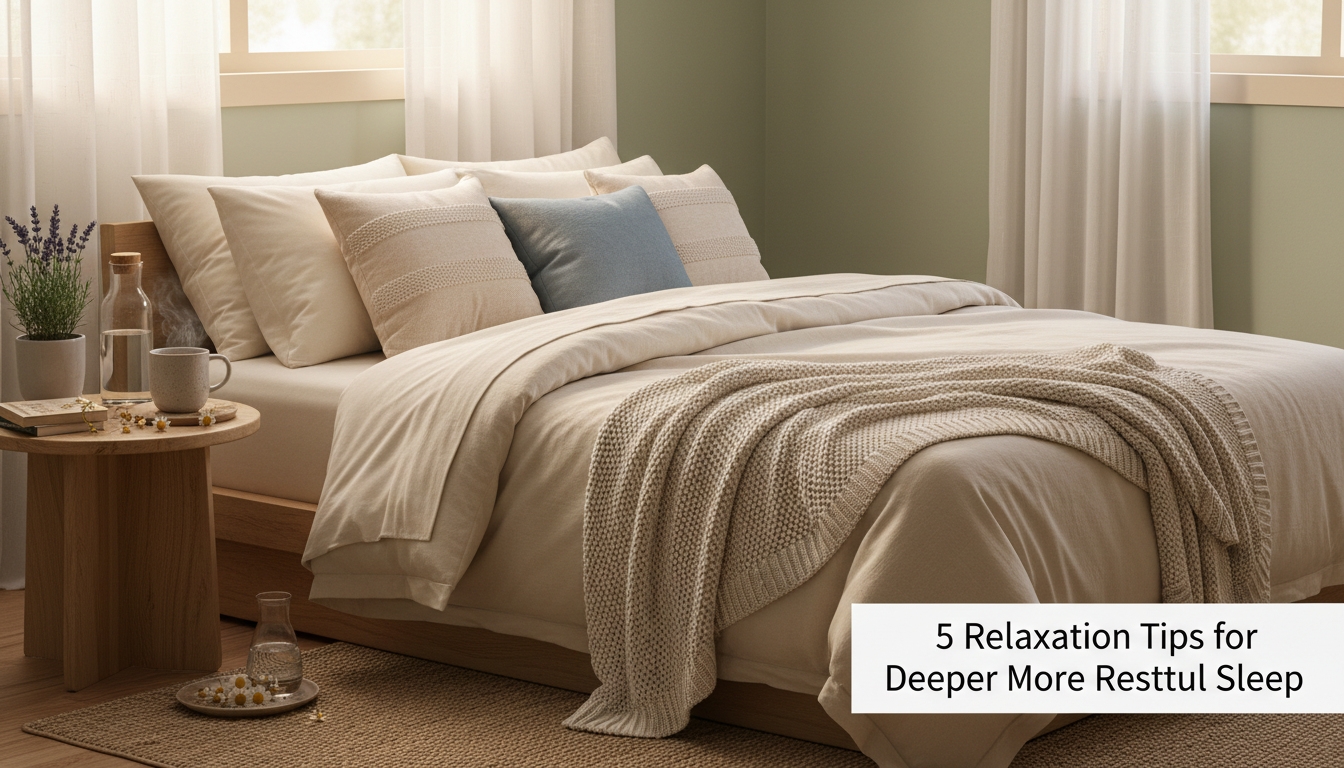
5 Relaxation Tips for Deeper More Restful Sleep
Dim the lights about an hour before bed with a warm, low‑watt lamp or a smart bulb that fades like a sunset, and block any stray glare with heavy curtains or a sleep mask. Then, do a 4‑minute deep‑breathing routine: inhale four counts, pause, exhale for six, feeling your heart rate slow. Follow with a 5‑minute guided meditation that mixes soft spoken cues and gentle ambient tones, and add a calming scent such as lavender or a soft rain soundscape. Finally, ease into a light stretch or yoga flow—seated forward fold, cat‑cow, supine twist, and legs‑up‑the‑wall—to lower cortisol and signal your body that it’s time to rest; the next steps will show you how to deepen this relaxation even further.
Key Takeaways
- Dim lights an hour before bed, using warm, low‑watt lamps or smart bulbs that fade to a sunset hue, and block external light with curtains or a mask.
- Perform a 4‑minute deep‑breathing routine: inhale for 4 counts, pause briefly, then exhale for 6 counts to slow heart rate and promote relaxation.
- Listen to a 5‑minute guided meditation with soft spoken cues and gentle ambient tones, visualizing a calm scene to focus the mind.
- Diffuse soothing scents like lavender or chamomile and play a low‑volume soundscape (white noise, rain, or binaural beats) that fades after 30‑45 minutes.
- End with a brief stretch or yoga flow—seated forward fold, cat‑cow, supine twist, and legs‑up‑the‑wall—to lower cortisol and signal the body for sleep.
Dim the Lights to Help You Fall Asleep Quickly
Ever wonder why a dimmed room feels so inviting at night? You’re cueing your brain that it’s time to wind down. Lowering the lights reduces blue‑light exposure, which otherwise suppresses melatonin, the hormone that signals sleep. Start by switching to a warm, low‑watt lamp about an hour before bed. If you use screens, enable night‑mode or wear blue‑blocking glasses. Dimmable smart bulbs let you schedule a gradual fade, mimicking sunset and easing the transition from alertness to calm. Keep bedroom curtains heavy or use a sleep mask to block any lingering streetlight. The softer illumination also relaxes your eyes, decreasing visual strain that can keep you alert. By creating a consistently dim environment, you train your body to associate low light with rest, helping you drift off faster and enjoy deeper, more restorative sleep.
Do a 4‑Minute Deep‑Breathing Exercise for Faster Sleep
After dimming the lights, you can amplify the calming effect with a quick 4‑minute deep‑breathing routine. Sit upright, close your eyes, and inhale slowly through your nose for a count of four, feeling your belly rise. Pause a beat, then exhale gently through your mouth for six counts, letting tension melt away. Repeat this pattern, maintaining a steady rhythm, and notice your heart rate slowing. By the third minute, your mind drifts, and cortisol levels dip, priming your body for sleep. Keep the focus on the breath; if thoughts wander, acknowledge them and return to the inhale‑exhale cycle. The short, structured practice balances oxygen flow, steadies the nervous system, and signals to your brain that it’s time to rest. Finish the session with a final, slow exhale, then settle into your pillow, feeling calmer and ready for deeper, more restful sleep.
Listen to a 5‑Minute Guided Meditation to Fall Asleep Quickly
Looking for a fast, effortless way to drift off? Press play on a 5‑minute guided meditation and let the soothing voice steer you toward sleep. Choose a track that blends soft spoken cues with gentle ambient tones—no sudden spikes, just a steady rhythm. As you lie down, close your eyes, and focus on each instruction: inhale, exhale, release tension, visualize a calm scene. The guide’s pacing matches your breathing, so you stay in sync without overthinking. By the third minute, your mind shifts from daily chatter to the present moment, and the body relaxes naturally. When the voice fades, you’ll already be nestled in a drowsy state, ready to slip into deeper rest. Use this short meditation nightly; consistency trains your brain to associate the audio cue with sleep, making it easier to fall asleep quickly each evening.
Turn on Calming Scents or a Soundscape for Quick Sleep
Curious how a simple scent or ambient sound can speed up bedtime? You can transform your bedroom into a sleep‑inducing sanctuary with just a few drops of essential oil or a low‑key soundscape. Choose lavender, chamomile, or sandalwood; their calming aromatics lower heart rate and quiet mental chatter. A diffuser releases a steady mist, keeping the fragrance gentle and consistent throughout the night. If you prefer sound, select white noise, gentle rain, or a soft binaural beat that masks disruptive noises and steadies your breathing. Set a timer so the audio fades after 30‑45 minutes, preventing overstimulation. Pair the scent with a sound that matches the same tempo—slow, rhythmic, and unobtrusive—to reinforce relaxation cues. Keep the volume low enough to stay in the background, allowing your brain to associate these cues with sleep. By consistently using these sensory triggers, you’ll cue your nervous system to unwind faster, slipping into deeper, more restful sleep with minimal effort.
Finish With a Light Stretch or Yoga Flow to Fall Asleep Quickly
Why not end your night with a gentle stretch or a short yoga flow? A few minutes of mindful movement signals your body that it’s time to unwind, dropping cortisol and inviting relaxation. Begin with a seated forward fold, letting your spine lengthen while you inhale, then exhale and release tension in your hamstrings. Transition to a cat‑cow sequence on hands and knees, syncing breath with each arch and round to loosen the spine.
Move into a supine twist: lie on your back, draw knees to chest, drop them to one side, and breathe deeply, feeling the gentle spinal rotation. Finish with legs‑up‑the‑wall pose for two minutes, allowing blood to flow away from your legs and calming the nervous system. Keep movements slow, focus on breath, and avoid straining. This light routine lowers heart rate, eases muscle tightness, and prepares you to drift into sleep quickly and peacefully.
Frequently Asked Questions
How Many Hours of Sleep Are Ideal for Adults?
You should aim for seven to nine hours each night, as most adults need that range for optimal health, mood, and cognitive performance, and it helps you recover and stay energized throughout the day.
Can I Use a Weighted Blanket for Better Sleep?
Yes, you can use a weighted blanket to improve sleep. It applies gentle pressure, which can calm your nervous system, reduce anxiety, and promote deeper, more restful rest throughout the night.
Should I Avoid Screens Before Bedtime?
Yes, you should avoid screens before bedtime. Turn them off at least an hour early, dim the lights, and give your brain a break. This helps melatonin rise, letting you drift into deeper, more restful sleep.
What Temperature Promotes the Deepest Sleep?
You’ll get the deepest sleep at about 65‑68 °F (18‑20 °C). Keep the room cool, not cold, and avoid overheating. A stable, comfortable temperature helps your body stay in restorative sleep cycles.
Do Certain Foods Affect Sleep Quality?
Yes, you’ll find that heavy, spicy, or sugary foods before bed can disrupt your sleep, while a light snack of complex carbs, try, or magnesium‑rich foods can help you stay asleep longer.
Conclusion
By dimming the lights, practicing a quick deep‑breathing routine, listening to a brief guided meditation, adding calming scents or a soothing soundscape, and finishing with a light stretch or yoga flow, you’ll create a perfect bedtime ritual. These simple steps signal your body it it’s time to unwind, helping you drift off faster and enjoy deeper, more restorative sleep night after night.


Table of Contents





No Comments