
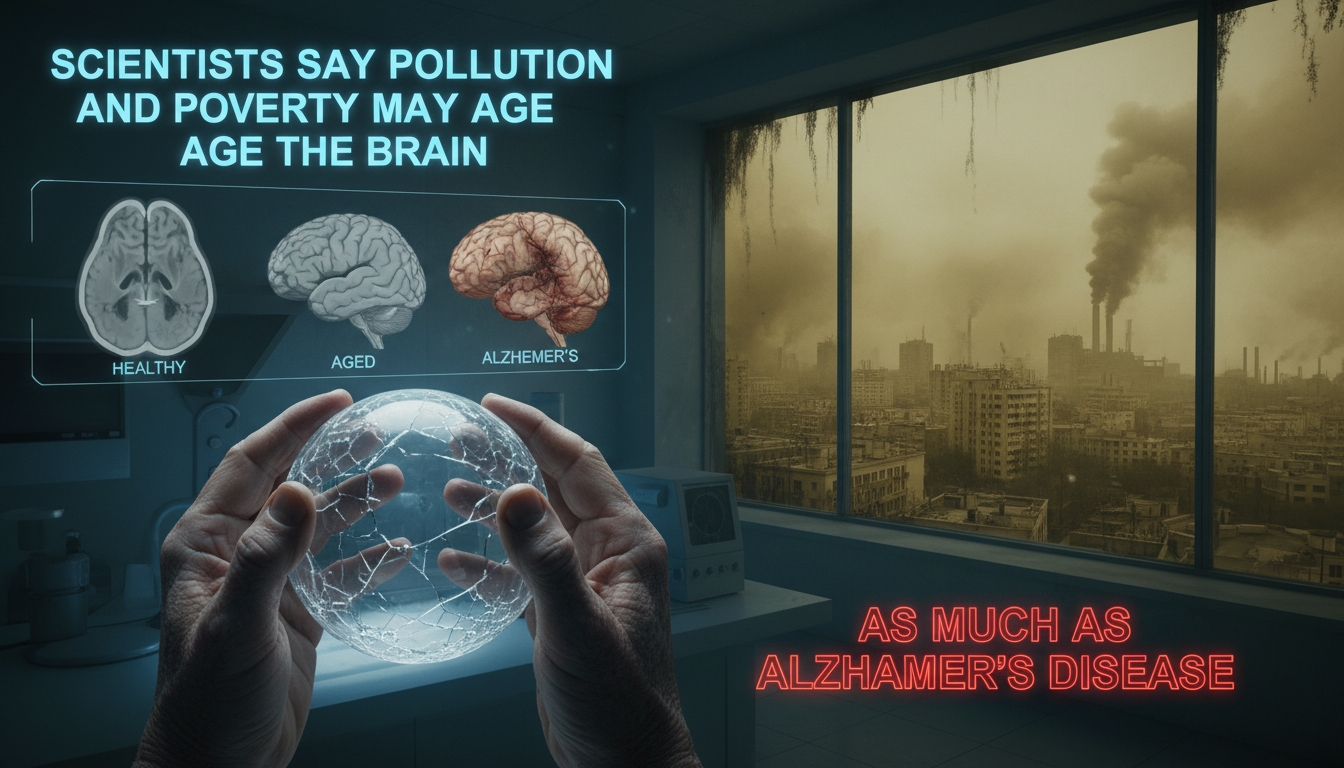
Scientists Say Pollution and Poverty May Age the Brain as Much as Alzheimer’s Disease
You’re hearing that the mix of polluted air and poverty can make your brain age as fast as Alzheimer’s. Fine particles slip through your nose, breach the blood‑brain barrier, and spark oxidative stress and inflammation that damage DNA, shrink hippocampal volume, and thin white‑matter tracts. Low‑income neighborhoods face higher PM2.5 levels and fewer health resources, amplifying IQ loss and dementia risk. If you keep going, you’ll discover the scans, mechanisms, and steps you can take to protect your brain.
Table of Contents
How Air Pollution Accelerates Brain Aging and Cognitive Decline
Why does the air you breathe matter for your brain? Every time you inhale polluted air, tiny particles slip past your nasal passages, travel along the olfactory nerve, and settle in the frontal cortex. There, they trigger inflammation, oxidative stress, and microglial activation, which erode neuronal connections. Studies show that a 1 µg m⁻³ rise in PM2.5 can shave 0.27 points off a child’s IQ, and chronic exposure shrinks hippocampal volume in adults, accelerating memory loss. The same pollutants boost depression and anxiety scores, and they increase the odds of dementia by over 100 % when concentrations exceed EPA limits. Low‑income neighborhoods face 2–3 × higher PM2.5, magnifying these effects. Even short‑term spikes can disrupt white‑matter tracts, compromising executive function. In short, polluted air fast‑tracks brain aging, turning everyday exposure into a silent, cumulative assault on cognition.
What Scans Show About Air‑Pollution‑Induced Brain Damage
How do brain scans reveal the hidden toll of polluted air? You’ll see that MRI and diffusion imaging expose structural and connectivity changes that mirror accelerated aging. In high‑pollution cities, children’s white‑matter tracts appear thinned, while older adults show reduced hippocampal volume and enlarged ventricles. Functional scans capture disrupted front‑temporal networks, linking exposure to poorer memory and attention. These images also flag neuroinflammation: elevated COX2 and IL‑1β signals appear in cortical regions of residents breathing toxic particles.
- White‑matter lesions in kids from Mexico City, indicating early microstructural damage.
- Hippocampal shrinkage in adults with chronic PM₂.₅ exposure, correlating with memory decline.
- Altered connectivity on diffusion MRI, showing weakened frontal‑temporal pathways tied to higher traffic pollution.
Together, the scans give you a concrete, visual map of how polluted air chips away at brain health, even before symptoms surface.
Why Low‑Income Communities Feel Pollution’s Brain‑Hit the Most
Ever notice that the same smog that drifts over your neighborhood also drifts into your home, magnifying its impact on your brain? You live where PM₂.₅ levels are two‑ to times higher than in affluent districts, because factories, busy highways, and older heating systems cluster near low‑income housing. Those same walls often lack proper ventilation, so indoor concentrations rise as you cook with solid fuels or keep windows shut to keep out noise.
The chronic exposure compounds with limited access to health care, meaning you’re less likely to get early screening for cognitive decline. Education gaps matter too; fewer years of schooling reduce the brain’s resilience, so each microgram of PM₂.₅ can shave off more IQ points for you than for a better‑off peer. In short, the environmental burden and socioeconomic constraints intersect, turning pollution into a disproportionately heavy brain‑hit for your community.
How Air‑Pollution Particles Trigger Brain‑Cell Damage
The same smog that piles up in low‑income neighborhoods also carries microscopic particles that slip past the nasal passages, enter the bloodstream, and eventually reach the brain. Once inside, these ultrafine particles trigger a cascade of damage. They breach the blood‑brain barrier, deposit metal‑rich nanoparticles in the olfactory bulb and frontal cortex, and ignite oxidative stress that harms DNA and membranes. Microglia respond, releasing inflammatory cytokines like IL‑1β and TNF‑α, which further erode neuronal connections. Over time, the combined assault accelerates protein misfolding, reduces hippocampal volume, and disrupts white‑matter integrity, laying the groundwork for cognitive decline.
- Oxidative stress: particles generate free radicals, damaging cellular components.
- Neuroinflammation: activated microglia release cytokines that impair synapses.
- Protein aggregation: metal particles promote amyloid‑β and tau buildup.
Policies and Habits to Protect Your Brain From Pollution
When you combine clean‑air policies with everyday habits, you can dramatically lower the neurotoxic impact of pollution. Push for stricter PM2.5 limits, incentivize electric public transit, and demand green‑belt zoning that buffers residential streets from traffic. At home, install high‑efficiency HEPA filters, seal drafts, and vent kitchens outward to keep indoor fine particles down. Choose routes that avoid heavy traffic, bike or walk in parks, and wear certified N95 masks on high‑pollution days. Eat antioxidant‑rich foods—berries, leafy greens, omega‑3 fish—to combat oxidative stress. Stay hydrated, exercise regularly, and practice stress‑reduction techniques, all of which bolster neuro‑protective pathways. Support community initiatives that replace coal heating with clean energy and that improve ventilation in low‑income housing. By aligning policy advocacy with personal habits, you protect your brain and help close the socioeconomic gap in pollution‑related cognitive decline.
Frequently Asked Questions
Do Air Filters Completely Stop Brain‑Aging Particles?
You won’t eliminate all brain‑aging particles with filters alone; they capture many PM2.5 and ultrafines, but some slip through, especially gases and particles that bypass residential systems.
Can Indoor Plants Reduce Neurotoxic Pollution Exposure?
You can lower indoor neurotoxic exposure a a few percent with plants, especially species that filter VOCs and particulate matter, but they won’t replace proper ventilation or air‑cleaning systems.
Is There a Genetic Test for Pollution‑Related Dementia Risk?
You can’t get a specific genetic test for pollution‑related dementia yet, but you can use existing panels for APOE, CLU, and other AD genes, which may indicate heightened vulnerability to environmental insults.
Do Electric Vehicles Eliminate Ultrafine Particle Brain Damage?
You won’t eliminate ultrafine particle brain damage just by driving an electric car; you’ll still breathe polluted air unless you also reduce traffic emissions, improve filtration, and address indoor sources.
How Long Does It Take for Brain Health to Improve After Moving to Cleaner Air?
You’ll notice measurable cognitive gains within six to twelve months of living in cleaner air, and brain‑structure improvements—like reduced inflammation and modest volume recovery—can keep emerging over several years.
Conclusion
You’ve seen how polluted air can age your brain as fast as Alzheimer’s, especially if you live in a low‑income area where exposure is highest. The particles breach the blood‑brain barrier, damage cells, and speed cognitive decline. But you can fight back: support clean‑air policies, use air filters, limit outdoor time on smoggy days, and keep a healthy lifestyle. Protecting your brain starts with the air you breathe.


Sorry, the comment form is closed at this time.