
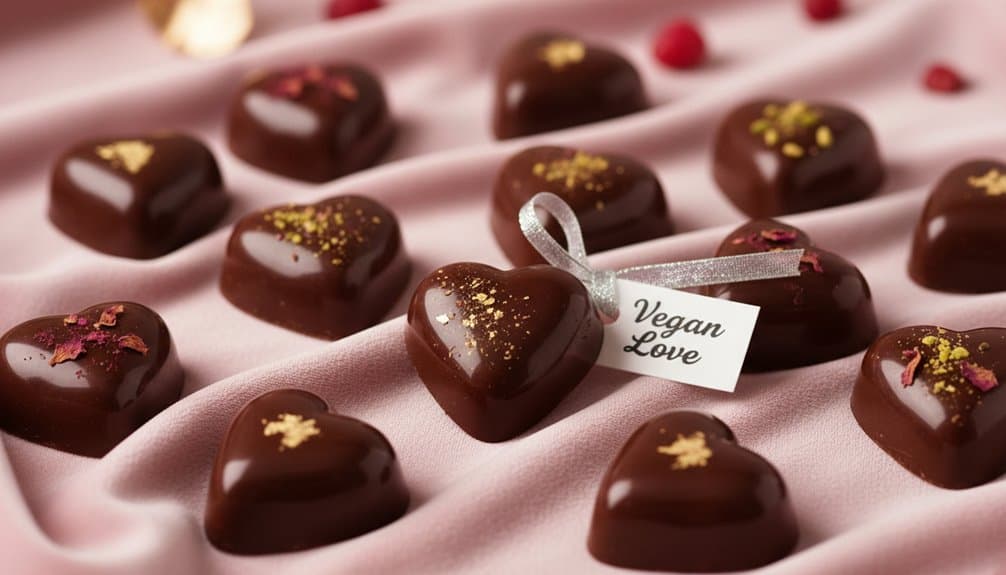
The Plant Based Valentine’s Chocolate Everyone’s Obsessing Over
You’re discovering what chocolate lovers already know—plant-based Valentine’s chocolates have mastered the art of luxury taste using coconut cream, cashew butter, and specialized emulsification techniques. These premium alternatives deliver the same rich, velvety mouthfeel as dairy varieties, with enhanced cocoa notes that often fool blind taste tests. Available online through Amazon and Thrive Market, plus in-store at Whole Foods and Target, they’re transforming romantic gifting with thoughtful presentation ideas that’ll make your Valentine swoon.
Table of Contents
Key Takeaways
- Plant-based chocolates use coconut cream, cashew butter, and oat milk to create premium richness rivaling traditional dairy chocolate.
- Advanced emulsification techniques blend plant oils with cacao solids, achieving smooth textures indistinguishable from dairy chocolate.
- Quality plant-based options deliver enhanced cocoa notes and complexity that often fool blind taste testers.
- Major retailers like Whole Foods, Target, and Amazon offer extensive selections with expedited Valentine’s delivery options.
- Creative presentations like edible bouquets, treasure hunts, and memory boxes elevate plant-based chocolate into memorable Valentine’s gifts.
What Makes Plant-Based Chocolate Taste Like Premium Dairy?
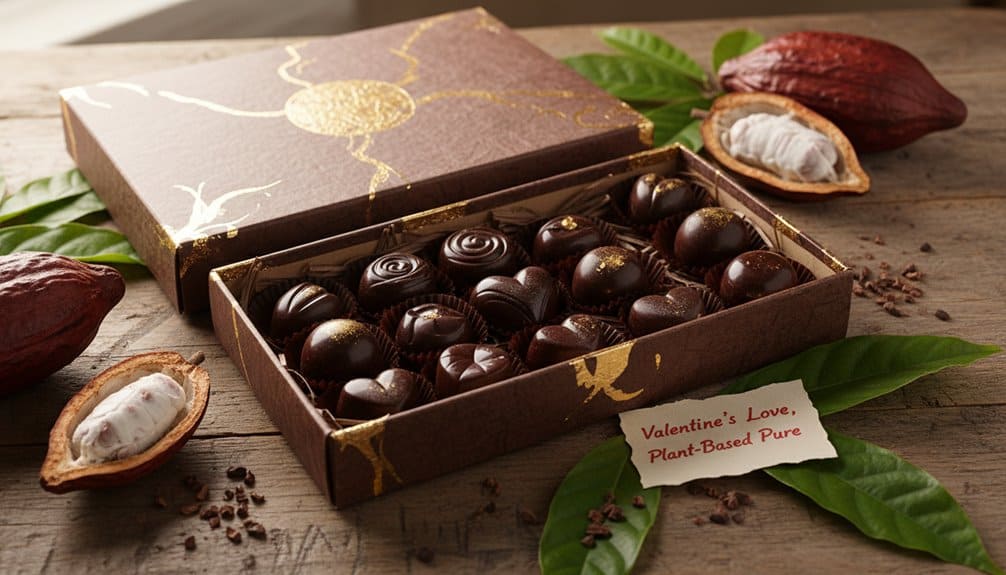
How do chocolatiers create plant-based chocolates that rival the creamy richness you’d expect from traditional dairy varieties?
The secret lies in sophisticated flavor compounds and advanced texture emulsions that mimic dairy’s distinctive mouthfeel.
Premium plant-based chocolates use coconut cream, cashew butter, or oat milk as their base.
These ingredients contain natural fats that create similar richness to dairy milk.
Chocolatiers carefully balance cacao percentages with these plant-based fats to achieve optimal smoothness.
The magic happens during processing.
Specialized emulsification techniques blend plant oils with cacao solids, creating stable texture emulsions that prevent separation and grittiness.
Some manufacturers add vanilla, lecithin, or natural flavor compounds to enhance the familiar taste profile you’re craving.

Temperature control during conching—the mixing process—ensures proper crystal formation.
This creates that satisfying snap and smooth melting sensation on your tongue.
When done correctly, you won’t taste the difference between plant-based and traditional dairy chocolate.
How This Chocolate Compares to Traditional Valentine’s Favorites
When you compare plant-based chocolates to classic Valentine’s treats like milk chocolate hearts and truffles, you’ll discover they’re remarkably competitive in both taste and presentation.
The flavor comparison reveals that quality plant-based options deliver the same rich sweetness and complexity you expect from traditional chocolates, often with enhanced cocoa notes that many find superior.
You’ll notice the texture contrast isn’t as dramatic as you might expect.
Modern plant-based chocolates achieve that signature smooth melt-in-your-mouth quality through innovative fat blending techniques.
Where traditional milk chocolate relies on dairy fats, these alternatives use coconut oil and cocoa butter combinations that create equally satisfying mouthfeel.
In blind taste tests, you’d struggle to identify the plant-based versions.
They match the indulgent experience of conventional Valentine’s chocolates while offering additional benefits like longer shelf life and often more intense flavor profiles that chocolate purists actually prefer.

Where to Buy Plant-Based Valentine’s Chocolate Online and In-Store
Where can you find these delectable plant-based Valentine’s chocolates? You’ve got plenty of options whether you prefer shopping online or browsing in person.
For online shopping, major retailers like Amazon, Thrive Market, and Vitacost offer extensive plant-based chocolate selections with convenient shipping options.
Many brands ship directly from their websites, often providing expedited delivery to ensure your Valentine’s treats arrive fresh and on time.
If you prefer seeing products before purchasing, check store locations at Whole Foods, Target, and natural food cooperatives.
Most Trader Joe’s locations carry seasonal plant-based chocolates during Valentine’s season.
Specialty vegan shops often stock unique artisanal brands you won’t find elsewhere.
Local health food stores frequently carry regional plant-based chocolate makers, giving you access to small-batch creations.
Many grocery chains now dedicate entire sections to plant-based products, making it easier than ever to find dairy-free Valentine’s chocolates right in your neighborhood.
Best Ways to Present Plant-Based Chocolate as a Valentine’s Gift
Why settle for ordinary packaging when you can transform your plant-based chocolate into an unforgettable Valentine’s surprise?
Creative presentation elevates your thoughtful gift from simple to spectacular.
Transform your chocolates into stunning displays that’ll make your valentine’s heart skip a beat:
- Create an edible bouquet by arranging chocolate bars like flowers in a vase, adding dried roses or lavender sprigs between each piece for romantic flair.
- Design a treasure hunt by hiding individual chocolates around your home with personal notes attached, leading to a grand finale surprise.
- Craft a memory box filled with chocolates nestled in tissue paper, including photos and handwritten messages about your favorite shared moments.
- Build a breakfast surprise by arranging chocolates on a tray with coffee, fresh berries, and a heartfelt card for an intimate morning treat.
Your presentation shows you’ve put thought into every detail, making plant-based chocolate feel extra special.
Frequently Asked Questions
How Long Does Plant-Based Chocolate Last Compared to Regular Chocolate?
Plant-based chocolate typically lasts as long as regular chocolate when stored properly.
You’ll get the same shelf life of 12-24 months for dark varieties and 6-12 months for milk alternatives.
The storage duration depends on cocoa content and ingredients used.
You should keep both types in cool, dry places away from sunlight.
Plant-based versions may actually last longer since they often contain fewer dairy proteins that can spoil.
Can People With Nut Allergies Safely Eat Plant-Based Valentine’s Chocolate?
You can’t automatically assume plant-based Valentine’s chocolate is safe if you have nut allergies.
Many plant-based chocolates use nuts like almonds, cashews, or hazelnuts as dairy alternatives.
Even nut-free varieties face cross contamination risks during manufacturing.
You’ll need to carefully read ingredient labels and look for “may contain nuts” warnings.
Contact manufacturers directly about their nut safety protocols before consuming any plant-based chocolate products.
Is Plant-Based Chocolate More Expensive Than Traditional Dairy Chocolate Options?
You’ll typically find plant-based chocolate carries premium pricing compared to traditional dairy options.
This price comparison reveals that vegan chocolates often cost 20-50% more due to specialized ingredients like cashew milk, coconut cream, or almond butter.
However, you’re paying for quality plant-based alternatives that require different manufacturing processes.
Many brands justify higher costs through organic certifications, fair-trade sourcing, and artisanal production methods that enhance flavor profiles.
What Are the Main Health Benefits of Choosing Plant-Based Chocolate?
You’ll enjoy significant antioxidant effects when choosing plant-based chocolate, as it’s typically higher in flavonoids that combat free radicals.
You’ll also experience cholesterol reduction benefits since plant-based varieties contain no dietary cholesterol, unlike dairy chocolate.
You’re getting more fiber, healthy fats, and minerals while avoiding saturated animal fats.
Your heart health improves, and you’ll likely consume fewer calories overall.
Does Plant-Based Chocolate Melt Differently in Warm Temperatures?
Yes, you’ll notice plant-based chocolate often has different melting behavior than traditional dairy chocolate.
It typically shows better heat resistance because plant-based fats like coconut oil and cocoa butter have higher melting points than milk fats.
You’ll find it stays firmer longer in warm temperatures, though the exact melting characteristics depend on which plant-based ingredients the manufacturer uses in their specific formulation.
Conclusion
You’ll discover that plant-based Valentine’s chocolate doesn’t mean compromising on taste or romance. Whether you’re shopping for a vegan partner or simply want to try something innovative, these chocolates deliver the indulgence you’re craving. Don’t wait until February 14th to order – the best varieties sell out quickly. You’re not just giving chocolate; you’re sharing a thoughtful, delicious experience that’ll make this Valentine’s Day unforgettable.


No Comments