
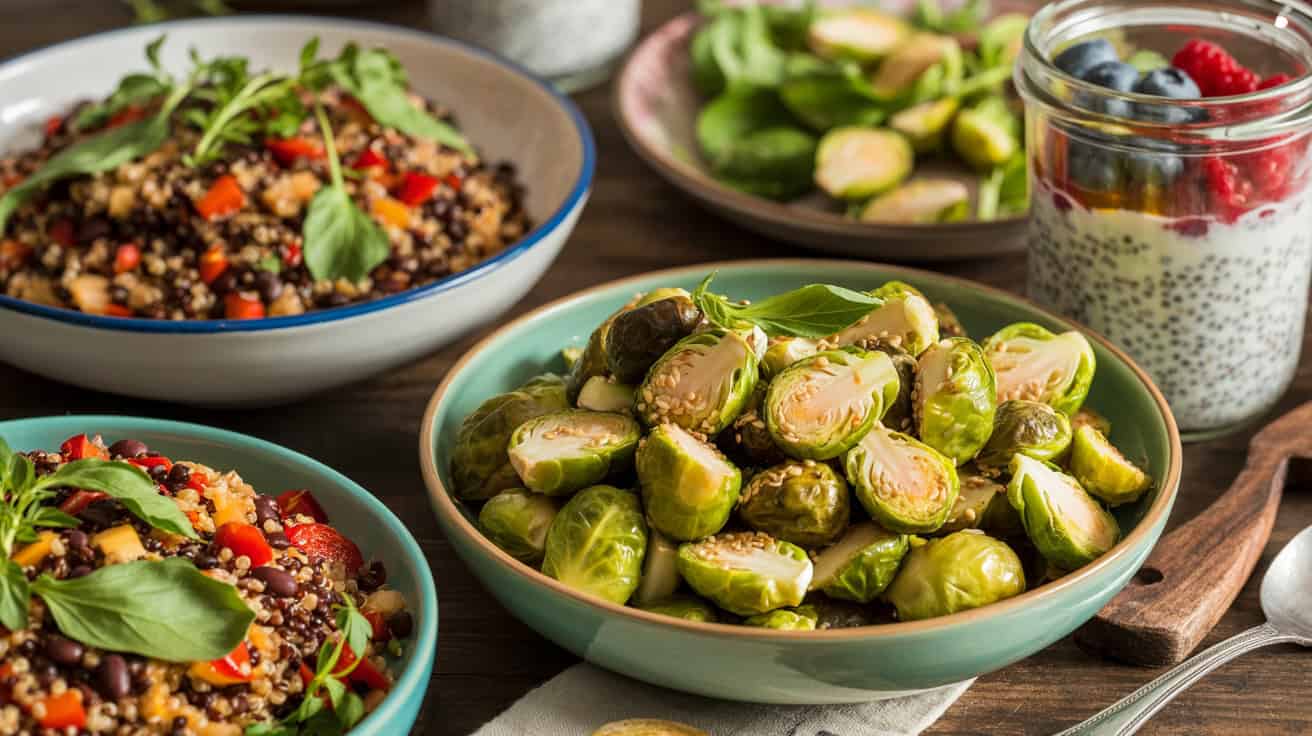
You’ll boost your fiber intake with delicious recipes that go beyond boring bran cereals. Start mornings with overnight oats topped with berries and chia seeds for 12 grams of fiber. Build power bowls using quinoa, chickpeas, and tahini dressing. Transform dinners with hearty bean chili, lentil curry, or vegetable-packed soups featuring root veggies and leafy greens. Blend fiber-rich smoothies with flaxseed and spinach. These satisfying meals provide sustained energy while supporting digestive health throughout your day.
Table of Contents
Key Takeaways
- Overnight oats with berries and chia seeds provide 12 grams of fiber for a filling breakfast.
- Quinoa Buddha Bowls combine quinoa, chickpeas, spinach, and tahini for a complete fiber-rich meal.
- Bean-based dishes like chickpea curry and black bean tacos offer quick, high-fiber weeknight dinners.
- Vegetable soups with root vegetables, leafy greens, and whole grains maximize fiber and nutrient density.
- Smoothies with frozen berries, ground flaxseed, and spinach deliver 8+ grams of fiber quickly.
High-Fiber Breakfast Recipes to Start Your Day Right
When you’re rushing through busy mornings, it’s tempting to skip breakfast or grab something quick that won’t keep you satisfied. However, understanding the importance of breakfast can transform your entire day. Starting with fiber-rich meals provides sustained energy and helps you avoid mid-morning crashes.
You’ll experience numerous fiber benefits by incorporating whole grains, fruits, and seeds into your morning routine. Try overnight oats topped with berries and chia seeds for 12 grams of fiber. Blend a smoothie with spinach, banana, and ground flaxseed for a quick 8-gram boost. If you prefer savory options, make avocado toast on whole-grain bread with hemp seeds.
These recipes take minimal prep time while delivering maximum nutrition. You can prepare most options the night before, ensuring you won’t skip this crucial meal.
Whole Grain Power Bowls and Salads
Building on the fiber foundation you’ve established at breakfast, lunch, and dinner offer perfect opportunities to create satisfying whole grain power bowls and salads.
You’ll discover countless power bowl variations that pack both nutrition and flavor into every bite.
Transform your meals with these fiber-rich combinations:
- Quinoa Buddha Bowl – Mix cooked quinoa with roasted chickpeas, spinach, and tahini dressing
- Farro Mediterranean Salad – Toss farro with cucumber, tomatoes, olives, and feta cheese
- Brown Rice Burrito Bowl – Layer brown rice with black beans, avocado, and salsa
- Barley Harvest Bowl – Combine pearl barley with roasted vegetables and pumpkin seeds
The whole grain benefits extend beyond fiber content.
You’re getting essential minerals, B vitamins, and sustained energy throughout your day.
These versatile bowls let you prep ingredients ahead, making healthy eating convenient.
Switch up your grains weekly to maximize nutrient variety and keep your taste buds excited.
Bean and Legume-Based Main Dishes
While whole grains provide an excellent fiber foundation, beans and legumes take center stage as nutritional powerhouses that’ll transform your main dishes.
You’ll discover endless possibilities when you explore protein-packed options like hearty bean chili or warming lentil stew. These versatile ingredients deliver both substance and satisfaction.
Try whipping up a fragrant chickpea curry or assembling quick black bean tacos for weeknight dinners. When you’re craving comfort food, split pea soup or white bean casserole won’t disappoint.
For lighter options, toss together a colorful kidney bean salad or grill savory pinto bean burgers.
Don’t overlook creative combinations either. A quinoa lentil bake brings together two fiber champions, while black eyed pea gumbo adds Southern flair to your table.
Each dish packs impressive amounts of fiber, protein, and essential nutrients. You’re not just feeding your family—you’re fueling them with meals that support digestive health and sustained energy throughout the day.
Vegetable-Forward Soups and Stews
A steaming bowl of vegetable soup delivers comfort and nutrition in equal measure. You’ll find these hearty dishes pack impressive amounts of fiber while satisfying your appetite.
Transform simple vegetables into restaurant-worthy meals by layering flavors and textures throughout the cooking process.
Build your soups with these fiber powerhouses:
- Root vegetables like carrots, parsnips, and turnips
- Leafy greens including kale, spinach, and chard
- Cruciferous options such as broccoli and cauliflower
- Whole grains like barley, farro, or wild rice
Master flavor enhancements by sautéing aromatics first, then deglazing with wine or vinegar. You’ll create depth using herbs, spices, and umami-rich ingredients like tomato paste or miso.
Choose seasonal ingredients for peak nutrition and taste—summer’s zucchini and tomatoes or winter’s squash and cabbage.
Don’t overcook your vegetables; maintain some texture for satisfying bites. You’re creating meals that nourish your body while delighting your taste buds.
Fiber-Packed Smoothies and Drinks
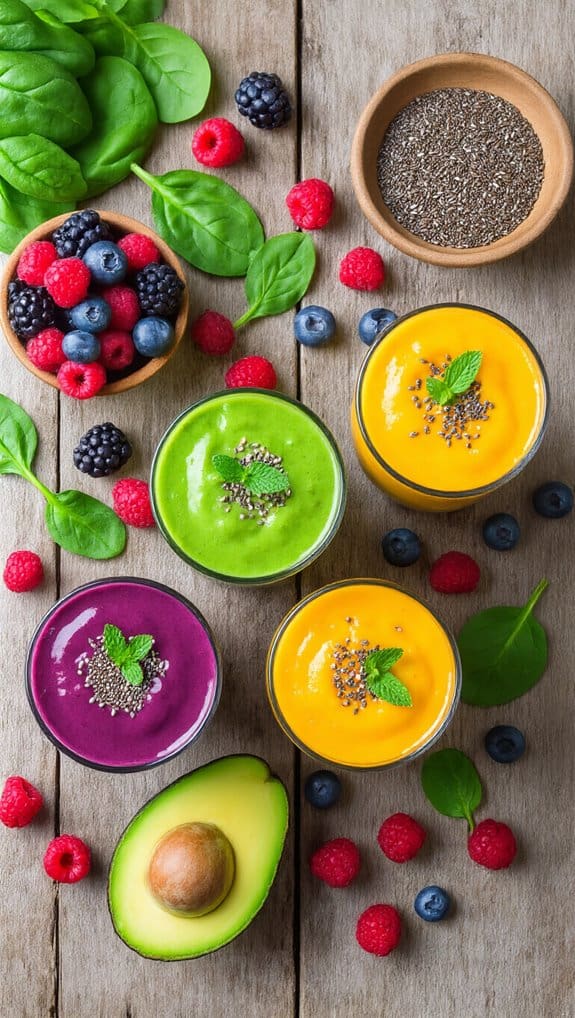
Three simple ingredients can transform your morning routine into a fiber-boosting powerhouse. Start with frozen berries, add ground flaxseed, and blend with unsweetened almond milk. You’ll get 8 grams of fiber in one glass.
Your smoothie variations can include spinach and avocado for extra nutrients. Try mixing chia seeds with mango and coconut water, or blend oats with banana and peanut butter. Each combination delivers 6-10 grams of fiber while keeping you satisfied until lunch.
For drink enhancements, stir psyllium husk into fresh juice or add it to herbal tea. You can dissolve acacia fiber in cold water with lemon for a refreshing beverage. Mix ground flax into your coffee or matcha latte for an easy fiber boost.
Keep pre-portioned smoothie ingredients in freezer bags for quick preparation. You’ll save time and ensure you’re meeting your daily fiber goals without sacrificing taste or convenience.
Wholesome Snacks and Energy Bites
When you’re craving something between meals, fiber-rich snacks can satisfy your hunger while supporting digestive health. These homemade energy bites offer incredible nutrient density while providing sustained energy boosts throughout your day.
You’ll love experimenting with different flavor combinations that transform simple ingredients into healthy indulgences.
Try these no-bake recipes for maximum portability options:
- Almond Date Energy Balls – Mix dates, almonds, and chia seeds for a naturally sweet treat
- Peanut Butter Oat Bites – Combine oats, peanut butter, and ground flax for protein-packed fuel
- Chocolate Coconut Clusters – Blend cacao, coconut flakes, and hemp hearts for antioxidant power
- Apple Cinnamon Rounds – Process dried apples, walnuts, and cinnamon for fall-inspired flavors
Smart snack pairings amplify fiber content – try hummus with veggies or whole grain crackers with nut butter.
For kid-friendly snacks, roll bites in coconut or mini chocolate chips. Ingredient substitutions like sunflower seed butter accommodate allergies without sacrificing taste or texture.
Quinoa and Ancient Grain Recipes
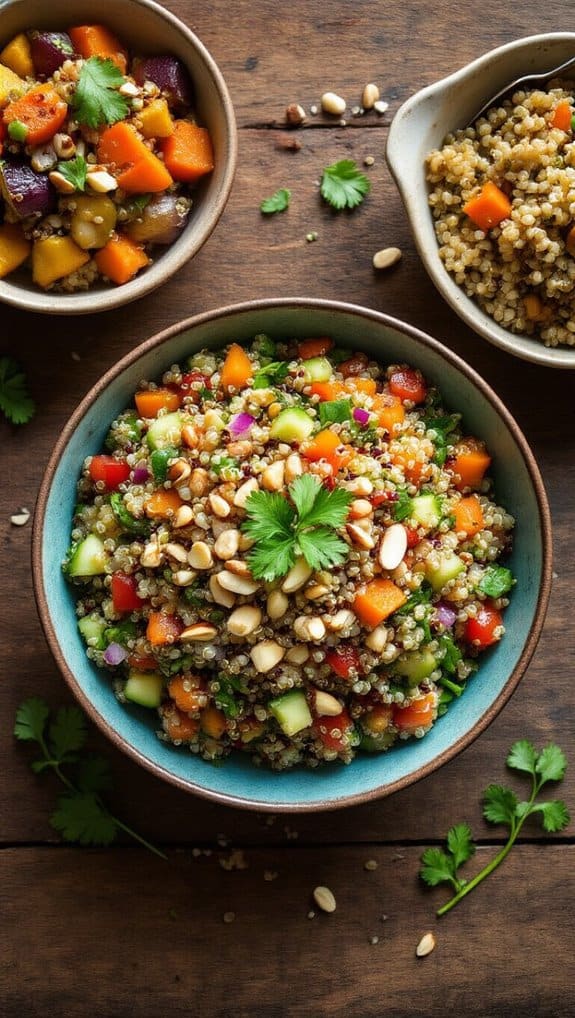
You’ll discover that quinoa and ancient grains like amaranth, millet, and teff pack impressive amounts of fiber while offering complete proteins and essential nutrients.
Start your mornings with quick breakfast bowls featuring these powerhouse grains topped with fresh fruits and nuts for an energy boost that’ll keep you satisfied.
Master simple meal prep strategies like batch-cooking grains on Sunday and storing them in portioned containers to streamline your weekday meals.
Ancient Grain Selection Guide
Since ancient grains pack more fiber, protein, and nutrients than modern wheat, they’ve become essential ingredients for health-conscious cooks.
You’ll discover unique nutrient profiles in each variety, from quinoa’s complete proteins to amaranth’s calcium content. Understanding proper grain storage extends shelf life while preserving health benefits.
Consider these sustainability factors when selecting ancient grains:
- Choose locally-sourced varieties to reduce transportation emissions
- Support organic farming practices that protect soil health
- Buy in bulk to minimize packaging waste
- Select drought-resistant grains like millet and teff
Different cooking methods unlock distinct textures—try pressure cooking for creamy results or toasting for nuttiness.
Experiment with flavor pairings like farro with mushrooms or buckwheat with herbs. These recipe variations ensure you’ll never tire of ancient grains’ versatility.
Quick Breakfast Bowls
Transform your mornings with quick breakfast bowls that combine quinoa and ancient grains into nutritious, satisfying meals.
You’ll find these protein-packed combinations keep you energized throughout your busy day.
Start with cooked quinoa or amaranth as your base. Add fresh berries, sliced bananas, and a drizzle of nut butter toppings for healthy fats and extra protein.
You can prepare grains in advance and refrigerate them for grab-and-go convenience.
Mix in yogurt alternatives like coconut or almond-based options for creaminess without dairy.
Top with crunchy additions: toasted nuts, hemp seeds, or granola.
Try flavor combinations like cinnamon-spiced quinoa with apple chunks or chocolate amaranth with raspberries.
These versatile bowls adapt to your preferences while delivering essential fiber and nutrients every morning.
Meal Prep Strategies
When you’re planning meals for the week, batch-cooking quinoa and ancient grains saves valuable time while ensuring you’ve got nutritious bases ready for multiple dishes.
You’ll maximize efficiency by preparing large quantities at once.
Here’s your meal planning strategy:
- Cook 3-4 cups of different grains simultaneously using separate pots
- Store cooked grains in portioned containers for 5 days refrigerated
- Mix grains with pre-chopped vegetables for instant salad bases
- Freeze extra portions in ice cube trays for single servings
Batch cooking transforms your kitchen routine.
You’ll spend one hour on Sunday preparing grains that become quick lunches, dinner sides, and breakfast bowls throughout the week.
This approach eliminates daily cooking stress while maintaining your fiber goals.
Sweet Potato and Root Vegetable Dishes
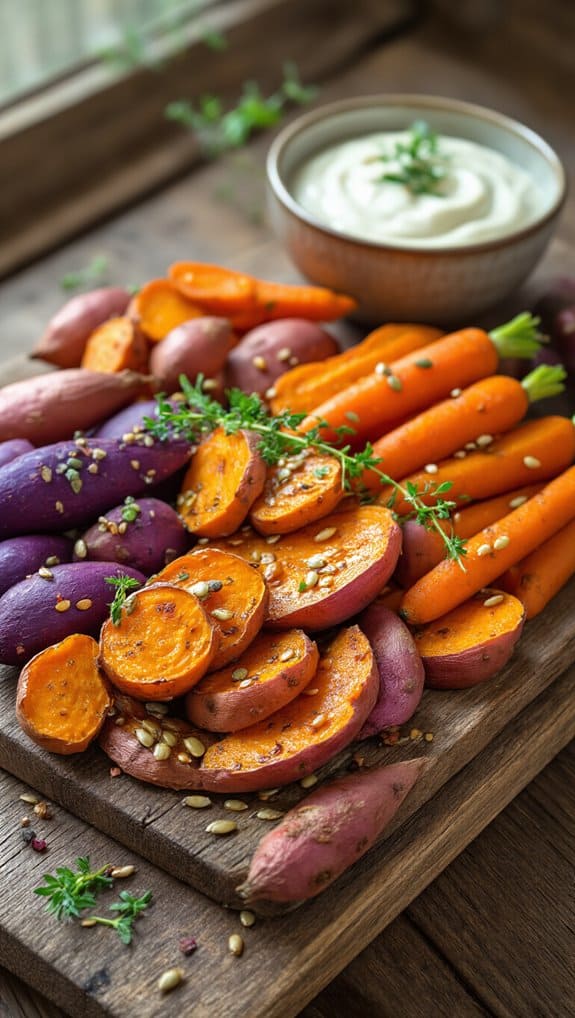
You’ll find root vegetables offer exceptional fiber content while delivering natural sweetness and hearty satisfaction to your meals.
These versatile ingredients shine in preparations like a colorful roasted root medley, creamy mashed sweet potatoes, or aromatic spiced vegetable curry.
Each dish provides different textures and flavors while maximizing the nutritional benefits of these fiber-packed vegetables.
Roasted Root Medley
Sweet potatoes and root vegetables create a naturally fiber-rich foundation for countless delicious meals.
You’ll discover that combining different root varieties maximizes both nutritional value and flavor complexity. Root vegetable benefits include sustained energy, improved digestion, and essential minerals.
Try this simple roasted medley featuring seasonal root varieties:
- Sweet potatoes – dice into 1-inch cubes for caramelized edges
- Carrots – cut diagonally for even roasting
- Parsnips – quarter lengthwise to highlight their natural sweetness
- Beets – wrap separately in foil to prevent color bleeding
You’ll achieve perfect results by tossing vegetables with olive oil, rosemary, and sea salt before roasting at 425°F for 35-40 minutes.
Turn once halfway through cooking for uniform browning.
Mashed Sweet Potato
Creating perfectly creamy mashed sweet potatoes transforms this humble root vegetable into a luxurious side dish that’s packed with fiber and nutrients.
You’ll maximize sweet potato benefits by keeping the skin on—it contains most of the fiber. Simply scrub, roast until tender, then mash with the peel intact for added texture and nutrition.
You can explore countless mashed variations to suit your taste. Try adding roasted garlic and fresh herbs for savory depth, or cinnamon and maple syrup for natural sweetness.
For extra creaminess, you’ll want to incorporate Greek yogurt or coconut milk instead of butter. Don’t overmix; gentle folding preserves the potatoes’ natural texture while maintaining their vibrant orange color.
This versatile dish delivers 6 grams of fiber per cup.
Spiced Vegetable Curry
Three aromatic spices can transform ordinary root vegetables into a fiber-rich curry that’s both satisfying and nutritious.
You’ll find that curry spices like turmeric, cumin, and coriander create depth while boosting anti-inflammatory benefits. Start by sautéing onions and garlic, then add your chosen vegetable combinations.
Try these fiber-packed additions:
- Sweet potatoes and carrots for natural sweetness
- Cauliflower and chickpeas for protein
- Spinach and lentils for iron
- Bell peppers and zucchini for vitamins
Simmer everything in coconut milk with tomatoes for creaminess.
You’re getting 8-10 grams of fiber per serving while enjoying bold flavors. Serve over brown rice or quinoa to increase fiber content further.
This one-pot meal stores well and tastes even better the next day.
Chia and Flax Seed Recipe Ideas
Ever wondered how to sneak more fiber into your meals without sacrificing flavor? Chia and flax seeds pack powerful fiber punches in tiny packages. You’ll love how easily they transform everyday dishes into nutritional powerhouses.
Start your mornings with chia pudding – it’s as simple as mixing chia seeds with your favorite milk overnight. The seeds absorb liquid, creating a creamy, tapioca-like texture. Add vanilla, cinnamon, or fresh berries for extra flavor. You’re getting 10 grams of fiber per ounce of chia seeds.
Flaxseed muffins make perfect grab-and-go snacks. Replace a quarter of your regular flour with ground flaxseed in any muffin recipe. You’ll boost fiber content while adding a subtle nutty taste.
Try blending flax into smoothies, sprinkling it on yogurt, or stirring chia into oatmeal. Both seeds work wonderfully in homemade granola bars and energy balls. They’re virtually tasteless when mixed into other ingredients, making them ideal for picky eaters.
Overnight Oats and Make-Ahead Options
When you’re rushing through busy mornings, overnight oats become your fiber-rich lifesaver. You’ll pack 4-8 grams of fiber per serving while saving precious morning minutes. Simply combine oats with liquid the night before, and you’ve created a nutritious grab-and-go breakfast.
Transform basic overnight oats into exciting make-ahead meals with these fiber-boosting combinations:
- Berry Blast: Mix oats with chia seeds, frozen berries, and Greek yogurt
- Apple Pie: Combine oats with diced apples, cinnamon, and ground flax
- Tropical Paradise: Blend oats with coconut milk, mango chunks, and hemp hearts
- Chocolate Peanut: Stir oats with cocoa powder, peanut butter, and sliced banana
You can prep five jars on Sunday for the entire workweek. Store them in mason jars or containers for easy portion control.
Add toppings like nuts, seeds, or fresh fruit right before eating. These make-ahead meals stay fresh for up to five days refrigerated, ensuring you’ll never skip breakfast again.
Frequently Asked Questions
How Much Fiber Should I Consume Daily for Optimal Health?
You’ll want to aim for daily fiber recommendations of 25-35 grams to achieve optimal health benefits.
Women typically need about 25 grams daily, while men should target 38 grams. This amount helps regulate your digestion, maintains healthy cholesterol levels, and stabilizes blood sugar.
You’re likely getting only half this amount currently, as most Americans don’t meet these targets.
Gradually increase your intake to avoid digestive discomfort.
Can Eating Too Much Fiber Cause Digestive Problems or Discomfort?
Yes, you can experience uncomfortable fiber symptoms when you drastically increase your intake.
You’ll likely face bloating, gas, cramping, or constipation if you consume too much too quickly. Your digestive balance depends on gradually adding fiber to your diet while drinking plenty of water.
If you’re experiencing discomfort, you’ve probably increased your fiber intake too fast. Scale back and slowly build up to avoid these unpleasant side effects.
What’s the Difference Between Soluble and Insoluble Fiber in Foods?
You’ll find two main types of fiber in your diet.
Soluble fiber dissolves in water, forming a gel-like substance that slows digestion and helps lower cholesterol and blood sugar. You’re getting soluble benefits from oats, beans, and citrus fruits.
Insoluble fiber doesn’t dissolve – it adds bulk to stool and promotes regular bowel movements. Common insoluble sources include whole wheat, nuts, and vegetable skins that help food move through your system.
Should I Increase Fiber Intake Gradually or All at Once?
You’ll want to increase your fiber intake gradually over several weeks rather than all at once.
Your digestive system needs time for proper digestive adjustment to handle more fiber. Start by adding 5 grams daily each week until you reach your goal.
If you increase too quickly, you’ll likely experience bloating, gas, and cramping.
Don’t forget to drink plenty of water as you make these changes to help fiber move through your system.
Do Fiber Supplements Work as Well as Fiber From Whole Foods?
You’ll find that whole food fiber sources generally outperform supplements.
While supplement types like psyllium husk and methylcellulose can help, they don’t provide the vitamins, minerals, and phytonutrients found in fruits, vegetables, and whole grains.
Your body absorbs and utilizes fiber from natural sources more effectively.
Supplements work best when you can’t meet your fiber needs through diet alone, but they shouldn’t replace whole foods entirely.
Conclusion
You’ve discovered countless ways to boost your daily fiber intake through delicious, satisfying recipes. From hearty breakfast bowls to veggie-packed stews, you’re now equipped to create meals that’ll keep you fuller longer and support your digestive health. Don’t forget to increase your water intake as you add more fiber to your diet. Start with one or two recipes this week, and you’ll soon find yourself naturally reaching for fiber-rich ingredients in every meal you make.


No Comments