
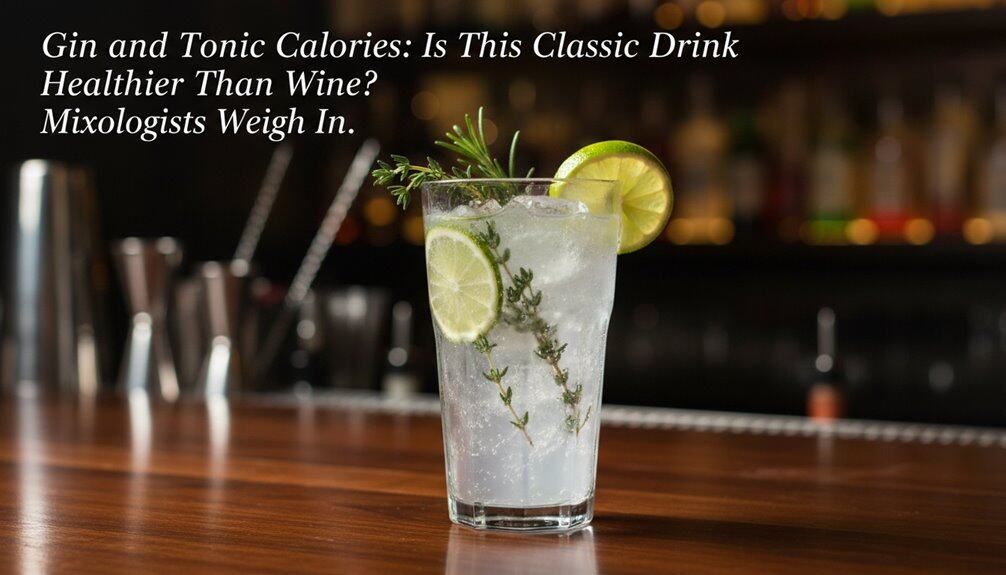
Gin and Tonic Calories: Is This Classic Drink Healthier Than Wine? Mixologists Weigh In
Your standard gin and tonic contains 170-200 calories versus wine’s 120-125, making wine the lighter choice. The culprit isn’t the gin at 60-80 calories per shot—it’s the tonic water adding 90-120 calories from sugar. Bartenders often pour 2-2.5 ounces instead of one, pushing your drink to 230-290 calories. You can slash calories by choosing diet tonic, requesting a “tall” pour, or garnishing with cucumber and herbs. Mixologists have clever tricks that’ll transform your G&T into a surprisingly light cocktail.
Table of Contents
Key Takeaways
- A standard gin and tonic contains 170-200 calories, while wine typically has 120-125 calories per 5-ounce serving.
- Bartenders often pour 2-2.5 ounces of gin, increasing a standard G&T from 150 to 230-290 calories.
- Diet tonic water eliminates 90-120 calories, making the drink only 60-80 calories from gin alone.
- Wine provides antioxidants and resveratrol, while gin and tonic offers virtually no nutritional benefits beyond quinine.
- Requesting a tall G&T, using diet tonic, or adding soda water significantly reduces calorie content.
Breaking Down the Numbers: Exact Calorie Counts in Your G&T Vs Wine Glass
A standard gin and tonic packs about 170-200 calories into your glass, while a 5-ounce pour of wine typically contains 120-125 calories. You’re looking at roughly 50-75 more calories when you choose the classic cocktail over wine.
The tonic water’s sugar content drives most of these extra calories – it contributes about 90-120 calories per serving, while gin adds 60-80 calories per shot.
Your calorie density variations depend on several factors. Premium tonic waters can contain up to 130 calories, while diet versions have zero. Wine’s calories fluctuate too – dry whites hover around 120, while sweet dessert wines can reach 165 per glass.
The nutritional composition comparison reveals stark differences. Wine offers antioxidants and resveratrol alongside its alcohol calories. Your G&T provides virtually no nutrients beyond the quinine in tonic water. You’ll get empty calories from both drinks, but wine edges ahead with its minimal nutritional benefits.
The Tonic Trap: How Your Mixer Choice Doubles (or Halves) the Calories
Your mixer choice makes or breaks your drink’s calorie count – standard tonic water transforms a 60-calorie shot of gin into a 170-calorie cocktail, while diet tonic keeps you at just those original gin calories. That’s because regular tonic packs about 110 calories per 8-ounce serving, mostly from high fructose corn syrup or cane sugar.
You’ll find sugar free options use artificial sweeteners like aspartame, saccharin, or stevia to deliver the same bitter-sweet flavor without the caloric load. These zero-calorie alternatives don’t affect your blood sugar levels either, making them ideal if you’re watching your weight or managing diabetes.
Consider premium light tonics that split the difference – they contain half the sugar of regular versions, cutting roughly 50 calories per drink. You can also experiment with sparkling water and a splash of regular tonic for flavor, or try naturally flavored seltzers with fresh herbs to create your own low-calorie mixer that doesn’t compromise taste.
Pour Size Reality: What Bartenders Actually Serve Vs Standard Measurements
Even with the perfect mixer choice, the calories in your G&T can vary wildly depending on who’s pouring – most bartenders don’t measure spirits with a jigger, instead relying on free pours that typically exceed the standard 1.5-ounce shot. You’re likely getting 2-2.5 ounces of gin, adding 30-60 extra calories before considering the tonic water volume.
Bar pours consistency differs dramatically between establishments. Upscale cocktail bars might precisely measure each ingredient, while your neighborhood pub’s bartender counts seconds. A standard pour should last three seconds, but experienced bartenders often pour heavier, especially for regulars.
The tonic ratio matters too. While recipes suggest 1:3 (gin to tonic), you’ll often receive 1:4 or 1:5, meaning 6-8 ounces of tonic instead of 4.5. That’s an additional 40-80 calories from mixer alone. Your “standard” 150-calorie G&T suddenly becomes 230-290 calories – nearly doubling what you’d tracked.
Smart Swaps and Garnish Hacks: Expert Tips for the Lowest-Calorie G&T
How can you slash your G&T’s calorie count without sacrificing flavor? You’ll cut 40-60 calories instantly by choosing diet tonic water, which contains zero sugar compared to regular tonic’s 32 grams. For alcohol content moderation, request a “tall” G&T—more mixer in a larger glass naturally dilutes the gin while maintaining the same alcohol serving.
Your garnish nutritional value matters more than you’d think. Skip calorie-dense orange slices and opt for cucumber ribbons, fresh herbs like rosemary, or a simple lime wedge. These add negligible calories while enhancing aromatics. Try muddling fresh berries directly in your glass—they’ll infuse flavor without requiring extra gin or sweeteners.
The smartest hack? Order your G&T with soda water topped with just a splash of tonic. You’ll get the signature quinine bite at a fraction of the calories. Ask for bitters to add complexity without adding sugar.
Frequently Asked Questions
Does Gin Contain Gluten or Allergens Compared to Wine?
You’ll find gin’s typically gluten-free since distillation removes gluten proteins, even when made from wheat or barley. Wine’s naturally gluten-free too, made from grapes.
However, you should check for allergen concerns in both drinks. Some gins contain botanicals that might trigger allergies, while wines can contain sulfites, egg whites, or milk proteins used in processing. If you’re sensitive, you’ll want to verify specific brands’ ingredients and production methods.
Can Drinking Gin and Tonic Affect Medication Interactions Differently Than Wine?
Yes, gin and tonic can affect your medications differently than wine. You’ll face potential alcohol drug interactions with both, but tonic’s quinine might interfere with certain heart medications and blood thinners. Wine’s tannins and sulfites create different interaction risks. You should discuss medication dosage adjustments with your doctor since gin’s higher alcohol content can intensify side effects faster than wine.
Don’t mix any alcohol with sedatives or painkillers.
Which Drink Causes Worse Hangovers – Gin and Tonic or Wine?
You’ll typically experience worse hangovers from gin and tonics than wine. The combination of spirits and sugary tonic creates higher intoxication levels faster, leading to increased dehydration.
Wine’s lower alcohol content means you’re drinking it more slowly, reducing hangover severity. However, dark wines contain congeners that can worsen symptoms.
If you’re choosing based on next-day effects, stick to moderate amounts of white wine over multiple gin and tonics.
Is Gin and Tonic Better for Acid Reflux Than Wine?
You’ll likely experience reduced heartburn symptoms with gin and tonic compared to wine. Wine’s naturally high acidity can trigger acid reflux, while gin has lower acidity levels that are gentler on your stomach.
The carbonation in tonic water might cause some bloating, but it’s still typically easier on your digestive system than wine’s acidic compounds. If you’re prone to reflux, gin and tonic is generally the better choice between these two drinks.
Does Gin Offer Any Unique Health Benefits Beyond Calorie Content?
You’ll find gin’s botanical flavors come from juniper berries and herbs that contain antioxidants and anti-inflammatory compounds. These botanicals may support digestion and provide mild diuretic effects.
Gin’s reduced sugar content compared to many spirits means you’re consuming fewer empty calories and avoiding blood sugar spikes. The juniper specifically offers potential antimicrobial properties, though you shouldn’t rely on gin as medicine. These benefits remain modest when consumed responsibly.
Conclusion
You’ve learned that your G&T isn’t automatically healthier than wine – it’s all about the choices you make. Control your calories by picking diet tonic, watching pour sizes, and choosing smart garnishes. While a standard G&T packs more calories than wine, you can easily flip that script with the right swaps. Remember, bartenders often over-pour, so when you’re ordering out, don’t assume you’re getting the “light” option just because it’s clear and bubbly.


No Comments