
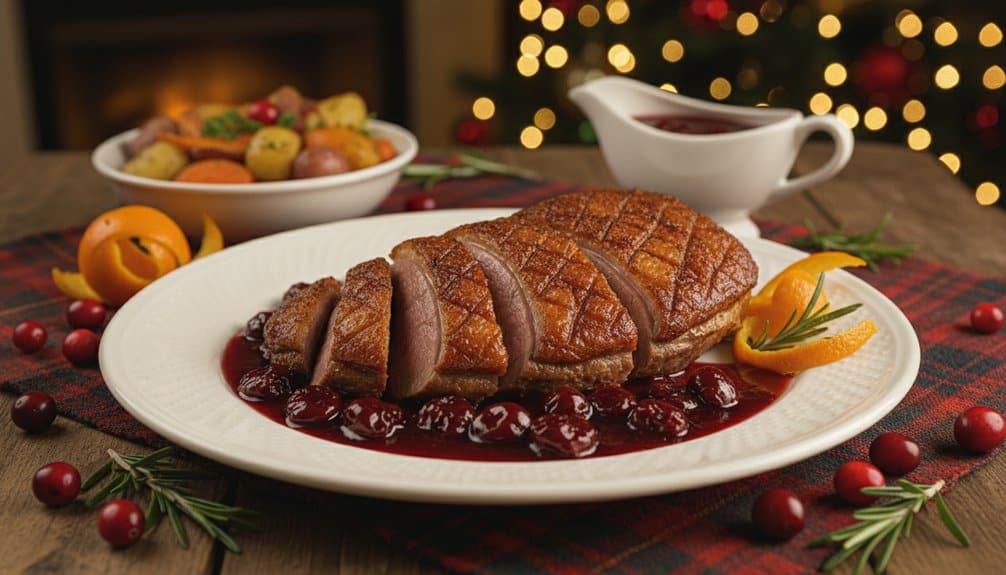
Crispy Christmas Duck Recipe With Cherry-Port Sauce
You’ll create an unforgettable Christmas centerpiece by selecting a plump duck with creamy skin, then scoring the surface in crosshatch patterns before generously salting. Roast at 425°F initially, then reduce to 350°F, draining fat every 45 minutes for maximum crispiness. Meanwhile, simmer port wine with fresh cherries, shallots, and thyme until reduced by half for your glossy sauce. After resting the duck properly, carve against the grain and drizzle with the elegant cherry-port reduction. Master these techniques to elevate your holiday feast.
Table of Contents
Key Takeaways
- Score duck skin in a crosshatch pattern and salt generously 2+ hours before cooking for maximum crispiness.
- Roast at 425°F initially, then reduce to 350°F, calculating 20 minutes per pound plus 15 minutes.
- Drain fat every 45 minutes and use a meat thermometer to ensure internal temperature reaches 165°F.
- Create cherry-port sauce by reducing 1½ cups port wine by half with cherries, shallots, and thyme.
- Rest duck 15-20 minutes before carving against the grain and serving with the glossy sauce.
Selecting and Preparing Your Duck for Christmas Dinner
The right duck makes all the difference for your Christmas feast. When selecting the best quality duck, look for plump birds with creamy white skin and minimal bruising. Fresh ducks should smell clean without any off odors. If buying frozen, check that packaging isn’t damaged or freezer-burned.
For frozen birds, ensuring proper thawing of frozen duck is crucial for food safety and even cooking. Plan ahead – a 4-5 pound duck needs 24 hours in the refrigerator to thaw completely. Never thaw at room temperature, as this promotes bacterial growth.
Once thawed, remove giblets from the cavity and pat the skin completely dry with paper towels. Trim excess fat around the neck and cavity opening. Score the skin in a crosshatch pattern, cutting through fat but not into meat. This helps render fat during cooking, creating that coveted crispy skin.
Essential Ingredients for Cherry-Port Sauce
While your duck roasts to perfection, you’ll want to prepare a luxurious cherry-port sauce that complements the rich, gamey flavors beautifully. This sophisticated sauce requires carefully selected ingredients that’ll create depth and balance.
You’ll need high-quality port wine as your foundation. Choose a ruby or tawny port for optimal sweetness and complexity. Fresh or frozen cherries work equally well, though dried cherries offer concentrated flavor for cherry compote variations. Add shallots for subtle onion notes, fresh thyme for earthiness, and butter to create silky richness.
Essential ingredients include:
- Port wine – 1½ cups of ruby or tawny port for proper reduction
- Cherries – 1 cup fresh, frozen, or dried cherries for natural sweetness
- Aromatics – 2 minced shallots, 2 thyme sprigs, and 3 tablespoons cold butter
Master port reduction techniques by simmering the wine until it reduces by half, concentrating flavors while maintaining the sauce’s glossy consistency.
Scoring and Seasoning Techniques for Maximum Crispiness
Achieving crispy duck skin starts with proper scoring techniques that allow fat to render effectively during roasting. Using a sharp knife, make diagonal cuts through the skin at one-inch intervals, creating a crosshatch pattern across the breast and legs. Don’t cut into the meat—you’re only piercing the skin and fat layer.
These skin crisping techniques create channels for fat drainage while exposing more surface area to heat. Pat the duck completely dry with paper towels before scoring, as moisture prevents proper browning.
For even seasoning application, generously salt the scored skin inside and out at least two hours before cooking. The salt draws out moisture and helps break down proteins for better texture.
Add freshly ground black pepper, dried thyme, and orange zest to complement the cherry-port sauce. Massage seasonings into the scores, ensuring every crevice gets coverage for consistent flavor throughout the crispy skin.
Roasting Instructions and Temperature Guidelines
Proper temperature control transforms your scored and seasoned duck into a golden masterpiece with crispy skin and succulent meat. Start by preheating your oven to 425°F for the initial high-heat sear. This aggressive temperature creates that coveted crispy exterior while sealing in the duck’s natural juices.
After thirty minutes at this high temperature, reduce your oven temperature settings to 350°F for the remainder of the cooking process. This two-stage approach prevents overcooking while ensuring thorough doneness throughout.
Key roasting guidelines include:
- Calculate cooking time considerations at 20 minutes per pound plus an additional 15 minutes
- Use a meat thermometer to confirm internal temperature reaches 165°F in the thickest part of the thigh
- Drain accumulated fat every 45 minutes to prevent smoking and maintain crispiness
Position your duck breast-side up on a rack inside a roasting pan. This elevation allows hot air to circulate completely around the bird, promoting even browning and preventing soggy bottom skin.
Creating the Perfect Cherry-Port Sauce
As your duck roasts to perfection, you’ll want to prepare a luxurious cherry-port sauce that complements the rich, gamey flavors beautifully. Start by sautéing minced shallots in butter until translucent, then add dried cherries and cook for two minutes.
Pour in one cup of port wine and let it reduce by half, concentrating the flavors. Add chicken stock, fresh thyme, and a bay leaf, then simmer until the liquid reduces to about three-quarters cup. The sauce consistency should coat the back of a spoon without being too thick.
Remove the bay leaf and whisk in cold butter gradually for glossiness. Season with salt and white pepper, tasting frequently to achieve proper flavor balance. The sauce should taste rich and slightly sweet with a subtle wine tang that won’t overpower the duck.
Strain through a fine mesh if you prefer smoothness, then keep warm until serving.
Resting and Carving Your Christmas Duck
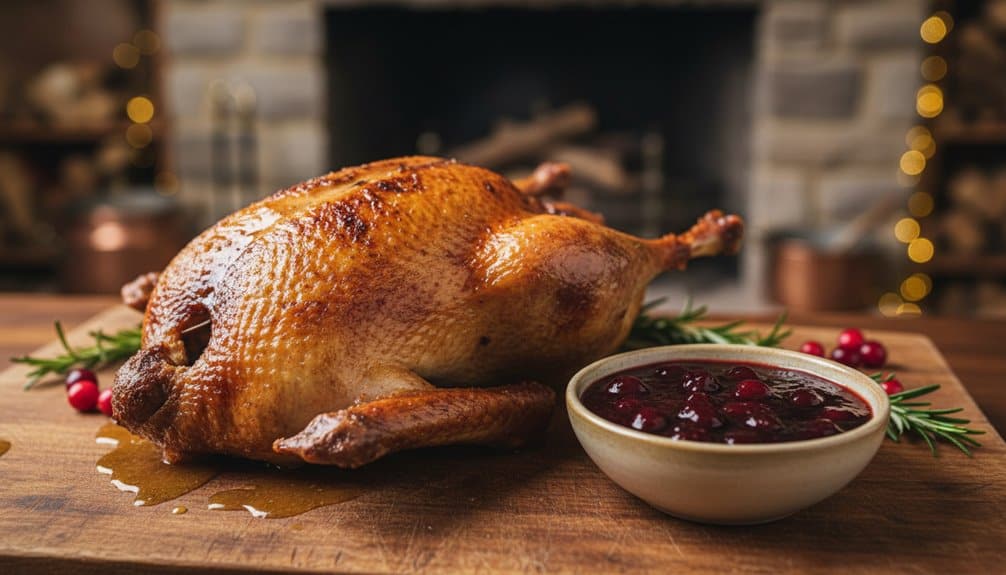
When your duck reaches the perfect internal temperature of 165°F, resist the urge to carve immediately—this crucial resting period allows the juices to redistribute throughout the meat, ensuring every slice remains moist and flavorful.
Letting duck rest for 15-20 minutes under loose foil prevents overcooking while maintaining warmth. During this time, prepare your carving station and warm your serving plates.
For proper carving technique, follow these essential steps:
- Remove the legs first – Cut through the skin between leg and body, then pop the thigh joint and slice through completely
- Carve the breast meat – Make long, smooth cuts parallel to the cutting board, slicing against the grain for maximum tenderness
- Separate wings and thighs – Cut drumsticks from thighs at the joint, and remove wings by cutting through the shoulder joint
Use a sharp carving knife and carving fork for clean cuts. Arrange slices on warmed plates and drizzle with your cherry-port sauce immediately before serving.
Serving Suggestions and Wine Pairings
You’ll want to pair your perfectly carved duck with sides that complement its rich, savory flavors without overwhelming the star of your Christmas table. The right wine selection can elevate the entire dining experience, while thoughtful presentation transforms your meal into an elegant holiday feast.
Let’s explore the best accompaniments, wine pairings, and plating techniques that’ll make your Christmas duck dinner truly memorable.
Perfect Side Dishes
Since duck offers such rich, complex flavors, you’ll want to choose side dishes that complement rather than compete with the star of your Christmas table. The key is balancing the duck’s richness with lighter, acidic, or earthy accompaniments that enhance its natural taste.
Perfect pairings include:
- Roasted vegetables like Brussels sprouts, carrots, and parsnips that add sweetness and texture
- Herbed stuffing with sage, thyme, and cranberries for traditional holiday comfort
- Creamy potato gratin or duchess potatoes for elegant starch options
You’ll also want to consider red cabbage braised with apples, wild rice pilaf, or sautéed green beans with almonds. These sides provide color contrast and varied textures while allowing your beautifully prepared duck to remain the centerpiece.
Wine Selection Guide
Pairing wine with duck requires balancing the bird’s rich, gamey flavors with complementary notes that enhance rather than overpower your Christmas feast. You’ll want bold reds like Pinot Noir or Burgundy that match duck’s intensity without competing with the cherry-port sauce. Consider Côtes du Rhône or northern Rhône wines for excellent seasonal wine pairing options.
If you’re serving white wine lovers, choose full-bodied Chardonnay or Viognier with enough structure to stand up to the duck’s richness. Champagne works beautifully as an aperitif before your meal.
Remember that proper cellar storage conditions affect wine quality significantly. Serve reds slightly below room temperature and whites well-chilled. Don’t forget to decant older reds thirty minutes before serving to maximize their flavor potential.
Elegant Presentation Tips
With your wine selections ready, creating an impressive presentation elevates your Christmas duck from a simple meal to a memorable dining experience. Proper plating techniques transform your crispy duck into restaurant-quality artistry that’ll wow your guests.
Start by warming your plates in a low oven. Slice the duck breast diagonally, fanning pieces across one side of the plate. Pool the cherry-port sauce elegantly beside the meat, not over it. Position roasted vegetables strategically for color balance.
- Decorative garnishes: Fresh rosemary sprigs, pomegranate seeds, or orange zest add festive color and aroma
- Height variation: Stack vegetables or use small ramekins for sauces to create visual interest
- Clean edges: Wipe plate rims with a damp towel before serving for professional presentation
Frequently Asked Questions
Can I Substitute the Duck With Another Type of Poultry?
You can definitely substitute duck with other poultry options. Turkey alternatives work excellently, especially a whole turkey breast or turkey thighs for similar richness.
Chicken substitutions also succeed well – try a whole roaster chicken or chicken thighs for best results. You’ll need to adjust cooking times since these birds cook faster than duck.
The cherry-port sauce pairs beautifully with both options.
How Far in Advance Can I Prepare the Cherry-Port Sauce?
You can make the cherry-port sauce up to one week ahead of time. After it’s completely cooled, store it in an airtight container in the refrigerator. The flavors will actually develop and improve during storage.
When you’re ready to serve your Christmas duck, simply reheat the sauce gently on the stovetop over medium-low heat, stirring occasionally until warmed through.
What Should I Do if My Duck Skin Isn’t Getting Crispy Enough?
If your duck skin isn’t getting crispy enough, preheat oven to higher temperature around 425°F for the final 15-20 minutes of cooking. You can also increase cooking time by extending the roasting period.
Score the skin deeper in a crosshatch pattern, pat it completely dry, and place the duck breast-side up on a rack to allow fat to render properly and air to circulate underneath.
Can I Use Frozen Duck Instead of Fresh for This Recipe?
You can absolutely use frozen duck for this recipe. You’ll need to plan for proper thaw time required – allow 24-48 hours in your refrigerator depending on the duck’s size. Don’t thaw at room temperature for food safety reasons.
Follow proper storage recommendations by keeping it on a tray to catch drips and use within 1-2 days once fully thawed for best results.
What Are Good Side Dishes to Serve With Christmas Duck?
You’ll want classic sides that complement duck’s rich flavor. Roasted potatoes work perfectly – try them with rosemary and garlic.
Sautéed brussels sprouts add a nice bitter contrast to cut through the fat. Consider adding roasted root vegetables like carrots or parsnips, creamy mashed turnips, or a tart cranberry sauce.
Wild rice or bread stuffing also pairs beautifully with duck’s gamey taste.
Conclusion
You’ve mastered the art of creating a show-stopping Christmas duck that’ll impress your guests. The combination of crispy, golden skin and rich cherry-port sauce elevates this festive centerpiece beyond ordinary holiday meals. Don’t forget to save those pan drippings for gravy, and let your duck rest properly before carving. With these techniques, you’ll serve a restaurant-quality dish that becomes your family’s new Christmas tradition.


No Comments