
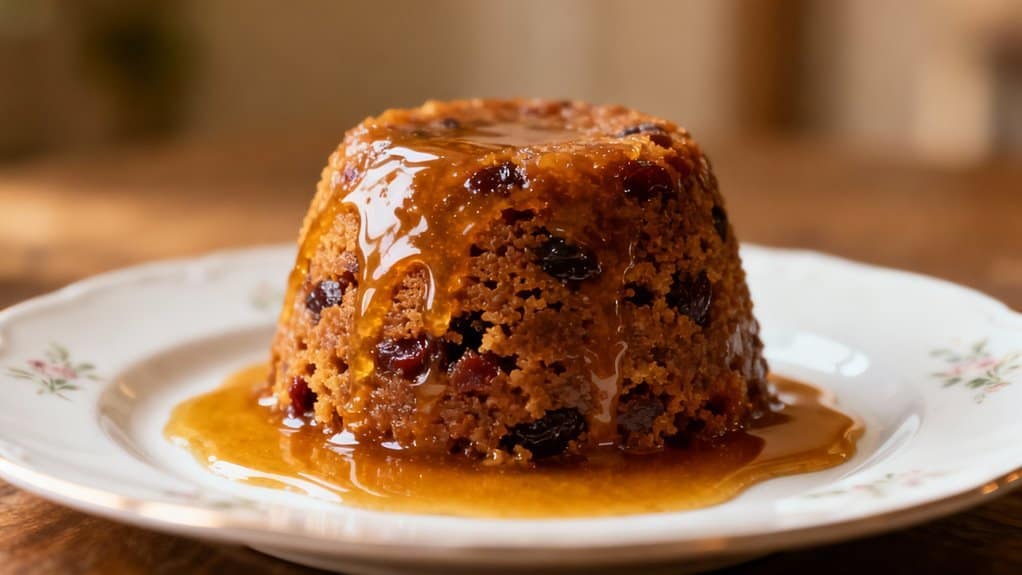
Classic English Plum Pudding With Brandy Sauce
You’ll make a classic English plum pudding by soaking dried fruit overnight in brandy or tea, then folding it into a rich mix of flour, breadcrumbs, suet (or grated butter), sugar, eggs and warm spices. Steam the pudding for several hours until dense and moist, then serve warm with a hot brandy sauce and a flaming pour. Keep it refrigerated or frozen for easy make‑ahead. Continue and you’ll get detailed tips, timings and serving tricks.
Table of Contents
Key Takeaways
- Traditional plum pudding is a dense steamed cake of dried fruit, suet (or substitute), breadcrumbs, flour, spices, sugar, eggs and molasses or treacle.
- “Plum” historically means raisins and other dried fruits, not fresh plums; fruit is soaked in brandy, rum, stout or tea overnight.
- Mix gently to a moist, non-sloppy batter, pack into a buttered basin, and steam for several hours until firm and cooked through.
- Serve warm with hot brandy sauce: melted butter and sugar, stirred with cream and warmed brandy; optionally flambé for ceremony.
- Store wrapped airtight: refrigerate up to 7 days or freeze 3–6 months; reheat gently and pour over hot brandy sauce before serving.
History and Origins of Plum Pudding
By the late Middle Ages English cooks were already simmering a spiced, meaty pottage that evolved into what we now call plum pudding; you’ll find the “plum” in its name referred to raisins and other dried fruit rather than fresh plums.
You trace its Medieval origins in household records, where cooks stretched preserved fruit, suet and grain into dense steamed puddings for feasts and forager’s frugality.
Over centuries you watch recipes simplify and sweeten, moving from savory to celebratory.
By the 19th century Victorian traditions cemented plum pudding as a Christmas centerpiece, wrapped in cloth, boiled for hours and sometimes doused with brandy before flaming.
You’ll notice rituals—stirring for luck, hiding tokens, and pairing pudding with family ceremony—reflect changing social tastes and industrial food availability.
When you consider plum pudding’s journey, you see a pragmatic medieval dish transformed into a symbol of holiday abundance and continuity through ritual.
Ingredients, Measurements and Substitutions
A handful of pantry staples and a few precise measures will get you started on a classic plum pudding.
You’ll need flour, breadcrumbs, sugar, eggs, butter, molasses or treacle, dried fruit and warm spices; pick good-quality ingredients and note Ingredient sourcing to ensure flavor.

Prioritize Measurement accuracy for reliable texture and steaming time.
- Flour & binders: swap whole-wheat for half white for nuttier taste.
- Sweeteners: use molasses, dark brown sugar, or maple syrup—adjust liquid.
- Fats & alcohol: substitute suet with grated cold butter or vegetable shortening; brandy can be reduced or replaced with rum or stout.
When substituting, keep weight ratios, not just volume; you’ll preserve moisture and avoid a dense or dry pudding.
Label quantities, weigh where possible, and plan minor swaps ahead so your pudding stays traditional in character without strict ingredients.
Measure wet and dry components separately and mix just until combined for best results.
Preparing the Fruit, Nuts and Suet
Soaking the dried fruit overnight in warm brandy or tea plumps it and blooms the flavor, so you’ll cover currants, raisins and chopped candied peel with just enough liquid to hydrate without drowning them. Use straightforward soaking techniques: weigh fruit, warm liquid, stir, cover and leave at room temperature for 8–24 hours, checking that fruit swells but retains texture.
When you drain, reserve a little soaking liquor. For nuts, toast briefly to deepen aroma, cool, then coarsely chop to keep bite. Follow simple chopping methods: steady knife, quarter-turn technique, and pulse in a food processor to avoid paste.
Trim suet of membrane and any discolored bits, then grate or finely chop so it distributes evenly. If you use vegetarian suet, handle similarly.
Measure components precisely and pat drained fruit dry to prevent excess moisture; the goal is plump, evenly sized pieces ready for a traditional, balanced pudding texture.
Mixing, Molding and Steaming the Pudding
Mixing the pudding calls for gentle but thorough folding so the soaked fruit, nuts, suet, and dry ingredients combine without crushing the fruit; start by using a large bowl and a sturdy spoon, scraping the sides so everything’s evenly distributed.
You’ll check consistency — it should be moist but not sloppy — and adjust with breadcrumbs or a splash of brandy.

For mold selection choose a traditional pudding basin or a heatproof bowl that holds the right volume.
Line the mold with buttered parchment or double greaseproof paper to ease unmolding.
Secure the cloth or lid and trim excess, then seal well.
- Prepare the mold: butter, paper, and test fit.
- Fill evenly: press gently to remove air pockets.
- Steam timing: steady simmer, covered, and regular water checks.
Mind release techniques when unmolding: invert warm, loosen edges with a knife, tap gently to release the pudding.
Making the Brandy Sauce and Flaming the Pudding
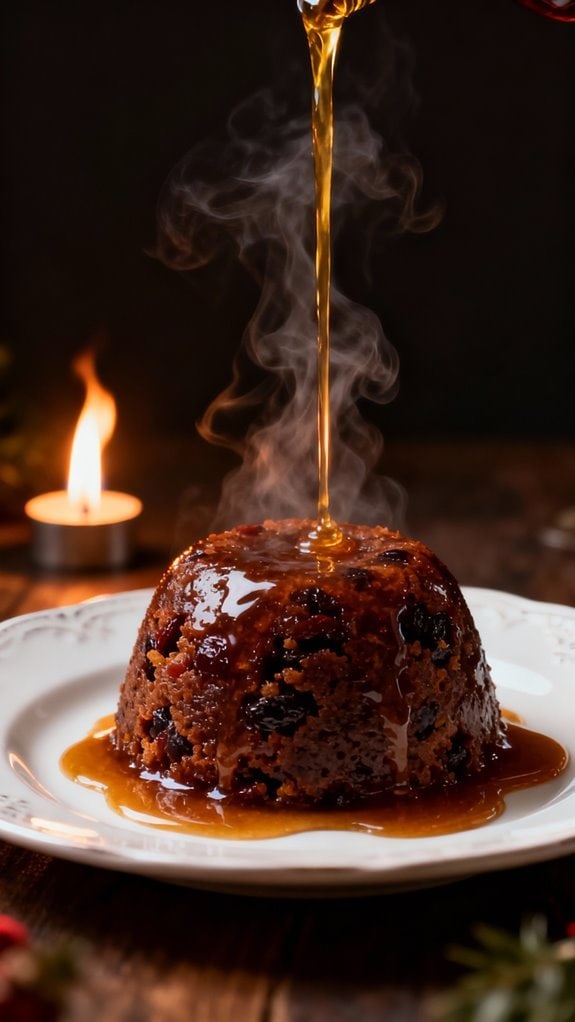
You’ll make a smooth brandy sauce by gently warming cream, butter, sugar and a good splash of brandy until it slightly thickens.
Keep the pan off the heat when you add extra brandy for flaming, and warm it carefully so the alcohol doesn’t boil away.
When serving, ignite the warmed brandy, pour it over the pudding, and let the blue flame caramelize the top before you extinguish and serve.
Preparing Brandy Sauce
Heat the butter and sugar gently until they melt, then stir in cream and brandy to make a smooth, glossy sauce.
You’ll keep heat low so the cream won’t split and the alcohol won’t evaporate too fast; this also supports kitchen safety and proper equipment care when handling hot pans.
Whisk until thickened, taste for sweetness, and strain if you want silkier texture. Serve warm over slices of pudding or keep covered in a warm pot.
- Use a heavy-bottomed pan to prevent scorching.
- Whisk constantly to combine and thicken evenly.
- Transfer to a warmed serving jug and keep lid on to retain heat.
Reheat gently over low heat, stirring occasionally, and never leave alcohol unattended near open flames or splattering hazards.
Flaming the Pudding
Flaming the pudding requires care and a steady hand: warm the brandy sauce in a small pan until steaming but not boiling, then bring the pudding to the table on a heatproof platter.
Set a damp cloth nearby, have a long lighter, and keep children away. Pour a little warmed brandy into a ladle, lift it close to the pudding, ignite with the lighter, and tilt the flaming ladle to pour the alcohol over the pudding.
Use measured amounts to control flame height. Extinguish by covering with a cloche or stirring in warmed sauce.
Mention safety techniques to guests before lighting to avoid surprises. Let the blue flame die naturally for hot sauce absorption. Your presentation theatrics will impress without risking harm or injury.
Storage, Make‑Ahead Tips and Serving Suggestions
Storing your plum pudding properly will keep it moist and deepen the flavors: wrap it tightly in parchment and foil, or tuck it into an airtight container, then refrigerate for up to a week or freeze for 3–6 months.
Use airtight freezing for longer storage and label with date; thaw in the refrigerator overnight before reheating gently.
To make ahead, steam or bake the pudding, cool, and store; reheating builds richness.
For serving, warm slices, flame with warmed brandy, or spoon hot brandy sauce over individual portions.
- Refrigeration: keep in an airtight container up to 7 days; reheat covered to retain moisture.
- Freezing: double-wrap and freeze up to 6 months; thaw fully before steaming 30–60 minutes.
- Presentation: try Garnish variations—candied orange, toasted almonds, or a sprig of mint; serve with cream or brandy butter.
You’ll find planning saves time and improves flavor consistently.
Frequently Asked Questions
What Wines or Drinks Pair Best With Plum Pudding?
You’ll want Vintage Ports and Spiced Liqueurs, plus tawny ports, Madeira, oloroso sherry, rum and full-bodied red wine to match the pudding’s richness.
You can serve a well-aged Vintage Ports for sweetness and depth, or warm Spiced Liqueurs like mulled brandy or spiced rum for festive spice.
Strong black coffee or espresso and a sweet Riesling or Sauternes also work, and you’ll balance richness with acidity and warmth and comfort
How Many Calories Are in a Typical Serving?
A typical serving has about 350–450 calories, depending on ingredients and brandy sauce. You’ll get a rough Calorie breakdown: 50–60% from carbs, 25–35% from fats, 10–15% from protein.
For a clearer Nutrient comparison, compare it to a slice of fruit cake or a serving of mince pie—those often sit slightly lower in fat but similar in sugar. Adjust portions or skip the sauce to cut calories and watch portions carefully.
Can I Transport the Pudding Long-Distance Reliably?
Yes, you can transport the pudding long-distance reliably if you use vacuum packaging, firm insulation, and strict temperature control.
You’ll chill or freeze it, secure it in padded containers, and ship with cold packs or dry ice.
You’ll label it fragile and perishable, track transit times, and avoid long layovers.
If you follow these steps, you’ll keep texture and safety intact and minimize spoilage risk during transit too and inspections.
Is Plum Pudding Suitable for Wedding or Formal Menus?
Yes, you can include plum pudding on wedding or formal menus, and it’s elegant when plated thoughtfully.
You’ll boost Table presentation with warm brandy sauce, decorative sprigs, and individual ramekins. Guests will appreciate its rich, traditional flavor and the Seasonal symbolism that evokes heritage and celebration.
Just coordinate service timing, offer a lighter alternate, and ensure any alcohol notes fit your crowd, note dietary options so everyone enjoys the finale.
How Does High Altitude Affect Steaming Time?
High altitude increases steaming time because water’s Boiling Point is lower, so you’ll need longer to reach the same internal temperature. You’ll also see a faster Evaporation Rate, so keep lids tight and add more liquid.
Reduce heat less, extend steaming time by 10–25% per 3,000 feet as a starting point, and check doneness frequently. You’ll get more consistent results by testing internal temperature rather than relying on time alone.
Conclusion
You’ve preserved a centuries‑old tradition while putting your own spin on classic English plum pudding. With preserved fruit, warm spices, and that boozy brandy sauce, you’ll impress family and friends. Make it ahead, steam gently, and reheat when needed — the flavors only deepen. When you light it, enjoy the drama and comfort. Serve with cream or custard, savor every bite, and let this festive dessert become a beloved ritual. Create new memories each holiday season.


No Comments