

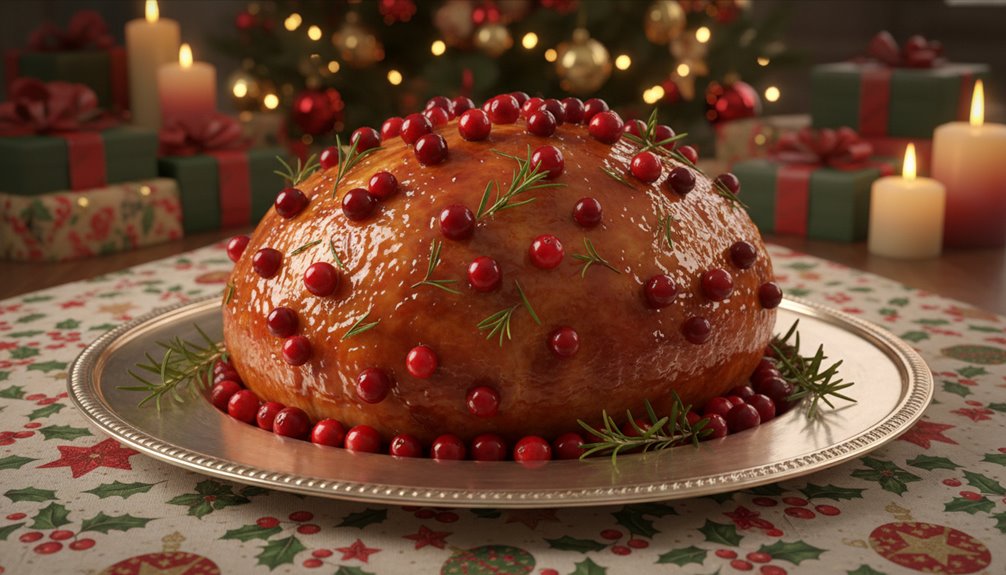
Christmas Hamda Ideas Creative Ways to Dress Your Ham
Create stunning Christmas ham presentations by scoring diamond patterns across the surface for visual appeal and deeper glaze penetration. You’ll want to brush on creative glazes like maple bourbon with candied pecans or pomegranate molasses with fresh herbs during the final cooking hour. Arrange seasonal garnishes such as cranberries, orange wheels, and roasted root vegetables around your ham’s base for festive color. These foundational techniques open doors to countless elegant variations that’ll transform your holiday centerpiece.
Key Takeaways
- Create diamond scoring patterns with a sharp knife, making quarter-inch deep diagonal cuts for enhanced visual appeal and glaze penetration.
- Apply fruit-based glazes like pineapple with brown sugar or orange with honey and Dijon mustard for vibrant color and flavor.
- Arrange seasonal garnishes including fresh cranberries, pomegranate arils, orange wheels, and aromatic herb sprigs around the ham’s base.
- Brush maple bourbon glaze during final cooking hour and press warm candied pecans into the surface for elegant presentation.
- Coat ham with pomegranate molasses glaze and herb crust using rosemary, thyme, and sage for sophisticated golden-brown finish.
Essential Scoring Techniques for Picture-Perfect Presentation
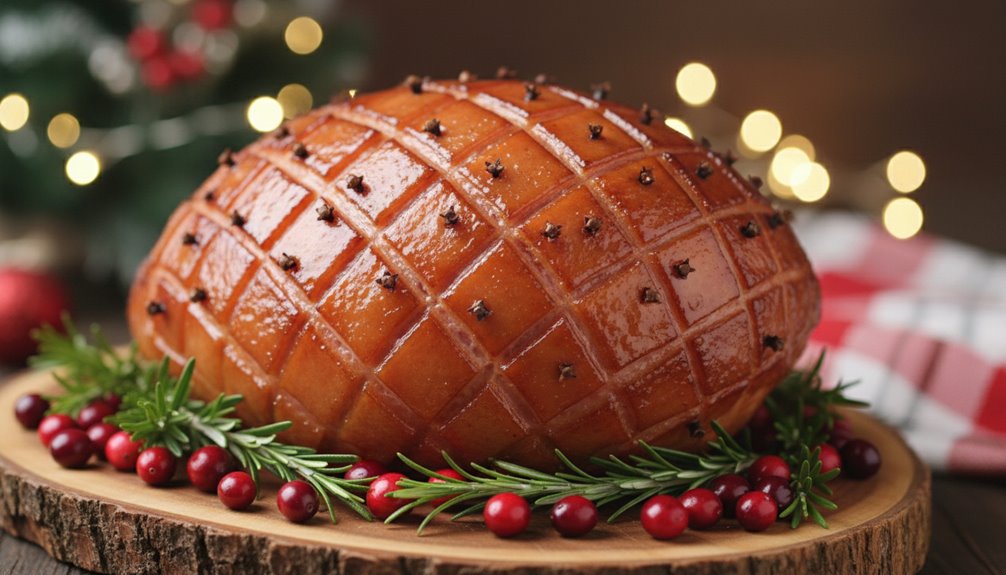
When you score your ham properly, you’ll create beautiful diamond patterns that not only enhance visual appeal but also allow glazes to penetrate deeper into the meat. Start by using a sharp knife to make diagonal cuts about one inch apart across the entire surface. Cut approximately quarter-inch deep, maintaining uniform depth scoring throughout to ensure even cooking and glaze absorption.
Create decorative scoring patterns by making a second set of diagonal cuts in the opposite direction, forming perfect diamonds. Don’t cut too deeply – you’ll risk drying out the ham. Keep your cuts consistent and parallel for professional-looking results.
For added visual interest, try varying your patterns. Consider creating larger diamonds on the main surface and smaller ones on curved areas. You can also score in straight lines for a modern geometric look. Remember that deeper scores mean more glaze penetration, so adjust your depth based on your desired flavor intensity.
Sweet and Savory Glaze Combinations That Wow
Once you’ve mastered the art of scoring, it’s time to transform your ham with glazes that balance sweet and savory flavors perfectly. Fruit-based glazes bring natural sweetness and vibrant color, while spiced honey combinations add warmth and complexity that’ll make your guests ask for the recipe.
These glazing techniques turn an ordinary ham into a show-stopping centerpiece that tastes as impressive as it looks.
Fruit-Based Glaze Recipes
Fruit-based glazes transform ordinary ham into a centerpiece that balances sweet and savory flavors with remarkable depth. You’ll discover that combining fruits with brown sugar glaze creates caramelized perfection, while citrus based marinades add brightness that cuts through rich meat.
| Fruit Base | Complementary Ingredients | Cooking Method |
|---|---|---|
| Pineapple | Brown sugar, soy sauce | Brush every 20 minutes |
| Orange | Honey, Dijon mustard | Apply final hour |
| Apple | Maple syrup, thyme | Baste throughout |
| Cherry | Balsamic vinegar, garlic | Glaze last 30 minutes |
| Cranberry | Port wine, rosemary | Multiple thin coats |
These combinations create complex flavor profiles that’ll impress your guests. Start applying fruit glazes during the final cooking stages to prevent burning while allowing natural sugars to caramelize beautifully.
Spiced Honey Combinations
Beyond fruit glazes, honey creates the perfect foundation for complex spice blends that elevate your ham’s flavor profile dramatically. You’ll discover that combining honey with warm spices like cinnamon, cardamom, and star anise transforms ordinary ham into something extraordinary.
Try mixing honey with freshly grated nutmeg and black pepper for a sophisticated balance. Candied ginger infusions add warmth and subtle heat that complements ham’s natural sweetness perfectly. You can also experiment with five-spice powder combined with honey for an Asian-inspired twist.
Don’t overlook citrus zest accents – orange or lemon zest mixed into spiced honey creates bright notes that cut through rich flavors. For deeper complexity, add smoked paprika and garlic powder to your honey base, creating layers that develop beautifully during roasting.
Seasonal Fruit and Vegetable Garnish Arrangements
Several vibrant fruits and vegetables can transform your Christmas ham into a stunning centerpiece that captures the season’s natural beauty. You’ll create visual impact by arranging cranberries, pomegranate seeds, and orange slices around your ham’s base. Consider building a layered vegetable terrine alongside featuring roasted root vegetables in festive colors.
| Fruit Options | Vegetable Options |
|---|---|
| Fresh cranberries | Baby carrots |
| Pomegranate arils | Brussels sprouts |
| Orange wheels | Red cabbage leaves |
Position pear halves and apple wedges strategically around the platter’s edges. You can enhance the presentation with edible flower garnishes like pansies or nasturtiums for elegant color pops. Rosemary sprigs and thyme branches add aromatic elements while maintaining the natural theme. Remember to brush fruit with lemon juice to prevent browning, and arrange everything just before serving to maintain freshness and vibrant colors.
Maple Bourbon Glaze With Candied Pecans
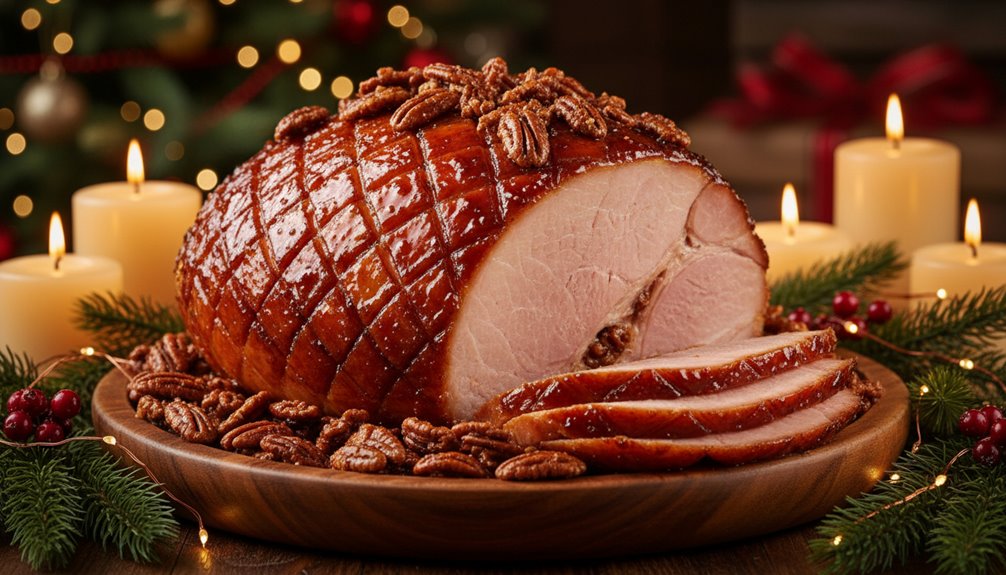
Nothing elevates a Christmas ham quite like a rich maple bourbon glaze topped with golden candied pecans. You’ll create an irresistible combination that balances sweet, smoky, and nutty flavors perfectly.
Start by whisking together pure maple syrup, bourbon, brown sugar, and Dijon mustard. The bourbon adds depth while the maple provides natural sweetness. Brush this mixture over your ham during the final hour of cooking, reapplying every 15 minutes to build beautiful caramelized textures.
For the candied pecans, toss pecan halves with maple syrup and a pinch of sea salt. Spread them on parchment paper and bake at 350°F for 8-10 minutes until golden and fragrant.
The rich glaze flavors penetrate the ham’s surface, creating a glossy, mahogany finish that’s absolutely stunning. Press the warm candied pecans into the glaze during the last few minutes of cooking. This creates an elegant presentation that’ll impress your guests and deliver incredible taste.
Pomegranate Molasses and Herb Crusted Ham
You’ll create a stunning centerpiece with this pomegranate molasses and herb crusted ham that balances sweet and savory flavors perfectly. Start by whisking together pomegranate molasses with complementary spices for your glaze, then craft an aromatic herb mixture that’ll form a beautiful crust.
The key lies in proper timing during the baking process and presenting your masterpiece with garnishes that enhance both flavor and visual appeal.
Preparing the Pomegranate Glaze
The pomegranate glaze transforms your ham into a stunning centerpiece with its deep ruby color and complex sweet-tart flavor profile. You’ll start by creating a pomegranate juice reduction in a heavy-bottomed saucepan. Combine two cups of pomegranate juice with half a cup of honey, simmering until it reduces by half.
Add pomegranate molasses, fresh thyme, and a pinch of black pepper for depth.
Master proper glazing techniques by applying the mixture in thin, even layers during the final hour of cooking. You’ll brush the glaze every fifteen minutes, allowing each coat to caramelize before adding the next. This builds beautiful lacquered layers that won’t burn. The finished glaze should cling perfectly to your ham’s surface, creating an irresistible mahogany sheen.
Creating the Herb Crust
While your pomegranate glaze provides the sweet foundation, building a fragrant herb crust elevates this dish to restaurant-quality sophistication. Start blending seasonings by combining fresh rosemary, thyme, and sage with minced garlic, coarse salt, and black pepper. Add breadcrumbs and olive oil to create a paste-like consistency that’ll adhere perfectly to your ham’s surface.
Pat the ham dry before applying herbs to ensure maximum adhesion. Press the mixture firmly across the scored diamond pattern, working it into each crevice. The herb crust should form a thick, even layer that’ll create a beautiful golden-brown finish during roasting. This aromatic coating not only adds incredible flavor but also creates an impressive visual contrast against the glossy pomegranate glaze underneath.
Baking and Serving Tips
Proper temperature control transforms your beautifully crusted ham from good to spectacular. Follow these oven temperature guidelines: preheat to 325°F and maintain consistent heat throughout cooking. Calculate 15-20 minutes per pound for pre-cooked ham. Insert a meat thermometer into the thickest part, avoiding bone, and heat until internal temperature reaches 140°F.
Master these basting techniques to keep your ham moist and flavorful. Baste every 30 minutes with pan juices or additional pomegranate molasses mixture. Tent with foil if the crust browns too quickly. During the final 15 minutes, remove foil and brush with reserved glaze for a glossy finish.
Let your ham rest 10-15 minutes before carving. This allows juices to redistribute, ensuring each slice stays tender and succulent.
Pineapple Upside-Down Ham With Caramelized Rings
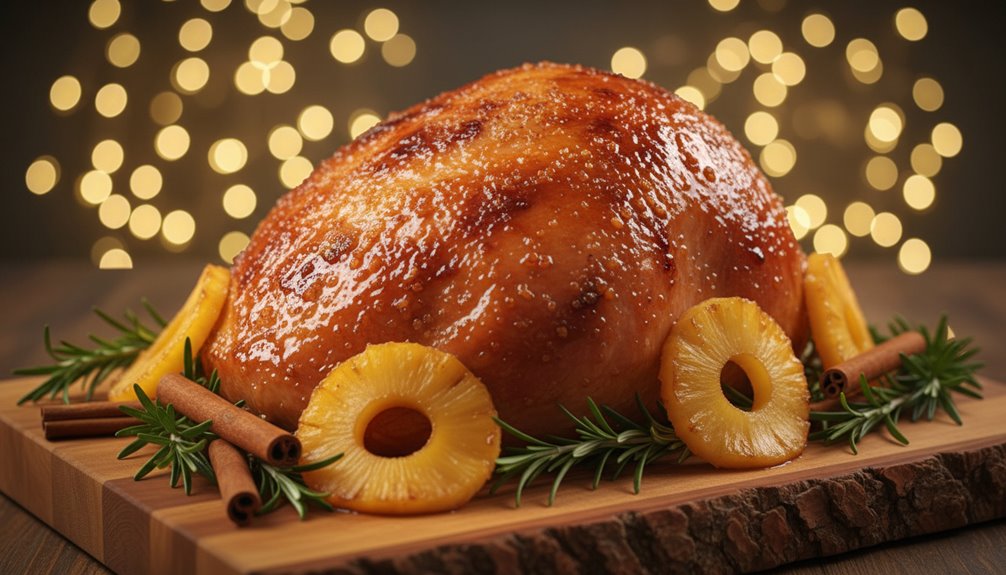
Inspiration strikes when you flip the classic pineapple upside-down cake concept and apply it to your holiday ham. You’ll create a stunning centerpiece that transforms traditional glazing into an artistic masterpiece.
Start by arranging thick pineapple rings across your ham’s surface, securing them with toothpicks. Brush everything with a rich marmalade glaze that’ll caramelize beautifully during cooking. The natural sugars create gorgeous golden-brown rings that’ll make your guests’ mouths water.
Essential techniques for perfect caramelized rings:
- Score the ham in a diamond pattern before adding pineapple for better glaze penetration
- Baste every 20 minutes with pan juices to intensify caramelization
- Add candied fruit accents like cherries or orange peel during the final 15 minutes
The result? Tender, juicy ham crowned with perfectly caramelized pineapple rings that taste as spectacular as they look. This showstopper combines sweet and savory flavors that’ll become your family’s new Christmas tradition.
Festive Spice Rubs and Aromatic Coatings
Transform your holiday ham into a fragrant masterpiece with carefully crafted spice rubs that penetrate deep into the meat’s surface. You’ll discover endless possibilities when experimenting with aromatic spice blends that complement ham’s natural saltiness.
Create a warming cinnamon sugar rub by combining brown sugar, ground cinnamon, nutmeg, and a pinch of cayenne pepper. This sweet-heat combination caramelizes beautifully during cooking, forming an irresistible crust.
For Mediterranean flair, blend rosemary, thyme, garlic powder, and black pepper with olive oil.
Apply your chosen rub generously, massaging it into score marks you’ve made across the ham’s surface. Let the seasoned ham rest for at least two hours, allowing flavors to penetrate deeply.
Consider coffee-based rubs with espresso powder, brown sugar, and paprika for bold complexity. Don’t forget herb-forward coatings featuring sage, oregano, and fennel seeds. These aromatic spice blends transform ordinary holiday ham into an extraordinary centerpiece that’ll have guests requesting your secret recipe.
Professional Plating and Serving Display Tips
Once you’ve perfected your ham’s flavor profile, presenting it with restaurant-quality finesse elevates your holiday feast from good to unforgettable. Your platter presentation techniques determine whether guests remember your ham as merely delicious or absolutely spectacular.
Start with an oversized white platter that showcases your ham’s golden exterior. Create height variations using inverted bowls beneath your serving cloth, then arrange colorful garnishes strategically around the centerpiece. Fresh rosemary sprigs, cranberry clusters, and orange wheels provide natural color contrast while complementing your ham’s flavors.
Creative display ideas transform ordinary serving into culinary artistry:
- Position carved slices in overlapping fan patterns, revealing the ham’s interior marbling
- Scatter pomegranate seeds and fresh herbs between slices for texture and visual interest
- Use warm serving platters to maintain optimal temperature throughout your gathering
Remember that guests eat with their eyes first. Your thoughtful presentation creates anticipation and demonstrates the care you’ve invested in their dining experience.
Frequently Asked Questions
What Size Ham Should I Buy for My Christmas Dinner Party?
You’ll need to consider ham weight considerations based on your guest count. Follow standard ham feeding guidelines of roughly half a pound per person for bone-in hams or one-third pound per person for boneless varieties.
If you’re serving ten guests, buy a 5-pound bone-in ham or 3.5-pound boneless ham. Don’t forget to account for leftovers you’ll want for post-holiday sandwiches and meals.
How Long Should I Cook My Ham per Pound?
You’ll need about 15-20 minutes cooking time per pound for a precooked ham at 325°F.
If it’s a raw ham, increase that to 20-25 minutes per pound.
Always check internal temperature guidelines – your ham’s ready when it reaches 140°F for precooked or 160°F for raw. Don’t rely solely on cooking time calculations; use a meat thermometer to ensure it’s properly heated through.
Can I Prepare and Dress My Ham the Night Before Christmas?
Yes, you can prepare ham the night before Christmas. You’ll save time on the big day by glazing and scoring your ham ahead.
After you’ve dressed it with your chosen glaze, wrap it tightly in foil and refrigerate dressed ham overnight. Remove it from the fridge 30 minutes before cooking to bring it closer to room temperature for even heating.
What’s the Best Way to Store Leftover Dressed Ham Safely?
You’ll need proper refrigeration techniques to keep your leftover dressed ham safe. Remove the ham from room temperature within two hours and refrigerate at 40°F or below. Use appropriate storage containers like airtight containers or wrap tightly in aluminum foil or plastic wrap.
You can store it safely for three to five days. Slice only what you’re using to maintain freshness longer.
Which Cuts of Ham Work Best for These Decorative Dressing Techniques?
You’ll want whole bone-in hams or spiral-cut hams for best decorative results. Selecting appropriate ham cuts means choosing ones with smooth, even surfaces that hold glazes and garnishes well.

Bone-in hams provide the classic shape, while spiral-cut versions make serving easier after presentation. Focus on ensuring ham size matches event needs – typically 10-12 pounds feeds 15-20 people, giving you ample surface area for creative dressing techniques.
Conclusion
You’ve got all the tools to transform your holiday ham from ordinary to extraordinary. Whether you’re scoring diamond patterns, brushing on that maple bourbon glaze, or arranging colorful garnishes, you’re creating more than just a meal—you’re crafting memories. Don’t forget to let your ham rest before carving, and remember that presentation’s just as important as taste. Your guests won’t believe their eyes when you unveil your masterpiece.


Table of Contents








No Comments