
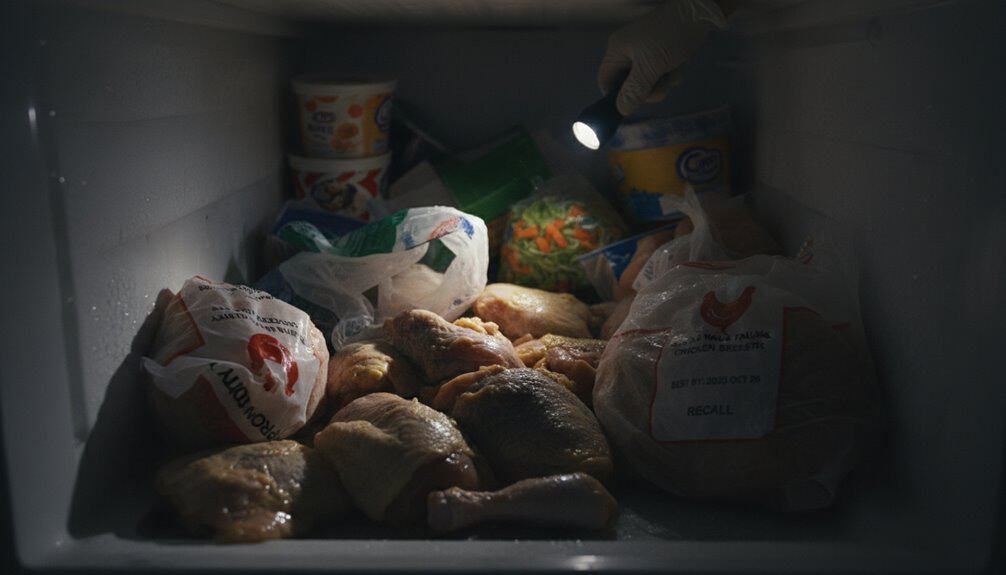
This Chicken Brand Recall Has Everyone Checking Their Freezers Right Now
You’ll need to check your freezer immediately for Tyson fully cooked chicken strips with “best if used by” dates of November 26, 2024. This Class I recall affects 25-ounce resealable bags distributed nationwide due to metal fragments found inside. Look for production codes 384BRQ0222, 384BRQ0223, 384BRQ0232, or 384BRQ0233 near the nutrition label. Don’t consume these products—return them for a full refund or throw them away. There’s important safety information about symptoms and proper disposal methods below.
Table of Contents
Key Takeaways
- Tyson fully cooked chicken strips in 25-ounce resealable bags are recalled for metal fragments contamination.
- Check products with “Best if Used By” date November 26, 2024 and codes 384BRQ0222, 384BRQ0223, 384BRQ0232, or 384BRQ0233.
- Find recall codes on back or side panel near nutrition label, separate from UPC barcode.
- Do not consume matching products; return to store for full refund or discard in sealed container.
- Seek medical attention for fever above 101.5°F, bloody diarrhea, or severe abdominal cramping after consumption.
Which Chicken Brands and Dates Are Recalled
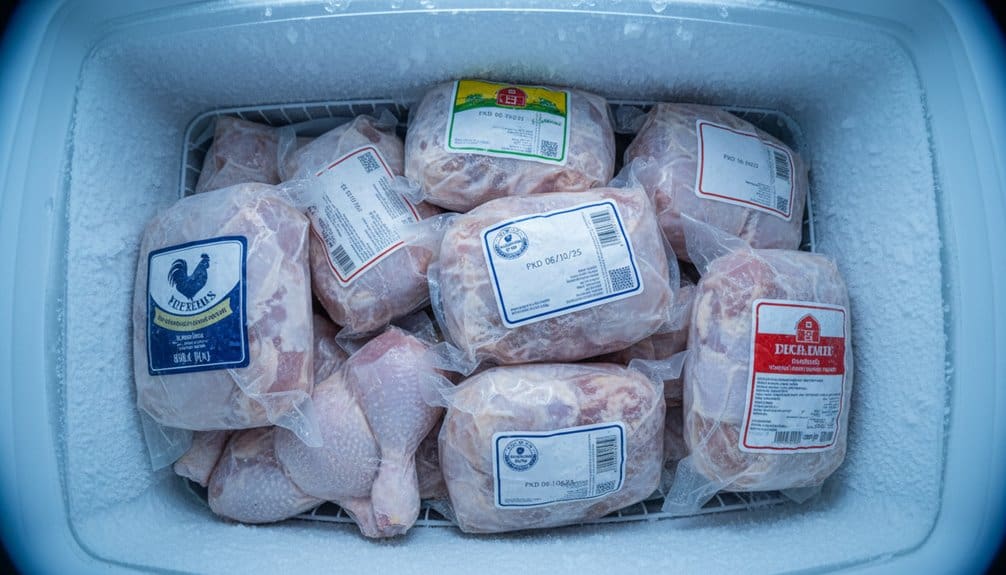
When you check your freezer, you’ll need to look for specific Tyson chicken products with particular production dates. The recall affects Tyson’s fully cooked chicken strips sold in 25-ounce resealable plastic bags. You’re looking for “best if used by” dates of November 26, 2024, and production codes 384BRQ0222, 384BRQ0223, 384BRQ0232, and 384BRQ0233.
This recall timing couldn’t be more critical since these products were distributed nationwide to major retailers between October and November 2024. If you’ve purchased these items recently, don’t consume them. The USDA announced this Class I recall—their highest risk classification—after metal fragments were discovered in the products.
Brand safety protocols triggered the voluntary recall after customer complaints surfaced. You should immediately throw away any matching products or return them to your place of purchase for a full refund. Don’t take chances with these contaminated items. Check the USDA’s website for updated information and contact Tyson’s consumer relations at 1-855-382-3101 if you have questions.
How to Find Recall Codes on Your Chicken Package
Where exactly should you look for these crucial recall codes on your Tyson chicken package? You’ll find them printed directly on the back or side panel of the bag, typically near the nutrition label. The recall codes appear as a series of numbers and letters, while packaging dates are stamped separately, often reading “BEST IF USED BY” followed by the date.
Don’t confuse the UPC barcode with recall codes—they’re different. The establishment number, starting with “EST. P-” followed by digits, sits inside the USDA inspection mark. This number’s essential for identifying recalled products.
Check multiple areas since printing locations vary by product type. For vacuum-sealed trays, examine the film’s edges. On boxed products, inspect all sides thoroughly. If you’ve already transferred chicken to freezer bags, you’ve unfortunately lost this tracking information. That’s why it’s smart to photograph packaging dates and codes before storing chicken differently.
What to Do With Recalled Chicken Products
Once you’ve confirmed your chicken matches the recall codes, don’t consume it under any circumstances—even if it looks and smells fine. Bacteria like Salmonella or Listeria aren’t always detectable through sight or smell, making recalled chicken handling a serious safety matter.
Here’s what to do immediately: Double-bag the product in plastic bags to prevent leakage and cross-contamination. You’ve got two options for disposal. First, you can return it to your purchase location for a full refund—keep your receipt if possible. Second, throw it away in a sealed container that children and pets can’t access.
After handling the recalled chicken, thoroughly wash your hands with soap and hot water for at least 20 seconds. Sanitize any surfaces, cutting boards, or utensils that touched the product using a bleach solution. Check your refrigerator and freezer for potential contamination from leaking packages. Document the product details and save your receipt for potential reimbursement claims.
Symptoms That Mean You Need Medical Attention
Should you develop symptoms after eating recalled chicken, you’ll need to act fast—foodborne illnesses can escalate quickly from mild discomfort to serious medical emergencies. Watch for fever above 101.5°F, bloody diarrhea, severe dehydration, or vomiting that prevents keeping liquids down. These symptoms signal your contamination risk has materialized into a serious infection requiring immediate medical care.
Don’t wait if you’re experiencing severe abdominal cramping, dizziness, or rapid heartbeat—these indicate dangerous dehydration. Young children, elderly adults, pregnant women, and immunocompromised individuals face higher risks and should seek help even with milder symptoms.
The recall timing matters: symptoms typically appear within 6-72 hours after consumption, though some infections take longer to manifest.
Call your doctor immediately if diarrhea persists beyond three days or you notice signs of severe dehydration like decreased urination, dry mouth, or sunken eyes. Tell medical staff about the recalled chicken exposure—this information helps them provide targeted treatment and report the case to health authorities.
Frequently Asked Questions
Will I Receive a Refund if I Return the Recalled Chicken?
You’ll typically receive a full refund when you return recalled chicken to your store. Your refund eligibility depends on having the product or proof of purchase like a receipt.
Don’t consume the chicken – instead, follow the recall process by returning it to where you bought it or disposing of it safely.
Most retailers will refund your money immediately, even without a receipt, since it’s a safety issue affecting public health.
Can I Still Eat Chicken From the Same Brand but Different Batch?
You can still eat chicken from non-recalled batches, but you’ll need to verify batch safety first. Check the specific lot numbers, production dates, and plant codes listed in the recall notice against your packages. If your chicken doesn’t match the recalled information, it’s safe to consume. Don’t assume all products from the brand are affected – recalls typically target specific production runs with identified contamination or safety concerns.
How Often Do Chicken Recalls Like This Typically Happen?
You’ll typically see major chicken recalls happen several times per year across different brands, though recall frequency varies by company size and safety protocols.
You’re looking at roughly 10-20 significant poultry recalls annually in the US.
Brand safety concerns usually stem from salmonella or listeria contamination during processing.
You shouldn’t panic – most companies catch issues quickly, but you’ll want to stay informed through FDA alerts and check your products regularly.
Are Other Stores Besides the Ones Listed Selling the Recalled Products?
You’ll find recalled products at other stores beyond those initially listed, as distribution networks often extend wider than first announced. During the recall process, manufacturers typically update their lists as they trace shipments to additional retailers. You should check with your local grocery store directly, even if it wasn’t mentioned in the original announcement. The recall process continues evolving as companies identify more locations that received the affected chicken products.
Is the Contamination Risk Only From Eating or Also From Handling?
You’re at risk from both eating and contamination handling of recalled chicken. When you touch raw contaminated poultry, bacteria can spread to your hands, utensils, and surfaces, creating cross contamination throughout your kitchen. You’ll need to thoroughly wash your hands with soap after handling, sanitize all surfaces the chicken touched, and clean any utensils used. Don’t just worry about cooking it properly – the handling itself poses serious health risks.
Conclusion
Don’t take chances with recalled chicken in your freezer. You’ve learned which brands and dates to check, where to find the codes, and how to safely dispose of affected products. If you’ve eaten any recalled chicken and experience severe symptoms like bloody diarrhea, high fever, or dehydration, you’ll need immediate medical care. Stay updated on food recalls by checking the USDA website regularly – it’s the best way to protect your family’s health.


No Comments