
10 Best Chair Yoga Poses for Home Office Beginners
You can boost posture, ease tension, and stay energized at your desk with ten simple chair‑yoga poses. Start with a seated Cat‑Cow to warm up the spine, then move into a Reverse Fly for shoulder activation. Follow with a Forward Fold to release the lower back, a seated Boat Pose for core strength, and a Seated Mountain Pose to realign posture. Add Ear‑to‑Shoulder Tilts for neck relief, an Extension Series for leg activation, and finish with gentle twists and mindful breathing to cool down and center yourself. Keep going to discover the full routine.
Seated Office Workout Overview & Benefits
Ever wondered how a simple seated routine can boost your workday? You can transform stagnant hours into moments of movement without leaving your chair. A seated office workout engages core muscles, improves posture, and circulates blood, reducing fatigue and the risk of back pain. By alternating gentle twists, forward folds, and shoulder rolls, you stimulate spinal flexibility and release tension that builds from prolonged typing. These micro‑sessions also sharpen focus; the brief pause triggers oxygen flow to the brain, enhancing concentration for the tasks ahead. Consistency matters—just five minutes every hour can lower stress hormones and curb the sluggishness that follows long meetings. You’ll notice quicker recovery after sitting, smoother transitions between projects, and a steadier mood throughout the day. Embrace this low‑impact routine, and let your chair become a catalyst for healthier, more productive work habits.
Seated Office Workout Warm‑Up: Cat‑Cow Stretch
The cat‑cow stretch is a gentle, flowing motion that wakes up your spine and shoulders while you stay seated. Begin by sitting tall, feet flat, hands resting on your knees. Inhale, arch your back, lift your chest, and look slightly upward—this is the “cow.” Exhale, round your spine, tuck your chin toward your chest, and draw your belly button toward your spine—this is the “cat.” Move between these two positions slowly, syncing each movement with your breath. Aim for 8‑10 cycles, feeling the stretch travel from the base of your skull down to your lower back. Keep your shoulders relaxed and avoid forcing the motion; let the breath guide the depth. This warm‑up mobilizes vertebrae, releases tension, and prepares your upper body for the rest of the seated workout. Consistent practice will improve posture and reduce stiffness during long work hours.
Seated Office Workout: Shoulder Activation – Reverse Fly
After loosening your spine with the cat‑cow stretch, you can target the upper back and rear delts by doing a seated reverse fly. Sit tall, feet flat, and grasp the armrests or a light resistance band with both hands. Keep shoulders down, elbows soft, and pull your hands outward, squeezing shoulder blades together. Hold a brief, then slowly return to the start.
Perform 10‑12 repetitions, focusing on controlled movement rather than speed. Keep your core engaged to protect the lower back, and breathe in as you pull apart, exhale as you release. If you use a band, choose a tension that lets you feel a gentle challenge without compromising form.
This exercise reactivates post‑ural muscles that slump during long typing sessions, improves posture, and reduces neck tension. Incorporate it after your warm‑up and before any deeper stretches for balanced shoulder activation.
Seated Office Workout: Lower‑Back Release – Forward Fold
Wondering how to ease tension in your lower back without leaving your desk? Sit tall, feet flat, and gently hinge at your hips, letting your torso fold forward over your thighs. Keep your spine long, shoulders relaxed, and let your hands rest on the armrests or lap. Feel a mild stretch along the lumbar region as you exhale, then inhale to lengthen. Hold for three breaths, then slowly roll up, stacking each vertebrae one by one.
To deepen the release, slide your chair slightly forward, allowing a larger angle at the hips, but avoid rounding the lower back excessively. If you have a low back, place a small pillow or folded towel under your hips for support.
Perform this forward fold two to three times throughout the day, especially after long periods of typing, to keep the lower back supple and reduce stiffness. Consistency will help maintain a healthier posture and prevent lingering discomfort.
Seated Office Workout: Core Strength – Boat Pose
Ever feel your midsection slouching after hours at the desk? Sit tall, feet flat, and engage your core. Inhale, lift both feet a few inches off the floor, and balance on your sit bones. Extend your shins parallel to the ground, then straighten your legs if you feel stable, forming a “V” shape—this is the seated boat pose. Keep your spine long, chest open, and shoulders relaxed. Hold for three to five breaths, then exhale and lower your feet gently. Repeat four to six rounds, focusing on drawing the belly button toward the spine to activate deep abdominal muscles. This micro‑workout strengthens the rectus abdominis and obliques, improving posture and reducing the “hunch” that builds up during long meetings. If balance wavers, keep knees bent or place a small cushion under your thighs for extra support. Consistency will tighten your core and boost overall desk‑day energy.
Seated Office Workout: Hip Mobility – Figure‑Four Stretch
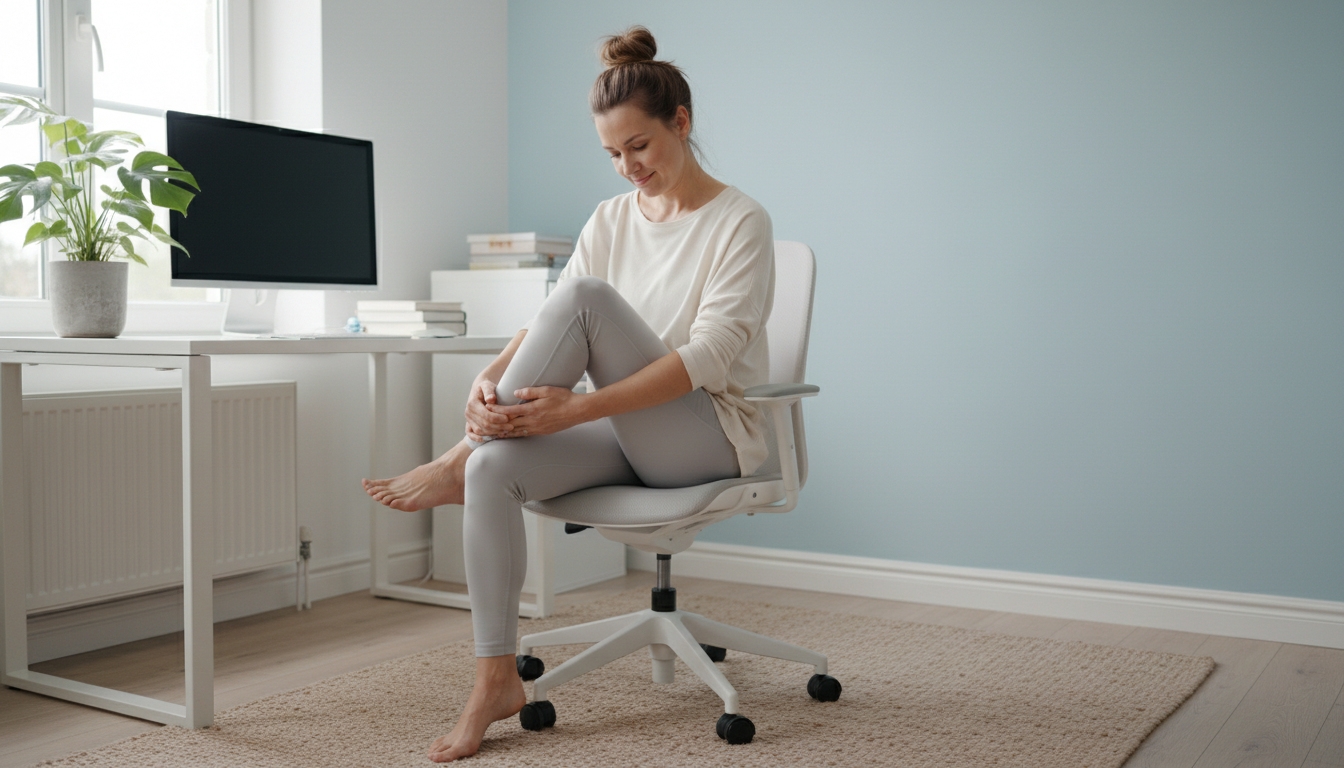
Feeling tight hips after hours of sitting? Sit upright in your chair, plant both feet firmly, and cross your right ankle over your left knee, forming a figure‑four. Gently press the right knee down while keeping your spine tall. You’ll feel a stretch in the outer right hip and glutes. Hold for 30 seconds, then switch sides. To deepen the stretch, lean forward slightly, reaching your hands toward the floor or the back of the chair, but avoid rounding your back. Breathe slowly, inhaling through the nose, exhaling through the mouth, letting tension melt away with each breath. Perform this mini‑routine three times per side during your workday to improve hip mobility, reduce stiffness, and promote better circulation. Consistency keeps joints supple, eases lower‑back pressure, and supports a more comfortable sitting posture throughout long hours at the desk.
Seated Office Workout: Office Posture Boost – Seated Mountain Pose
Need you spend hours hunched over a screen, the Seated Mountain Pose can instantly reset your posture and re‑engage core muscles. Sit tall in your chair, feet flat, knees bent at 90 degrees. Press your sit down into the seat, engage your thighs, and lift your sternum toward the ceiling. Lengthen your spine, imagine a string pulling the crown of your head upward, and tuck your chin slightly. Draw your shoulder blades together, opening the chest, while keeping your palms resting gently on your thighs. Breathe deeply for five to ten cycles, feeling the activation of the deep abdominal muscles that support the lower back. This pose counteracts slouching, improves balance, and primes your body for the workday ahead. When you finish, release the tension slowly, and notice a steadier, more confident posture as you return to your tasks.
Seated Office Workout: Neck Relief – Ear‑to‑Shoulder Tilt
How often does a tight neck interrupt your focus during a long day at the desk? Sit upright, feet flat, and let your shoulders relax. Gently tilt your right ear toward your right shoulder, feeling a stretch along the left side of your neck. Hold for three to five breaths, then slowly return to center. Switch sides, guiding the left ear to the left shoulder. Keep your jaw relaxed and avoid raising your shoulder; the motion should come from the neck, not the shoulders. For deeper relief, lightly place a hand on the opposite side of the head and apply a soft, guiding pressure as you hold the tilt. Perform this sequence three times per side, breathing steadily to release tension. Incorporating the Ear‑to‑Shoulder Tilt into your hourly routine reduces stiffness, improves circulation, and restores concentration without leaving your chair.
Seated Office Workout: Leg Activation – Extension Series
Often, a simple leg extension from your chair can re‑energize your lower body and prevent the sluggishness that builds up during long hours of sitting. Start by sitting upright, feet flat on the floor, and engage your core. Extend one leg straight, hold for a breath, then lower slowly. Alternate sides, keeping the movement controlled and the knee aligned with the hip. This series boosts circulation, awakens quads, and reduces fatigue without leaving your workstation.
- Straight‑Leg Raise: Extend the right leg, hold three seconds, lower; repeat on the left.
- Pulse Extension: Raise one leg and pulse up and down in small increments for ten counts.
- Alternating Extensions: Switch legs every two seconds, maintaining a steady rhythm.
- Double‑Leg Lift: Raise both legs together, hold briefly, then lower; repeat three times.
- Seated March: Simulate a marching motion, extending each knee fully before the next.
You’ll feel tighter hips, stronger calves, and a steadier posture ready for the rest of your workday.
Seated Office Workout: Cool‑Down & Mindfulness – Breathing + Gentle Twist
After the leg activation, settle back into your chair and shift your focus to breathing and gentle spinal movement. Inhale slowly through your nose, feeling your ribcage expand, then exhale through your mouth, releasing tension. Repeat this cycle three times, letting each breath deepen your relaxation.
Next, place your right hand on the back of the chair and your left hand on your right thigh. As you inhale, lengthen your spine; as you exhale, gently twist toward the right, looking over your shoulder if comfortable. Hold for five breaths, then return to center.
Switch sides, mirroring the motion with your left hand on the chair back and right hand on the left thigh. This twist mobilizes the thoracic spine, eases lower‑back stiffness, and stimulates digestion.
Finish by returning to neutral posture, closing your eyes, and taking three mindful breaths. Notice the calm that follows this simple cool‑down.
Frequently Asked Questions
How Often Should I Repeat Each Pose for Optimal Benefits?
You should hold each pose for 30‑60 seconds, then repeat it two to three times per session. Aim for three sessions daily, spacing them out to keep your muscles engaged and your mind refreshed.
Can I Modify These Exercises if I Have a Knee Injury?
Yes, you can adapt them—skip deep knee bends, replace them with gentle seated stretches, and keep movements shallow. Use a pillow for support, listen to pain signals, and stop if discomfort worsens.
What Equipment, Besides a Chair, Enhances the Routine?
You’ll boost the routine with a yoga strap, a small foam roller, resistance bands, and a wrist‑support cuff; these tools deepen stretches, improve alignment, and add gentle strength work.
Do These Poses Help Reduce Eye Strain From Screen Time?
Yes, they’ll ease eye strain. You’ll improve circulation, relax facial muscles, and release tension in your neck and shoulders, which all lessen the fatigue that builds up from prolonged screen time.
How Long Does It Take to See Noticeable Posture Improvement?
You’ll notice posture gains after about two to three weeks of daily five‑minute chair yoga, especially if you stay consistent and pair the poses with mindful sitting habits throughout your workday.
Conclusion
By weaving these simple moves into your day, you’ll keep muscles limber, posture upright, and stress at bay—all from your chair. You’ll feel more energized, focused, and ready to tackle any workload. Keep breathing, stay consistent, and let your office become a space for both productivity and well‑being.


Sorry, the comment form is closed at this time.