
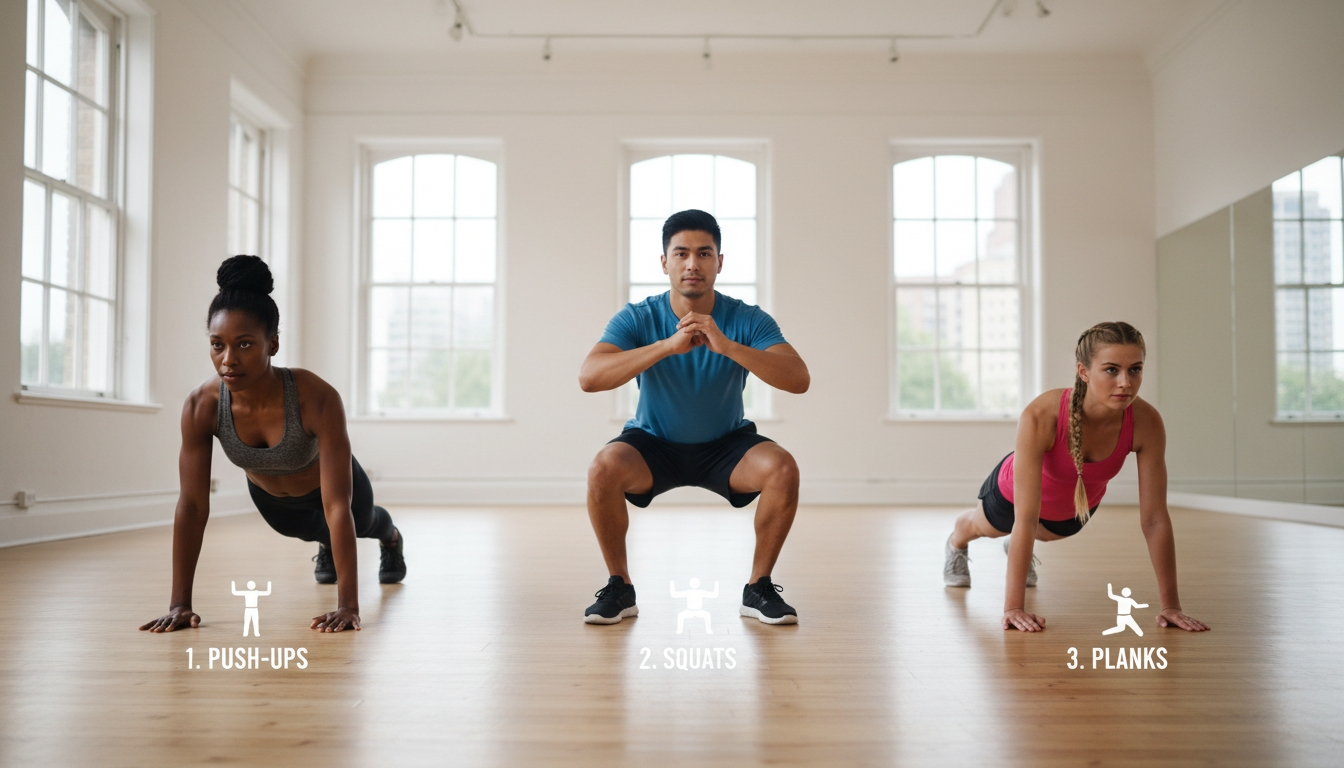
3 Bodyweight Strength Exercises for Beginners (No Equipment)
Start with a solid push‑up: place your hands shoulder‑width apart, keep a straight line from head to heels, engage your core and glutes, lower until your chest almost touches the floor, then press up without locking elbows. Pair it with a bar‑free squat: stand shoulder‑width apart, toes out a bit, keep your chest up, drop until thighs are parallel, and drive through your heels to stand. Finish with a beginner plank: hold a forearm plank for 20‑30 seconds, then try shoulder taps or side planks for added core stability. Keep this trio consistent and you’ll build full‑body strength fast; the next steps will show you how to progress each move.
Table of Contents
Master the Push‑Up: Form, Common Mistakes, and First‑Level Progressions
Ever wondered why push‑ups feel so tough at first? You’re probably letting your hips sag or your elbows flare out, which steals power and strains shoulders. Start by planting hands shoulder‑width apart, fingers pointing forward, and keep a straight line from head to heels. Engage your core, squeeze glutes, and lower until your chest nearly touches the floor, then push back up without locking elbows.
Common mistakes include dropping the head, letting the lower back arch, and collapsing the chest. Fix them by looking a few inches ahead, tightening the mid‑section, and keeping elbows at a 45‑degree angle.
For first‑level progressions, try knee push‑ups: keep the same hand placement but rest knees on the ground, maintaining a straight line from knees to head. Next, do incline push‑ups with hands on a sturdy bench or table, reducing load while preserving form. Finally, practice negative reps—slowly lower for three seconds, then press up quickly—to build strength efficiently.
Push‑Up Companion: Bar‑Free Squat Moves for Leg Power
Why not pair your push‑up routine with a set of bar‑free squats to boost leg power? Start with a basic bodyweight squat: feet shoulder‑width apart, toes slightly turned out, chest up, lower until thighs are parallel to the floor, then drive through the heels to stand. Perform three sets of 12‑15 reps, pausing a second at the bottom for extra tension. To intensify, try jump squats—explode upward, land softly, and repeat. This plyometric twist spikes heart rate and builds explosive strength. For unilateral work, do single‑leg pistol squats using a chair for support: extend one leg, sit back, then push up while keeping the standing knee tracking over the toe. Finish with a squat pulse: hold the low position and pulse up and down for 30 seconds. These moves complement push‑ups by engaging quads, glutes, and hamstrings, delivering balanced full‑body power without any equipment.
Push‑Up Companion: Beginner Plank Progressions to Strengthen Your Core
If you want your push‑up routine to feel more stable and powerful, add a few beginner plank progressions to target the core.
Start with a forearm plank: elbows under shoulders, body in a straight line, engage the belly button toward your spine. Hold 20‑30 seconds, focusing on a tight core and neutral hips.
Progress to a high plank, shifting weight onto straight arms; this mimics the push‑up position and builds shoulder stability.
Next, try a plank with shoulder taps: from a high plank, lift one hand to tap the opposite shoulder, alternating sides while keeping hips level. This challenges anti‑rotation muscles and improves balance.
Finally, incorporate a side plank on each side for 15‑20 seconds, stacking feet and raising the top arm for added rotation control.
Perform each variation for 2‑3 sets, resting briefly between sets.
Consistent practice will tighten your midsection, protect your lower back, and make every push‑up feel more controlled.
Frequently Asked Questions
How Often Should I Train Each Muscle Group per Week?
You should train each muscle group two to three times weekly, spacing sessions 48‑72 hours apart. Keep workouts short, focus on compound moves, and adjust volume as you progress without overtraining.
What’s the Best Warm‑Up Routine Before Bodyweight Workouts?
Start with 5‑minute light cardio, then do dynamic stretches: arm circles, leg swings, hip circles, and inchworms. Finish with a few bodyweight moves—air squats, push‑ups, and lunges—to raise temperature and mobilize joints.
Can I Combine These Exercises With Cardio Without Overtraining?
You can mix them, just keep cardio sessions moderate and schedule them on alternate days or after strength work. Listen to your body, monitor fatigue, and adjust intensity to avoid overtraining.
How Do I Know When to Increase Difficulty of a Movement?
You know it’s time to up the difficulty when you can complete the sets with perfect form, feel only a mild burn, and recover quickly—then add reps, sets, or a harder variation.
What Nutrition Basics Support Strength Gains for Beginners?
You should eat enough protein—about 0.8‑1 gram per pound of body weight—spread across meals, keep carbs moderate for energy, stay hydrated, and ensure a slight calorie surplus to fuel muscle growth.
Conclusion
You’ve got the basics down: perfect your push‑up form, add bar‑free squats for leg power, and build a solid core with plank progressions. Keep focusing on proper technique, stay consistent, and gradually increase intensity. With these three bodyweight moves, you’ll build strength, improve stability, and set a strong foundation for any future fitness goals. Keep pushing forward—your body will thank you.


Sorry, the comment form is closed at this time.