
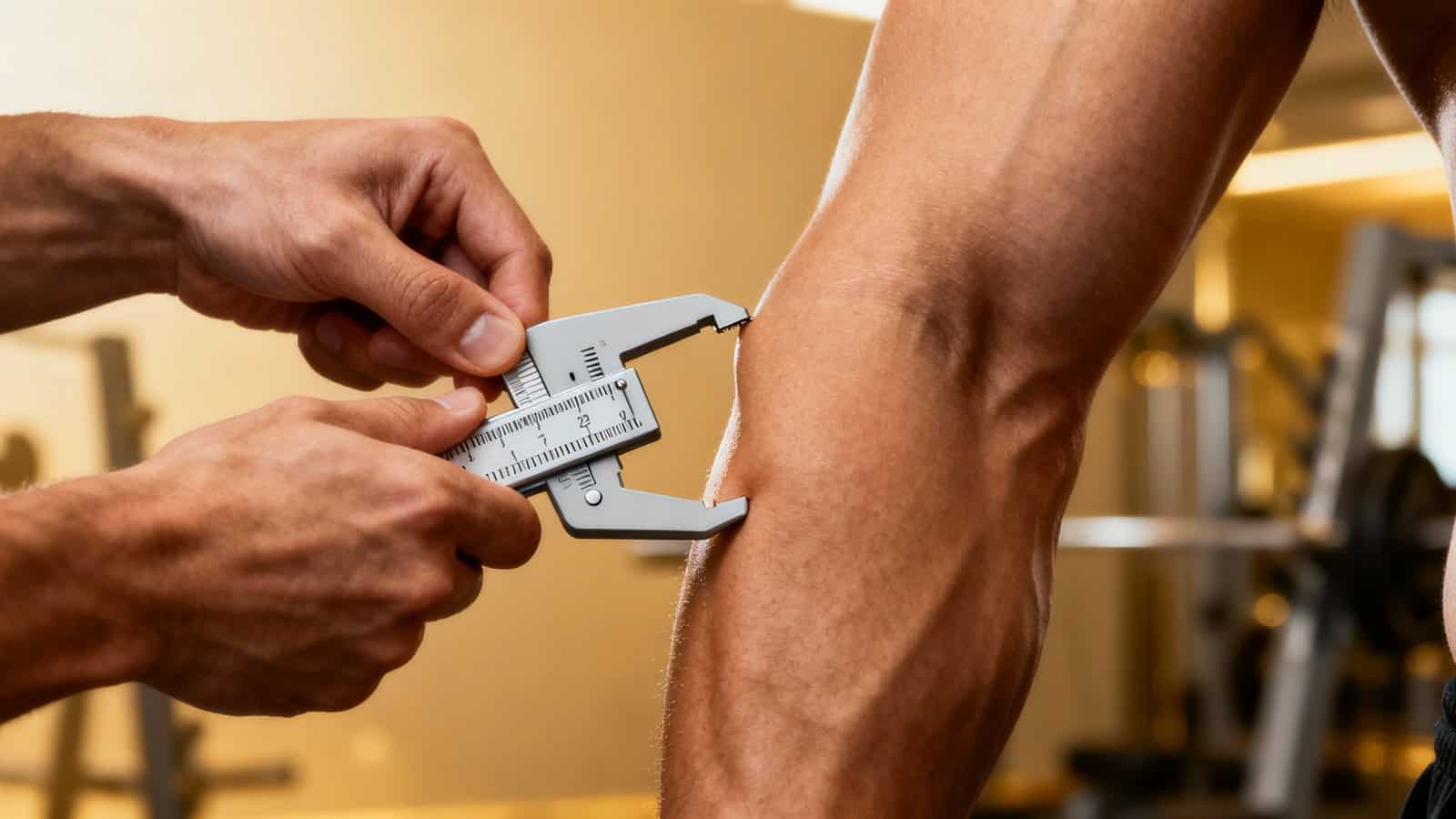
NASM’s body fat calculator uses Navy Method equations to estimate your body fat percentage from simple measurements like waist, hip, and neck circumferences plus height. You’ll need a tape measure for circumferences and skinfold calipers for specific body sites—chest, abdomen, and thigh for men or triceps, suprailiac, and thigh for women. The calculator processes these measurements through validated formulas to determine your fat-to-lean mass ratio. Understanding how this tool works and its 3-5% margin of error helps you track fitness progress accurately.
Table of Contents
Key Takeaways
- NASM’s calculator uses Navy Method equations to estimate body fat percentage from waist, hip, neck circumferences and height measurements.
- Required tools include a tape measure for circumferences, skinfold calipers for site-specific measurements, scale, and measurement landmarks marker.
- The calculator provides body fat categories ranging from essential to obese, with gender-specific percentage ranges for health assessment.
- Typical margin of error is 3-5%, making it better for tracking trends over time than determining absolute values.
- Results help establish baseline measurements for setting realistic fitness goals with recommended progress milestones every 4-6 weeks.
How the NASM Body Fat Calculator Works
Ever wondered what happens behind the scenes when you input your measurements into the NASM Body Fat Calculator? You’re about to discover the science that powers this essential fitness tool.
The algorithm overview reveals a sophisticated system that processes your body measurements through validated mathematical formulas.
When you enter your waist, hip, and neck circumferences along with your height, the calculator applies Navy Method equations to estimate your body fat percentage.
It’ll instantly compute the ratio between your lean mass and total body weight.
The calculation assumptions include that you’ve measured yourself accurately at specific anatomical points and that your body composition follows typical distribution patterns.
The tool assumes you’re measuring at your natural waist, widest hip point, and neck below the larynx.
It doesn’t account for extreme muscle mass or unusual fat distribution patterns, which means professional athletes or bodybuilders might see less accurate results.
Required Measurements and Tools You’ll Need
Now that you understand the calculation process, you’ll need specific measurements and the right tools to get accurate results.

The primary tool you’ll require is a skinfold caliper. Your caliper selection matters significantly – choose one with consistent spring tension and clear millimeter markings. Digital calipers offer easier reading, while mechanical ones like Lange or Harpenden provide professional-grade precision.
You’ll take measurements at specific measurement landmarks depending on your gender. Men typically measure chest, abdomen, and thigh sites. Women measure triceps, suprailiac, and thigh areas. You’ll also need a tape measure for circumference measurements like waist, hip, and neck.
Don’t forget you’ll need a scale for body weight and someone to help take measurements you can’t reach yourself. A marker helps identify exact measurement landmarks for consistency.
Record everything immediately – you’ll need these numbers for the NASM formula. Taking measurements at the same time of day ensures better accuracy across multiple assessments.
Understanding Your Body Fat Percentage Results
After calculating your body fat percentage using the NASM method, you’ll need to interpret what these numbers actually mean for your health and fitness goals. Your results fall into specific categories: essential fat (10-13% for women, 2-5% for men), athletic (14-20% for women, 6-13% for men), fitness (21-24% for women, 14-17% for men), average (25-31% for women, 18-24% for men), and obese (32%+ for women, 25%+ for men).
Understanding these ranges reveals important health implications. Higher percentages increase your risk of heart disease, diabetes, and hypertension. Lower percentages below essential levels can disrupt hormone production and immune function.
You’ll make better lifestyle adjustments when you know where you stand. If you’re above optimal ranges, you can implement caloric deficits and increase cardiovascular exercise. If you’re within healthy ranges, you’ll focus on maintenance through balanced nutrition and consistent training. Remember, these percentages aren’t just numbers—they’re indicators that guide your fitness journey.
Accuracy and Limitations of Body Fat Calculations
While the NASM body fat calculator provides valuable insights, you’ll need to understand its accuracy ranges and inherent limitations.
Most body fat calculations carry a margin of error between 3-5%, depending on the method used.
You’re dealing with estimates based on mathematical models, not direct measurements.

Here’s what affects calculation accuracy:
- Population Variability – Formulas developed on specific demographics may not apply equally to all ethnicities, ages, or athletic backgrounds
- Systematic Bias – Calculations can consistently overestimate or underestimate based on your unique body composition
- Measurement errors – Small mistakes in taking measurements multiply into larger percentage discrepancies
- Hydration status – Your water retention levels significantly impact results, especially with bioelectrical impedance methods
You’ll get the most reliable tracking by using the same method consistently rather than switching between techniques.
Remember, these tools work best for monitoring trends over time, not determining absolute values.
Consider them directional guides for your fitness journey.
Using Your Results to Set Fitness Goals
Your calculated body fat percentage becomes a powerful baseline for establishing realistic fitness targets.
You’ll want to set specific, measurable goals based on where you’re starting and where you’d like to be. For most people, aiming to lose 0.5-1% body fat per month represents a sustainable pace that won’t sacrifice muscle mass.
Create progress milestones every 4-6 weeks to track your journey. You might target a 2% reduction in your first milestone, then adjust based on your results. These checkpoints help you stay motivated and identify when you need to modify your approach.
Your lifestyle adjustments should align with your body fat goals. If you’re aiming to reduce body fat, you’ll need to create a modest caloric deficit through diet and increase your activity level.
For muscle gain while maintaining body fat, focus on strength training and adequate protein intake. Remember, sustainable changes beat extreme measures every time.
Frequently Asked Questions
How Often Should I Recalculate My Body Fat Percentage?
You should recalculate your body fat percentage every 4-6 weeks for accurate tracking.
While you can do weekly checks to monitor trends, they won’t show significant changes due to normal fluctuations.
Schedule milestone reassessments monthly or bi-monthly to gauge real progress. This timeframe allows enough time for measurable changes to occur while keeping you accountable.
Don’t obsess over daily or weekly variations—they’re often just water weight shifts.
Can I Use the Calculator if I’m Pregnant or Breastfeeding?
You shouldn’t use standard body fat calculators during pregnancy or while breastfeeding.
Pregnancy considerations include normal weight gain from your baby, placenta, and increased blood volume, which skew results. During lactation safety is also compromised since you’re retaining extra fluid and breast tissue.
These changes make typical calculations inaccurate. Wait until you’ve finished breastfeeding and your body has returned to its baseline state before measuring body fat percentage.
Does the Calculator Work Differently for Athletes Versus Sedentary Individuals?
Yes, it works differently for these groups.
If you’re an athlete, the calculator’s athlete calibration adjusts for your higher muscle mass and lower body fat percentage, giving you more precise results.
For sedentary individuals, the standard sedentary accuracy settings apply since you’ll typically have less muscle and potentially more body fat.
You’ll need to select your activity level when using the calculator to ensure it applies the right formula for your lifestyle.
Is There a Minimum or Maximum Age Requirement for Using the Calculator?
You’ll find most body fat calculators work best for adults aged 18-65, though specific age restrictions vary.
For adolescent considerations, growth and development make accurate measurements challenging since you’re dealing with changing body composition.
Similarly, geriatric accuracy decreases because muscle mass naturally declines with age, potentially skewing results.
If you’re outside the typical adult range, you should consult healthcare professionals for more appropriate assessment methods tailored to your age group.
Should I Measure Myself Before or After Working Out?
You should measure yourself before working out for the most accurate results. During exercise, post workout dehydration can significantly affect your body’s water content, which alters measurement readings. Additionally, increased blood flow to muscles causes temporary swelling that impacts skinfold compression measurements.
Your skin’s thickness and tissue density change after physical activity, making pre-workout measurements more consistent and reliable. Take measurements at the same time daily, preferably morning, for best tracking.
Conclusion
You’ve learned how NASM’s body fat calculator works and what measurements you’ll need to get started. Now that you understand what your results mean and the tool’s limitations, you’re ready to track your progress effectively. Use your body fat percentage as a baseline to set realistic fitness goals and monitor changes over time. Remember, it’s one helpful metric among many – combine it with how you feel and perform for the complete picture.


No Comments