
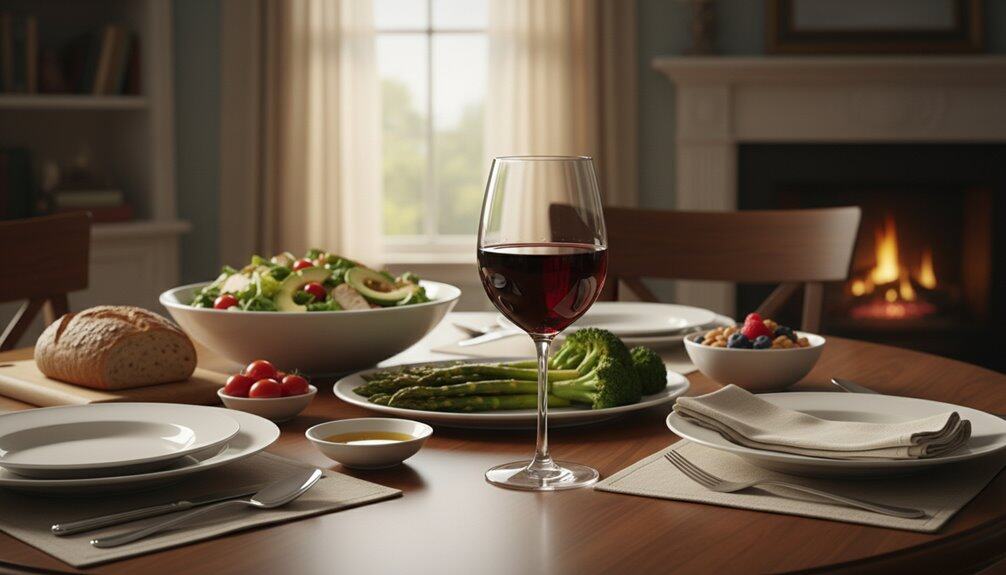
Red Wine Calories: Is a Glass at Dinner Ruining Your Deficit? Sommelier-Backed Facts
That nightly glass of Cabernet you’re pouring contains 125 calories in a standard 5-ounce serving, but you’re probably drinking closer to 175-190 calories since home pours often exceed recommendations by 40-50%. Your body prioritizes burning alcohol over fat, completely halting fat burning until the wine clears your system. Sommeliers balance wine enjoyment with fitness by using smaller glasses, measuring precisely, and choosing lower-alcohol options like Pinot Noir at 121 calories to maintain their calorie deficit.
Table of Contents
Key Takeaways
- A standard 5-ounce pour contains 120-150 calories, but home and restaurant pours often exceed this by 40-100%.
- Alcohol halts fat burning completely until metabolized, making wine calories particularly disruptive to weight loss efforts.
- Wine disrupts gut bacteria that regulate hunger hormones, potentially increasing appetite and calorie intake later.
- Sommeliers recommend limiting to three thoughtful sips, alternating with water, and pairing with protein to minimize caloric impact.
- Lower-calorie options like Pinot Noir (121 calories) or wine spritzers can cut intake by 20-50% while maintaining enjoyment.
The Real Calorie Count in Popular Red Wines and Why Pour Size Matters More Than You Think
You’ve probably poured yourself a glass of red wine without giving much thought to the calories swirling in your glass, but the numbers might surprise you. A standard 5-ounce pour of Cabernet Sauvignon contains about 125 calories, while lighter Pinot Noir sits around 121 calories. Here’s the catch: most home pours exceed serving size recommendations by 40-50%, turning that “one glass” into 175-190 calories.
Wine alcohol percentages directly impact caloric content. Higher-alcohol wines like Zinfandel (15-16% ABV) pack 140-150 calories per standard serving, while lower-alcohol options (12-13% ABV) stay closer to 115 calories. You’re likely underestimating your intake because restaurant pours often reach 6-8 ounces, and those oversized wine glasses at home encourage heavier pours. That generous splash you’re calling one serving? It’s probably closer to two. Track your pour sizes for a week, and you’ll discover you’re consuming 50-100% more calories than expected.
How Your Body Processes Wine Calories Differently Than Food (And Why It Prioritizes Alcohol First)
Your liver converts alcohol into acetaldehyde, then acetate, which becomes your body’s preferred fuel source. Here’s what happens during this process:
- Fat burning stops completely—your body won’t touch fat stores until alcohol clears
- Carbs you’ve eaten get stored instead of burned for energy
- Your metabolic rate temporarily increases by 10-30%, but you’re only burning alcohol
The gut microbiome effects add another layer—wine disrupts beneficial bacteria that regulate hunger hormones, making you crave high-calorie foods. You’ll also absorb nutrients less efficiently for hours after drinking. That seemingly innocent glass doesn’t just add calories; it fundamentally changes how your body processes everything else you’ve consumed.
Smart Strategies Sommeliers Use to Balance Wine Enjoyment With Fitness Goals
Professional sommeliers taste dozens of wines daily yet maintain their health—and they’ve mastered techniques anyone can steal. You’ll benefit from their wine tasting tips: sip slowly, swirl between tastes, and alternate with water. They don’t finish every glass—taking three thoughtful sips tells you everything about a wine’s character.
Smart meal pairing suggestions make all the difference. You’ll maximize satisfaction by matching lighter wines with protein-rich dishes. Sommeliers pair Pinot Noir with grilled salmon or mushroom dishes, letting umami flavors enhance the wine’s complexity while protein slows alcohol absorption.
They also practice the “one-glass rule” at dinner, savoring quality over quantity. You can adopt their pre-dinner strategy: eat a small protein snack before wine service. This creates a buffer that prevents rapid alcohol absorption and reduces overall consumption. Most importantly, they treat wine as an experience rather than a beverage—focusing on aromas, textures, and flavors naturally slows consumption.
Lower-Calorie Red Wine Options and Serving Tricks That Don’t Sacrifice Quality or Experience
Three simple swaps can slash your red wine calories by 30% without compromising taste. You’ll find that Pinot Noir delivers complex flavors at just 120 calories per glass, while Beaujolais offers fruit-forward notes at similar counts. Choosing these over Zinfandel or Port saves you 40-80 calories per serving.
Your appropriate glassware selection matters more than you’d think. Using smaller wine glasses naturally controls portions while maintaining the full sensory experience. You’re not depriving yourself—you’re being strategic.
Master these serving tricks:
- Add sparkling water to create a wine spritzer that cuts calories in half
- Alternate with water between sips to slow consumption and enhance flavor perception
- Measure precisely using a 4-ounce pour instead of eyeballing
Smart food pairing considerations amplify satisfaction too. Pair lighter wines with protein-rich appetizers to feel fuller faster. You’ll drink less while enjoying more. These sommelier-approved adjustments let you maintain your deficit without sacrificing your evening ritual.
Frequently Asked Questions
Does Red Wine Affect Sleep Quality When Consumed During Dinner?
Yes, red wine at dinner can disrupt your sleep quality. While you might fall asleep faster, alcohol fragments your sleep cycles and reduces REM sleep. You’ll experience shorter sleep duration and more frequent wake-ups throughout the night.
Even if you’re choosing high red wine quality, the alcohol content interferes with your body’s natural sleep patterns. You’re better off finishing your glass at least three hours before bedtime.
Can Red Wine Interfere With Nutrient Absorption From Meals?
Yes, red wine can interfere with your meal’s nutrient absorption. The tannins in red wine bind to iron, reducing its bioavailability by up to 90% when you’re eating iron-rich foods.
You’ll also experience decreased antioxidant absorption efficiency from vegetables since wine’s polyphenols compete for the same absorption pathways.
If you’re concerned about nutrient bioavailability concerns, wait at least an hour after eating before drinking wine, or choose white wine instead.
How Long Before Exercising Should I Avoid Drinking Wine?
You’ll want to avoid wine at least 3-4 hours before exercising. Timing alcohol intake matters since wine dehydrates you and impairs coordination, reaction time, and energy levels.
It also disrupts your body’s temperature regulation during workouts. For post exercise hydration, skip the wine immediately after training too – your muscles need water and electrolytes first. Save that glass for later when you’re fully recovered and properly rehydrated.
Does Organic or Biodynamic Wine Contain Fewer Calories Than Conventional?
No, organic and biodynamic wines don’t contain fewer calories than conventional wines. You’ll find the same calorie count because organic wine components like grapes still convert to alcohol during fermentation, which determines caloric content.
Biodynamic wine production methods focus on farming practices and lunar cycles, not reducing sugar or alcohol levels. If you’re counting calories, you’ll need to check the alcohol percentage and residual sugar, regardless of farming method.
Will Red Wine Trigger More Cravings or Late-Night Snacking?
Red wine can trigger wine cravings and late night snacking for some people, but it’s highly individual. You’ll find alcohol lowers inhibitions and impairs judgment, making you more likely to reach for chips or cheese. It also disrupts blood sugar levels, potentially increasing hunger.
However, if you’re mindful and plan ahead with healthy snacks or drink wine with a balanced meal, you can minimize these effects on your eating habits.
Conclusion
You don’t have to give up your evening glass to maintain your deficit. Now that you understand actual pour sizes, how your body prioritizes alcohol calories, and which reds pack less caloric punch, you’re equipped to make smarter choices. Apply these sommelier strategies – measure your pours, choose lighter-bodied wines, and time your consumption wisely. Your fitness goals and wine enjoyment can coexist. It’s about being informed, not abstaining entirely.


No Comments