
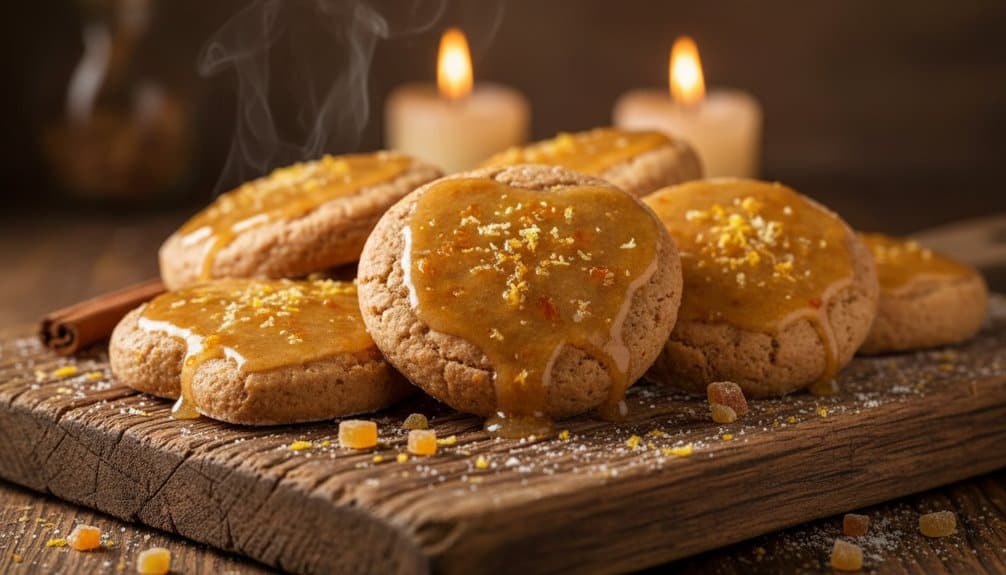
Authentic Lebkuchen Recipe: Soft German Spiced Cookies With Citrus Glaze Like Nuremberg
Authentic Nuremberg lebkuchen differs dramatically from regular gingerbread through its honey-based sweetness, ground almonds replacing most flour, and candied citrus peel additions. You’ll combine almond meal with lebkuchengewürz spices, bind with honey and eggs, then chill overnight before rolling and cutting. Bake at 350°F for 12-15 minutes until edges set, creating soft, cake-like cookies. Brush with citrus glaze while warm for optimal absorption. Proper storage maintains their characteristic chewy texture for weeks, and mastering the traditional techniques reveals countless variations.
Table of Contents
Key Takeaways
- Authentic German lebkuchen uses almond meal instead of flour and honey as the primary sweetener for dense, chewy texture.
- Essential spice blend includes cinnamon, cloves, nutmeg, cardamom, and coriander with candied orange and lemon peel for brightness.
- Nuremberg-style Elisenlebkuchen requires at least 25% nuts with minimal flour for premium authentic texture and flavor.
- Refrigerate dough overnight before rolling to quarter-inch thickness, then bake at 350°F for 12-15 minutes until edges set.
- Apply citrus glaze while cookies are slightly warm for best absorption, creating the traditional soft, glazed finish.
What Makes Traditional Lebkuchen Different From Regular Gingerbread
While both lebkuchen and gingerbread share warming spices like cinnamon and cloves, traditional German lebkuchen sets itself apart through its unique combination of honey, nuts, and candied fruits that create a denser, more complex flavor profile.
You’ll notice lebkuchen contains ground almonds or hazelnuts as a primary ingredient, replacing much of the flour found in regular gingerbread.
This creates a chewy, cake-like texture rather than gingerbread’s crisp snap.
Traditional lebkuchen also relies heavily on honey for sweetness and moisture, while gingerbread typically uses molasses or brown sugar.
Regional variations across Germany showcase lebkuchen’s cultural significance.
Nuremberg’s famous Elisenlebkuchen contains at least 25% nuts with minimal flour, while Aachen’s Printen features a harder texture.
You’ll find lebkuchen often glazed with chocolate or sugar icing and shaped into hearts or rounds, reflecting centuries-old traditions tied to Christmas markets and medieval guild regulations.
Essential Ingredients for Authentic German Lebkuchen
The pantry of authentic lebkuchen holds time-honored ingredients that German bakers have treasured for centuries. You’ll need specific components that create lebkuchen’s distinctive character and separate it from ordinary gingerbread cookies.

Almond meal forms the foundation, replacing much of the flour found in regular cookies. This creates lebkuchen’s dense, moist texture. Candied citrus peel adds brightness and complexity that balances the warm spices.
| Core Ingredients | Purpose |
|---|---|
| Honey | Primary sweetener and moisture source |
| Lebkuchengewürz spice blend | Authentic German spice mixture |
| Candied orange and lemon peel | Citrus brightness and texture |
You’ll also need eggs for binding, minimal flour, and sometimes marzipan for premium varieties. The spice blend typically contains cinnamon, cloves, nutmeg, cardamom, and coriander. These ingredients work together to create lebkuchen’s complex flavor profile that’s been perfected over generations of German baking traditions.
Step-by-Step Instructions for Perfect Lebkuchen Cookies
Creating perfect lebkuchen requires patience and precision, as these traditional cookies develop their signature texture through careful mixing and proper resting time.
Start by combining your dry ingredients in a large bowl, then gradually incorporate honey, molasses, and eggs.
You’ll notice the dough becoming sticky and aromatic. Use a gentle kneading technique to bring everything together without overworking the mixture. The dough should feel slightly tacky but manageable.
Wrap your finished dough tightly and refrigerate overnight. This resting period allows flavors to meld and makes rolling easier.
Roll the chilled dough to quarter-inch thickness on a floured surface. Cut into desired shapes and place on parchment-lined baking sheets. Bake at 350°F for 12-15 minutes until edges are set.
Allow cookies to cool completely before glaze application. Brush with citrus glaze while cookies are still slightly warm for optimal absorption and shine.
Tips for Storing and Serving Your Homemade Lebkuchen
After your lebkuchen cookies have cooled and been glazed, proper storage becomes essential for maintaining their distinctive chewy texture and rich flavor. Store them in an airtight container at room temperature for up to two weeks.
Layer cookies between parchment paper to prevent sticking. For longer storage, freeze them for up to three months.

Packaging Tips: Wrap individual cookies in cellophane for gift-giving, or arrange them in decorative tins lined with wax paper. Include a small piece of bread or apple slice in the container to maintain moisture levels.
Pairing Suggestions: Serve your lebkuchen with hot mulled wine, coffee, or black tea during winter months. They’re perfect alongside other Christmas cookies or as part of a holiday dessert platter.
You can also crumble them over vanilla ice cream or incorporate pieces into bread pudding for creative dessert variations.
Frequently Asked Questions
Can I Make Lebkuchen Without Nuts Due to Allergies?
Yes, you can definitely make lebkuchen without nuts. For nut free substitutions, replace ground almonds with additional flour, breadcrumbs, or ground sunflower seeds.
You’ll need allergy safe binders like extra eggs or honey to maintain the cookies’ texture.
Increase your spices slightly since nuts add flavor depth.
The cookies will still be delicious and authentically spiced without compromising safety.
How Far in Advance Can I Prepare Lebkuchen for Christmas?
You can prepare lebkuchen up to 4-6 weeks before Christmas for optimal results. The storage duration actually improves their taste through flavor maturation – the spices meld beautifully over time, creating deeper, more complex flavors.
Store them in airtight containers at room temperature, separating layers with parchment paper. They’ll stay soft and become even more delicious as Christmas approaches, making advance preparation highly recommended.
What’s the Best Way to Ship Homemade Lebkuchen as Gifts?
You’ll want to use airtight containers or vacuum-sealed bags first, then place them in sturdy boxes with insulated packaging like bubble wrap or foam inserts.
Ship via expedited delivery to minimize transit time and maintain freshness. Consider purchasing transit insurance for valuable shipments.
Include gel packs during warm weather, and clearly label packages as “fragile” and “perishable food items” for careful handling.
Can I Substitute Honey With Maple Syrup in Lebkuchen?
You can substitute maple syrup for honey in lebkuchen, but expect significant flavor differences.
Maple syrup will create a more caramel-like, woodsy taste instead of honey’s floral sweetness.
The texture impact includes slightly denser cookies since maple syrup contains less fructose than honey.
You’ll also lose some of lebkuchen’s traditional character.
If substituting, use equal amounts and reduce other liquids slightly.
Why Do My Lebkuchen Cookies Turn Out Too Hard?
Your lebkuchen cookies turn hard because you’re either overbaking them or working with underhydrated dough.
You’ve likely baked them too long – lebkuchen should feel slightly soft when you remove them from the oven.
Alternatively, your dough might lack enough moisture from honey or other wet ingredients.
Check your baking time and ensure you’re measuring liquid ingredients accurately for proper dough hydration.
Conclusion
You’ve mastered the art of authentic German lebkuchen! These aromatic spiced cookies capture the essence of traditional Nuremberg treats with their tender texture and zesty citrus glaze. Don’t rush the aging process – your lebkuchen will develop deeper flavors over time. Share them with loved ones during the holidays or enjoy them year-round as a delightful reminder of German baking heritage. You’ll find yourself returning to this cherished recipe again and again.


No Comments