
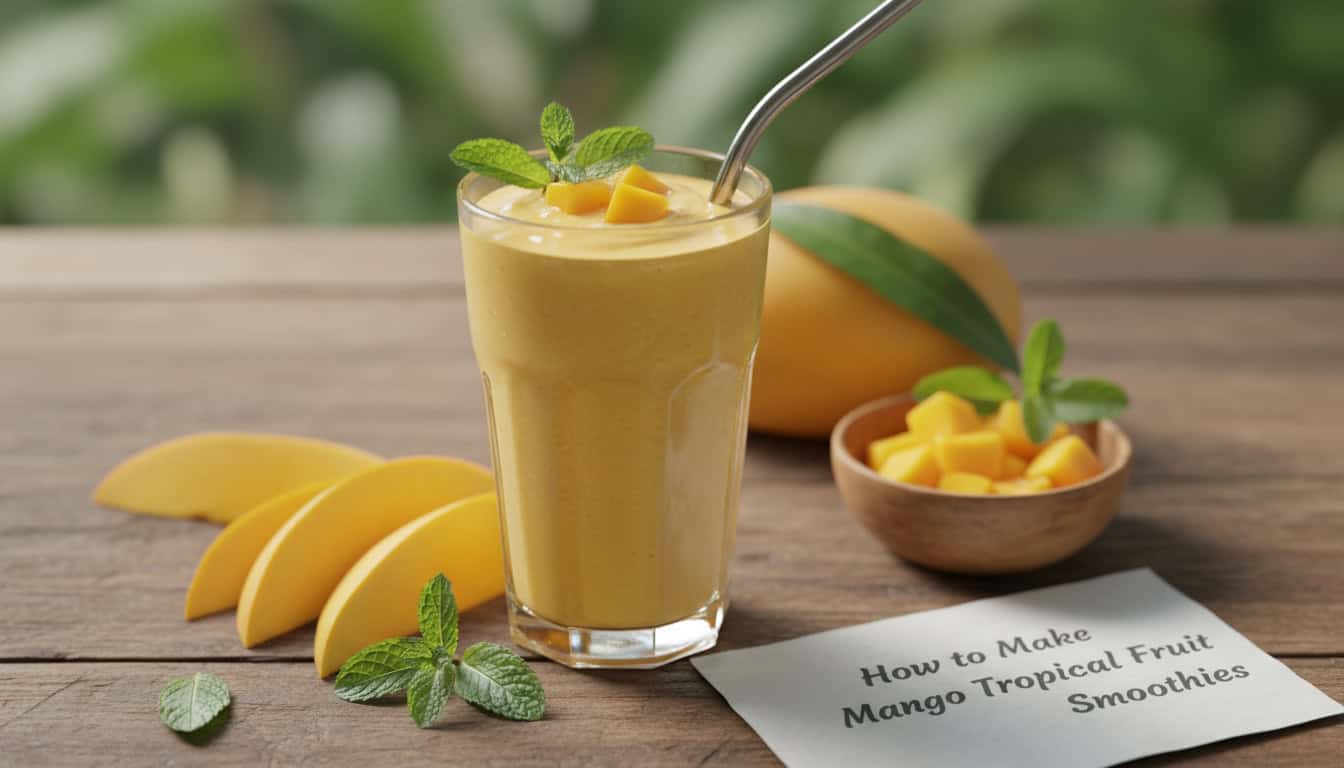
How to Make Mango Tropical Fruit Smoothies
Start by blending a high‑fat liquid base—unsweetened almond milk, coconut milk, or vanilla Greek yogurt—until silky. Add frozen mango, a ripe banana, and a splash of orange juice, then blend on medium‑high for 30‑45 seconds. Toss in ice cubes and a pinch of xanthan gum or honey to thicken and keep the emulsion stable. Adjust thickness with a bit more milk if needed, and finish with a drizzle of honey or lime for brightness. Keep going for extra tips on protein boosts, fiber seeds, and storage tricks.
Table of Contents
Choose the Ideal Mango Liquid Base
Why settle for a bland liquid when you can boost flavor, nutrients, and texture? You’ll want a base that complements mango’s sweetness while adding body and health benefits. Unsweetened almond milk delivers a low‑calorie, dairy‑free canvas that lets mango shine and contributes extra vitamin E. If you crave richer mouthfeel, coconut water adds electrolytes and a subtle tropical note without overwhelming the fruit. For a protein punch, blend in a splash of vanilla Greek yogurt; it thickens the drink and supplies calcium and probiotics. When you need a dairy‑free protein boost, choose oat milk—its creamy texture pairs well with mango and supplies modest fiber. Remember to keep the liquid ratio around 1 cup per serving; too much thins the smoothie, too little makes it gritty. Adjust the amount based on desired thickness, then blend until smooth for a balanced, vibrant mango tropical fruit smoothie.
Blend Mango, Banana, and Orange Juice for a Classic Smoothie
A classic mango‑banana‑orange smoothie comes together in just a few steps. First, pour the orange juice into the blender’s base; it creates a liquid vortex that pulls the fruit down. Next, add frozen mango pieces and a ripe banana. The mango supplies natural sweetness and thickness, while the banana contributes creaminess and potassium. Secure the lid and blend on medium‑high for 30‑45 seconds, stopping to scrape the sides if needed.
If the mixture looks too thick, drizzle a little more orange juice or almond milk until you reach a pourable consistency.
Taste and adjust—add a pinch of honey or a splash of lime if you want extra brightness. Once smooth, pour the drink into a glass, garnish with a mint leaf or a slice of orange if desired, and enjoy the vibrant, vitamin‑C‑rich classic.
Create a Creamy Texture With Ice and Milk Ratios
Wondering how to achieve that ultra‑smooth, velvety sip? Start by measuring milk before ice. Use ½ cup of unsweetened almond milk for a thick base; add another ¼ cup if you prefer a looser texture. Then toss in ½ cup of ice cubes. Ice chills the blend and creates a silk‑like mouthfeel without watering down flavor. If the mixture feels too dense, drizzle an extra 2‑3 Tbsp of milk and pulse briefly. For a richer creaminess, replace half the almond milk with cold coconut milk or a splash of dairy milk—this adds fat that coats the palate. Keep the ice to a minimum when using frozen mango, because the fruit already contributes bulk. Finally, blend on high for 30‑45 seconds, then pause to scrape the sides and blend again. The result should coat smooth, thick, and cool, ready for that perfect tropical sip.
Add Yogurt, Protein Powder, or Nut Butter to Boost Protein & Healthy Fats
Adding a scoop of vanilla Greek yogurt, plant‑based protein powder, or a spoonful of almond butter instantly lifts the smoothie’s protein count and introduces healthy fats, turning a refreshing treat into a satisfying, nutrient‑dense snack. You’ll notice a creamier texture when the yogurt’s casein proteins thicken the blend, while the powder’s high‑quality whey or pea protein adds muscle‑supporting amino acids without extra sugar. Almond butter contributes monounsaturated fats that keep you full longer and lend a subtle nutty aroma.
Aim for 4–6 g protein from yogurt, 15–20 g from powder, or 3–5 g from a tablespoon of butter, depending on your dietary goals. Balance the added calories—Greek yogurt adds about 80 kcal, protein powder 100 kcal, and almond butter roughly 95 kcal per serving.
Mix these boosters after the fruit and ice are blended, then give the blender a quick pulse to fully integrate the nutrients, ensuring a smooth, thick finish.
Fold in Fiber‑Rich Seeds for Omega‑3s and Extra Satiety
When you fold in fiber‑rich seeds like flaxseed or chia, you boost omega‑3s and keep hunger at bay. Sprinkle a tablespoon of ground flaxseed or three teaspoons of whole chia seeds into the blended mango‑banana mixture. The seeds’ mucilage swells, thickening the drink while delivering 2–3 g of soluble fiber per serving. This extra fiber slows glucose absorption, stabilizing energy and extending satiety. Omega‑3 fatty acids from flaxseed support heart health and reduce inflammation, complementing the smoothie’s vitamin‑C and potassium profile.
If you prefer a crunchier texture, add the seeds after blending and give the cup a quick stir; the seeds will soften slightly but retain a pleasant bite. Remember to hydrate—seeds absorb liquid, so you may need a splash more almond milk or water to achieve your desired consistency. This simple step upgrades nutrition without adding sugar or calories.
Adjust Sweetness and Acidity With Citrus, Mint, or Natural Sweeteners
A splash of citrus, a handful of mint, or a drizzle of natural sweetener can instantly fine‑tune the flavor of your mango smoothie without adding refined sugar.
Start with a tablespoon of freshly squeezed lime or lemon juice; the bright acidity cuts the mango’s natural sweetness and awakens the vitamin C punch.
If you prefer a milder tang, use orange juice, which adds a subtle sweetness while keeping the pH balanced.
For a refreshing twist, bruise a few mint leaves and stir them in after blending; the herb’s cool note complements the tropical fruit and masks any bitterness from added protein powders.
When you need extra sweetness, reach for natural options like honey, agave, or maple syrup—just a teaspoon or two will lift the flavor without overwhelming the fruit’s profile.
Taste as you go, adjusting citrus, mint, or sweetener until the smoothie hits your perfect sweet‑acid balance.
How to Store, Freeze, and Re‑Blend Your Mango Smoothie Without Losing Flavor
Ever wondered how to keep your mango smoothie tasting fresh after you’ve made it? Store it right, freeze it smart, and re‑blend without sacrificing that bright, tropical zing. First, transfer the smoothie into a clean, airtight jar, leaving a half‑inch headspace for expansion. Keep it in the fridge for up to 24 hours; a quick stir or shake before you sip brings back the original texture. When you need longer storage, pour the blend into freezer‑safe containers, seal tightly, and label with the date. Thaw overnight in the fridge, not at room temperature, to preserve flavor and prevent separation. Finally, re‑blend with a splash of fresh juice or a few ice cubes to restore creaminess.
Key steps for flavor‑preserving storage
- Airtight jar, ½‑inch headspace.
- Refrigerate ≤ 24 h, shake before drinking.
- Freeze in sealed containers, label date.
- Thaw in fridge, add juice/ice, re‑blend.
Troubleshoot Grainy Texture, Separation, and Over‑Dilution
You’ll notice a grainy texture when the mango isn’t fully blended or when too much high‑fiber add‑in overwhelms the liquid.
To keep the smoothie from separating, blend the liquids first, then add the frozen fruit and ice in a steady stream.
If it feels over‑diluted, cut back on the juice or ice and increase the fruit‑to‑liquid ratio for a richer mouthfeel.
Grainy Texture Causes
Why does your mango smoothie sometimes feel grainy, separate, or overly thin? The culprit often lies in ingredient preparation and blending order. Grainy texture usually stems from undissolved powders, frozen fruit crystals, or excess ice that hasn’t been fully emulsified. Here’s how to pinpoint the cause:
- Protein or fiber powders – if they clump before blending, they leave gritty bits.
- Frozen mango chunks – large crystals can break into sand‑like particles when the blender stalls.
- Ice cubes – too many or too large create a watery, grainy mouthfeel.
- Insufficient liquid – a thin base prevents proper suspension, making solids settle and feel coarse.
Adjust powder timing, use smaller ice, and ensure a liquid‑first blend to keep your smoothie silky.
Preventing Separation Issues
Between the blender’s whirl and the cup’s chill, separation happens when solids and liquids fail to stay emulsified. To keep your mango smoothie uniform, start with a high‑fat base—almond milk, Greek yogurt, or a splash of coconut milk—because fat stabilizes the emulsion. Add a tablespoon of honey or a pinch of xanthan gum; both increase viscosity and bind water. Blend the liquid first, then the frozen mango and banana, and finally the ice; this order prevents large ice shards from pushing liquid to the surface. If you notice a watery layer after sitting, give the cup a quick shake or stir with a straw. Avoid over‑dilution by limiting extra juice; a ¼‑cup addition is enough for flavor without breaking the texture.
Frequently Asked Questions
Can I Use Fresh Mango Instead of Frozen Without Affecting Texture?
Yes, you can use fresh mango, but you’ll need extra ice or a splash of cold liquid to keep the texture thick and frosty, otherwise the smoothie may turn out thinner and less chilled.
What’s the Best Way to Keep the Smoothie From Separating Overnight?
You’ll prevent separation by adding a splash of lemon juice or a pinch of xanthan gum, then store it in a sealed jar and give it a vigorous shake before drinking.
How Many Servings Does a Typical Recipe Yield?
You’ll get roughly four servings per batch, assuming a standard two‑cup recipe. If you double the ingredients, you’ll end up with eight portions, perfect for a family brunch or meal‑prep.
Is It Safe to Add Raw Honey for Extra Sweetness?
You can safely add raw honey for extra sweetness, but keep it under a tablespoon per serving to avoid excess sugar, and stir it in after blending so it dissolves evenly without overheating.
Can I Substitute Dairy Milk for Oat Milk Without Changing Nutrition?
Yes, you can swap dairy milk for oat milk and keep protein fiber fiber, carbs and calories similar; you’ll lose some calcium and vitamin D unless you choose fortified oat milk, but overall nutrition stays close.
Conclusion
Enjoy your mango tropical smoothie as a refreshing, nutrient‑packed treat any time of day. By mastering the perfect liquid base, balancing fruit, dairy, and protein, and adding fiber‑rich seeds, you’ll achieve a silky texture and lasting energy. Adjust sweetness and acidity to taste, then store or freeze for future sips without losing flavor. With these tips, you’ll consistently create a delicious, satisfying smoothie that fuels your body and delights your palate.


Sorry, the comment form is closed at this time.