
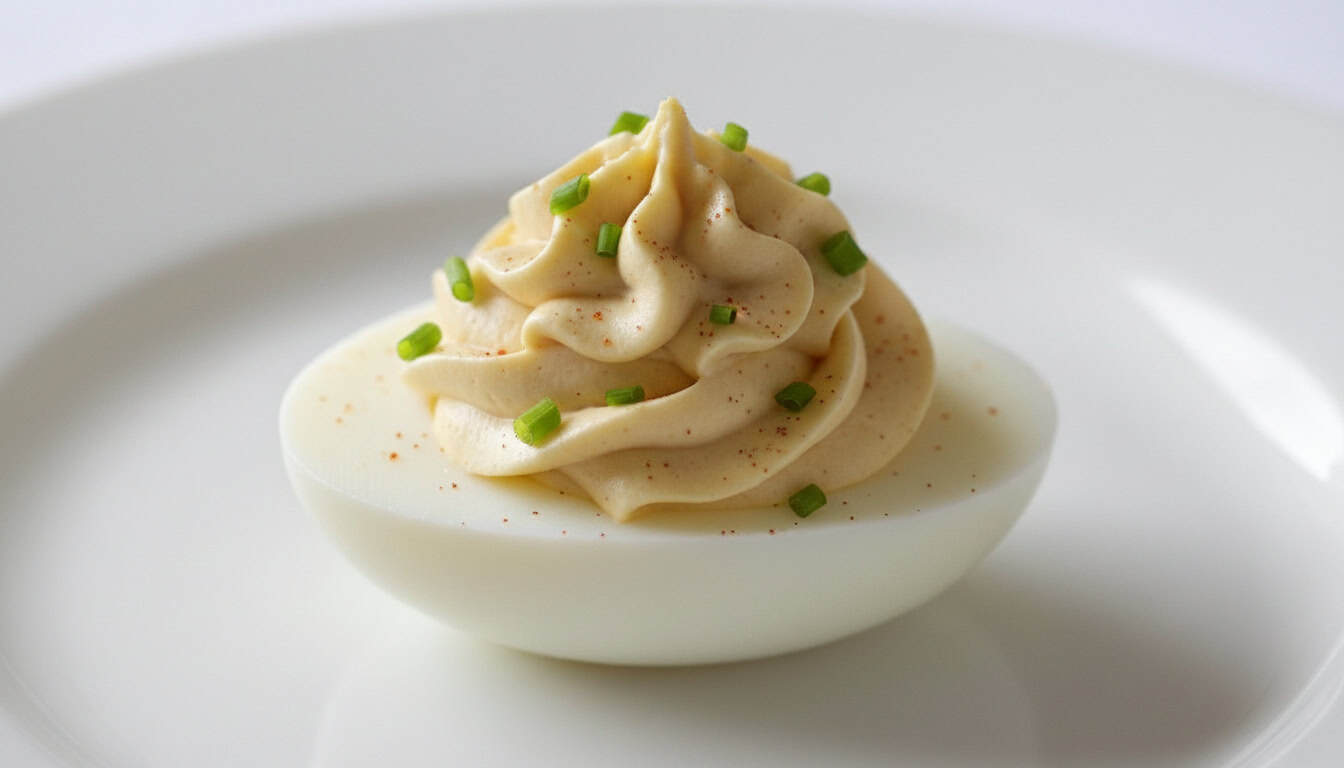
How Many Calories Are In One Deviled Egg?
A single deviled‑egg half typically packs about 70–80 kcal, mostly from the 5–7 g of fat (around 74 % of its calories) and roughly 3–4 g of protein, with virtually no carbs. Saturated fat hovers near 2 g and cholesterol can hit 200 mg per half, while sodium sits around 250 mg. If you tweak the mayo amount, add bacon, or use larger eggs, the count shifts—so adjusting the mix‑ins or portion size will change the total calories you consume. Keep reading to discover how to fine‑tune those numbers for your own serving.
Table of Contents
How Many Calories Are in a Single Deviled‑Egg Half?
Ever wonder how many calories a single deviled‑egg half packs? You’ll find it falls between 60 and 90 kcal, depending on the recipe’s mayo‑to‑mustard ratio and any added toppings. A typical half‑egg delivers roughly 74 % of its calories from fat, 23 % from protein, and a tiny 3 % from carbs. That means about 5–7 g of fat, 3–4 g of protein, and less than half a gram of carbs per half. The saturated fat content hovers around 2 g, while cholesterol can reach 200 mg. If you’re tracking macros, note that the half‑egg supplies roughly 6 g of high‑quality protein and a modest dose of choline, which supports brain function. Sodium is another factor, with about 250 mg per half, so you may want to balance it with lower‑sodium foods. Overall, the half‑egg is a nutrient‑dense, low‑carb snack that fits well into keto or low‑carb plans, but its fat and cholesterol levels call for moderation.
What Factors Change Deviled‑Egg Calories?
What makes deviled‑egg calories swing? It’s the ingredients you choose, the portion size you serve, and the tweaks you make in the filling. You can keep the base egg constant, but every added flavor, fat source, or garnish shifts the calorie count. Understanding these levers helps you control the snack’s energy load without sacrificing taste.
- Mayonnaise amount – swapping a tablespoon for a low‑fat alternative can shave 30–40 kcal.
- Additional mix‑ins – bacon bits, cheese, or avocado add extra fat and calories.
- Egg size – a large egg delivers roughly 30 kcal more than a medium one.
- Seasoning choices – sugar‑based sauces boost carbs, while herbs add negligible calories.
- Portion format – serving whole halves versus a cup changes the total calorie tally dramatically.
How Can I Calculate Deviled‑Egg Calories for My Own Serving?
Want to know exactly how many calories your deviled‑egg serving contains? First, count the halves you’ll eat. Multiply each half by the average 75 kcal (midpoint of 60–90 kcal).
If you use a recipe that adds extra mayo or bacon, add those ingredients’ calories per tablespoon or slice. Use nutrition labels: a tablespoon of mayo ≈ 90 kcal, a slice of bacon ≈ 45 kcal.
Add the totals, then adjust for any garnish like paprika (negligible). For a whole egg (two halves), the base is about 150 kcal; a cup (≈136 g) is roughly 305 kcal, so scale proportionally if you serve a different weight.
Remember fat supplies ~74 % of calories, so a high‑fat addition will boost the count quickly. Write down each component, apply the per‑unit values, sum them, and you’ll have an accurate calorie count for your custom portion.
Frequently Asked Questions
How Does the Type of Filling Affect Deviled‑Egg Calorie Count?
You’ll see calories rise when you add mayo, cheese, or bacon because those ingredients pack extra fat and protein; lighter fillings like mustard or herbs keep the count near the basic 60‑90 kcal per half‑egg.
Are Deviled‑Egg Calories Different When Using Whole‑Grain vs. Regular Mustard?
You’ll notice barely any calorie difference—whole‑grain mustard adds about 1–2 kcal per teaspoon, so a deviled egg’s total stays roughly the same, give or take a couple of calories.
What Impact Does the Size of the Egg (Small, Medium, Large) Have on Calories?
You’ll find that a small deviled half runs about 80 kcal, a medium around 115 kcal, and a large roughly 150 kcal, because the yolk and filling scale with egg size.
Do Storage Conditions (Refrigerated vs. Room Temperature) Change the Calorie Content?
You won’t see any calorie shift when you store deviled eggs refrigerated versus at room temperature; temperature only affects safety and texture, not the energy content of the egg.
Can Adding Herbs or Spices Significantly Alter the Overall Calorie Count?
You won’t notice a big change; herbs and spices add virtually no calories, so a deviled egg’s count stays roughly the same unless you dump in calorie‑dense sauces or extra oil.
Conclusion
You’ve seen that a half deviled egg typically runs about 60–70 calories, but the exact count hinges on the filling, size, and any extra toppings you add. By breaking down the ingredients and using a simple calorie‑calculator, you can tailor the numbers to your own recipe. Keep these factors in mind, and you’ll always know exactly how many calories you’re enjoying in each bite.


Sorry, the comment form is closed at this time.