
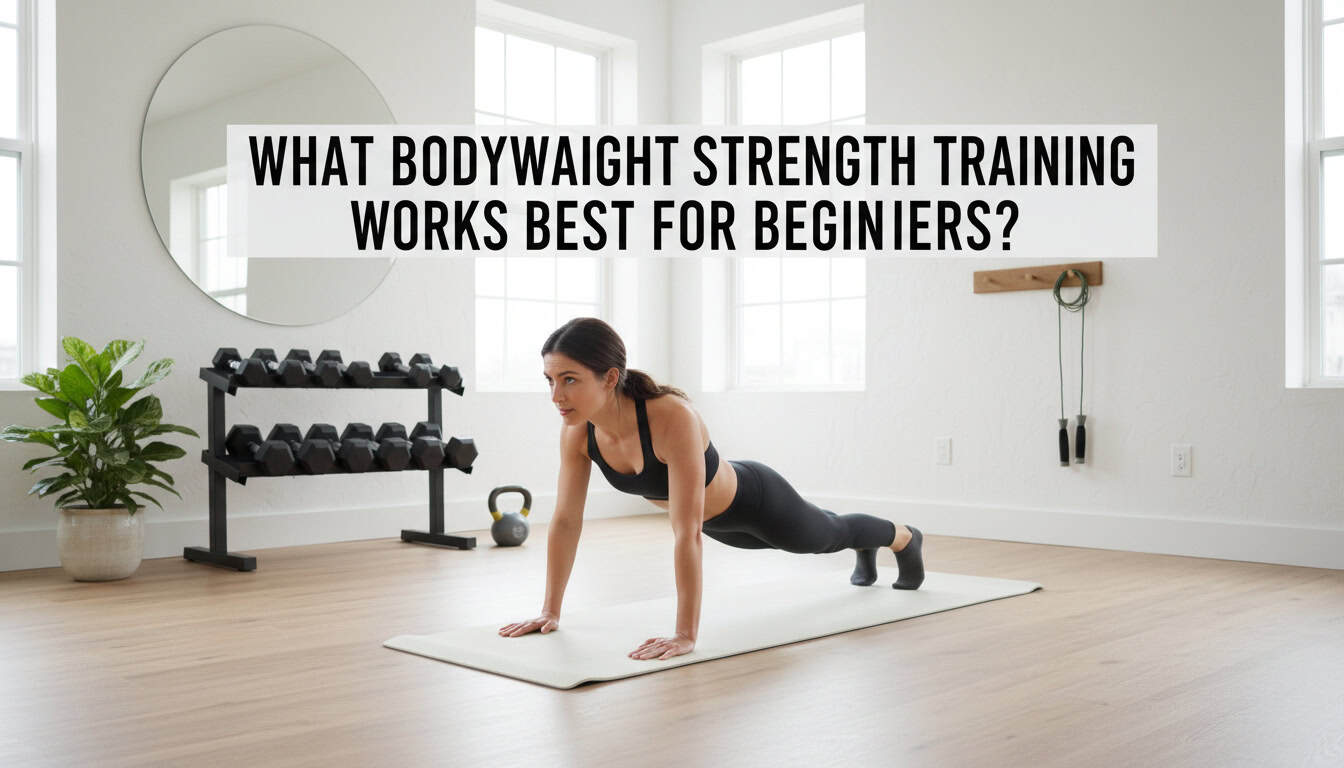
What Bodyweight Strength Training Works Best Beginners?
You’ll get the fastest strength gains by mastering a handful of core bodyweight moves that need no equipment and scale naturally. Start with push‑ups, bodyweight squats, inverted rows, and walking lunges for upper‑ and lower‑body strength, while planks, dead‑bugs, bird‑dogs, and glute bridges build a solid core foundation. Adjust intensity with tempo, leverage, or reps, and keep the routine short and consistent. Keep these basics tight, and you’ll discover even more effective progressions and tracking tips.
Table of Contents
Why Bodyweight Training Works Best for Beginners
Why is bodyweight training the go‑to for beginners? You’ll find it requires no equipment, so you can start at home or in a park without spending a dime. The movements use your own mass, giving you natural resistance that scales as you get stronger. You can easily adjust intensity by changing leverage, tempo, or repetitions, keeping progress steady. Because you’re moving in functional patterns—pushes, pulls, squats, and hinges—you build coordination and balance that translate to everyday tasks. The low impact on joints reduces injury risk, making it safe for those new to exercise. Plus, the simplicity of the exercises means you spend less time learning technique and more time actually working out. You’ll see quick improvements in strength, endurance, and confidence, which fuels motivation to keep going. In short, bodyweight training offers an accessible, adaptable, and effective foundation for anyone starting their fitness journey.
Core Bodyweight Moves Every Newbie Should Master
Having seen how bodyweight training fits beginners, let’s focus on the core moves that build a solid foundation. Mastering these basics boosts stability, improves posture, and primes you for more advanced exercises. You’ll feel stronger faster when you consistently practice proper form and engage the right muscles. Keep the tempo steady, breathe through each rep, and progress by adding reps or extending the range of motion.
- Plank – hold a straight line from head to heels, engage the core, and avoid sagging hips.
- Dead‑Bug – lie on your back, extend opposite arm and leg, then switch, maintaining a neutral spine.
- Bird‑Dog – from all fours, extend one arm and opposite leg, hold briefly, then alternate.
- Glute Bridge – lift hips toward the ceiling, squeeze glutes at the top, and lower with control.
These four movements target the anterior, posterior, and lateral core, giving you a balanced, functional base for any bodyweight routine.
Starter 20‑Minute Full‑Body Bodyweight Routine
Usually, you can hit every major muscle group in just twenty minutes by cycling through a series of compound bodyweight moves with short rest intervals. Begin with a 30‑second warm‑up: jumping jacks or high knees to raise your heart rate. Move straight into a circuit: 45 seconds of push‑ups, 15 seconds rest; 45 seconds of bodyweight squats, 15 seconds rest; 45 seconds of inverted rows (using a sturdy table or bar), 15 seconds rest; 45 seconds of walking lunges, 15 seconds rest; 45 seconds of plank shoulder taps, 15 seconds rest. Repeat the circuit twice, aiming for steady, controlled tempo. Finish with a 30‑second cool‑down stretch focusing on chest, quads, back, and shoulders. Keep the intensity high by minimizing idle time, but listen to your body—if a movement feels too tough, shorten the work period or modify the range of motion. Consistency and proper form will build a solid strength foundation.
Bodyweight Progression: Easy → Intermediate Variations
Ever wondered how to turn basic bodyweight moves into tougher challenges without equipment? You can stack difficulty by tweaking leverage, range of motion, or tempo, turning a simple squat into a pistol‑squat progression or a knee‑push‑up into a decline push‑up. Start with the easy version, master the form, then add one variable at a time. This method keeps you progressing safely while constantly recruiting fresh muscle fibers.
- Squat → Bulgarian Split Squat → Pistol Squat – add single‑leg load and deeper flexion.
- Knee‑Push‑Up → Standard Push‑Up → Decline Push‑Up – raise foot elevation to increase shoulder demand.
- Plank → Side Plank with Leg Lift → Plank Walk‑Outs – introduce lateral stability and dynamic movement.
- Glute Bridge → Single‑Leg Bridge → Hip Thrust with Feet Elevated – shift from both‑leg to unilateral loading and increased hip extension.
Common Bodyweight Mistakes That Sabotage Strength Gains
If you skip progressive overload, your muscles never get the stimulus they need to grow.
Poor form on basic moves can turn a simple push‑up into a shoulder injury.
Ignoring a full range of motion leaves strength gaps that stall progress.
Skipping Progressive Overload
Why do you keep hitting a wall despite consistent workouts? You’re probably skipping progressive overload, the engine that drives strength gains. When you repeat the same reps and sets without increasing difficulty, your muscles adapt and stop growing. This stall feels like a plateau, but it’s simply your body telling you it’s time to raise the bar.
- Add a few extra reps each week.
- Increase the lever length (e.g., elevate feet for push‑ups).
- Incorporate harder variations (pistol squats, archer pull‑ups).
- Use weighted vests or backpacks for added resistance.
Poor Form on Basics
When you perform a push‑up with hips sagging or a squat with knees caving inward, you’re not just looking sloppy—you’re undermining the very muscles you’re trying to strengthen. That misalignment forces your lower back or inner thighs to compensate, reducing load on the chest, shoulders, glutes, and quads. You also risk joint stress and injury. To fix it, keep a straight line from head to heels in push‑ups and push your knees outward in squats, engaging the core and glutes. In planks, avoid a dropped pelvis; tighten abs and glutes. For lunges, step far enough that the front knee stays above the ankle. Consistently checking alignment before each rep ensures every repetition truly builds strength.
Neglecting Full Range
Ever notice how many bodyweight routines stop short of the top or bottom of a movement? Skipping the full range limits muscle stretch, reduces joint mobility, and stalls strength gains. When you only go halfway, you’re training a narrow portion of the muscle curve, leaving the rest under‑worked. That partial effort also makes it easier to cheat, compromising form and increasing injury risk. To truly build functional strength, you need to move through the complete arc each rep, feeling tension from start to finish.
- Push‑ups: lower chest to floor, fully extend elbows at top
- Squats: sit back until thighs are parallel or deeper, stand tall
- Pull‑ups: hang with arms fully extended, pull chin above bar
- Dips: descend until shoulders are below elbows, lock out at top
Tracking Bodyweight Progress Without a Gym Log
You can keep track of your gains with quick daily check‑ins, noting how many reps or how long you hold each move. Pair that with a simple visual progress photo log to see muscle tone and posture changes over weeks. These two habits give you clear, gym‑free evidence of improvement without any bulky spreadsheets.
Simple Daily Check‑Ins
Wondering how to gauge your strength gains without a bulky notebook? You can use quick, mental checks that fit into any routine.
Before each workout, note how many reps you can crank out of a core move—push‑ups, squats, or planks. Compare today’s count to yesterday’s; a rise of two or three reps signals progress.
Pay attention to how the exercise feels: does it feel easier, or can you hold a plank longer without shaking?
Track perceived effort on a 1‑10 scale; a lower number means you’re getting stronger.
These tiny data points add up, giving you a clear picture without ever opening a log.
- Count reps of a staple exercise each day
- Record hold time for static moves (plank, wall‑sit)
- Rate perceived exertion on a 1‑10 scale
- Note any reduction in form breakdown or wobble
Visual Progress Photo Log
A quick mental check‑in can tell you when it’s time to capture a visual snapshot of your progress. Take a photo every two weeks, same lighting, same pose, same time of day. Use a plain background and wear fitted clothing so changes in muscle tone and posture are clear. Store images in a dedicated folder or app, labeling each with the date and a brief note about your workout focus that week. Compare side‑by‑side to spot subtle gains—tightening shoulders, deeper squats, fuller arms. The visual record reinforces motivation, highlights what works, and flags plateaus before they become discouraging. By treating the photo log as a simple, low‑cost alternative to a gym journal, you keep tracking consistent without extra equipment.
Mobility Work to Speed Up Bodyweight Recovery
Ever wondered why sore muscles linger after a bodyweight session? You’re probably skipping mobility work, which is the secret sauce for faster recovery and smoother movement patterns. By dedicating a few minutes each day to dynamic stretches and joint‑centric drills, you’ll increase blood flow, reduce stiffness, and keep your nervous system primed for the next workout. This isn’t about yoga poses; it’s about targeted motions that unlock the muscles you just taxed. Consistency beats intensity—simple, repeatable routines will keep you limber, lower injury risk, and let you train more often without the dreaded ache.
- Hip flexor circles to open the pelvis and improve squat depth
- Scapular wall slides for shoulder stability and pull‑up readiness
- Ankle dorsiflexion stretches to enhance balance and lunges
- Thoracic spine rotations to increase rotational mobility for push‑up variations
When to Enhance Bodyweight Workouts With Minimal Equipment
When should you bring a pull‑up bar, resistance band, or weighted vest into your routine? As soon as you can complete your bodyweight sets with perfect form and minimal fatigue, it’s time to add a tool that extends the stimulus. If you’re hitting a plateau in push‑ups, dips, or squats, a band can provide extra resistance or assistive support to keep the movement challenging. When pull‑ups feel too easy or you can’t finish a set, a bar lets you progress to weighted hangs or negatives. A vest adds uniform load, perfect for increasing the difficulty of lunges, planks, and burpees without altering technique. Introduce equipment gradually—one item at a time, two to three weeks of adaptation before adding another. Track reps, tempo, and perceived effort; when those metrics stop improving, upgrade the load. This measured approach preserves form, prevents injury, and accelerates strength gains.
Frequently Asked Questions
Can I Lose Fat Faster With Bodyweight Training?
You can lose fat faster with bodyweight training if you combine high‑intensity circuits, progressive overload, and a calorie‑controlled diet, because it boosts metabolism, burns calories, and preserves muscle while you shed weight.
How Many Days per Week Should Beginners Train?
You should train three days a week, giving yourself a day of rest between sessions. This schedule lets you recover, build strength, and stay consistent without overloading your muscles or joints.
Should I Eat Protein Before or After Workouts?
You should aim to consume protein both before and after your workouts—about 15‑20 grams 30 minutes prior for energy and muscle protection, and another 20‑30 grams within two hours post‑exercise for recovery.
What Shoes Are Best for Bodyweight Exercises?
You’ll want flat, flexible trainers with a thin sole and good grip—think minimalist or cross‑training shoes. Avoid heavy cushioning or excessive arch support, as they can hinder balance and movement control.
Can I Combine Yoga With a Bodyweight Strength Plan?
Yes, you can blend yoga with a bodyweight strength plan; just schedule yoga on recovery days or after lighter strength sessions, focus on flow that stretches worked muscles, and keep intensity balanced.
Conclusion
You’ve seen why bodyweight training’s perfect for beginners: it’s cheap, flexible, and builds functional strength fast. Master the core moves, follow the 20‑minute routine, and progress with easy‑to‑hard variations. Avoid common mistakes, track your reps, and add mobility work to keep recovery smooth. When you’re ready, sprinkle in a few pieces of minimal equipment for extra challenge. Stick with it, stay consistent, and watch your strength soar.


Sorry, the comment form is closed at this time.