
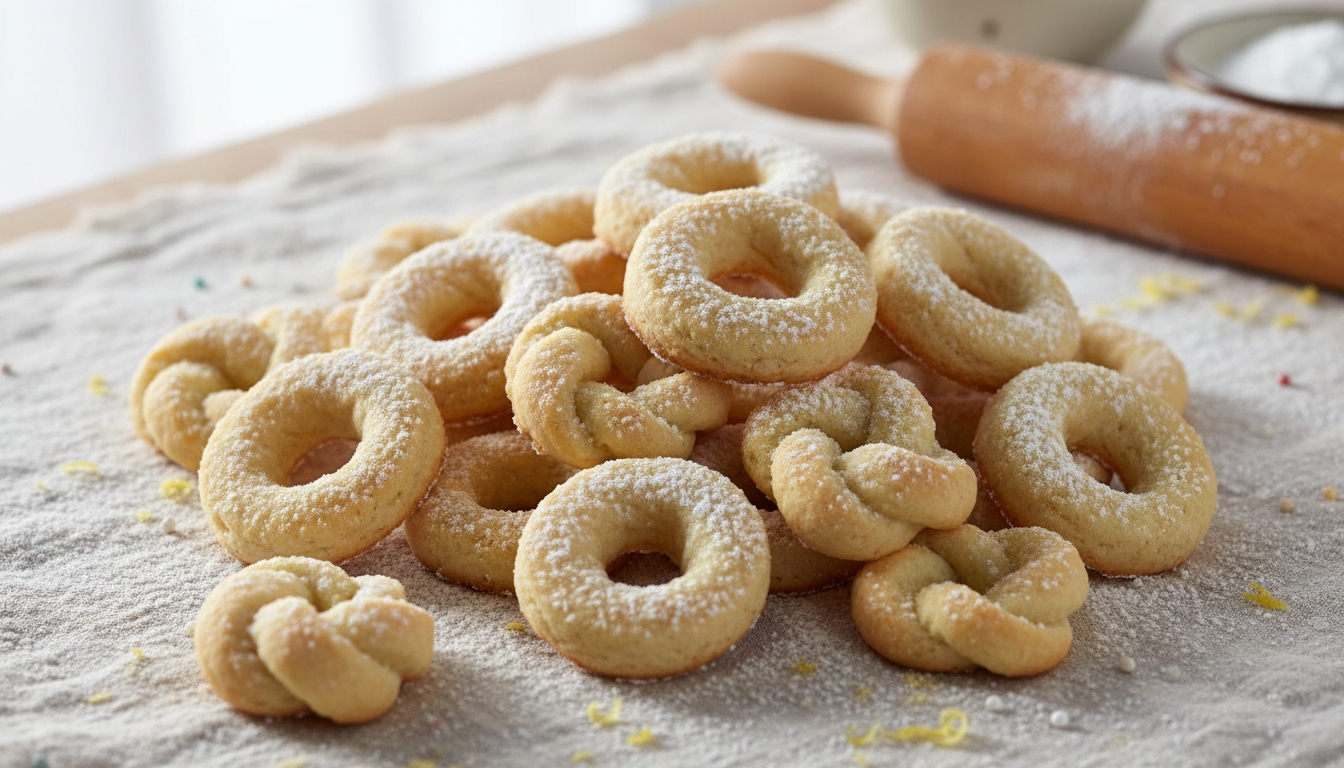
You’ll start by softening butter and beating it with sugar until fluffy, then whisk in eggs, vanilla, and almond extracts. Sprinkle in baking powder, fold in flour, and form a smooth dough, then scoop or roll uniform shapes onto a parchment‑lined sheet. Bake at 350 °F for 10–12 minutes until the edges turn light amber and the centers stay soft. While the cookies cool, whisk milk, melted butter, vanilla, almond, and powdered sugar into a glossy glaze, drizzle it on, and finish with pastel sugar or nuts. Keep going for more tips and variations.
Table of Contents
Key Takeaways
- Preheat oven to 350 °F, line a sheet with parchment, and space dough pieces two inches apart.
- Cream softened unsalted butter with one cup sugar until fluffy, then whisk in three eggs, vanilla, and almond extracts.
- Fold in one tablespoon baking powder and three‑and‑half cups all‑purpose flour to form a smooth dough; chill 30 minutes before shaping.
- Bake 10‑12 minutes until edges turn light amber while centers stay soft; cool on sheet briefly, then transfer to a rack.
- Prepare a glossy glaze by whisking milk, melted butter, vanilla, almond extract, and powdered sugar; drizzle on cooled cookies and let set.
How to Prepare Authentic Italian Easter Cookies
How do you capture the festive spirit of Italy in a single bite? You start by gathering the basics from classic easter cookie recipes, then follow a precise rhythm.
Preheat the oven to 350 °F and line a sheet with parchment. Soften butter, then beat it with sugar until fluffy; whisk in eggs, vanilla, and almond extracts. Sprinkle in baking powder, stir, and gradually fold in flour until a smooth dough forms. Scoop or roll the dough into uniform shapes, space them evenly, and bake 10–12 minutes until edges turn golden.
While they cool, whisk milk, melted butter, vanilla, almond, and powdered sugar into a glossy frosting. Drizzle or pipe the frosting onto each cookie, letting it set before serving. A quick sprinkle of colored sugar adds a festive pop, completing your authentic Italian Easter treat.
Essential Ingredients for Italian Easter Cookies
Ever wondered which components truly define Italian Easter cookies? You’ll need softened unsalted butter, a cup of sugar, and three large eggs as the base. The butter should be room‑temperature so it creams smoothly with the sugar, creating a light, airy crumb.
Add a teaspoon each of vanilla and almond extracts; the almond gives the classic nutty aroma that distinguishes these cookies.
A tablespoon of baking powder lifts the dough, while three‑and‑a‑half cups of all‑purpose flour provide structure without becoming dense.
For the glaze, combine milk, melted butter, vanilla, almond extract, and powdered sugar until glossy. The frosting’s liquid ratio matters—too much milk makes it runny, too little leaves it stiff.
Keep all ingredients at similar temperatures to ensure even mixing. By measuring precisely and using fresh extracts, you’ll capture the authentic flavor and texture that make Italian Easter cookies unforgettable.

Bake the Cookies for a Perfect Texture
Want perfectly tender, golden‑brown Italian Easter cookies? First, preheat your oven to 350°F and let the parchment‑lined sheet sit ready. Slide the dough onto the sheet, spacing each piece about two inches apart so they won’t merge. Bake for 10‑12 minutes, watching the edges turn a light amber while the centers stay soft. Pull the tray out when the cookies just begin to brown—over‑baking makes them crisp instead of melt‑in‑your‑mouth. Let them cool on the sheet for two minutes, then transfer to a wire rack; this prevents steam from soggy the bottoms.
| Step | Visual Cue | Result |
|---|---|---|
| 1 | Light amber edges | Tender, golden‑brown |
| 2 | Soft centers | Melt‑in‑your‑mouth texture |
| 3 | Two‑inch spacing | Even shape, no sticking |
| 4 | Two‑minute rest | Firm enough to frost without breaking |
Now you’ve baked the perfect texture, ready for a glossy frosting finish.
Fix Common Baking Problems & Easy Variations
Often the most frustrating issues—cookies spreading too thin, turning overly crisp, or frosting cracking—stem from simple tweaks you can make before, during, and after baking. First, chill the dough for at least 30 minutes; cooler butter holds shape, preventing excess spread. Second, verify your flour measurement—spoon into the cup and level off, not scooping, which can make cookies too dense and crisp. Third, adjust oven temperature by 10 °F lower if you notice edges browning too fast; a gentler bake yields a tender bite. Finally, let frosting set at room temperature before handling, and add a splash of milk if it feels too thick, keeping it smooth and crack‑free.
- Chill dough to lock in butter and control spread.
- Measure flour accurately for balanced texture.
- Lower oven heat slightly to avoid over‑crispness.
- Allow frosting to set, then thin it with milk for a flawless finish.
Creative Frosting & Decorating Ideas for Italian Easter Cookies
How can you turn simple Italian Easter cookies into eye‑catching, festive treats? Start by whisking together milk, melted butter, vanilla, almond extract, and powdered sugar until smooth. Dip each cooled cookie halfway, letting excess drip back into the bowl for a clean edge. For a classic look, sprinkle pastel-colored non‑pareils while the glaze is still tacky. If you crave texture, roll the wet side in finely chopped toasted almonds or crushed pistachios, then press a few edible gold leaf flakes for elegance.
To paint intricate designs, fill a small piping bag with tinted buttercream—mix a drop of food‑grade gel color into the frosting. Pipe ribbons, swirls, or tiny Easter motifs like lambs and eggs. Finish with a dusting of powdered sugar or a light drizzle of honey for shine. These simple steps transform ordinary biscuits into vibrant, celebratory pieces that delight both eyes and palate.
Frequently Asked Questions
How Long Can I Store the Cookies Before Frosting?
You can keep the baked cookies at room temperature for up to three days before frosting; store them in an airtight container, and if you need longer, refrigerate for a week, then bring to room temperature before frosting.
Can I Substitute Almond Extract With Another Flavor?
You can swap almond extract for vanilla, lemon, or orange zest—just use the same amount. Keep the flavor balance in mind, and the cookies will still taste bright and festive.
What’s the Best Way to Freeze the Dough?
Wrap the dough tightly in plastic, then place it in a freezer‑safe bag, squeezing out air. Label it, and freeze flat for up to two months; thaw overnight in the fridge before shaping.
Do I Need to Chill the Dough Before Shaping?
Yes, chill the dough at least 30 minutes before shaping. It firms the butter, prevents spreading, and gives the cookies a tender crumb. Cold dough also makes cutting or rolling easier and more precise.
Can I Use a Gluten‑Free Flour Blend?
Yes, you can swap the all‑purpose flour for a gluten‑free blend; just ensure it contains xanthan gum or add a teaspoon yourself, and expect slightly softer cookies, so chill the dough briefly before shaping.

Conclusion
Now you’ve mastered the buttery, vanilla‑almond cookies that brighten Italian Easter tables. The crisp edges, soft centers, and glossy frosting bring tradition to life in every bite. Serve them fresh, share them with loved ones, and let the simple pantry ingredients turn into a festive celebration that’s as timeless as the holiday itself. Enjoy the sweet, buttery, and the joy of passing down a cherished family ritual.


No Comments