
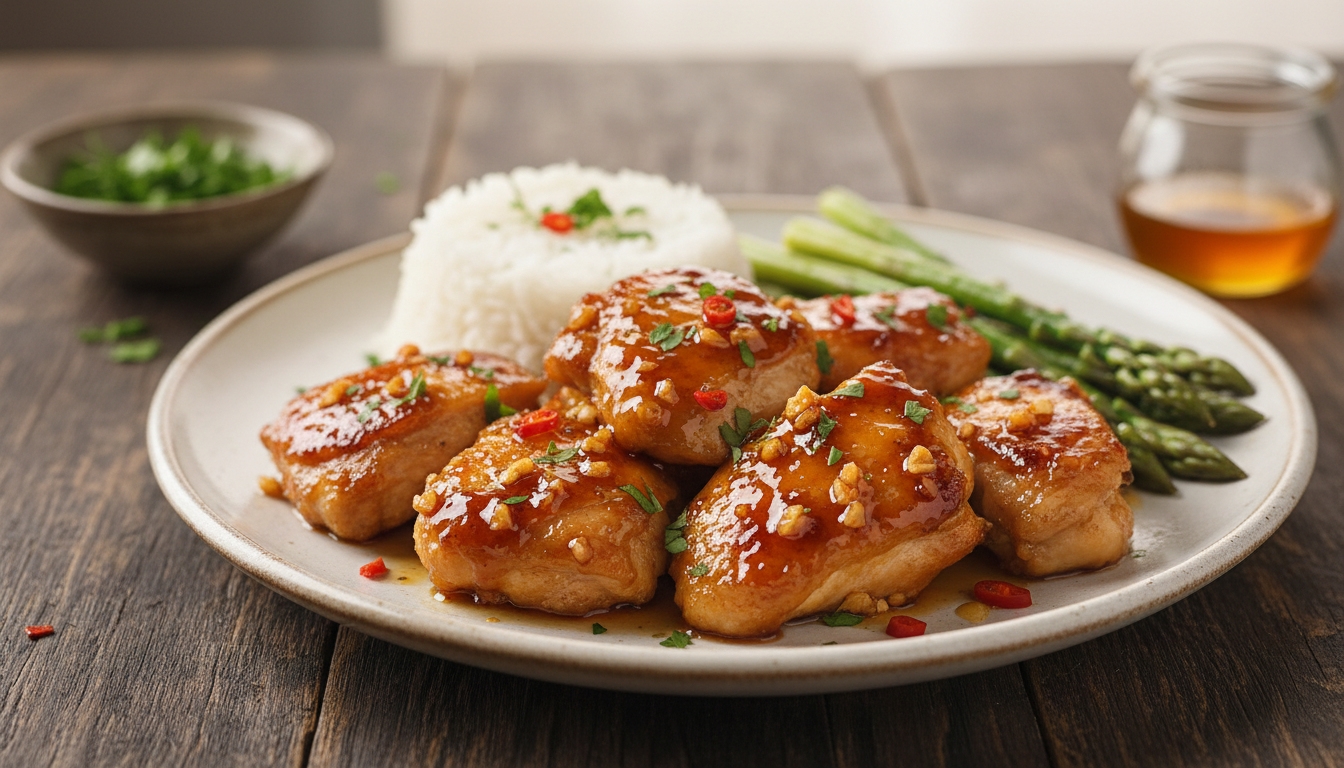
Cube 1‑inch pieces of chicken breast, pat them dry, and season with salt, pepper, and optional red‑pepper flakes. Heat 2 tsp olive oil in a skillet over medium‑high until shimmering, then sear the cubes 2–3 minutes per side until golden. Mix 3 tbsp honey, 3 tbsp low‑sodium soy sauce, and 3 minced garlic cloves; pour over the chicken, lower heat, and stir for 5‑7 minutes until the glaze clings and caramelizes. Rest a minute, serve over rice, and discover tips for scaling, storage, and nutrition.
Table of Contents
Key Takeaways
- Cube 1‑inch chicken breast pieces, pat dry, and season with salt, pepper, and optional red‑pepper flakes for quick, even browning.
- Heat 2 tsp olive oil in a skillet over medium‑high; sear chicken 3–4 minutes per side until golden, then reduce heat to low.
- Whisk together 3 tbsp honey, 3 tbsp low‑sodium soy sauce, and 3 minced garlic cloves; pour over chicken and stir.
- Simmer 5–7 minutes, stirring occasionally, until sauce thickens into a glossy glaze and chicken reaches an internal temperature of 165 °F.
- Rest 1 minute, then serve over rice or noodles, garnished with green onions and sesame seeds.
Honey Garlic Chicken Overview
Ever wondered how a simple skillet can deliver a dish that’s both sweet and savory in just fifteen minutes? You’re about to master a go‑to entry in easy chicken recipes that packs flavor without fuss. This honey garlic chicken hinges on a quick sear, a glossy sauce, and a brief finish that keeps the meat tender. The key is cubed breast—small pieces brown fast, absorb the glaze, and stay juicy. You’ll whisk honey, low‑sodium soy sauce, minced garlic, and optional red‑pepper flakes into a sweet‑savory blend that caramelizes in the pan.
No oven, no marinating overnight; just a hot skillet, a splash of olive oil, and a few minutes of attention. The result is a glossy, aromatic dish that pairs perfectly with rice or veggies, making it a reliable staple whenever you need a fast, satisfying meal. This overview sets the stage for a seamless, 15‑minute cooking experience.
Gather Exact Ingredients & Measurements
You’ll want to measure each ingredient exactly to keep the flavor balance on point. If you need a swap, know which alternatives keep the honey‑garlic harmony without throwing off the sauce’s texture. Accurate measurements and smart substitutions are the keys to a perfect dish.
Precision Measurement for Success
Typically, you’ll achieve the best flavor and texture by measuring each ingredient exactly as listed—2 tsp olive oil, 1.5 lb cubed chicken breast, 3 tbsp honey, 3 tbsp low‑sodium soy sauce, 3 minced garlic cloves, and a quarter‑teaspoon of red pepper flakes if you like heat. Use a calibrated kitchen scale for the chicken; a slight variance can alter cooking time and moisture retention.
Spoon‑measure honey and soy sauce with a flat‑bottomed tablespoon to avoid packing errors. Mince garlic directly into a measuring cup; a clove’s volume can differ, so count them precisely. If you add pepper flakes, level the spoon to keep the heat consistent. These exact steps let you replicate the intended balance every time, ensuring a reliable, restaurant‑quality result.
Ingredient Substitutions Explained
Precision matters, so when you swap ingredients you keep the same ratios and measurements to preserve flavor and texture. If you replace olive oil, use an equal amount of avocado oil for a neutral taste. Swap chicken breast for thigh meat, but keep the 1.5 lb quantity to maintain cooking time. When you need a soy‑free option, match 3 Tbsp tamari to the original soy sauce volume. For a lower‑calorie glaze, substitute half the honey with maple syrup, keeping the total at 3 Tbsp.
| Original | Substitute | Ratio |
|---|---|---|
| Olive oil (2 tsp) | Avocado oil | 1:1 |
| Chicken breast (1.5 lb) | Thighs | 1:1 |
| Soy sauce (3 Tbsp) | Tamari | 1:1 |
These swaps preserve the dish’s balance while fitting dietary needs.
Cube & Pat‑Dry Chicken Breast
Start by cutting the chicken breast into uniform, bite‑sized cubes—about 1‑inch pieces work best for quick, even cooking. Place the cubes on a clean plate, then sprinkle a pinch of salt and pepper. Grab a paper towel or a clean kitchen cloth and press gently on each piece, absorbing excess moisture. Patting the meat dry is crucial; it creates a crisp surface that will brown fast and prevents the garlic‑honey sauce from turning watery. If you notice any stubborn spots of liquid, give them another quick press. Once the cubes are dry, set them aside while you heat the skillet. This simple step saves you from over‑cooking and ensures the sauce clings to the meat, delivering that glossy, flavorful finish you expect from a fifteen‑minute honey garlic chicken.

Season Chicken & Oil Ratio (2 tsp Olive Oil)
Now that the chicken cubes are dry, drizzle the 2 tsp olive oil into the hot skillet and let it shimmer before you season the meat. The oil creates a thin, even film that prevents sticking and helps the seasoning cling. Sprinkle a generous pinch of salt and freshly cracked black pepper over the cubes—about ½ tsp each for a pound of chicken. If you like a hint of heat, add a pinch of red pepper flakes now; they’ll toast lightly without burning. Toss the pieces gently with tongs so every side gets a light coating of oil and seasoning. You’ll notice the oil bubbling around the edges, a sign the pan is hot enough to sear quickly. Keep the heat at medium‑high; this balance ensures the chicken browns while staying juicy. Once the seasoning is evenly distributed, you’re ready to move on to the next step.
Cook Chicken – First 0‑5 min
Heat the oil quickly until it shimmers, then add the cubed chicken. Season it well with salt and pepper before it hits the pan so every piece gets a flavorful crust. Let it sizzle for the first few minutes, turning once to lock in juices.
Heat Oil Quickly
How quickly can you get that skillet sizzling? You’ll want the oil shimmering, not smoking, in just a few seconds. Grab the pan, set the burner to medium‑high, and pour the olive oil. As the surface shimmers, give it a quick swirl so the layer is even. You’re aiming for a thin film that will coat every cube of chicken without pooling. When a drop of water sizzles and evaporates instantly, you’ve hit the sweet spot. Now you’re ready to toss the chicken in and lock in flavor.
- Use a wide, heavy‑bottomed skillet for even heat distribution.
- Add oil just before the pan reaches temperature; it should ripple, not smoke.
- Test with a tiny piece of chicken; if it sizzles immediately, the oil’s ready.
Season Chicken Properly
Want perfectly seasoned chicken right from the start? Sprinkle salt and pepper evenly over the cubed breast before it hits the pan. Use about half a teaspoon of salt for every pound of meat and a generous pinch of black pepper; the seasoning will melt into the surface as it browns. If you like a hint of heat, add a pinch of red pepper flakes now. Toss the pieces gently with your fingertips or a spoon so every side gets a light coating. This quick step builds flavor depth without waiting for a sauce later. Once seasoned, place the chicken in the hot skillet and let it sizzle for three to five minutes, turning once, until each side shows a golden crust. The seasoning will lock in moisture and set the stage for the honey‑garlic glaze.
Add Honey‑Soy‑Garlic Sauce (5‑10 min)
A quick, glossy sauce comes together in just a few minutes: whisk the honey, low‑sodium soy sauce, minced garlic, and optional red‑pepper flakes, then pour the mixture over the browned chicken.
As the sauce hits the pan, it sizzles, releasing a sweet‑savory aroma that signals you’re on the right track. Let it bubble gently, stirring occasionally, so the flavors meld and the chicken absorbs the glaze.
Keep the heat medium‑low; you want the sauce to thicken without scorching. When the glaze coats the pieces and looks slightly syrupy, you’re done—no need to over‑cook.
- Stir continuously for even coating.
- Watch the sauce reduce to a clingy consistency (about 4‑5 minutes).
- Taste and adjust salt or pepper if needed.
Now the chicken glistens, ready for the final finish.
Finish Cooking – Last 10‑15 min
Now that the sauce has thickened and clings to every piece, turn the heat down to low and let the chicken finish cooking for another 5‑7 minutes, stirring occasionally to keep the glaze even. As the glaze sets, the meat stays juicy while the honey‑garlic coating caramelizes, creating a glossy finish. Taste a bite; if it needs a pinch more salt or a splash of soy, add it now, then give the pan one last gentle stir. When the chicken is opaque throughout and the sauce has a syrupy sheen, remove the skillet from heat. Let it rest a minute so the flavors meld, then serve over rice or noodles, sprinkling green onions and sesame seeds for texture and brightness.
| Step | Action | Time |
|---|---|---|
| 1 | Reduce heat to low | 0 min |
| 2 | Stir occasionally | 5‑7 min |
| 3 | Adjust seasoning if needed | 1 min |
| 4 | Rest before plating | 1 min |
Prevent Overcooking Small Chicken Pieces
Three quick tricks keep those bite‑size chicken cubes juicy: keep the heat medium‑high only while searing, then lower it as soon as the glaze forms; use a timer, and watch the sauce thicken before serving.

- Monitor the clock: Set a 4‑minute timer for the first side, flip, and give another 3‑4 minutes. The glaze will signal when the meat’s done.
- Control the glaze: As soon as the honey‑soy mixture bubbles and coats the cubes, reduce the flame to low. This prevents the sauce from scorching and the chicken from drying out.
- Test a piece: Cut one cube in half; the interior should be opaque, pink‑free, and tender. If it’s still pink, give it a quick 30‑second finish on low heat.
Adjust Heat – Red Pepper Flakes or Chili Oil?
Want a spicier bite? You can dial up the heat in two ways: sprinkle red pepper flakes or drizzle chili oil. Red pepper flakes give a dry, granular heat that distributes evenly when you whisk them into the sauce. They’re perfect if you want a subtle, lingering spice that you can control pinch‑by‑pinch.
Chili oil, on the other hand, adds a glossy, oily sheen and a more immediate punch. Because the oil carries the capsaicin, a little goes a long way, and you can drizzle it at the end for a burst of flavor without diluting the honey‑garlic glaze. If you’re watching sodium, both options are low‑sodium, but oil adds extra calories. Taste as you go: start with a quarter teaspoon of flakes or a teaspoon of oil, then adjust until the heat matches your preference. This quick tweak keeps the dish within fifteen minutes while delivering the perfect kick.
Choose Pairings – Rice, Quinoa, Veggie Noodles
Which base will let the honey‑garlic glaze shine brightest? You’ll want a side that absorbs the sauce without stealing the spotlight. A fluffy white rice offers a neutral canvas, letting the sweet‑savory notes dominate. If you crave a nutty texture and extra protein, quinoa steps in with its subtle crunch and earthy flavor, pairing perfectly with the glaze. For a low‑carb, vibrant twist, veggie noodles—zucchini, carrot, or shirataki—bring a fresh bite and let the sauce cling to each strand.
- Rice: Cooked al dente, steam‑fluffed, and ready to soak up every drop.
- Quinoa: Rinsed, boiled, and fluffed, its slight bite balances the sauce’s richness.
- Veggie Noodles: Lightly sautéed or blanched, they stay crisp, letting the glaze glide over their surface.
Pick the one that matches your mood, and let the honey‑garlic chicken take center stage.
Add Garnish – Green Onions, Sesame Seeds, Lime
You’ll love the fresh crunch green green onions add, giving each bite a lively texture.
Sprinkle sesame seeds on top for a subtle nutty pop that balances the sauce.
Finish with a squeeze of lime to brighten the flavors and tie everything together.
Green Onions: Fresh Crunch
Craving a bright, crunchy finish? Green onions give your honey‑garlic chicken that fresh pop you need, and they’re a snap to prep. Slice them thinly, keep the white base for a mild bite, and let the green tips add a subtle peppery lift. Their crisp texture cuts through the sauce, keeping each forkful lively.
- Trim off the root end, slice the stalks on a diagonal for longer ribbons.
- Rinse quickly, pat dry, and scatter over the hot chicken just before serving.
- Use the leftover tops for a quick garnish on soups or salads.
You’ll notice the contrast instantly—bright, herbaceous, and delightfully crunchy. Enjoy the balance of sweet, savory, and fresh green onion crispness in every bite.
Sesame Seeds & Lime: Bright Finish
Want a burst of brightness to finish your honey‑garlic chicken? Sprinkle toasted sesame seeds over the glossy sauce, letting their nutty crunch contrast the sweet‑savory glaze. Then squeeze fresh lime juice across the top; the acidity cuts through the richness, lifting the flavor profile. The lime’s zing also highlights the garlic’s depth while the sesame adds a subtle earthiness. For extra visual appeal, scatter a few extra seeds and a thin lime zest ribbon. This simple garnish transforms the dish from comforting to vibrant, making each bite feel fresh and lively. Serve immediately, and let the bright finish turn your quick dinner into a memorable, palate‑pleasing experience.
Store Leftovers & Reheat Without Losing Sauce
Storing the honey‑garlic chicken properly keeps the sauce from drying out; transfer the cooled pieces to an airtight container, pour any remaining sauce over them, and refrigerate within two hours. When you’re ready to eat, pull the container out, let it sit a minute at room temperature, then reheat in a skillet or microwave. In a skillet, add a splash of water or broth, cover, and stir over medium heat for three to four minutes, letting the sauce loosen and coat the meat again. In the microwave, cover loosely with a damp paper towel and heat in 30‑second bursts, stirring between bursts to avoid hot spots.
- Cool before storing: let the chicken reach room temperature, then seal it.
- Add moisture when reheating: a tablespoon of liquid prevents the sauce from clumping.
- Heat gently: low‑medium heat preserves texture and flavor.
Fix Common Chicken‑Cooking Mistakes
If you crowd the pan, the chicken will steam instead of sear, leaving it soggy and unevenly cooked.
Make sure each piece reaches the right temperature before adding the sauce, or you’ll end up with undercooked meat.
Let the honey‑soy mixture simmer a few minutes after you stir it in so it thickens and coats the chicken perfectly.
Over‑crowding the Pan
Usually, when you dump all the chicken cubes into a hot skillet at once, the pan becomes crowded and the pieces steam instead of searing. The moisture they release drops the temperature, so you lose that caramelized crust that locks in flavor. To keep the pan hot and the chicken crisp, work in batches and give each piece space to contact the surface. This also prevents the sauce from turning watery and ensures the garlic and honey cling to a nicely browned bite.
- Pre‑heat the skillet, then add a single layer of cubes; avoid overlapping.
- Cook for 2–3 minutes per side, then set aside before adding the next batch.
- Finish the sauce in the same pan, deglazing with a splash of broth if needed.
Undercooking the Chicken
Ever wondered why your honey garlic chicken ends up pink in the middle? That’s usually a sign you undercooked it. Start by cutting the breast into uniform cubes—about 1‑inch pieces—so heat penetrates evenly. Pre‑heat the skillet until the oil shimmers, then add the chicken in a single layer; don’t crowd it. Cook each side 3‑4 minutes, stirring occasionally, until the exterior turns golden. Use a meat thermometer: the thickest piece should reach 165 °F (74 °C). If you don’t have a thermometer, cut one piece open; the juices should run clear, not pink. Finally, let the chicken rest a minute after removing it from the pan; residual heat finishes the cooking and keeps the meat juicy.
Missing the Sauce Reduction
Ensuring the chicken is fully cooked is only half the battle; the sauce also needs time to thicken. If you skip the reduction, the dish ends up watery, bland, and lacking that glossy cling you expect. Keep the heat medium‑low after adding the honey‑soy mixture, and let it simmer until it coats the chicken. Stir occasionally, but don’t rush—patience yields a sauce that balances sweet, salty, and garlicky notes.
- Bring the pan to a gentle boil, then reduce to a low simmer for 2‑3 minutes.
- Watch the liquid shrink and thicken; it should coat the back of a spoon.
- Finish by tossing the chicken one, ensuring each piece glazes evenly.
Nutrition Facts for Honey Garlic Chicken
If you’re counting calories, a single serving of this honey‑garlic chicken—about ½ cup of cubed breast with sauce—delivers roughly 210 kcal, 20 g protein, 3 g fat, and 12 g carbs, plus a modest 9 g of sugar from the honey. The protein boost supports muscle repair, while the low fat keeps the dish light. Sodium stays reasonable because you use low‑sodium soy sauce, contributing about 400 mg per serving—well under the daily limit for most adults. Fiber is minimal, so pair the chicken with vegetables or whole‑grain rice to round out the meal. If you watch carbs, the 12 g carbs come mainly from honey and soy, making it a moderate‑glycemic option. Adjusting the honey amount can trim sugar further, but the flavor balance will shift.
Scale the Recipe for Families or Meal Prep
How many servings do you need to feed? If you’re cooking for a family of four, double the sauce and chicken to hit eight portions, and if you’re prepping meals for the week, multiply the ingredients by three or four and store in airtight containers. Keep the flavor balance intact by scaling honey, soy sauce, and garlic proportionally—don’t halve the pepper flakes unless you want milder heat. When you upscale, use a larger skillet or split the batch into two pans to avoid overcrowding, which can steam the chicken instead of browning it.
- Double the recipe for a family dinner, keeping the same cooking times.
- Triple for meal‑prep, dividing the sauce into separate jars for easy reheating.
- Quadruple for large gatherings, using a wok or sheet pan to achieve even caramelization.
Adjust seasoning after tasting; a splash more soy or a drizzle of honey can rescue any imbalance. Store cooked chicken in the fridge for up to four days or freeze for longer..
Frequently Asked Questions
Can I Use Bone‑In Chicken Thighs Instead of Breast?
Yes, you can swap bone‑in thighs for breast; just brown them longer—about 6‑8 minutes per side—until the internal temperature hits 165°F, then follow the honey‑garlic sauce steps as written.
Will the Sauce Thicken if I Add Cornstarch?
Yes, it will thicken. Mix a teaspoon of cornstarch with equal water, stir into the sauce, and simmer a couple minutes. Keep stirring so it smooths out without clumping.
Is It Safe to Substitute Low‑Sodium Soy Sauce With Regular Soy Sauce?
Yes, you can swap low‑sodium for regular soy sauce; it will just make the dish saltier. Taste as you cook, and if it feels too salty, add a splash of water or a pinch of sugar.
Can I Make This Dish Gluten‑Free With Tamari?
Yes, you can make it gluten‑free by swapping the soy sauce for tamari. Just ensure the tamari you choose is labeled gluten‑free, then follow the same steps—no other adjustments needed.
How Long Can Leftovers Be Stored in the Refrigerator?
You can keep the leftovers in the fridge for three to four days. Store them in an airtight container, and reheat thoroughly before eating. If you notice any off smell or texture, discard them.
Conclusion
You’ve just turned pantry basics into a restaurant‑level dish in fifteen minutes. The honey‑garlic glaze clings to every bite‑size chicken cube, delivering sweet, salty, and tangy notes that won’t overpower. Toss it with rice, garnish with green onions and sesame seeds, and you’ve got a complete, satisfying meal. The quick sear locks in juices, the optional pepper flakes add subtle heat, and the lime finish brightens everything—perfect for busy nights or meal‑prep success.


No Comments