

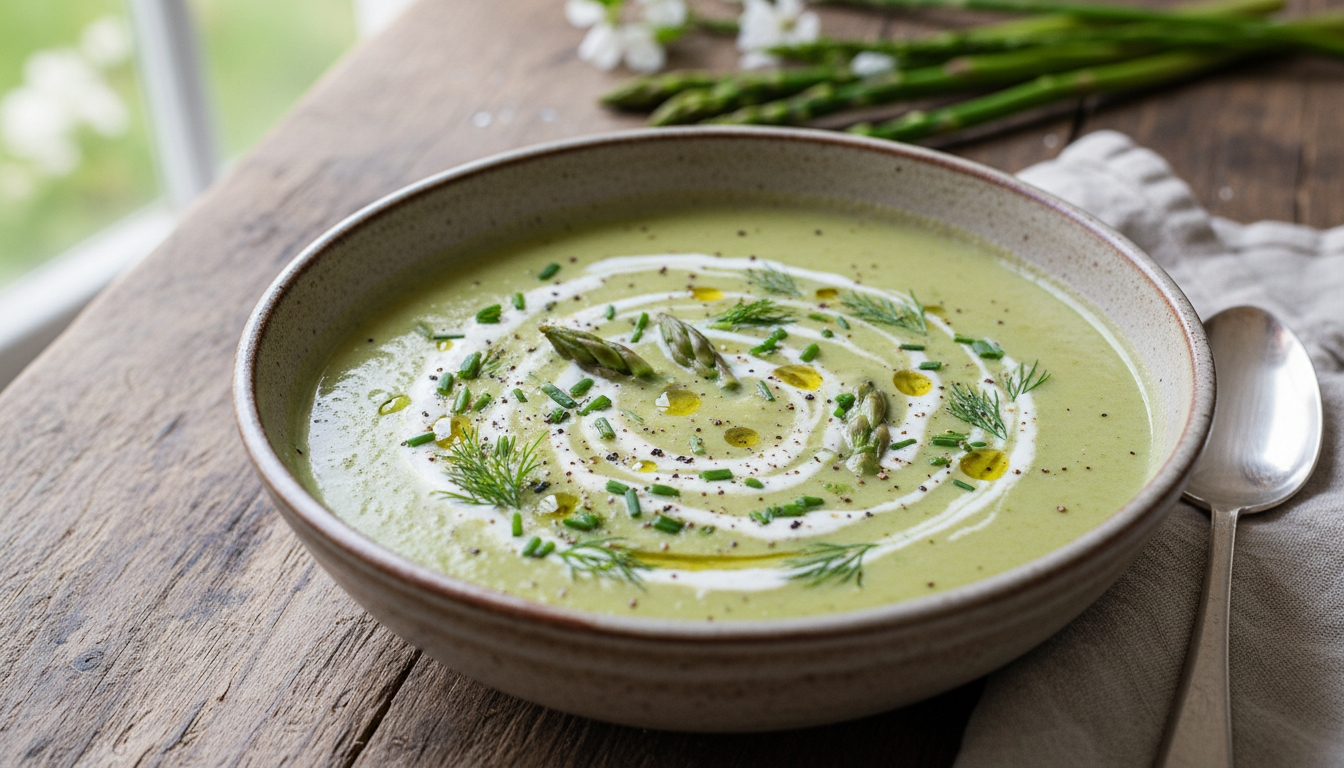
Creamy Vegan Asparagus Soup Without Dairy: A Fresh, Springy Bowl That Tastes Restaurant-Level
You’ll get a velvety, restaurant‑level asparagus soup by roasting spears, blending them with oat milk, cashew cream, and a light roux made from equal‑weight flour and neutral oil, then finishing with lemon juice, garlic, and fresh herbs for bright balance. The tofu‑like protein matrix and oat thickness trap water, while cashew richness adds depth without dairy. Adjust broth and thicken with oat flour or extra cashew cream if needed, and you’ll discover the full technique ahead.
Key Takeaways
- Use tofu, oat milk, and cashew cream to create a velvety, dairy‑free body that traps water and adds richness.
- Build a fluffy roux with neutral oil and equal‑weight flour, then whisk in cold plant‑based milk for an airy, glossy foam.
- Roast asparagus, blend with coconut milk and cashew purée, and emulsify to a smooth base without heaviness.
- Finish with lemon juice, minced garlic, garlic oil, and fresh herbs (tarragon, chives, dill) for bright, balanced flavor.
- Store in airtight containers, label with date, and reheat gently, adding a splash of plant milk or broth to restore creamy texture.
Why Is This Vegan Asparagus Soup Creamy Without Dairy?
Why does this vegan asparagus soup feel so luxuriously creamy without a drop of dairy? You’re blending cooked asparagus, silken tofu, and a splash of oat milk, then pureeing until smooth.
The tofu’s protein matrix traps water, creating a velvety body, while oat milk contributes subtle sweetness and a natural thickness. Adding a touch of cashew cream amplifies richness without overwhelming the flavor. A pinch of nutritional yeast injects umami, mimicking the depth you’d expect from dairy.
The key is temperature: simmering the vegetables releases pectin, which thickens as it cools, and the final blend incorporates air, giving the soup a light, mousse‑like texture. You also use a small amount of cornstarch slurry, which activates on heat and stabilizes the mouthfeel.
Together, these plant‑based ingredients work in harmony, delivering a luxurious, dairy‑free creaminess that satisfies both palate and conscience.
Build a Fluffy Roux for Vegan Asparagus Soup
Ever wondered how to give your vegan asparagus soup a light, airy body without butter? Start by heating a neutral oil—olive or grapeseed—over medium heat. Sprinkle in an equal‑weight amount of finely ground flour, typically 2 tablespoons each for a medium batch. Stir constantly with a whisk; the mixture should bubble, releasing a nutty scent while staying pale. Cook for 2–3 minutes, then lower the heat and add a splash of cold plant‑based milk, such as oat or soy, whisking vigorously to prevent lumps. The key is a slow, steady incorporation of liquid, allowing the roux to expand into a glossy, airy foam. Once the mixture thickens slightly, you’ve achieved a fluffy base that lifts the soup’s texture without any dairy. Finish by gently folding the roux into the simmering asparagus broth, letting it meld for a minute before seasoning. This technique delivers a restaurant‑level mouthfeel while keeping the dish fully vegan.
Step‑by‑Step Guide to Blend Asparagus, Coconut Milk, and Cashew Cream
You’ll start by trimming the asparagus tips and cutting the spears into uniform pieces so they blend smoothly.
Next, combine the veggies with coconut milk and a spoonful of cashew cream, adjusting the ratio until the sauce feels rich but not heavy.
Finally, taste and season, balancing the natural earthiness with just enough creamy sweetness for a restaurant‑level finish.
Asparagus Prep Techniques
When you trim the asparagus, snap off the woody ends and cut the spears into bite‑size pieces before they hit the blender; this ensures a smooth texture and prevents bitter bits from lingering. Pat the pieces dry, then toss them lightly with olive oil, salt, and a pinch of pepper. Arrange the spears on a hot skillet for two minutes per side, letting them brown just enough to release a nutty aroma without turning mushy. Transfer the roasted spears to a blender, add coconut milk and a spoonful of soaked cashew cream, then pulse until velvety. The result is a bright, silk‑smooth base ready for seasoning.
| Step | Visual Cue |
|---|---|
| Trim | Fresh green tips snap |
| Toss | Oil glistens on spears |
| Sear | Light caramel rings appear |
| Blend | Swirl of creamy white |
Balancing Creamy Flavors
A well‑balanced creamy texture starts with the right ratio of roasted asparagus, coconut milk, and cashew cream, so you’ll want to measure each component before blending. Begin by weighing 300 g of roasted asparagus, 200 ml of full‑fat coconut milk, and 100 g of soaked cashews. Toss the asparagus with a pinch of sea salt and a drizzle of olive oil, then roast at 425 °F for 12 minutes; this deepens flavor without adding dairy. While the veg cools, blend the cashews with half the coconut milk until smooth, adding more milk if needed to reach a velvety consistency. Combine the roasted asparagus, remaining coconut milk, and cashew purée in a high‑speed blender; pulse for 30 seconds, then blend 1 minute until fully emulsified. Taste, adjust salt, and add a splash of lemon juice for brightness before serving.
Season Vegan Asparagus Soup With Lemon, Garlic, and Fresh Herbs
Craving that bright, herbaceous lift in your creamy asparagus soup? Squeeze fresh lemon juice just before serving, letting its acidity cut through the richness and awaken the green notes. Toss in minced garlic early, allowing it to mellow as it simmers, then finish with a whisper of garlic oil for a lingering bite. Hand‑pick herbs—tarragon, chives, or dill—chop them finely, and stir them in at the end to preserve their fresh flavor and vivid color. A pinch of sea salt and a dash of white pepper balance the tang and heat without overpowering the delicate asparagus. If you like a hint of heat, add a pinch of red‑pepper flakes, but keep it subtle so the lemon stays the star.
Serve the soup in warm bowls, garnish with a drizzle of herb‑infused oil, and enjoy the harmonious blend of citrus, garlic, and garden‑fresh herbs.
Fix Common Vegan Asparagus Soup Mistakes
If your soup turns watery, cut back on the broth and blend the asparagus until it’s thick enough to coat a spoon. Overcooking the spears makes them mushy and loses their bright flavor, so keep them just tender before pureeing.
Adjust the liquid and cooking time, and you’ll end up with a silky, vibrant bowl.
Too Much Water
Ever notice how a splash of extra broth turns your creamy asparagus soup into a watery disappointment? When you add too much liquid, the delicate flavor of asparagus gets lost and the velvety texture disappears. Start by measuring broth carefully—about one cup per two cups of sliced asparagus works well. If you find the soup thin after blending, simmer it uncovered for a few minutes; the excess water will evaporate, concentrating flavor. You can also thicken with a splash of cashew cream or a spoonful of oat flour, but add these gradually, tasting as you go. Finally, taste for seasoning; a pinch of salt and a dash of lemon juice will brighten the dish without needing more liquid. This way, you keep the soup rich, smooth, and perfectly balanced.
Overcooking Asparagus
When you leave asparagus on the heat too long, it turns mushy and releases excess water, turning your silky soup into a bland, watery mess. To keep the spears bright and firm, blanch them for just two minutes, then shock in ice water. This stops the cooking process and locks in flavor. If you add the asparagus directly to the simmering broth, watch the timer closely; a minute extra can ruin texture. Slice the spears into uniform pieces so they finish at the same rate. When you blend the soup, pause before adding the asparagus, then stir them in at the end for a crisp bite. This timing preserves the garden‑fresh snap and prevents a soggy, overcooked base.
Garnish Vegan Asparagus Soup Like a Pro
Ready to elevate your bowl? Pick a garnish that adds texture, color, and a hint of flavor without drowning the soup. A drizzle of toasted almond oil gives a nutty shine, while a sprinkle of finely chopped chives introduces a fresh bite. Toasted pumpkin seeds lend crunch; toast them lightly in a dry pan, then toss with a pinch of sea salt. For a creamy contrast, swirl in a spoonful of cashew cream—just blend soaked cashews with lemon juice, garlic, and a splash of water. If you crave a pop of acidity, shave a few ribbons of pickled radish or add a few drops of balsamic reduction. Finish with microgreens or edible flowers for visual appeal. Keep portions small—no more than a tablespoon of each element—so the garnish enhances, not overpowers, the delicate asparagus flavor.
Store, Reheat, and Freeze Vegan Asparagus Soup
After perfecting your garnish, you’ll want to keep the soup fresh until the next meal. Store the soup in airtight containers; refrigerate for up to four days, and freeze for up to three months. When reheating, use a gentle simmer on the stovetop or a microwave at 50 % power, stirring every 30 seconds to avoid scorching. Add a splash of plant‑based milk or broth if the texture thickens. For best flavor, label each batch with the date and a brief note on the reheating method you prefer.
| Method | Time | Tips |
|---|---|---|
| Refrigerator | 0‑4 days | Keep sealed, cool before storing |
| Freezer | Up to 3 months | Portion into single‑serve bags |
| Reheat | 5‑7 min | Stir, add liquid, low heat |
Frequently Asked Questions
Can I Use Frozen Asparagus Instead of Fresh?
Yes, you can swap frozen for fresh; just thaw, rinse, and chop them. Cook them a minute longer to ensure tenderness, then blend as usual for that creamy, restaurant‑level texture.
What Other Plant Milks Work for a Dairy‑Free Creamy Texture?
You can swap oat, cashew, or soy milk for that silky, dairy‑free texture. Oat gives subtle sweetness, cashew adds richness, and soy provides a neutral creaminess—each works well in your asparagus soup.
Is It Possible to Make This Soup Gluten‑Free?
Yes, you can keep it gluten‑free—just use gluten‑free broth, substitute any thickener with cornstarch or arrowroot, and avoid wheat‑based seasonings. The rest of the recipe stays unchanged.
How Long Does the Soup Keep Refrigerated Before Spoiling?
You can store it in the fridge for three to four days. Keep it in a sealed container, and if you notice any off‑smell or mold, discard it immediately. Reheat only what you’ll eat.
Can I Add Protein, Like Tofu, Without Altering the Flavor?
You can add tofu for protein without changing the flavor; just cube it, simmer briefly, and stir it in. It’ll absorb the soup’s taste, keeping the dish light and creamy.
Conclusion
Enjoy the silky, dairy‑free asparagus soup you just created. You’ve mastered the roux, blended coconut milk and cashew cream, and brightened it with lemon, garlic, and herbs. No more common mistakes—just perfect texture and flavor. Garnish with a drizzle of olive oil or toasted nuts for that restaurant touch. Store leftovers in the fridge or freeze for later, and reheat gently to keep the creamy consistency. Your spring bowl is ready to impress.


Table of Contents
Related posts:
 Crispy Mongolian Tofu That Beats Takeout: Sticky-Sweet Sauce, Weeknight Speed, No Deep Frying
 10 Refreshing Vegan Summer Side Dishes That Will Impress Your Guests
 Spinach Artichoke Chicken Is the Creamy One-Pan Dinner That Feels Like a Treat (Not a Chore)
 15 Delicious Ascension Day Recipes: Celebrate with Traditional Foods and Modern Twists!





No Comments