

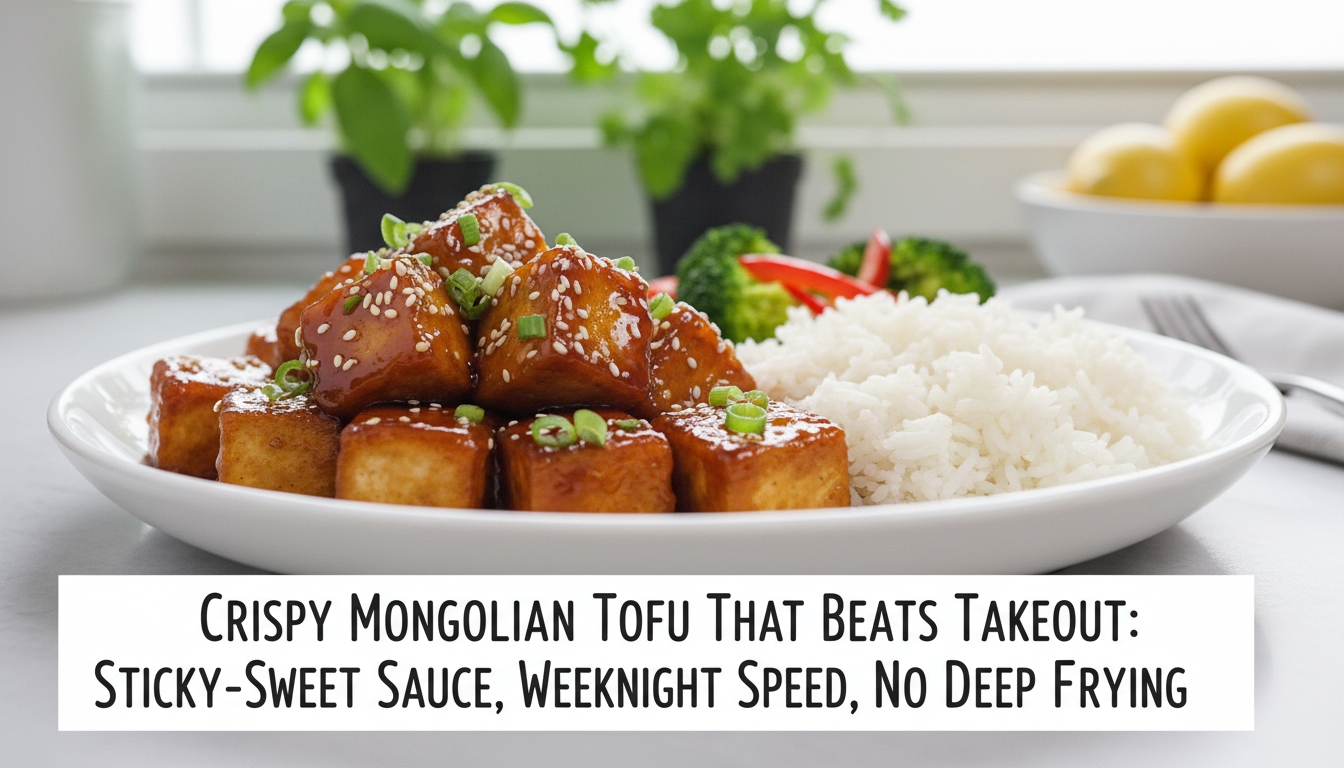
Crispy Mongolian Tofu That Beats Takeout: Sticky-Sweet Sauce, Weeknight Speed, No Deep Frying
You’ll press extra‑firm tofu, coat it lightly with cornstarch, then sear it in a hot skillet until each cube gets a deep, caramelized crust that stays crisp without deep‑frying. A quick 5‑minute glaze of soy, honey, rice vinegar, garlic, ginger, and a cornstarch slurry coats the tofu in a glossy, sticky‑sweet finish, while scallions, toasted sesame, and a dash of chili oil add brightness and heat. Follow these steps and you’ll have a restaurant‑level, weeknight‑fast dish that outshines takeout, plus tips on storage, reheating, and flavor tweaks.
Key Takeaways
- Use extra‑firm tofu, press ≥ 30 min, dry, coat lightly with cornstarch, then sear in a hot non‑stick skillet for a crisp crust without deep‑frying.
- Prepare a 5‑minute sticky‑sweet glaze: soy sauce, rice vinegar, honey/maple syrup, garlic, ginger, sesame oil, and a cornstarch slurry for glossy thickness.
- Sear tofu cubes spaced apart, 2 min per side, then toss quickly with the reduced glaze to coat each bite evenly.
- Finish with bright scallions, toasted sesame seeds, and optional chili oil or sriracha for heat and flavor depth.
- Store tofu and sauce separately; reheat tofu in a skillet or oven to restore crunch, then drizzle warm glaze before serving.
Why This Stovetop Mongolian Tofu Beats Takeout
Ever wondered why a stovetop version of Mongolian tofu can outshine any takeout? You control the heat, so the tofu crisps evenly without the soggy crust that delivery dishes often get. By searing the cubes in a hot skillet, you lock in moisture while forming a caramelized exterior that deep‑frying can’t match without excess oil. You also dictate the sauce’s balance, letting the ginger, garlic, and soy reduce to a glossy glaze that clings perfectly to each bite. No soggyd contaminated by transit time, and no hidden sodium spikes from restaurant sauces. The aroma fills your kitchen instantly, creating a fresh, vibrant flavor that fades quickly in a takeout container. Plus, you avoid the greasy aftertaste that comes from reheating battered tofu. The result is a light, crunchy, and deeply satisfying dish that feels like a restaurant quality but tastes home‑crafted and healthier.
Choosing the Right Tofu – Maximizing Crunch
Which tofu will give you that satisfying crunch? Reach for extra‑firm tofu, the only variety that holds its shape when tossed in a hot pan. Press it for at least 30 minutes—place the block between two plates, add a weight, and let the moisture drain.
Once dry, cut it into 1‑inch cubes; the smaller pieces crisp faster, while still staying juicy inside. Toss the cubes in a light coating of cornstarch or potato starch; the fine particles create a delicate, airy crust once they hit the heat. Use a non‑stick skillet heated to medium‑high, add a splash of oil, and let it shimmer before you lay the tofu down.
Give each side a minute or two without moving it, then flip once the edges turn golden. The result is a satisfying crunch that stays firm, even after you add the sauce later.
5‑Minute Sticky‑Sweet Sauce – Ingredients & Method
You’ll gather a handful of pantry staples—soy sauce, honey, rice vinegar, and a pinch of chili flakes—to create a sauce that’s ready in under a minute.
Mix them together, then taste and adjust until the sweet and sour notes balance perfectly.
The result is a glossy, sticky coating that brings the tofu together without any fuss.
Quick Prep Ingredients
The minute‑sweet sauce comes together in just a few minutes, using pantry staples you probably already have. You’ll need soy sauce, rice vinegar, brown sugar, garlic, ginger, and a splash of sesame oil. For a glossy finish, whisk in a little cornstarch mixed with cold water. Grab a small bowl and measure ¼ cup soy sauce, 2 tablespoons rice vinegar, 2 tablespoons brown sugar, 1 minced garlic clove, ½ teaspoon grated ginger, and ½ teaspoon sesame oil.
In another cup, dissolve 1 tablespoon cornstarch in 2 tablespoons water. Toss everything into a saucepan, bring to a gentle boil, and stir until the sugar dissolves and the mixture thickens—about one to two minutes. This quick prep gives you a balanced, sticky‑sweet base ready for the tofu.
Balanced Sweet‑Sour Ratio
How do you hit that perfect sweet‑sour balance without overcomplicating the sauce? You start by measuring each flavor component precisely, then adjust in small increments while the sauce simmers. Use a 2:1 ratio of soy sauce to rice vinegar for the base, then stir in honey or maple syrup to offset the acidity. Taste before adding the cornstarch slurry; if it’s too sharp, a dash of brown sugar restores harmony. Finally, finish with a splash of sesame oil for depth and a pinch of red pepper flakes for subtle heat.
- 2 Tbsp soy sauce
- 1 Tbsp rice vinegar
- 1 Tbsp honey or maple syrup
- ½ tsp brown sugar (optional)
Searing Tofu Without Deep‑Frying – Step‑by‑Step
Press the tofu firmly for at least fifteen minutes to squeeze out excess moisture, then pat it dry.
Heat a skillet until it’s smoking hot, add a thin layer of oil, and place the tofu cubes side‑by‑side without crowding.
Let them sear for two minutes each side until a golden crust forms, then flip and repeat.
Pressing Tofu Properly
Ever wondered why your tofu ends up soggy instead of crisp? The secret lies in proper pressing. First, remove the tofu from its package and drain any liquid. Wrap the block in a clean kitchen towel or several layers of paper towels. Place the wrapped tofu on a plate, then set a heavy skillet, a cast‑iron pan, or a can of beans on top. Let it sit for 15‑20 minutes; the weight squeezes out excess moisture, creating a firmer texture that sears beautifully. After pressing, pat the surface dry before seasoning or coating. This step ensures the sauce clings while the exterior crisps up without deep‑frying.
- Use a flat, sturdy weight (e.g., cast‑iron skillet)
- Press for at least 15 minutes
- Keep the towel damp to avoid drying out the tofu
- Pat dry again before cooking
High‑Heat Searing Technique
Now that the tofu is dry and firm, crank the heat and let a thin layer of oil shimmer in a hot skillet. Toss the cubes in, spreading them evenly so each piece contacts the surface. Hear the sizzle—don’t move them for 90 seconds, then flip with tongs. Cook the second side another 90 seconds until a deep golden crust forms. If you’re using a non‑stick pan, a splash more oil prevents sticking; a stainless steel pan needs a little extra heat. Keep the flame medium‑high; too low yields soggy tofu, too high burns the exterior before the interior firms. Once both sides are crispy, transfer to a paper‑towel‑lined plate, then proceed to the sauce.
Finishing Touches – Scallions, Sesame, and Heat
What’s the secret to turning a good dish into a great one? You finish your Mongolian tofu with bright scallions, toasted sesame, and a kick of heat. The green tops add crisp freshness, while the seeds lend nutty depth. A drizzle of chili oil or a pinch of red‑pepper flakes awakens the palate without overwhelming the sweet‑savory sauce. Toss everything together just before serving so the flavors stay vivid and the tofu remains crispy.
- Slice scallions thinly, separating white and green parts
- Toast sesame seeds in a dry pan until golden
- Add a splash of chili oil or a pinch of red‑pepper flakes for heat
- Mix all finish in at the end, allowing the sauce to coat each piece evenly
Mongolian Tofu Mistakes & Quick Fixes
Why do Mongolian tofu dishes flop so often? You probably over‑crowd the pan, letting tofu steam instead of crisp. The sauce then slides off, turning the dish soggy. First mistake: using soft, silken tofu. Swap to firm or extra‑firm, press for at least 15 minutes to squeeze excess moisture. Second: coating with too much cornstarch. A thin dusting creates a light crust; shake off excess before cooking. Third: adding sauce too early. Cook tofu until golden, then deglaze with a splash of broth, and finally drizzle the sticky‑sweet sauce, letting it thicken for 30 seconds. Fourth: neglecting heat control. Medium‑high works best—low heat melts the sugar and yields a watery glaze. Quick fix: if the sauce pools, increase the heat briefly and toss the tofu to evaporate excess liquid. Finally, taste before serving; a pinch of salt or a splash of rice vinegar can rescue a flat flavor profile.
Quick Variations – Spicy, Gluten‑Free, Low‑Sugar
Ever wondered how to tweak the classic Mongolian tofu without sacrificing its signature crunch? You can dial up heat, ditch gluten, or slash sugar in just a few swaps, and the dish stays fast, flavorful, and perfectly crisp. Keep the same quick‑pan method, then adjust the sauce components to match your dietary goal. A splash of sriracha or a pinch of cayenne adds instant fire, while tamari or coconut aminos replace soy for a gluten‑free version. For low‑sugar, swap half the brown sugar for a natural sweetener like stevia or monk fruit, and let the natural caramel from the tofu do the heavy lifting. These tweaks preserve the sticky‑sweet balance and keep the crunch you love, so you can enjoy a personalized bowl in under 30 minutes.
- Add 1 tsp sriracha or ½ tsp cayenne for heat
- Use tamari or coconut aminos instead of soy sauce for gluten‑free
- Replace half the brown sugar with stevia or monk fruit for low‑sugar
- Finish with a drizzle of toasted sesame oil for extra flavor without extra sugar
Storing & Reheating – Make‑Ahead Tips
Looking to keep your Mongolian tofu crisp and flavorful for later meals? Cool the tofu on a wire rack, then transfer it to an airtight container. Store the sauce separately in a small jar to prevent sogginess. Refrigerate up to four days; for longer storage, freeze the tofu and sauce in zip‑top bags, labeling the date. When reheating, preheat a skillet over medium‑high heat, add a splash of oil, and toss the tofu for two to three minutes until the crust re‑forms. If you’re using the oven, spread the tofu on a parchment‑lined sheet and bake at 425°F for five minutes, turning halfway. Warm the sauce in a microwave or saucepan, then drizzle it over the reheated tofu. For a quick microwave fix, place tofu on a paper‑towel‑lined plate, cover loosely, and heat in 30‑second bursts, checking crispness each time. This method preserves texture and flavor without sacrificing convenience.
Frequently Asked Questions
Can I Use Frozen Tofu for This Recipe?
Yes, you can use frozen tofu—just thaw it, press out excess water, and slice it before coating. The texture will stay firm, and the sauce will still cling nicely for that crisp, sticky finish.
Will the Sauce Caramelize on Any Stovetop?
Yes, the sauce will caramelize on any stovetop. Keep the heat medium‑high, stir constantly, and let the sugar brown for a minute or two. You’ll see a glossy, sticky coating forming quickly.
Is a Wok Necessary for Searing Tofu?
You don’t need a wok; a large skillet works fine. Heat it until it’s hot, add a little oil, then sear the tofu until golden. The surface will still get crisp without a wok.
How Long Does the Dish Keep in the Fridge?
It stays fresh for three to four days in the fridge if you store it in an airtight container; just reheat it gently, and you’ll still enjoy the crisp texture and sweet‑savory flavor.
Can I Replace Soy Sauce With Coconut Aminos?
You can swap soy sauce for coconut aminos; just use the same amount, remembering the flavor’s milder, less salty profile. Adjust the sweetener or a pinch of salt if needed.
Conclusion
You’ve just nailed a restaurant‑level Mongolian tofu on the stovetop—crunchy, caramelized, and bursting with flavor in minutes. By searing the tofu, tossing it in that quick sticky‑sweet sauce, and finishing with scallions, sesame, and a dash of heat, you’ve got a dish that’s faster, healthier, and more satisfying than any takeout. Swap in spice, go gluten‑free, or cut the sugar, and you’ll always have a versatile, crowd‑pleasing weeknight dinner ready in a flash.


Table of Contents







No Comments