
Why Electric Pizzelle Irons Are Replacing Traditional Methods
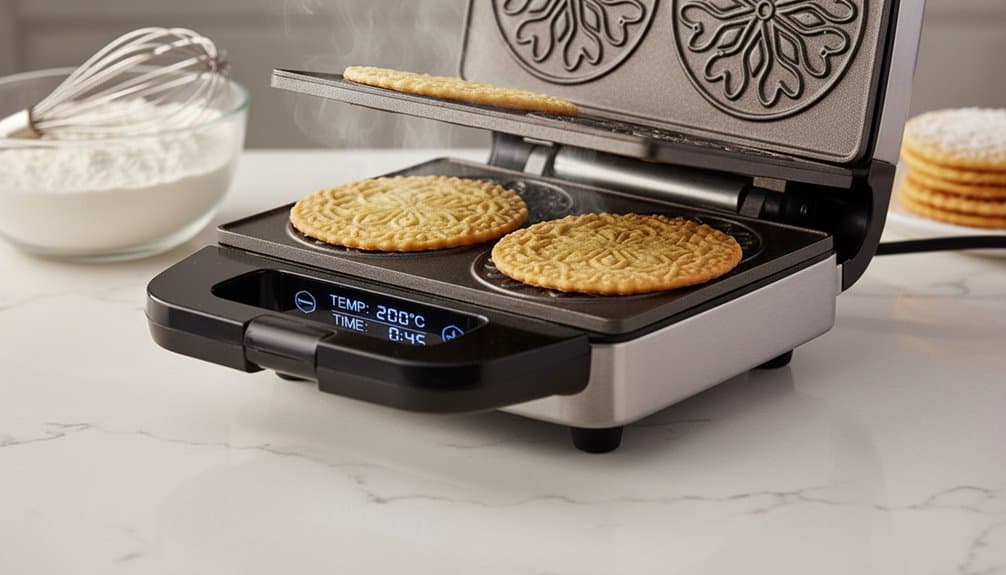
You’ll make two pizzelle in 30-40 seconds with electric irons versus one per minute with stovetop models. Electric makers maintain consistent 350-400°F temperatures through built-in thermostats, eliminating hot spots and manual flipping. They’re also more affordable—starting at $25.99 compared to $54.99 for quality stovetop versions. Non-stick coatings mean you won’t need greasing, and preheat indicators remove guesswork. These efficiency gains explain why home bakers are switching to electric models faster than ever.
Table of Contents
Key Takeaways
- Electric pizzelle irons maintain consistent 350-400°F temperatures via thermostats, eliminating the hot spots and flame variability of stovetop models.
- Electric makers produce two pizzelles simultaneously while stovetop irons make one at a time, doubling throughput per cooking cycle.
- Non-stick electric models require no greasing and offer easy release, while traditional cast aluminum needs regular greasing and maintenance.
- Electric irons feature preheat indicators and ready lights, removing the constant monitoring and manual flipping required by stovetop versions.
- Entry-level electric makers start at $25.99, making them more affordable than higher-end stovetop options that reach $54.99.
Electric vs. Stovetop Pizzelle Makers: Key Differences
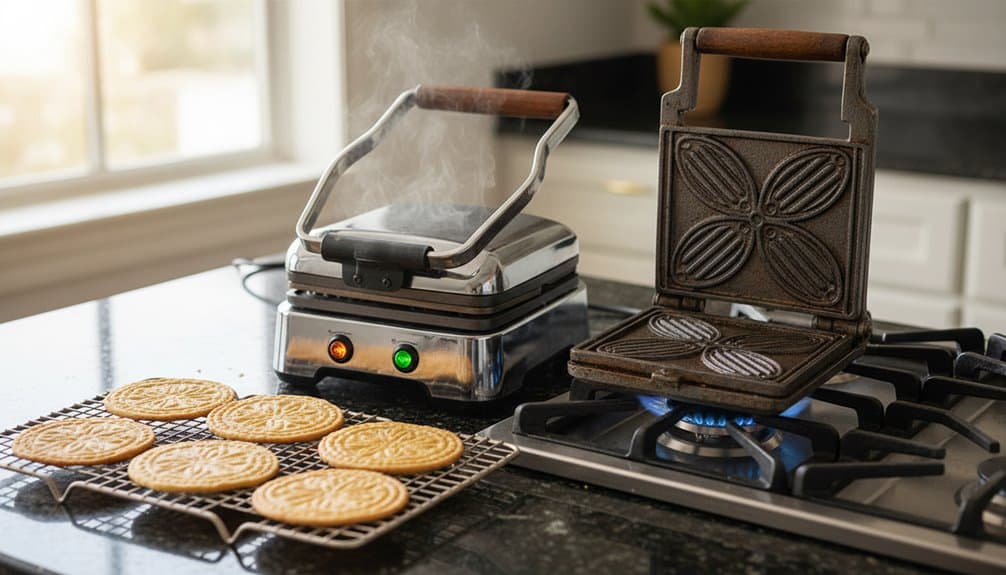
When you’re choosing between electric and stovetop pizzelle makers, the power source fundamentally changes your cooking experience. Electric models plug directly into outlets for automatic electric heating, while stovetop versions rely on your existing gas, electric, or ceramic burner without needing cords. You’ll find electric irons feature preheat indicators and ready lights that signal optimal temperature, whereas stovetop models demand constant monitoring and manual flipping halfway through cooking.
The capacity differences affect your workflow significantly. Electric makers typically produce two 5-inch cookies simultaneously, doubling your output compared to stovetop irons that make one at a time. You’ll need more stovetop dexterity with traditional models since their handles get extremely hot, requiring protective mitts and careful maneuvering. Electric versions simplify the process with five temperature settings and nonstick surfaces that release cookies easily. The nonstick plates also reduce breakage and make cleanup significantly easier compared to traditional cast iron surfaces. While stovetop’s cord-free design allows portability away from outlets, electric models compensate with lightweight construction—some weighing just 4 pounds—and compact storage features.
Why Electric Pizzelle Irons Cook Twice as Fast
How do electric pizzelle irons achieve cooking speeds that leave stovetop models behind? You’ll find the answer in their precise temperature control. Electric models maintain a consistent 350-400°F through thermostats, eliminating the hot spots and flame variability that plague stovetop versions. This stability cuts your average cook time by 50%.
Your electric iron’s thinner plates and optimized grid patterns enhance batter spread, allowing quicker browning in just 30-40 seconds. The shallow grooves create thinner layers that cook faster while dual-grid designs double your throughput by cooking two pizzelle simultaneously. Modern electric models like the Palmer 1000T reach 800W power to maintain even heat distribution throughout the baking cycle.
What really sets electric models apart is their instant heat recovery. While stovetop irons need cooldown periods between batches, electric elements bounce back to full temperature within seconds. After the initial 10-15 minute preheat, you’re cooking continuously at 35-55 seconds per batch. That’s twice the speed of traditional methods, giving you 24 perfectly crisp pizzelle in under 60 seconds of active cooking time.
Non-Stick Coating vs. Cast Aluminum Plates
The coating on your pizzelle iron’s plates determines everything from release ease to final texture. Non-stick surfaces let you bake two 4.75-inch pizzelle without initial greasing, and they’ll slide right off when done. You’ll get thin, crispy results at 0.27 inches thick, plus cleanup’s simple since batter won’t stick. However, you’ll need nylon brushes to protect the coating’s non stick durability from scratches, and the surface won’t develop seasoning like uncoated options.
Cast aluminum plates require greasing during first uses, but they’ll build cast aluminum seasoning over time that creates natural non-stick properties. You’re trading initial convenience for superior texture – these plates deliver crispier, crunchier pizzelle that resist sogginess when cooling. They’re scratch-resistant, so you can use wire brushes for thorough cleaning. While cast aluminum models often include 10-year warranties versus 5-year electrical-only coverage on non-stick versions, you’ll decide whether immediate ease or long-term performance matters more. California regulations require Proposition 65 warnings for both plate types due to potential chemical exposure during heating cycles.
Electric Pizzelle Maker Prices and Top Models
Why spend more than necessary for quality pizzelles? You’ll find entry-level electric makers starting at $25.99, delivering excellent results without breaking your budget. Mid-range pricing models at $29.99 dominate Walmart’s bestseller list, proving you don’t need premium prices for great performance. If you’re seeking advanced features, higher-end stovetop options reach $54.99, while CucinaPro’s polished non-stick model offers an affordable compromise.
Your two word discussion ideas should include “performance value” when comparing 2025’s top-rated models. Chef’s Choice 834 Toscano leads the pack with its non-stick surface, followed by Cuisinart’s WM-PZ10 and Vitantonio’s Pizzelle Chef 300. VillaWare’s V3600 NS Prego impresses with five-inch pizzelles in just thirty seconds. For commercial-grade durability, you’ll need to call Palmer directly about their Model 1000’s pricing—it features cast aluminum construction, bakes two 4.75-inch pizzelles, and includes a five-year electrical warranty. Whether you choose budget-friendly or premium, today’s electric makers outperform traditional methods consistently.
Frequently Asked Questions
How Do I Prevent Pizzelles From Becoming Soft After Cooling?
You’ll maintain crisp texture by cooling pizzelles flat on wire racks immediately after removing them from the iron. Don’t stack them while warm—this traps steam and causes softening. These cooling tricks work best: let them air dry for several hours, then store in aluminum foil or paper bags in a cool, dry place. Avoid plastic containers and humid areas. If they soften, reheat at 300°F for 3–5 minutes.
Can Electric Pizzelle Irons Make Other Types of Cookies?
Yes, you can make several cookie types beyond traditional pizzelles with your electric iron. Your cookie experimentation opportunities include creating waffle cookies, thin wafers, and cone-shaped treats. The iron’s batter versatility lets you adapt recipes for different textures—from crispy to chewy variations. You’ll find the non-stick plates and even heat distribution work well with various batters, though you’ll achieve best results with thin, pourable mixtures rather than thick doughs.
What’s the Best Batter Consistency for Electric Pizzelle Makers?
You’ll achieve best results when your batter consistency creates a ribbon that drops from the spoon in 2-3 seconds. Aim for a stiff mixture that’s between thick batter and soft dough. If it’s too thin, gradually add flour by the tablespoon. Your batter shouldn’t cling to the iron but should retain some thickness on the spoon. After refrigerating for 1-2 hours, let it return to room temperature before using.
How Long Do Electric Pizzelle Iron Heating Elements Typically Last?
You’ll get impressive electric durability from your pizzelle iron’s heating elements, which typically last 14 years according to user reports. Your heating element lifespan depends on how you maintain it – store it in cool, dry places and avoid frequent on-off cycling. Even 50-year-old pizzelle irons work perfectly with replacement elements that cost around $30-40. You’re looking at 3-10 years minimum, but proper care extends this significantly.
Should I Spray Oil on Non-Stick Surfaces Before Each Use?
You don’t need to spray oil on non-stick surfaces before each use.
Your electric pizzelle iron’s non-stick coating eliminates this extra step that’s required for traditional cast aluminum plates.
The coating’s designed to release pizzelles without oil assistance, making your baking process simpler.
You’ll save time and effort since non-stick surfaces already provide the release properties that uncoated irons achieve only through oil application and repeated seasoning.
Conclusion
You’ve seen how electric pizzelle irons outperform traditional stovetop models in every way that matters. They’ll cut your cooking time in half, prevent sticking with modern coatings, and deliver consistent results every time. While you’ll invest more upfront than a basic stovetop model, the convenience and precision you’re getting make it worthwhile. Don’t cling to outdated methods—upgrade to an electric pizzelle maker and you’ll wonder why you waited so long.


No Comments