
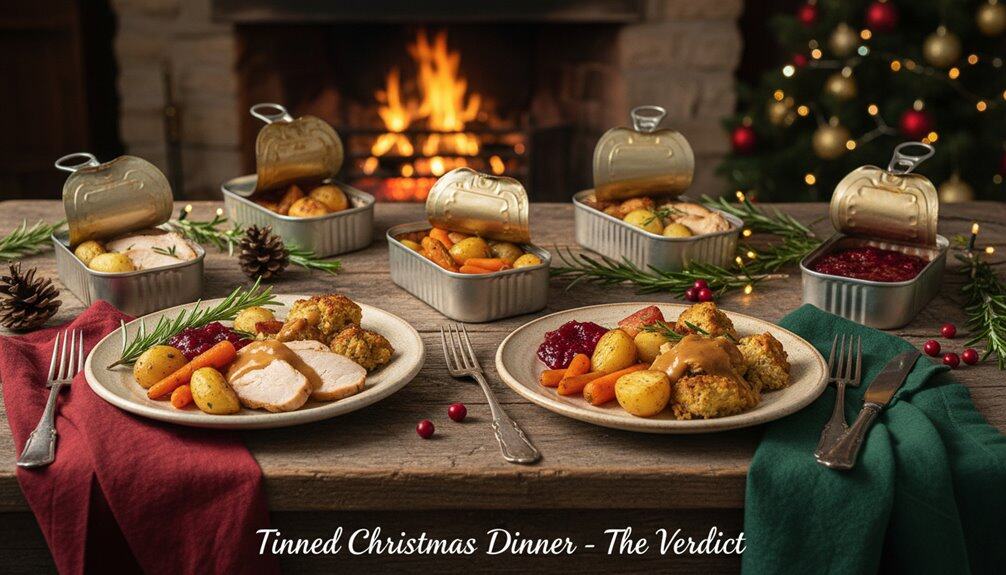
We Tried the Tinned Christmas Dinner Here’s the Verdict
We tried the viral tinned Christmas dinner, and here’s what you’ll get: a compressed, soggy meal that costs $12-18 per serving with muted flavors and metallic undertones. The turkey’s surprisingly tender but lacks seasoning, vegetables are mushy, and the stuffing tastes artificial. While it’s convenient and novelty-fun, it can’t compete with traditional Christmas dinner’s complexity and fresh flavors. Our verdict reveals whether this trendy feast is worth your holiday budget.
Table of Contents
Key Takeaways
- Tinned Christmas dinner offers convenience and novelty but arrives as a compressed, soggy mess with muted colors and indistinguishable components.
- The taste features metallic undertones, softer textures, and concentrated flavors that fall short of traditional Christmas dinner expectations.
- Turkey lacks herb-crusted richness, vegetables are mushy, stuffing is dense, and cranberry sauce is overly sweet and gelatinous.
- Each serving contains 300-500 calories with dangerously high sodium levels of 800-1,200mg plus extensive preservatives and additives.
- At $12-18 per serving, tinned Christmas dinner costs similarly to homemade meals but delivers significantly inferior quality and taste.
What Exactly Is Tinned Christmas Dinner?
Although it might sound like a culinary curiosity, tinned Christmas dinner is exactly what the name suggests—a complete traditional holiday meal packed into a single can. You’ll find turkey, stuffing, roasted potatoes, vegetables, cranberry sauce, and gravy all combined in one convenient container.
The convenience factor is undeniable. You won’t need hours of preparation, multiple pots and pans, or precise timing to coordinate different dishes. Simply open the can, heat the contents, and you’ve got dinner ready in minutes. This makes it appealing for camping trips, emergency situations, or when you’re cooking for one.
The holiday novelty aspect has made tinned Christmas dinner something of a viral sensation. People buy it out of curiosity, as gag gifts, or to test whether manufacturers can truly replicate the festive feast experience. It’s become an annual tradition for some to try different brands and compare results.
First Impressions: Opening the Can
When you first crack open a tin of Christmas dinner, the initial visual impact rarely matches your expectations. The package presentation promises a festive feast, but reality delivers something quite different. You’ll notice the contents don’t resemble the traditional Christmas spread you’re familiar with.
The visual appeal immediately raises questions about what you’ve gotten yourself into. Here’s what you’ll typically encounter:
- Compressed portions – Everything’s packed tightly together, creating an unappetizing mass
- Muted colors – The vibrant reds and greens from the packaging become dull browns and grays
- Liquid pooling – Excess moisture collects at the bottom, making everything soggy
- Indistinguishable components – It’s challenging to identify individual elements like turkey, vegetables, or stuffing
The aroma hits you next—a peculiar blend of preserved meat and canned vegetables that doesn’t quite capture Christmas morning magic. Your expectations definitely need adjusting at this point.
The Taste Test Experience
You’ll notice the first bite hits differently than expected—the textures feel softer and the flavors more concentrated than their fresh counterparts. The turkey carries a distinctly processed taste with hints of salt and preservatives, while the vegetables maintain surprising sweetness despite their mushy consistency.
Your palate encounters an unusual blend where traditional Christmas flavors merge with the metallic undertones characteristic of canned foods.

First Bite Impressions
How does a Christmas dinner from a tin actually taste when that first forkful hits your tongue? Your initial reactions depend heavily on expectations, but the sensory experience delivers some genuine surprises.
The moment you taste it, you’ll notice:
- Turkey texture – surprisingly tender, though slightly mushier than fresh-roasted
- Gravy consistency – thicker than expected, with decent savory depth
- Vegetable crunch – carrots retain some bite, while Brussels sprouts turn softer
- Overall saltiness – noticeably higher sodium content than homemade versions
You’re not getting restaurant-quality flavors, but it’s far from inedible. The seasoning blend actually works well together, creating a cohesive taste that genuinely resembles Christmas dinner. Your first impression will likely be cautious optimism rather than outright disappointment.
Flavor Profile Analysis
Breaking down each component reveals distinct flavor characteristics that set tinned Christmas dinner apart from its traditional counterpart. You’ll notice the turkey carries a processed texture with subdued seasoning, lacking the herb-crusted richness you’d expect from roasted poultry.
The stuffing delivers a mushy consistency with artificial sage notes that don’t quite capture homemade authenticity. Cranberry sauce provides the brightest flavor profile nuances, offering genuine tartness that cuts through heavier elements.
The vegetables taste overcooked and somewhat metallic, while gravy maintains decent savory depth despite its gelatinous appearance. Brussels sprouts surprisingly retain some bite, though they’re noticeably saltier than fresh versions.
Together, these components create an overall eating experience that’s functional but lacks the complexity and warmth of traditional Christmas fare.
Comparing Flavors to Traditional Christmas Dinner
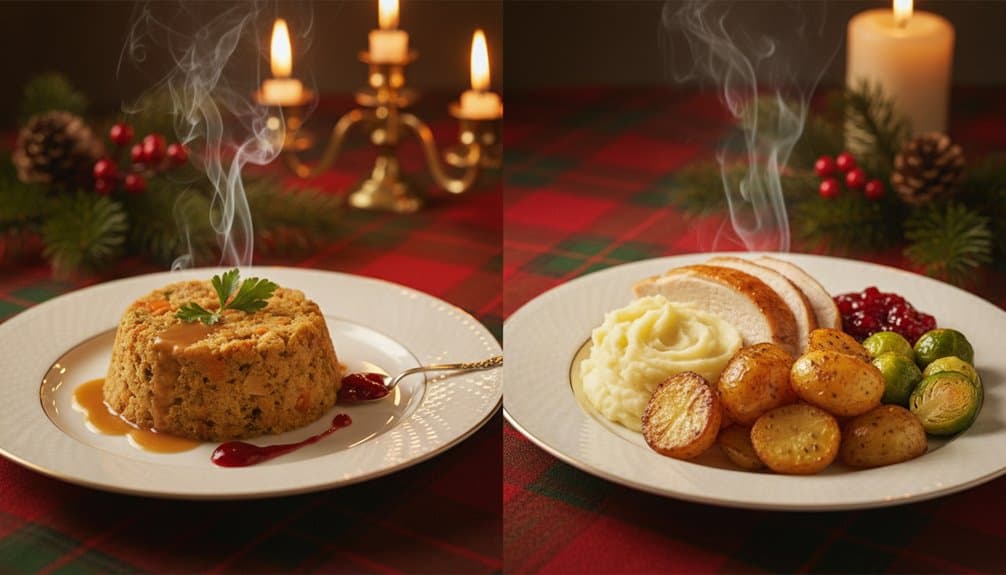
When you crack open a tin of Christmas dinner, the first thing you’ll notice is how the flavors differ from their fresh counterparts. The canning process transforms the festive seasonal flavors you’d expect from traditional meal presentation into something entirely different.
Here’s how tinned components compare to fresh versions:
- Turkey – The meat becomes saltier and more processed-tasting, lacking the herb-crusted richness of roasted turkey
- Vegetables – Carrots and Brussels sprouts turn mushy with muted flavors, missing the caramelized edges from oven roasting
- Stuffing – Dense and soggy rather than crispy-topped, with artificial sage notes overpowering subtle seasonings
- Cranberry sauce – Overly sweet and gelatinous, without the tart brightness of homemade versions
While you’ll recognize familiar Christmas flavors, they’re diluted and homogenized. The complexity that makes traditional Christmas dinner special—varying textures, distinct seasonal spices, and balanced sweet-savory elements—gets lost in translation to tinned format.

Nutritional Value and Ingredients Breakdown
You’ll find that tinned Christmas dinners pack a surprising nutritional punch, though they’re often loaded with sodium and preservatives to extend shelf life.
Most varieties contain between 300-500 calories per serving, with a macro breakdown that’s typically heavy on carbohydrates and moderate in protein and fat.
When you examine the ingredients list, you’ll spot familiar additives like sodium nitrite, modified corn starch, and various flavor enhancers that help maintain taste and texture during the canning process.
Calorie and Macro Content
Curiosity about the nutritional profile of tinned Christmas dinners reveals a mixed bag of calorie density and macronutrient distribution. You’ll find most canned versions pack between 350-450 calories per serving, which isn’t unreasonable for a complete meal.
However, the nutritional breakdown shows some concerning patterns regarding ingredient quality.
Here’s what you can expect from typical tinned Christmas dinners:
- Protein content: Usually 12-18 grams, primarily from processed turkey or chicken
- Carbohydrates: 35-45 grams, mostly from potatoes and vegetables with added starches
- Fat content: 15-25 grams, often from added oils and meat processing
- Sodium levels: 800-1,200mg per serving, significantly high for daily intake
You’ll notice the sodium content represents nearly half your recommended daily allowance, making these products more of an occasional convenience than regular nutrition.
Preservatives and Additives Analysis
Beyond the basic macronutrient profile, tinned Christmas dinners contain an extensive list of preservatives and additives that extend shelf life but raise questions about ingredient quality. You’ll find sodium benzoate, potassium sorbate, and various stabilizers throughout most products.
The preservative quantity often exceeds what you’d encounter in fresh preparations, with some meals containing over fifteen different chemical compounds.
These additives serve specific functions—emulsifiers maintain texture, artificial colors enhance visual appeal, and flavor enhancers mask metallic tastes from packaging. However, additive effects on digestion and overall health remain concerning for regular consumption.
You’re essentially trading convenience for ingredient simplicity. While these preservatives ensure safety during extended storage, they transform your Christmas dinner into a heavily processed meal that’s nutritionally distant from traditional homemade alternatives.
Cost Analysis: Is It Worth Your Money?
When you’re weighing the cost of a tinned Christmas dinner against preparing one from scratch, the numbers tell an interesting story. While tinned versions might seem expensive upfront, they’re surprisingly competitive when you break down the cost per serving analysis.
Here’s what you’ll typically spend:
- Tinned Christmas dinner: $12-18 per serving
- Homemade feast: $15-25 per serving (including ingredients, energy costs)
- Restaurant Christmas meal: $35-60 per serving
- Takeaway alternatives: $20-30 per serving
You’re saving significantly on time, energy bills, and ingredient waste. There’s no need to buy whole turkeys or bags of vegetables you won’t finish. For small households or busy families, tinned dinners become genuine budget friendly alternatives.
You’ll avoid the stress of coordination and potential cooking disasters. When convenience meets reasonable pricing, these meals offer decent value for specific situations.
Our Final Verdict and Recommendations
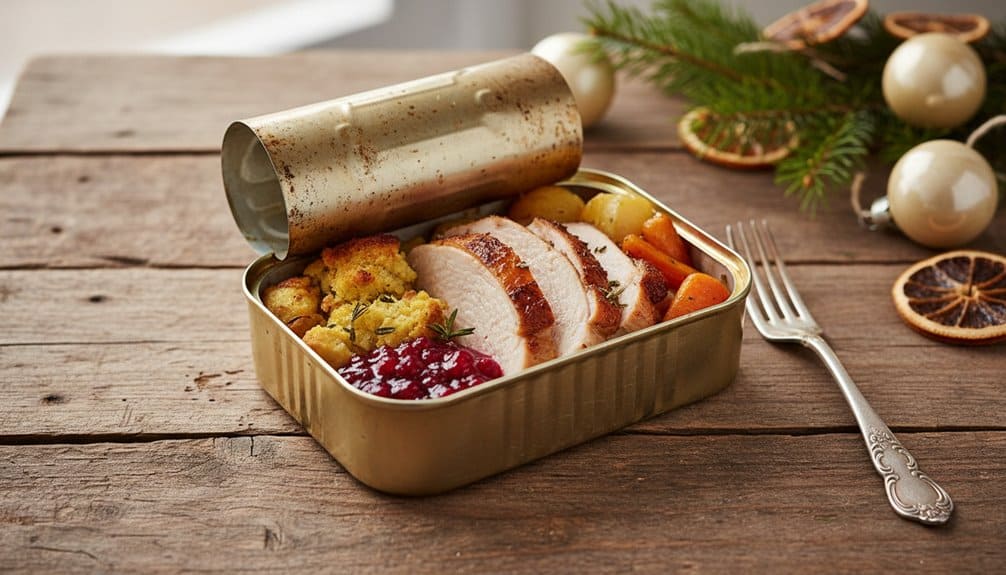
After examining the taste, convenience, and financial aspects, tinned Christmas dinners occupy a specific niche in holiday meal planning. They’re not replacing your grandmother’s homemade feast, but they serve emergency situations and solo celebrations effectively.
| Scenario | Traditional Dinner | Tinned Dinner |
|---|---|---|
| Family gathering | ❤ Memorable experience | 😔 Disappointing substitute |
| Emergency backup | 😰 Stressful scramble | 😌 Relief and gratitude |
| Solo celebration | 💸 Wasteful portions | ✅ Perfect single serving |
The cost saving benefits make tinned dinners attractive for specific circumstances. You’ll spend £3-8 versus £50+ for traditional meals, though overall satisfaction depends heavily on expectations and context.
We recommend keeping one tinned dinner as emergency backup rather than planned celebration food. They’re genuinely useful when unexpected guests arrive, cooking disasters strike, or you’re celebrating alone. Just don’t expect miracles—expect convenience with acceptable taste.
Frequently Asked Questions
How Long Does Tinned Christmas Dinner Last After Opening?
Once you’ve opened your tinned Christmas dinner, you’ll need to consume it within 2-3 days for optimal safety and quality. Proper storage is crucial—transfer any leftovers to airtight containers and refrigerate immediately.
The shelf life after opening is significantly shorter than the unopened tin’s long-term storage capability. Don’t leave opened portions at room temperature for more than two hours, as this increases bacterial growth risks.
Can You Heat Tinned Christmas Dinner in the Microwave Safely?
Yes, you can safely heat tinned Christmas dinner in the microwave. Transfer the contents to a microwave-safe dish first, as metal tins aren’t microwave-compatible.
Heat thoroughly until steaming hot throughout, stirring halfway through for even heating. Microwave heating safety requires checking the food reaches proper temperature.
Follow basic food safety considerations by consuming immediately after heating and never reheating leftovers multiple times.
What Brands Make Tinned Christmas Dinner and Where Can You Buy It?
You’ll find tinned Christmas dinners from brands like Heinz, Fray Bentos, and ASDA’s own label. The variety of tinned dinner options includes traditional turkey with all the trimmings, vegetarian alternatives, and premium versions.
Availability of tinned dinner in stores spans major supermarkets like Tesco, Sainsbury’s, and Morrisons, plus you can order them online through Amazon or grocery delivery services during the holiday season.
Is Tinned Christmas Dinner Suitable for Vegetarians or Vegans?
You’ll find limited options for vegetarians and vegans with traditional tinned Christmas dinners, as most contain meat and animal products. However, you can source meat free alternatives from specialty brands that focus on plant based ingredients.
Look for tinned roasts made from lentils, mushrooms, or soy protein, paired with vegetable sides. Always check labels carefully, as some seemingly vegetarian options may contain hidden animal-derived ingredients like gelatin or dairy.
How Does the Serving Size Compare to a Regular Christmas Meal?
You’ll find tinned Christmas dinners typically serve one to two people, significantly smaller than traditional holiday meals that feed four to eight.
The portion size variance means you’re getting about half the volume of a regular Christmas plate. If you’re feeding multiple people, you’ll need several tins, making it less economical than cooking a full roast dinner from scratch.
Conclusion
You’ll find tinned Christmas dinner serves as a decent emergency backup, but don’t expect it to replace your traditional feast. While it’s convenient and affordable, the flavors lack depth and the texture won’t satisfy your holiday expectations. You’re better off saving it for camping trips or quick meals rather than your actual Christmas table. If you’re curious, try one can first—you probably won’t want seconds.


No Comments