
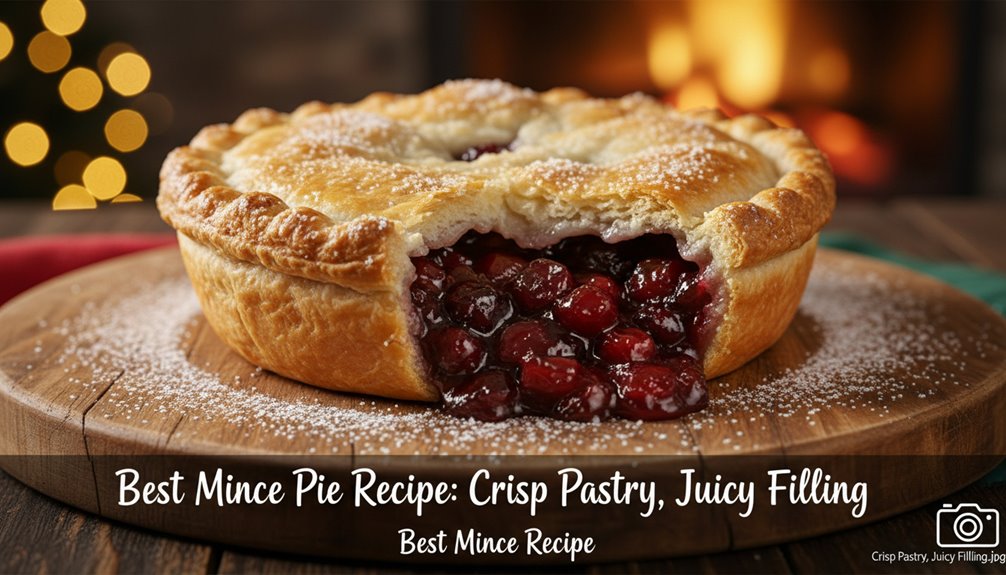
The Best Mince Pie Recipe Crisp Pastry, Juicy Filling
You’ll create exceptional mince pies by combining cold unsalted butter with premium flour until it resembles coarse breadcrumbs, then adding ice-cold water to form pastry. Chill thoroughly before rolling to consistent thickness. Fill with rich mincemeat made from quality dried fruits, Granny Smith apples, citrus zest, brandy, and suet. Seal edges properly, brush with egg wash, and bake at 200°C until golden. Master these fundamentals and discover the professional techniques that elevate homemade mince pies to bakery-quality perfection.
Table of Contents
Key Takeaways
- Use cold butter and ice-cold water when making pastry, then chill dough for 30 minutes before rolling.
- Roll pastry to consistent 3mm thickness and use one heaped tablespoon of mincemeat per pie.
- Brush pastry edges with egg wash to create moisture barrier and ensure proper sealing.
- Bake at 200°C on bottom third of oven for crisp bases, rotating halfway through cooking.
- Combine quality dried fruits with fresh apple, citrus zest, spices, and brandy for flavorful filling.
Essential Ingredients for Perfect Mince Pies
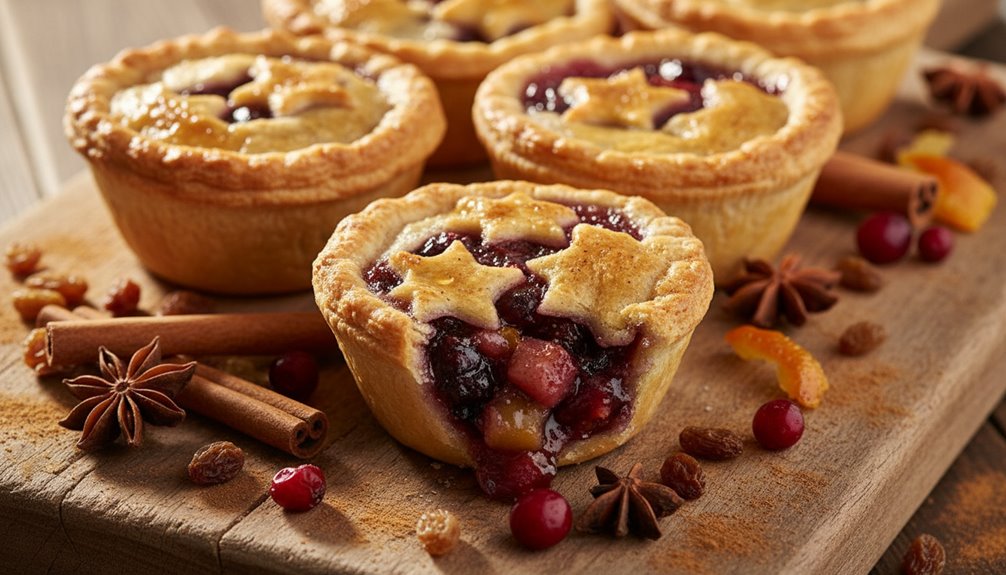
Every exceptional mince pie starts with high-quality ingredients that’ll transform your baking from ordinary to extraordinary. You’ll need premium plain flour, cold unsalted butter, and fresh eggs for pastry that’s both tender and crisp. Don’t skimp on the mincemeat—invest in quality dried fruits or make your own blend.
Your seasonal produce selection matters enormously. Fresh apples, preferably Bramley or Granny Smith, add tartness that balances sweetness perfectly. Choose plump raisins, sultanas, and currants alongside candied citrus peel for complexity.
Filling ingredient ratios determine your pie’s success. Aim for 60% dried fruit, 20% fresh apple, 10% suet or butter, and 10% sugar and spices. Ground cinnamon, nutmeg, and allspice create warmth, while brandy or rum adds depth.
Quality matters more than quantity—you’re better off using fewer premium ingredients than compromising with inferior substitutes. Fresh spices and real vanilla extract make noticeable differences in your final result.
Making the Ultimate Buttery Pastry
Now that you’ve gathered your premium ingredients, creating pastry that’s both flaky and buttery requires proper technique and temperature control. Start with cold butter—the ideal butter temperature should be firm yet pliable, straight from the refrigerator. Cut it into small cubes and rub into flour using your fingertips until the mixture resembles coarse breadcrumbs with visible butter pieces.
Add ice-cold water gradually, one tablespoon at a time, mixing with a knife until the dough just comes together. Here’s where the proper kneading method matters: avoid overworking the dough. Gently bring it together with your hands, then shape into a disc.
The secret lies in keeping everything cold. If the butter warms up, you’ll lose those crucial flaky layers. Wrap the dough in plastic film and chill for at least thirty minutes before rolling. This rest period allows the gluten to relax and ensures easier handling.
Preparing Rich and Flavorful Mincemeat Filling
While your pastry chills, you’ll transform simple dried fruits and spices into a luxurious mincemeat that’s the heart of exceptional mince pies. Start by combining sultanas, currants, and chopped dates with finely diced Granny Smith apples for tartness.

Add freshly grated orange and lemon zest, then squeeze in their juice for brightness.
Create balanced sweetness by mixing brown sugar with a touch of honey. Don’t rely on traditional spice mixes—develop unique spice blends using freshly ground cinnamon, nutmeg, and allspice, then add unexpected notes with cardamom and star anise. Pour in brandy or rum for depth, then fold in chopped almonds and suet for richness.
Let this mixture macerate for at least two hours, stirring occasionally. The fruits will plump, spices will meld, and alcohol will mellow. Taste and adjust—you’re creating layers of flavor that’ll shine through buttery pastry. This patient approach delivers mincemeat that’s aromatic, complex, and utterly irresistible.
Assembly Techniques for Professional Results
You’ll transform your mincemeat into bakery-quality pies by mastering three essential assembly techniques. Start with proper pastry rolling to achieve even thickness, then learn strategic filling distribution that prevents overflow while ensuring every bite’s packed with flavor.
Finally, perfect your sealing and crimping methods to create those distinctive decorative edges that’ll make your mince pies look professionally crafted.
Pastry Rolling Technique
Mastering the art of pastry rolling transforms your mince pies from homemade treats into bakery-quality delights. You’ll achieve consistent thickness and professional appearance through proper technique. Start with properly chilled pastry after adequate pastry chilling duration—typically 30 minutes in the refrigerator. Roll from the center outward using even pressure, rotating the dough frequently to maintain circular shape.
| Rolling Stage | Thickness | Technique |
|---|---|---|
| Initial roll | 5mm | Light pressure, center outward |
| Quarter turns | 4mm | Rotate dough 90 degrees |
| Final shape | 3mm | Consistent even strokes |
| Edge check | 3mm | Trim excess uniformly |
| Final rest | 3mm | Chill before cutting |
Monitor pastry texture adjustment throughout—if it becomes too soft, return to refrigerator briefly. Dust lightly with flour to prevent sticking.
Filling Distribution Methods
Achieving consistent filling distribution requires precise portioning and strategic placement techniques that prevent overflow during baking. You’ll want to use a tablespoon to measure exactly one heaped spoonful of mincemeat per pie, ensuring uniform filling across your batch. Don’t pile the mixture in the center—instead, spread it gently from edge to edge, leaving a quarter-inch border around the pastry rim.
For even distribution, press the filling lightly with your spoon’s back, creating a shallow well that accommodates the pastry lid without air pockets. Avoid overfilling, as the fruit will expand during baking and could burst through your carefully crafted pastry. This methodical approach guarantees professional-looking pies with balanced flavor in every bite.
Sealing and Crimping
How do you transform a simple pastry assembly into bakery-quality mince pies? Master proper sealing and crimping techniques that prevent filling leakage while creating an attractive finish.

Start with your sealing method: lightly brush the bottom pastry edges with beaten egg or milk. This creates a moisture barrier that bonds the pastry layers. Press the top pastry gently onto the base, ensuring complete contact around the circumference.
For crimping edges, use your thumb and forefinger to create decorative ridges while sealing. Press firmly but avoid stretching the pastry. Traditional fork crimping works too—simply press tines around the perimeter at regular intervals.
Cut small steam vents in the top to prevent bursting during baking. These techniques ensure professional-looking pies with secure seals that contain the precious filling throughout the baking process.
Baking Tips for Golden, Crisp Perfection
You’ll achieve bakery-quality mince pies by mastering two critical baking elements that separate amateur efforts from professional results.
Temperature precision ensures your pastry develops the perfect golden color and crisp texture without burning the delicate filling.
Proper egg wash application creates that coveted glossy finish while helping your decorative pastry elements adhere securely.
Perfect Oven Temperature Control
While many bakers overlook temperature precision, mastering your oven’s heat distribution is what separates soggy-bottomed disappointments from perfectly golden mince pies with crisp, flaky pastry. Start by preheating your oven to 200°C (180°C fan) for optimal results. Use an oven thermometer to verify accuracy—most ovens run 10-15 degrees off their displayed temperature.
Implement temperature monitoring techniques by checking your thermometer placement in the center rack where you’ll bake. For even browning, rotate your mince pies halfway through baking. Make oven temperature adjustments by lowering heat to 180°C during the final 5-10 minutes if tops brown too quickly.
Position pies on the bottom third of your oven for crisp bases, ensuring proper heat circulation around each pie.
Egg Wash Techniques
Although egg wash might seem like a simple finishing touch, mastering this technique transforms ordinary mince pies into bakery-quality treats with stunning golden crusts that crackle perfectly under your fork.
For optimal egg wash consistency, whisk one whole egg with two tablespoons of milk or cream until completely smooth. Strain the mixture through a fine mesh to eliminate any lumps that could create uneven browning.
Perfect egg wash application requires a light touch. Use a soft pastry brush to
Storage and Serving Recommendations
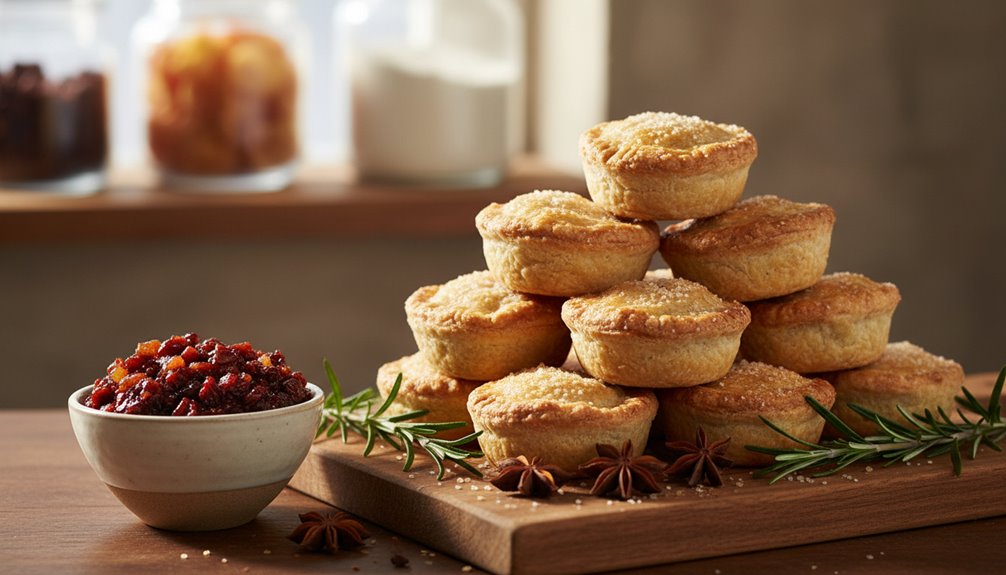
Once you’ve baked your perfect mince pies, proper storage becomes essential for maintaining their freshness and flavor. Store cooled pies in airtight containers at room temperature for up to three days. For longer preservation, wrap individually in plastic wrap before freezing—your freezer storage duration extends up to three months.
| Storage Method | Duration | Best Practice |
|---|---|---|
| Room Temperature | 3 days | Airtight container |
| Refrigerator | 1 week | Covered tightly |
| Freezer | 3 months | Individual wrapping |
| Pantry | 2 days | Cool, dry place |
For optimal taste, bring refrigerated pies to room temperature serving before enjoying. You can reheat frozen pies directly in a 350°F oven for 10-15 minutes. Warm pies slightly in the oven to restore pastry crispness if they’ve softened during storage. Dust with powdered sugar just before serving for an attractive presentation that’ll impress your guests.
Troubleshooting Common Mince Pie Problems
Even with careful preparation and proper storage, mince pie baking doesn’t always go according to plan. If your pastry turns out soggy, you’ve likely used too much liquid in the dough or overfilled the pies. Check your dough consistency—it should hold together without being sticky. Blind bake the pastry cases for five minutes before adding filling to create a moisture barrier.
When pastry cracks during rolling, it’s too dry. Add cold water one teaspoon at a time until workable. If your filling leaks out, you’ve probably overstuffed the pies or the filling consistency is too wet. Drain excess liquid from your mincemeat before using.
Pale, undercooked pastry indicates your oven temperature is too low or baking time insufficient. Brush tops with beaten egg for golden color. If pastry browns too quickly, cover with foil and continue baking until the base is properly cooked.
Frequently Asked Questions
Can I Make Mince Pies Without Alcohol in the Filling?
Yes, you can absolutely make mince pies without alcohol in the filling. You’ll find plenty of alcohol free filling options that deliver incredible flavor.
Traditional mincemeat recipes often include brandy or rum, but you can substitute with apple juice, orange juice, or extra spices like cinnamon and nutmeg. You won’t miss the alcohol—the dried fruits and spices create rich, festive flavors.
How Far in Advance Can I Prepare Mince Pies for Christmas?
You can prepare mince pies up to three days before Christmas for optimal freshness. Their shelf life depends on storage conditions—keep them in an airtight container at room temperature for 2-3 days, or extend to one week with proper refrigeration requirements.
Store baked pies in the fridge and reheat before serving. You’ll maintain the crisp pastry texture and prevent the filling from spoiling with correct storage.
Are There Any Good Vegan or Gluten-Free Alternatives for This Recipe?
Yes, you can easily adapt this recipe for dietary restrictions. For gluten-free versions, substitute regular flour with gluten-free flour blend.
For vegan alternatives, use dairy free ingredients like vegan butter instead of regular butter, and create egg free pastry by replacing eggs with plant milk or aquafaba. These substitutions maintain the crisp texture while accommodating different dietary needs perfectly.
What’s the Difference Between Homemade and Store-Bought Mincemeat Filling?
Homemade mincemeat offers superior homemade texture with chunky, distinct fruit pieces you can control for freshness and flavor intensity. You’ll taste individual spices and achieve your preferred sweetness level.
Store-bought varieties provide convenient store bought consistency but often contain preservatives, artificial flavors, and overly uniform textures. Homemade versions let you customize ingredients, alcohol content, and spice ratios while avoiding unnecessary additives found in commercial alternatives.
Can I Freeze Unbaked Mince Pies and Bake Them Later?
Yes, you can absolutely freeze unbaked mince pies for convenient baking later.
When freezing unbaked mince pies, place them on a tray until solid, then transfer to freezer bags. They’ll keep for up to three months.
For baking frozen mince pies, you don’t need to thaw them first—just add an extra 5-10 minutes to your normal baking time and they’ll come out perfectly golden.
Conclusion
You’ve mastered the art of creating exceptional mince pies with crisp, buttery pastry and richly spiced filling. Don’t rush the chilling process—it’s crucial for achieving that perfect texture. Remember to seal edges properly and create steam vents for even baking. Store your finished pies in airtight containers, and they’ll stay fresh for days. With these techniques, you’ll consistently produce bakery-quality mince pies that’ll impress family and friends every holiday season.


No Comments