
Stress Free Xmas Day Dinner: Timelines, Tips, and Recipes
You can create a memorable Christmas dinner without the chaos by following a strategic timeline that breaks preparation into manageable tasks spread across two weeks. Start by confirming your guest count and dietary restrictions, then map out an oven schedule prioritizing make-ahead dishes like casseroles, roasted vegetables, and desserts. Two weeks before, order premium proteins and create shopping lists. The day before, prep vegetables and set your table. Master these steps to transform your holiday hosting experience.
Key Takeaways
- Start prep two weeks before by confirming guest count, ordering proteins, and creating detailed shopping lists for stress-free execution.
- Maximize make-ahead dishes like casseroles, mashed potatoes, and desserts that can be prepared day-before and reheated beautifully.
- Create an oven schedule mapping when each dish needs cooking to avoid timing conflicts and ensure everything serves hot.
- Choose foolproof main courses with clear timing guides like prime rib or roasted turkey that include resting periods.
- Prepare vegetables, set the table, and assemble casseroles the day before to minimize Christmas Day kitchen tasks.
Planning Your Christmas Menu and Guest Count
Before you send out invitations or buy a single ingredient, you’ll need to nail down two crucial details: what you’re serving and who’s coming. Start your guest headcount planning by creating a simple spreadsheet with columns for confirmed attendees, dietary restrictions, and plus-ones. Don’t assume everyone can make it—send invitations three weeks ahead and request RSVPs within ten days.
Once you’ve locked in numbers, focus on menu component balance. You’ll want one protein, three to four sides, and two dessert options. Consider your guests’ preferences but don’t overcomplicate things. If you’re hosting twelve people, stick to dishes you’ve made before. Scale recipes properly—most side dishes serve six, so you’ll need to double them.
Map out your oven schedule next. Your turkey needs four hours, so plan sides that can cook at different temperatures or be made ahead. Choose at least two dishes you can prepare the day before.
The Complete Prep Timeline: What to Do When
Now that you’ve planned your menu and confirmed your guest count, you’ll need a strategic timeline to execute everything smoothly. Breaking down your prep work into manageable chunks—starting two weeks before, ramping up the day before, and tackling morning-of tasks—ensures you won’t scramble at the last minute.
This systematic approach transforms what could be a chaotic cooking marathon into an organized sequence of simple steps.
Two Weeks Before
While you’re still enjoying your regular December routine, it’s the perfect time to tackle the tasks that’ll save you stress later. Start your holiday hosting preparation by confirming your guest count and dietary restrictions. You’ll need accurate numbers for shopping and seating arrangements.
Visit local markets to scout seasonal produce selection. December’s peak offerings include Brussels sprouts, winter squash, cranberries, and root vegetables. Note prices and availability since these can fluctuate closer to Christmas.
Order your turkey or roast now if you’re buying from a specialty butcher. They’ll often sell out of premium cuts. Create your complete menu and shopping lists, separating items by when you’ll purchase them. Clean out your freezer and pantry to make space for ingredients you’ll buy ahead.
Day Before Schedule
The day before Christmas transforms your kitchen into command central for tomorrow’s feast. You’ll tackle make-ahead dishes while finalizing grocery list planning for any last-minute items. Start early by delegating responsibilities to family members who’ve offered help.
| Time | Task |
|---|---|
| 9 AM | Prep vegetables, store in containers |
| 11 AM | Bake pies and desserts |
| 2 PM | Assemble casseroles for refrigeration |
| 4 PM | Set dining table, arrange centerpieces |
| 6 PM | Confirm cooking schedule and assignments |
Chop onions, celery, and herbs for stuffing. Prepare cranberry sauce and refrigerate. Mix dry ingredients for breakfast items. Check your turkey’s thawing progress—it should feel soft throughout. Before bed, review tomorrow’s timeline with your kitchen helpers and ensure serving dishes are clean and accessible.
Morning Of Tasks
As dawn breaks on Christmas morning, you’ll shift into high gear with a carefully orchestrated sequence of tasks. Start your wake up routine early—ideally by 7 AM—to ensure everything runs smoothly. Pour that first morning coffee and review your cooking schedule while you’re alert and focused.
Remove the turkey from the refrigerator to bring it to room temperature. Preheat your oven and prepare the roasting pan. Chop fresh herbs for stuffing and set out serving platters. Assemble any make-ahead casseroles that need final touches before baking.
Set the dining table completely, including water glasses and wine stems. Prepare your appetizer station and chill white wines. Mix compound butter for rolls and vegetables. By 10 AM, you’re ready to start the main cooking phase with confidence.
Make-Ahead Dishes That Reheat Beautifully
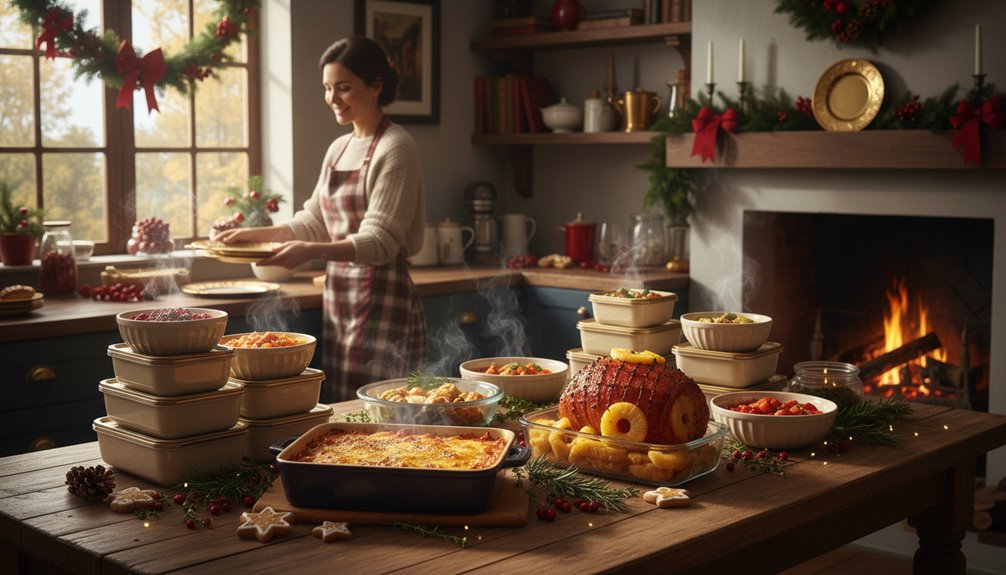
Planning your Christmas dinner becomes infinitely easier when you’ve got dishes that can be prepared days in advance and reheated without losing their appeal. You’ll save precious time on the big day while still serving impressive, delicious food.
Consider starting with freezer friendly dishes like lasagna, shepherd’s pie, or enchiladas that actually improve after resting. These reheat ready items maintain their texture and develop deeper flavors during storage. Soups, stews, and braised meats are perfect candidates—they’re often better the second day. You can prepare mashed potatoes three days ahead; just reheat them slowly with extra cream and butter.
Don’t forget sides like roasted vegetables, stuffing, and casseroles. Green bean casserole, sweet potato gratin, and bread pudding all reheat beautifully in your oven while the turkey rests. Even desserts like pies, trifles, and cheesecakes benefit from advance preparation. You’re creating a strategic advantage that transforms Christmas cooking from marathon to manageable celebration.
Essential Kitchen Tools and Equipment Checklist
You’ll save yourself stress on Christmas Day by confirming you have the right tools ready before you start cooking.
Your must-have cooking tools include a reliable meat thermometer, sharp carving knife, roasting pan with rack, and multiple cutting boards to prevent cross-contamination.
Don’t forget serving equipment essentials like platters, gravy boats, serving spoons, and trivets to protect your table from hot dishes.
Must-Have Cooking Tools
Before you start prepping your Christmas feast, you’ll need the right tools to ensure everything runs smoothly in the kitchen. Your high quality cookware forms the foundation—invest in a heavy-bottomed roasting pan for the turkey, multiple sheet pans for sides, and a reliable Dutch oven for braising. You’ll need sharp knives, cutting boards, and a meat thermometer to check doneness accurately.
Essential kitchen gadgets make multitasking easier. A stand mixer handles mashed potatoes while you’re stirring gravy. Food processors quickly chop vegetables and make pie crusts. Don’t forget basics like wooden spoons, whisks, tongs, and a sturdy carving set. Having measuring cups, mixing bowls in various sizes, and aluminum foil readily available prevents last-minute scrambles. These tools aren’t luxuries—they’re necessities for executing your Christmas menu efficiently.
Serving Equipment Essentials
Platters and serving bowls transform your carefully prepared dishes into an impressive holiday spread. You’ll need various sizes to accommodate everything from the turkey to side dishes. Choose heat-resistant options that can go from oven to table.
Stock up on serving utensils—you’ll need at least one set per dish. Don’t forget gravy boats, butter dishes, and salt and pepper shakers for each table section. Serving trays make transporting multiple items effortless and enhance your buffet presentation when guests serve themselves.
Consider having warming trays or chafing dishes to keep food at proper temperatures. You’ll also need trivets to protect surfaces from hot dishes. Label cards help identify dishes for guests with dietary restrictions. Keep extra serving spoons handy since they tend to disappear into different dishes throughout the meal.
Foolproof Main Course Recipes With Timing Guides
When you’re orchestrating Christmas dinner for a crowd, the main course demands both spectacular flavor and precise timing to ensure everything reaches the table hot and perfectly cooked.
For prime rib prep, remove the roast from refrigeration 90 minutes before cooking. Season generously with kosher salt and cracked pepper, then sear at 450°F for 20 minutes. Reduce heat to 325°F and roast 13-15 minutes per pound for medium-rare. Rest for 20 minutes before carving.
Classic roast turkey techniques start with brining overnight in saltwater solution. Pat dry, stuff cavity with aromatics, and butter under the skin. Roast at 325°F, calculating 15 minutes per pound. Tent with foil if browning too quickly. Check temperature at the thickest thigh point—165°F means it’s done.
Both proteins benefit from digital thermometers for accuracy. Start your turkey earlier since it needs resting time while you finish sides. You’ll serve restaurant-quality mains without the stress.
Simple Yet Impressive Side Dishes and Accompaniments
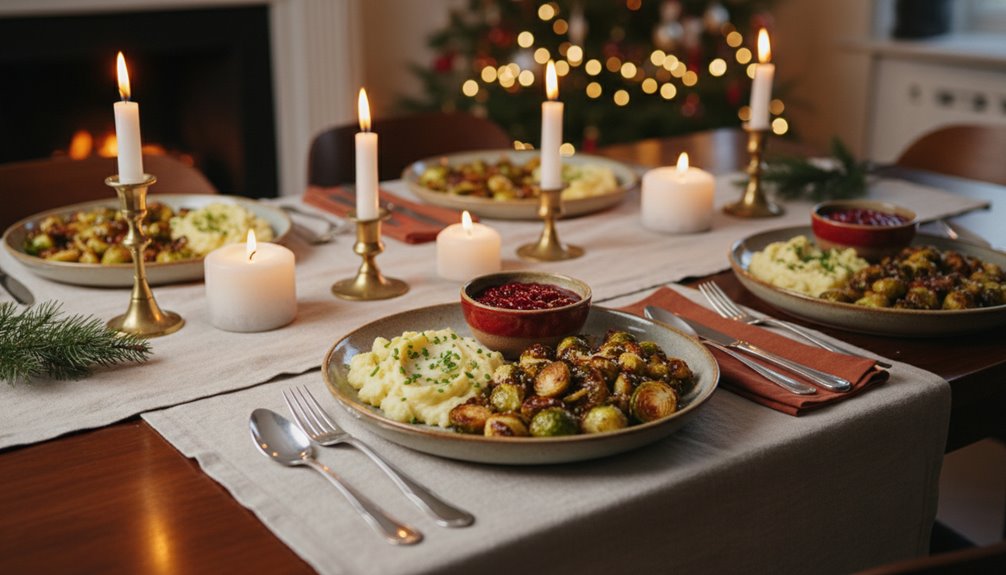
Three signature sides can transform your Christmas dinner from ordinary to extraordinary without requiring advanced culinary skills or hours of prep work. You’ll impress guests while maintaining your sanity by choosing dishes that practically cook themselves.
Start with roasted root vegetables—they’re foolproof crowd-pleasers. Toss carrots, parsnips, and Brussels sprouts with olive oil, salt, and thyme. Roast at 425°F for 35 minutes while you focus elsewhere. The caramelization creates complex flavors without any effort on your part.
Your herbed bread stuffing can be assembled the night before. Combine cubed bread with sautéed onions, celery, sage, and stock. Refrigerate overnight, then bake covered for 30 minutes. Remove the foil for the final 15 minutes to achieve that coveted crispy top.
Round out your spread with honey-glazed green beans. Blanch them ahead, then quickly sauté with butter and drizzle with honey just before serving. These three sides work harmoniously while giving you breathing room to manage your main course.
Troubleshooting Common Christmas Dinner Disasters
Every host’s nightmare involves something going catastrophically wrong just as guests arrive, but you can salvage most Christmas dinner disasters with quick thinking and these proven fixes. You’ll breathe easier knowing these solutions for overcoming kitchen mishaps that threaten your celebration.
- Turkey too dry: Slice it thin, drench with warm broth mixed with melted butter, then cover with foil for five minutes before serving.
- Gravy lumpy or broken: Strain through fine mesh, then whisk vigorously while adding cream to smooth texture.
- Vegetables overcooked: Puree them into soup or mash them with butter and herbs for an intentional side dish.
- Dessert collapsed: Crumble it into glasses, layer with whipped cream, and call it trifle.
When mitigating holiday party chaos, remember that confidence sells any solution. Your guests won’t notice minor imperfections if you don’t point them out. Keep extra wine handy—it helps everyone relax while you’re fixing problems behind the scenes.
Frequently Asked Questions
How Do I Accommodate Guests With Dietary Restrictions or Allergies?
You’ll accommodate food allergies by asking guests about restrictions weeks ahead.
Create a detailed spreadsheet tracking everyone’s needs. Label all dishes clearly with ingredients and set up separate serving utensils to prevent cross-contamination.
You can manage dietary needs by preparing versatile base recipes that work for multiple restrictions. Offer dairy-free, gluten-free, and vegan options alongside traditional dishes.
Keep allergen-free alternatives in your pantry for last-minute adjustments.
What Wines Pair Best With Traditional Christmas Dinner Courses?
You’ll want to serve crisp white wines like Riesling or Sauvignon Blanc with appetizers and seafood starters. For turkey or ham, pour medium-bodied whites such as Chardonnay or Viognier.
If you’re serving beef or lamb, choose bold red wines like Cabernet Sauvignon or Syrah. Don’t forget dessert wines—Port pairs beautifully with Christmas pudding while Moscato complements lighter sweets. Offer both red and white options throughout dinner.
How Much Should I Budget per Person for Christmas Dinner?
You’ll typically spend $15-35 per person for Christmas dinner, though average guest expenditure varies by menu complexity.
Your holiday food budgeting should account for appetizers, the main course, sides, desserts, and beverages. You can control costs by buying seasonal produce, choosing turkey over prime rib, and making dishes from scratch. Plan for higher amounts if you’re including premium ingredients like seafood or specialty items. Don’t forget to budget for decorative garnishes.
What Are Appropriate Seating Arrangements for Mixed Family Gatherings?
You’ll want to create a thoughtful seating plan layout that separates any family members with tensions while placing conversationalists together. Mix generations strategically – pair younger relatives with interesting elders.
Place the host at the table’s head with formal table settings marking each guest’s spot. You’re aiming to seat peacemakers between potentially difficult relatives.
Consider children’s needs by grouping them near parents but away from breakable decorations or hot serving areas.
How Do I Keep Children Entertained During a Formal Dinner?
You’ll keep children engaged by setting up a kids’ corner with coloring books and crayons near the dining table.
Create holiday themed games like Christmas bingo or a scavenger hunt for ornaments. Give them special responsibilities like passing out napkins or being the “bell ringer” for courses.
Prepare simple activities for children between courses, including festive puzzles or quiet crafts. Consider rotating older kids through short breaks to burn energy outside.
Conclusion
You’ve got everything you need to create a memorable Christmas dinner without the usual chaos. By following these timelines, prepping ahead, and keeping these foolproof recipes handy, you’ll actually enjoy hosting this year. Remember, even if something goes wrong, you’re prepared with solutions. Your guests won’t remember if the potatoes were slightly lumpy—they’ll remember the warmth, laughter, and love around your table. Now take a deep breath and start planning your stress-free celebration.


No Comments